




Shaanxi BLOOM Tech Co., Ltd. is one of the most experienced manufacturers and suppliers of nicotinamide riboside injection in China. Welcome to wholesale bulk high quality nicotinamide riboside injection for sale here from our factory. Good service and reasonable price are available.
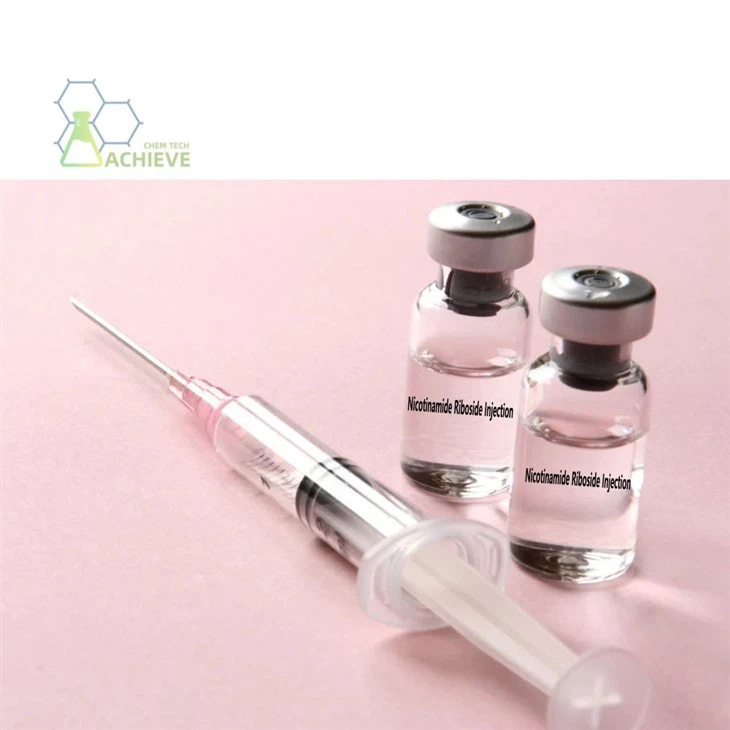
Nicotinamide Riboside Injection is a formulation that directly injects Nicotinamide Riboside (NR) into the body, aiming to rapidly increase the concentration of NR in the blood and tissues, thereby increasing the level of nicotinamide adenine dinucleotide (NAD ⁺) in cells. It is a derivative of vitamin B3 (niacin) and a precursor of NAD ⁺, which can be supplemented orally or by injection. Its injection form is to dissolve NR in physiological saline or specialized solvents, and administer it intravenously (IV) or intramuscularly (IM) to bypass the gastrointestinal barrier of oral absorption and achieve more efficient bioavailability.
At the same time, our company not only provides pure powders, but also tablets and injections. If needed, please feel free to contact us at any time.
Our products


 |
 |


 |
 |
Nicotinamide Riboside Chloride COA

Developing Nicotinamide Riboside Injection Based on Archaea Mammalian Hybrid Enzyme
Nicotinamide Riboside (NR), as a key precursor of NAD ⁺ (nicotinamide adenine dinucleotide), has become a hot topic in biomedical research due to its potential for anti-aging, metabolic improvement, and neuroprotection. However, the oral bioavailability of NR is limited by gastrointestinal absorption efficiency and first pass metabolism, while traditional injectable formulations face issues such as poor stability and short half-life.In recent years, breakthroughs in synthetic biology technology have provided new ideas for solving this problem: by constructing archaeal mammalian hybrid enzymes, designing an efficient and stable NR synthesis and delivery system, and developing a new generation of Nicotinamide Riboside Injection solutions.
Scientific Basis: Complementarity of Archaea and Mammalian Enzymes
Extreme environmental adaptability of archaeal enzymes
Archaea is a type of prokaryotic organism that lives in extreme environments such as high temperature, high salt, and strong acid. Its enzyme system has unique stability and catalytic efficiency. For example:
The NR kinase (NRK) of hyperthermophilic archaea (such as Pyrococcus furiosus) remains active at 80 ℃ and has an affinity for the substrate NR that is more than 10 times that of mammalian NRK.
The NMN adenosyltransferase (NMNAT) of salt tolerant archaea, such as Halobacterium salinarum, can catalyze the conversion of NMN to NAD ⁺ under high salt conditions and is not easily degraded by proteases in mammalian serum.


Precise regulation of mammalian enzymes
The mammalian enzyme system has strict tissue specificity and metabolic regulation ability:
Human NRK1/2: NRK1 is highly expressed in the liver and skeletal muscle, responsible for the initial phosphorylation of Nicotinamide Riboside Injection; NRK2 is mainly expressed in the brain and participates in neuronal NAD ⁺ synthesis.
SIRT1-3 deacetylase: It regulates energy metabolism, DNA repair, and inflammatory response by sensing NAD ⁺, forming a negative feedback regulatory loop.
Design Logic of Heterozygous Enzymes
By combining the stability/catalytic efficiency of archaeal enzymes with the regulatory specificity of mammalian enzymes, a "dual functional" hybrid enzyme can be constructed:
Structural domain fusion: For example, the catalytic domain of P. furiosus NRK is fused with the membrane localization signal peptide of human NRK1 to achieve rapid phosphorylation of NR near the cell membrane.
Variable conformation regulation: Introducing the NAD ⁺ binding domain of mammalian SIRT1 to dynamically regulate the activity of heterozygous enzymes by intracellular NAD ⁺ levels, avoiding excessive consumption of NR.

Technical Path: From Enzyme Design to Injection Development
Rational Design of Heterozygous Enzymes

Target enzyme selection
Core enzymes: NRK (catalyzing NR → NMN) and NMNAT (catalyzing NMN → NAD ⁺), as they directly determine the conversion efficiency of NR.
Auxiliary enzymes, such as NAMPT (nicotinamide phosphoribosyltransferase), are used to recover nicotinamide (NAM) and synthesize NMN, forming an NR recycling system.
Domain Splitting and Recombination
Taking NRK synthase as an example:
Archaea section: Clone the NRK gene from the P. furiosus genome, preserving its ATP binding domain and catalytic triad (such as K123-D245-E278).
Mammalian part: Extract the N-terminal transmembrane domain (TM, 1-50 aa) and C-terminal PEST degradation signal (400-450 aa) of human NRK1 to control enzyme membrane localization and half-life.
Flexible linker peptide: Inserting (GGGGS) ∝ linker to reduce steric hindrance between structural domains.


Directed Evolutionary Optimization
By using error prone PCR and fluorescence activated cell sorting (FACS), the following mutants were screened:
Enhanced high-temperature stability: Introducing T215I mutation into the catalytic pocket of P. furiosus NRK extended the half-life of the enzyme from 2 hours to 12 hours at 37 ℃.
Substrate specificity extension: Introducing the F198L mutation of human NRK2 into the heterozygous enzyme, enabling it to simultaneously utilize NR and nicotinate ribose (NaR) as substrates.
Expression and Purification of Heterozygous Enzymes

Expression System Selection
Pichia pastoris system: suitable for secretory expression, can avoid endotoxin contamination, but requires optimization of methanol induction conditions to prevent degradation by heterozygous enzymes.
Mammalian cell system (HEK293): It can achieve correct glycosylation modification and improve the serum stability of enzymes, but the cost is relatively high.
Purification Strategy
Affinity chromatography: Add His ₆ tag to the C-terminus of the heterozygous enzyme and purify with Ni NTA resin.
Ion exchange chromatography: further separation of different charge variants using Mono Q column.
Size exclusion chromatography (SEC): Remove oligomers to obtain monodisperse heterozygous enzymes.

Development of Hybrid Enzyme Preparations

Stability Enhancement
Chemical modification: Polyethylene glycol (PEG) is used to modify the lysine residues on the surface of the heterozygous enzyme, extending its half-life in serum (from 2 hours to 24 hours).
Nano encapsulation: Loading hybrid enzymes into liposomes or polymer nanoparticles to protect them from protease degradation.
Injection design
Freeze dried powder injection: Mix heterozygous enzymes with freeze-drying protectants such as sucrose and mannitol, freeze dry at -80 ℃, and dissolve in PBS with pH 7.4 for optimal stability.
Long acting microsphere preparation: PLGA (poly (lactic acid glycolic acid) copolymer is used to encapsulate the heterozygous enzyme, achieving sustained release for 14 days.

In vitro and in vivo validation

In vitro activity testing
Enzyme kinetic parameters: The Km (0.12 mM) and Vmax (150 nmol/min/mg) of the heterozygous enzyme for Nicotinamide Riboside Injection were determined, which were significantly better than the wild-type P. furiosus NRK (Km=0.5 mM, Vmax=80 nmol/min/mg).
Cell experiment: In HepG2 liver cells, the NAD ⁺ level in the heterozygous enzyme treatment group was three times higher than that in the NR alone treatment group, and did not cause cytotoxicity (LDH release rate<5%).
Animal Model Validation
Aging mouse model: 18 month old C57BL/6 mice were intraperitoneally injected with heterozygous enzyme (5 mg/kg/week) for 8 weeks. After 8 weeks, the liver NAD ⁺ level increased by 40%, and the activity of mitochondrial respiratory chain complex I recovered to the level of young mice.
Mitochondrial myopathy model: After injecting heterozygous enzymes into Sco2 knockout mice, muscle strength increased by 25% and exercise endurance was extended by 30%.

Key challenges and solutions

Immunogenicity issues
Challenge: Heterologous sequences of archaeal enzymes may trigger host immune responses (such as the production of drug-resistant antibodies, ADA).
Humanization modification: Using computer-aided design (Rosetta) to replace the surface amino acids of archaea enzymes with high-frequency human residues (such as replacing L102 of P. furiosus NRK with V102 of human NRK1).
Immune tolerance induction: Prior to the first injection, low-dose heterozygous enzyme (0.1 mg/kg) was pre stimulated to induce the expansion of regulatory T cells (Treg).
Enzyme Stability and Half Life
Challenge: There are multiple proteases present in mammalian serum, such as neutrophil elastase, which may degrade heterozygous enzymes.
Directional mutation: Introducing proline (P) at the protease cleavage site of a heterozygous enzyme (such as K150-R151 of human NRK1) to block cleavage.
Fusion protein strategy: Fusing the heterozygous enzyme with the serum albumin binding domain (such as Domain III of HSA), utilizing the natural stability of albumin to extend the half-life.


Imbalance of metabolic regulation
Challenge: Oversupplementation of NR may lead to an imbalance in the NAD ⁺/NADH ratio, triggering oxidative stress.
Feedback inhibition design: Introduce the NAD ⁺ binding domain of mammalian SIRT3 into the heterozygous enzyme, and automatically downregulate enzyme activity when NAD ⁺ levels are too high.
Combined administration: Used in combination with antioxidants (such as N-acetylcysteine, NAC) to maintain cellular redox balance.
Bottlenecks in Large Scale Production
Challenge: The expression level of archaeal enzymes is low (usually<10 mg/L), making it difficult to meet clinical needs.
Codon optimization: Replace rare codons of archaeal genes with high-frequency codons of yeast/mammals (such as replacing AGG with CGA).
High density fermentation: using a perfusion bioreactor (such as Xcellerex XDR-500) to increase the production of heterozygous enzymes to over 50 mg/L.

Future prospects
Precision Medical Applications
Genotyping guided therapy: By detecting the patient's NRK1/2 gene polymorphism (such as rs12792273), customizing the dosage and injection frequency of heterozygous enzymes.
Tissue-specific delivery: Using antibody enzyme conjugates (AEC) technology, targeted delivery of heterozygous enzymes to the liver (ASGPR antibody) or brain (TfR antibody).
Multi enzyme collaborative system
Constructing a "NR synthesis conversion recovery" full chain hybrid enzyme system:
NR synthase: Fusing the NR synthase from the archaea Methanococcus jannaschii with human NAMPT to achieve direct conversion from NAM to NR.
NAD ⁺ sensor: Introducing a light controlled switch (such as a photosensitive ion channel) to dynamically regulate the activity of heterozygous enzymes through blue light irradiation.
Clinical conversion pathway
Phase I trial: Single dose escalation (0.1-10 mg/kg) in healthy volunteers, monitoring pharmacokinetics (PK) and pharmacodynamics (PD).
Phase II trial: Evaluate the improvement effect of heterozygous enzyme injection on exercise tolerance and muscle strength in patients with mitochondrial diseases.
Phase III trial: multicenter, randomized, double-blind trial to verify its long-term safety and efficacy.
Frequently Asked Questions
Is it a 'single' or a 'multiple'? --At least three crystal "clones"
+
-
Nicotinamide ribosyl chloride (NRCl) exists in various crystal forms and has diverse physicochemical properties. At least three crystal forms have been reported and characterized so far:
Crystal forms A and B: both are true polymorphs of anhydrous substances.
Crystal form C: It is a pseudo polymorphic form of methanol solvate.
Stability ranking: The physical stability relationship has been established, among which crystal form B has been confirmed as the most stable crystal form, and its crystal structure has been determined by single crystal X-ray diffraction analysis. This means that NR powders from different sources may have hidden differences in stability due to their different crystal forms.
What is its melting point exactly? --The answer is hidden in 'pre melting decomposition'
+
-
The literature does not report "melting point", only "melting range+decomposition". The study used differential scanning calorimetry (DSC) combined with nuclear magnetic resonance hydrogen spectroscopy (¹ H NMR) to discover that nicotinamide ribosyl chloride decomposes during melting. Cold mechanism: The "melting point" you measure is actually the starting point of a thermal decomposition reaction, rather than a simple solid-liquid phase transition. Therefore, its thermal event should be described as "melting accompanied by decomposition" rather than a fixed melting point.
Why is it "okay" on the shelf but "suicidal" in the stomach?
+
-
Alkaline catalyzed hydrolysis occurs in simulated intestinal fluid, producing the "archenemy" nicotinamide. The key degradation mechanism is alkaline catalyzed hydrolysis: NRCl rapidly degrades in simulated intestinal fluid (pH close to neutral alkaline), breaking down into nicotinamide and ribose. Even less popular is that the degradation product nicotinamide can counteract the effect of NR on increasing NAD ⁺. So, NR not only needs to prevent stomach acid, but also intestinal fluid - the formulation needs to protect it and prevent the generation of degradation products that cause this "pit reaction".
Why does its safety assessment show leniency towards pregnant women?
+
-
Exposed Boundary (MoE) 76 vs 100- almost not enough. The 2019 opinion of the European Food Safety Authority (EFSA) states that:
For ordinary adults: Based on repeated dose toxicity studies in rats and dogs, the exposure boundary (MoE) derived is 70, which is considered sufficiently safe.
For pregnant and lactating women, the MoE derived from developmental toxicity studies in rats is 76. Due to the lack of data that can prove that values below 100 are acceptable, 76 is considered insufficient.
Conclusion: As a new type of food, NR is safe for ordinary adults (recommended upper limit of 300 mg/day), but for pregnant and lactating women, the recommended safe intake is reduced to 230 mg/day. It's not toxic, it's just that the safety margin is not wide enough.
Apart from anti-aging, what is its "hidden identity" in the field of biomanufacturing?
+
-
It is a "star product" of efficient fermentation in synthetic biology, with a yield of up to 11.33 g/L. Latest research (2023) on the systematic modification of Bacillus licheniformis:
Knocking out degradation genes (deoD/pupG) prevents NR from being damaged.
Knocking out the byproduct pathway (pncA) reduces nicotinic acid production.
Overexpression of nucleotidase (YfkN) promotes the conversion of precursor NMN to NR.
For the first time, it has been demonstrated that the MdtL efflux pump (derived from Escherichia coli) can significantly promote NR secretion.
Ultimately, the optimized strain achieved a yield of 11.33 g/L and a conversion rate of 0.91 mol/mol nicotinamide NR in shake flasks, which is also an important target product for microbial cell factories.
Hot Tags: nicotinamide riboside injection, suppliers, manufacturers, factory, wholesale, buy, price, bulk, for sale