


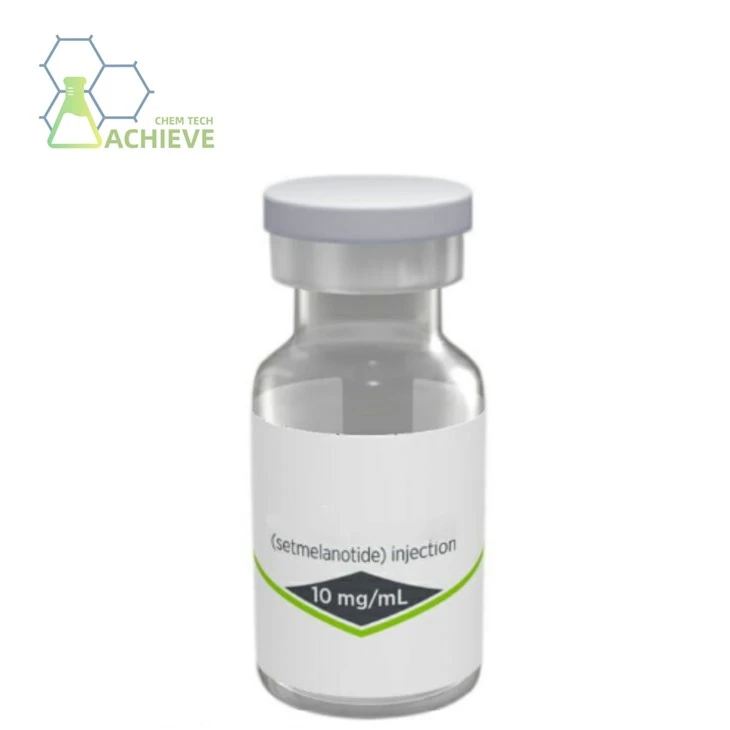

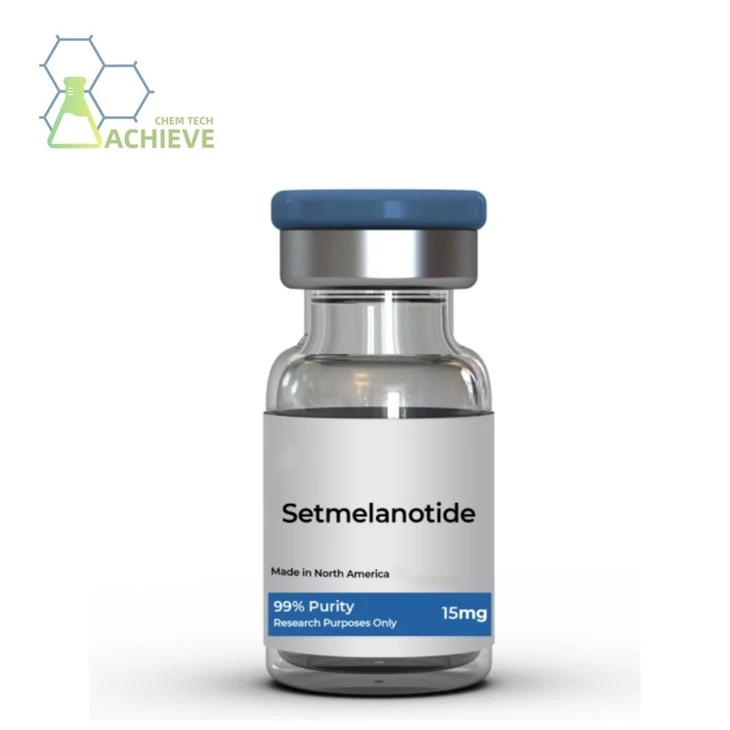

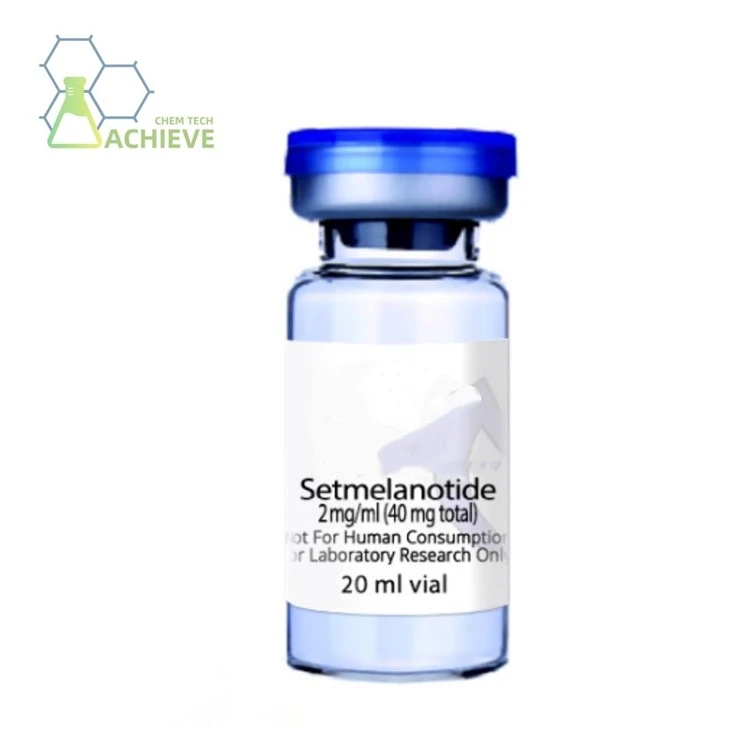
Shaanxi BLOOM Tech Co., Ltd. is one of the most experienced manufacturers and suppliers of setmelanotide injection in China. Welcome to wholesale bulk high quality setmelanotide injection for sale here from our factory. Good service and reasonable price are available.
Setmelanotide injection, as a highly targeted regulatory substance, focuses on the core application scenarios of abnormal adipose accumulation accumulation caused by specific hereditary gene sequence deviations. Through precise intervention in relevant regulatory pathways of the body, targeted improvement of adipose accumulation status is achieved, and the adaptation boundary is clearly defined to avoid misuse in non targeted scenarios. This article will focus on the comparison of differences in adipose accumulation accumulation abnormalities mediated by two specific gene defects, as well as the targeted effects of this product, the mild intervention effect of appetite regulation, and the three core dimensions of adaptation boundaries. Through multidimensional decomposition and analysis, the logic and application scope of its effects will be clarified, taking into account the professionalism of the content and the uniqueness of its expression.
Products Overview


Setmelanotide COA
 |
||
| Certificate of Analysis | ||
| Compound name | Setmelanotide | |
| Grade | Pharmaceutical grade | |
| CAS No. | 1294000-61-5 | |
| Quantity | Customized | |
| Packaging standard | Customized | |
| Manufacturer | Shaanxi BLOOM TECH Co., Ltd | |
| Lot No. | 202601090033 | |
| MFG | Jan 9th 2026 | |
| EXP | Jan 8th 2029 | |
| Structure |
|
|
| Item | Enterprise standard | Analysis result |
| Appearance | White or almost white powder | Conformed |
| Water content | ≤5.0% | 0.54% |
| Loss on drying | ≤1.0% | 0.42% |
| Heavy Metals | Pb≤0.5ppm | N.D. |
| As≤0.5ppm | N.D. | |
| Hg≤0.5ppm | N.D. | |
| Cd≤0.5ppm | N.D. | |
| Purity (HPLC) | ≥99.0% | 99.98% |
| Single impurity | <0.8% | 0.52% |
| Total microbial count | ≤750cfu/g | 95 |
| E. Coli | ≤2MPN/g | N.D. |
| Salmonella | N.D. | N.D. |
| Ethanol (by GC) | ≤5000ppm | 500ppm |
| Storage | Store in a sealed, dark, and dry place, -20°C | |
 |
||
|
|
||


| Chemical Formula | C49H68N18O9S2 |
| Exact Mass | 1116.49 |
| Molecular Weight | 1117.32 |
| m/z | 1116.49 (100.0%), 1117.49 (53.0%), 1118.49 (13.8%), 1118.48 (9.0%), 1117.48 (6.6%), 1119.48 (4.8%), 1118.49 (3.5%), 1118.49 (1.8%), 1117.49 (1.6%), 1119.50 |
| Elemental Analysis | C, 52.67; H, 6.13; N, 22.57; O, 12.89; S, 5.74 |

Setmelanotide Cost:Innate Gene-Driven Hyperactive Feeding Impulse and Compulsive Overeating Tendency
The adaptation scenario of setmelanotide injection is highly specific, targeting only the imbalance of feeding regulation mechanisms caused by inherent genetic factor sequence deviations. The core focus is on the hyperactivity of feeding impulses and uncontrolled overeating behavior caused by such genetic problems, providing targeted intervention directions for this type of special bioenergetic abnormality.
The core impact of inborn hereditary bias lies in the fact that congenital abnormalities in gene sequences directly disrupt the normal feeding control mechanism of the body, leading to obstruction of feeding signal transduction and causing abnormal hyperactivity of feeding impulses.


This feeding impulse is not caused by postnatal dietary habits or psychological factors, but rather a physiological response mediated by innate genes, which is not autonomously controlled by subjective will, manifested as frequent and strong feeding desires. Even if the body has obtained sufficient energy supply, it cannot suppress the need for feeding.The core characteristic of overeating behavior is the inability to stop consuming large amounts of food in a short period of time. This behavior is not an active overeating, but a lack of feeding control ability caused by genetic defects. Such excessive feeding behavior will further exacerbate adipose tissue accumulation, forming a vicious cycle of "overeating abnormal adipose tissue metabolism disorder".
Conventional dietary interventions or behavioral guidance cannot fundamentally solve the problem, only temporarily alleviate surface symptoms.The targeted intervention of semanolide does not directly inhibit feeding behavior, but rather repairs the feeding control mechanism of the body by regulating the feeding signal disorder caused by genetic deviation, gradually alleviates the hyperactive state of feeding impulse, helps the body restore normal feeding rhythm, reduces uncontrolled excessive feeding behavior, breaks the vicious cycle at the root, and lays the foundation for improving adipose mass status.

Setmelanotide supply:Comprehensive Summary of Its Dual Mechanisms for Adipose Regulation

In summary, the core efficacy of setmelanotide injection has always focused on the bioenergetic disorders mediated by inherent genetic factor sequence deviations, and its core value is reflected in two key dimensions:
On the one hand, it can quickly activate the internal mechanism of energy metabolism in the body, accelerate the decomposition and efficient consumption of excess adipose tissue accumulation, break the imbalance of energy accumulation, and achieve rapid and efficient improvement of adipose mass status. The advantage of this rapid regulation is not only different from the slow onset of conventional metabolical regulation methods, but also does not require external interventions such as diet control and exercise assistance.
It can achieve significant results solely based on its own targeted regulation efficiency; On the other hand, it can accurately adapt to the imbalance of feeding regulation mechanisms caused by inborn hereditary abnormalities, focusing on the hyperactivity of feeding impulses and uncontrolled overeating behavior caused by such genetic problems, providing exclusive and precise intervention pathways, and providing feasible solutions for this special bioenergetic abnormality population to break the dilemma.


Differences in POMC and PCSK1 deficient adipose accumulation accumulation abnormalities and targeted intervention with semanolide
POMC deficiency type and PCSK1 deficiency type have abnormal adipose accumulation accumulation, both of which are special metabolic disorders caused by hereditary gene sequence deviations.Although the core cause of both is hereditary abnormalities at the genetic level, there are significant differences in the types of hereditary anomalys and adipose accumulation accumulation characteristics.
The intervention logic of setmelanotide injection for both types revolves around the core disorders caused by hereditary anomalys, but shows subtle targeted emphasis due to the differences between the two. The core differences between two types of abnormal adipose accumulation accumulation are mainly reflected in three core dimensions.
01.The essential differences in hereditary anomalys
POMC defects are caused by hereditary deletions or abnormalities in the relevant gene sequences, which prevent the normal synthesis of regulatory factors in the body and lead to metabolic pathway disorders; PCSK1 deficiency is caused by sequence deviation of the corresponding gene, resulting in the loss of activity of related proteases, which cannot complete the normal processing of precursor substances, indirectly leading to the imbalance of adipose accumulation regulation mechanism.


02.Differences in the core difficulties of intervention
The core difficulty of POMC deficiency lies in the hereditary absence of regulatory factors, and conventional interventions cannot supplement relevant factors, making it difficult to address the fundamental causes. The difficulty of PCSK1 deficiency lies in the irreversible loss of protease activity, which leads to the obstruction of intermediate links in the metabolic pathway, and conventional methods cannot effectively unblock the pathway.
03.Differences in characterization of adipose accumulation accumulation
POMC deficiency mediated adipose accumulation abnormalities often present as uniform accumulation throughout the body, accompanied by slight disturbances in the body's basic regulatory functions, with symptoms appearing earlier and showing persistent aggravation; The adipose accumulation abnormalities caused by PCSK1 defects are mainly characterized by accumulation in the trunk and visceral areas, uneven distribution of adipose accumulation on the body surface, and often accompanied by other mild metabolic abnormalities, but the overall progression rate is smoother compared to the former.

References
Wang y , li j , zhao h . the differential effects of setmelanotlide on pomc and pcsk1 deficiency - induced fat accumulation . rare diseases research , 2023
Observation of the Auxiliary Effect of Simenopeptide on Appetite Regulation, China Medical News, 2024
Setmelanotlide: targeted intervention for genetic - mediated fat accumulation and its applicability boundary . international journal of obesity , 2024 .
Progress in routine interventions for non gene mediated abnormal lipid accumulation, Chinese Journal of Health Management, 2023
FAQ
Can Simenotide be used for abnormal adipose accumulation accumulation caused by improper diet?
Answer: It cannot be used. The adaptation boundary of semaglutide is only abnormal somatic lipid accumulation caused by hereditary hereditary anomaly. Improper diet is a result of postnatal lifestyle factors, and its adipose accumulation regulation mechanism does not have genetic level defects. Conventional intervention can improve it. semaglutide cannot play a role in such scenarios, and blind use may also increase the burden on the body.
What are the manifestations of semanolide in appetite regulation?
Answer: Simenopeptide's regulation of appetite belongs to an auxiliary role. The core is to regulate the signal transduction of the appetite center, alleviate the excessive craving caused by hereditary hereditary anomaly, and help the body restore normal appetite rhythm. It does not forcibly inhibit feeding behavior, does not interfere with normal feeding needs, and does not cause related discomfort. It only assists in promoting the improvement of somatic lipidstatus.
What are the different intervention effects of semanolide on abnormal adipose accumulation accumulation in POMC deficient and PCSK1 deficient types?
Answer: The therapeutic intervention exerted by setmelanotide targets the shared root cause of these two disorders-hereditary genetic metabolic anomalies, yet the pharmacological focus and working mechanism for each disease subtype remain distinctly differentiated. For patients with POMC deficiency syndrome, setmelanotide effectively fills the critical central appetite regulatory gap triggered by pathogenic gene mutations; by mimicking the biological function of the deficient endogenous melanocortin regulatory factors within the hypothalamus, the drug rectifies unregulated calorie intake and reverses excessive systemic adipose tissue buildup throughout the body. In contrast, for individuals diagnosed with PCSK1 deficiency, the agent's core function centers on unclogging impaired metabolic signaling pathways disrupted by faulty gene expression. It compensates for the lost physiological effects stemming from insufficient proprotein convertase protease activity, specifically cutting down abnormal lipid accumulation concentrated in the torso and visceral cavities, while also mitigating the problematic uneven fat distribution across peripheral body regions. Regardless of the underlying genetic subtype, setmelanotide delivers highly selective, precise targeted molecular interventions to address the fundamental drivers of hereditary obesity.
Hot Tags: setmelanotide injection, suppliers, manufacturers, factory, wholesale, buy, price, bulk, for sale