




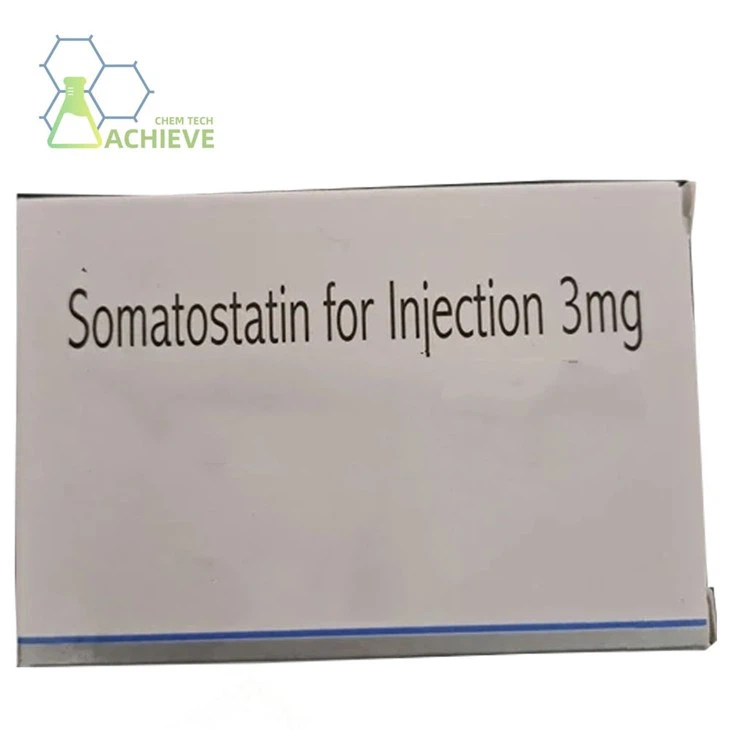

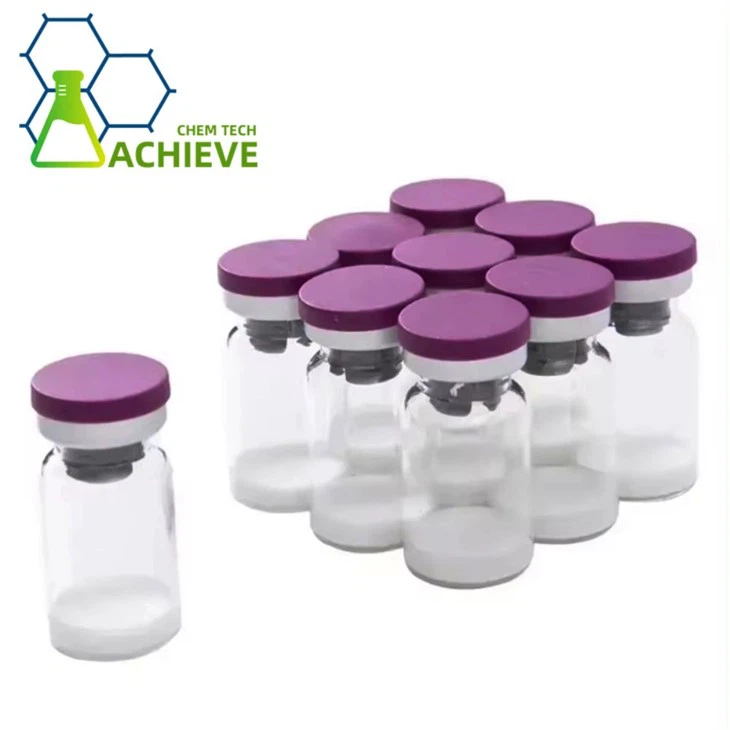
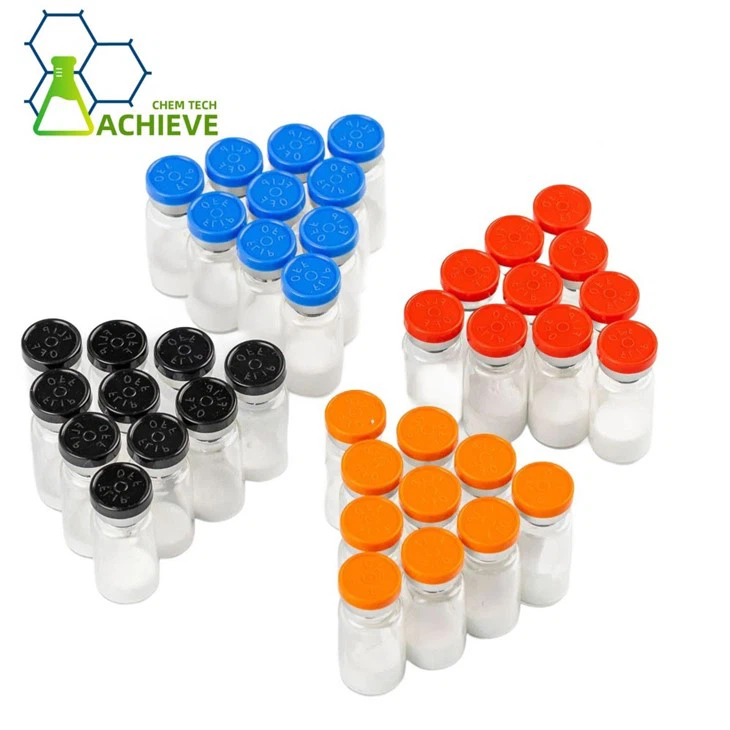
Shaanxi BLOOM Tech Co., Ltd. is one of the most experienced manufacturers and suppliers of somatostatin injection 3 mg in China. Welcome to wholesale bulk high quality somatostatin injection 3 mg for sale here from our factory. Good service and reasonable price are available.
Somatostatin injection 3 mg is a clinically applied artificially synthesized cyclic polypeptide preparation with a chemical structure highly consistent with natural human somatostatin. Its core active ingredient is synthetic somatostatin acetate, which possesses definitive chemical parameters including CAS number 51110-01-9, molecular formula C₇₆H₁₀₄N₁₈O₁₉S₂, and a molecular weight of 1638.89 Da. In terms of physical properties, the raw material presents as white or off-white freeze-dried blocks or fine powder, with excellent solubility in conventional clinical solvents.


Somatostatin COA
 |
||
| Certificate of Analysis | ||
| Compound name | Somatostatin | |
| Grade | Pharmaceutical grade | |
| CAS No. | 51110-01-1 | |
| Quantity | 10g | |
| Packaging standard | PE bag+Al foil bag | |
| Manufacturer | Shaanxi BLOOM TECH Co., Ltd | |
| Lot No. | 202601090056 | |
| MFG | Jan 9th 2026 | |
| EXP | Jan 8th 2029 | |
| Structure | 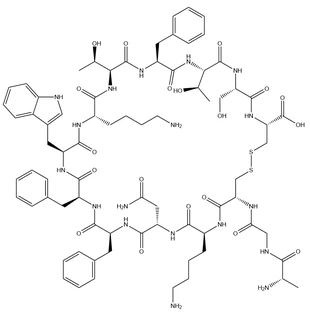 |
|
| Item | Enterprise standard | Analysis result |
| Appearance | White or almost white powder | Conformed |
| Water content | ≤5.0% | 0.48% |
| Loss on drying | ≤1.0% | 0.34% |
| Heavy Metals | Pb≤0.5ppm | N.D. |
| As≤0.5ppm | N.D. | |
| Hg≤0.5ppm | N.D. | |
| Cd≤0.5ppm | N.D. | |
| Purity (HPLC) | ≥99.0% | 99.90% |
| Single impurity | <0.8% | 0.56% |
| Total microbial count | ≤750cfu/g | 170 |
| E. Coli | ≤2MPN/g | N.D. |
| Salmonella | N.D. | N.D. |
| Ethanol (by GC) | ≤5000ppm | 400ppm |
| Storage | Store in a sealed, dark, and dry place below -20°C | |
|
|
||
|
|
||


| Chemical Formula: | C76H104N18O19S2 |
| Exact Mass: | 1636.72 |
| Molecular Weight: | 1637.90 |
| m/z: | 1636.72 (100.0%),1637.72 (82.2%),1638.72 (33.3%),1638.71(9.0%),1639.73 (8.1%),1639.72 (7.4%),1637.71 (6.6%),1638.72 (5.2%),1638.72 (3.9%),1639.72 (3.2%),1640.72 (3.0%),1639.72 (2.2%),1640.73 (1.8%),1637.72(1.6%),1638.72 (1.3%),1640.73(1.3%),1637.72(1.2%) |
| Elemental Analysis: | C,55.73; H,6.40; N,15.39; O,18.56; S,3.91 |
As a multifunctional regulatory preparation, it exerts extensive and precise clinical therapeutic effects by potently inhibiting the abnormal secretion of multiple human hormones and adjusting visceral hemodynamic parameters. In clinical operation, due to its freeze-dried dosage form characteristics.The preparation cannot be directly administered and needs to be fully dissolved.
Diluted with sterile physiological saline or 5% glucose solution to prepare a uniform and stable injection solution before intravenous administration, ensuring safe and effective clinical medication.Somatostatin injection 3 mg is an endogenous regulatory peptide widely present in tissues such as the central nervous system, hypothalamus, pancreas, and gastrointestinal mucosa. Its natural forms are mainly 14 peptide (SS-14) and 28 peptide (SS-28).
The injectable somatostatin commonly used in clinical practice is a synthetic 14 peptide with a structure identical to endogenous somatostatin. It has the characteristics of short half-life, wide range of effects, and high safety, and mainly exerts pharmacological effects through continuous intravenous infusion.

Core pharmacological effects

Widely inhibiting the release of endocrine hormones such as somatostatin can suppress the secretion of growth hormone (GH) and thyroid stimulating hormone (TSH) in the anterior pituitary gland; Inhibit the secretion of glucagon by pancreatic alpha cells and insulin by pancreatic beta cells; Inhibit the secretion of various hormones such as gastrin by gastrointestinal G cells, 5-hydroxytryptamine, and vasoactive intestinal peptide (VIP) by intestinal chromaffin cells. Through multi-target inhibition, achieve overall regulation of the body's metabolism, digestion, and circulatory systems.
Strong inhibition of exocrine secretion of digestive glands significantly suppresses the secretion of gastric acid, pepsin, pancreatic juice (water, bicarbonate, digestive enzymes), bile, and small intestinal fluid, reduces the total amount of digestive fluid, lowers the pressure inside the digestive tract, and alleviates mucosal irritation and self digestion damage.
Regulating visceral hemodynamics to selectively constrict visceral blood vessels, reduce portal vein pressure, and decrease portal vein blood flow, with minimal impact on systemic hemodynamics, is an important mechanism for treating portal hypertension related bleeding.


Inhibiting gastrointestinal peristalsis and protecting mucosal barriers slows down gastrointestinal transport speed, reducing mechanical stimulation of bleeding wounds or postoperative anastomotic sites caused by gastrointestinal movement; Inhibit the release of inflammatory factors, alleviate tissue edema, maintain intestinal mucosal barrier function, and reduce bacterial translocation.Regulating cell proliferation and immune function has inhibitory effects on proliferation and induces apoptosis in various endocrine and gastrointestinal tumor cells. At the same time, it can moderately regulate immune inflammatory responses.
Pharmacokinetic characteristics
After intravenous administration, the drug undergoes rapid distribution throughout the body. Its plasma half-life is merely 1.1 to 3 minutes, a short duration that necessitates continuous intravenous infusion to sustain steady and effective blood drug levels during treatment. The substance is primarily metabolized by the liver and kidneys, and the resulting metabolites are eventually eliminated from the body via urinary excretion. Since it does not tend to accumulate noticeably in human tissues and organs, this agent is well suited for short-term medication in critically ill patients.

Application of somatostatin in severe upper gastrointestinal bleeding

Its mechanism of action includes: constriction of visceral blood vessels, reduction of portal vein blood flow, and reduction of pressure in varicose veins; Inhibit gastric acid and gastrin secretion, increase gastric pH, and stabilize blood clots; Reduce the risk of rebleeding. Continuous intravenous infusion after loading dose is commonly used in clinical practice, and combined with endoscopic treatment, it can significantly improve the success rate of hemostasis.
Severe esophageal and gastric variceal bleeding triggered by portal hypertension in decompensated cirrhosis is a critical clinical emergency with an extremely high short-term mortality rate. Single-dose somatostatin Injection 3 mg is a classic first-line hemostatic drug jointly recommended by authoritative domestic and international clinical guidelines, which can rapidly lower elevated portal vein pressure and effectively control life-threatening acute bleeding.

nonvariceal upper gastrointestinal bleeding

Major bleeding caused by gastric ulcers, duodenal ulcers, acute erosive hemorrhagic gastritis, stress ulcers, etc. Somatostatin inhibits gastric acid secretion, reduces gastric mucosal blood flow, alleviates wound bleeding, and assists proton pump inhibitors (PPIs) and endoscopic hemostasis.
It is particularly suitable for high-risk rebleeding patients and critically ill cases that cannot be immediately treated with endoscopy.
The core application of somatostatin in pancreatic diseases
For mild acute pancreatitis patients, it can rapidly alleviate painful clinical symptoms and obviously shorten the overall course of the disease; For life-threatening severe acute pancreatitis, it can significantly lower the incidence of fatal multiple organ failure, reduce severe complications such as abdominal hypertension, pancreatic fistula, and secondary infection. Besides, this agent is widely recommended as a core basic treatment drug in authoritative domestic and foreign clinical pancreatitis guidelines.

Prevention of perioperative complications in pancreatic surgery

The use of somatostatin during the perioperative period of pancreaticoduodenectomy, distal pancreatectomy, and pancreatic trauma repair can significantly reduce the incidence of postoperative complications such as pancreatic fistula, abdominal bleeding, infection, and acute pancreatitis, shorten hospitalization time, and improve surgical safety.
For postoperative or traumatic pancreatic fistula, somatostatin can reduce pancreatic secretion, decrease fistula fluid flow, promote fistula closure.
And is often used in combination with drainage and nutritional support.

Application of somatostatin in digestive fistula and intestinal obstruction

Adjuvant treatment for pancreatic fistula, biliary fistula, and intestinal fistula
Somatostatin inhibits exocrine secretion from the pancreas, biliary tract, and intestine, reduces the amount of fluid discharged from fistulas, decreases the corrosion of surrounding tissues by digestive enzymes, alleviates local inflammation, and promotes fistula closure. Clinically, it is commonly used in the conservative treatment stage, combined with fasting, gastrointestinal decompression, parenteral nutrition, and anti infective therapy.
Acute adhesive intestinal obstruction
For patients diagnosed with simple and incomplete adhesive intestinal obstruction, somatostatin exerts multiple therapeutic effects. It can significantly suppress excessive gastrointestinal secretion, mitigate intestinal wall edema, and effectively decrease pressure within the intestinal lumen. These pharmacological actions work together to relieve typical symptoms including abdominal distension and abdominal pain, accelerate the recovery of normal intestinal peristalsis and digestive function. Ultimately, this treatment helps improve clinical outcomes and greatly reduces the likelihood that patients will require subsequent surgical intervention.

Application of somatostatin in endocrine and metabolic diseases

Diabetes ketoacidosis (DKA)
The core pathological mechanism of DKA is insulin deficiency and excessive activation of glucocorticoids. Somatostatin injection 3 mg can inhibit the secretion of glucocorticoids such as glucagon, growth hormone, and cortisol, reduce hepatic glucose output and fat breakdown, lower ketone body production, assist insulin in rapidly correcting ketosis, stabilizing blood sugar, reducing insulin dosage, and lowering the risk of hypoglycemia.
Acromegaly
Somatostatin is capable of potently suppressing the excessive abnormal secretion of growth hormone secreted from the anterior pituitary gland. Given this unique pharmacological property, it is clinically widely applied to achieve stable short-term symptom control, serve as reliable preoperative adjuvant preparation, or relieve persistent clinical discomforts in acromegaly patients who are not eligible for radical surgical treatment. Meanwhile, long-acting somatostatin analogues, represented by octreotide and lanreotide, are extensively adopted in daily routine clinical settings to deliver steady sustained therapeutic effects for standardized long-term chronic disease management.

Acute pancreatitis

The core underlying pathological mechanism of acute pancreatitis is premature abnormal activation of pancreatic enzymes leading to severe self digestion of pancreatic tissue and widespread systemic inflammatory response. Somatostatin can effectively suppress excessive pancreatic exocrine secretion, cut down pancreatic enzyme synthesis and abnormal release, block the vicious cascade reaction of pancreatic enzyme activation, mitigate pancreatic edema, tissue necrosis, and excessive systemic inflammatory response.
Reference information source
American Diabetes Association (ADA), Standards of Medical Care in Diabetes, 2024
Endocrinology Branch of Chinese Medical Association, Guidelines for Diagnosis and Treatment of Type 1 diabetes in China (2023)
Endocrine Society, Clinical Practice Guideline for Acromegaly, 2021
Editorial Board of the Chinese Journal of Endocrinology and Metabolism, "Expert Consensus on the Diagnosis and Treatment of Acromegaly in China (2020)"
Frequently Asked Questions
What is somatostatin secreted by?
+
-
Somatostatin is endogenously produced and secreted by multiple types of cells throughout the human body, including neurons in the hypothalamus, pancreatic delta cells, and D cells distributed across the gastrointestinal tract. A variety of factors can trigger its release within the gastrointestinal system. Specifically, meals rich in fat and glucose, low gastric pH levels, as well as neural regulatory signals, all serve as effective stimulants to prompt the secretion of gastrointestinal somatostatin.
What happens if somatostatin is high?
+
-
Too much somatostatin results in extreme reduction in the secretion of many endocrine hormones. An example of this is suppression of insulin secretion from the pancreas leading to raised blood glucose levels (diabetes).
What is the role of somatostatin in the gut?
+
-
Once somatostatin (SST) binds to its specific receptors that are widely distributed along the entire gastrointestinal tract, it takes part in modulating a broad spectrum of key physiological activities. It plays a regulatory role in intestinal peristalsis, controls the secretion of gastric acid and multiple gastrointestinal hormones. Beyond these digestive functions, it also works to preserve the structural integrity of the intestinal mucosa and strengthen the protective capabilities of the intestinal barrier, maintaining the normal physiological state of the gastrointestinal system.
What is the role of the somatostatin?
+
-
Somatostatin produces predominantly neuroendocrine inhibitory effects across multiple systems. It is known to inhibit GI, endocrine, exocrine, pancreatic, and pituitary secretions, as well as modify neurotransmission and memory formation in the CNS.
What diseases are linked to somatostatin?
+
-
Somatostatinomas belong to a group of uncommon neuroendocrine neoplasms, which most frequently arise in the pancreas and duodenum. A defining feature of these tumors is the overproduction and abnormal release of somatostatin. As a powerful regulatory hormone, somatostatin exerts broad inhibitory effects on both endocrine and exocrine secretory activities throughout the body. This abnormal hormonal suppression subsequently gives rise to a classic clinical triad, consisting of diabetes mellitus, steatorrhea and cholelithiasis, which are the hallmark manifestations of this disease.
Hot Tags: somatostatin injection 3 mg, suppliers, manufacturers, factory, wholesale, buy, price, bulk, for sale