




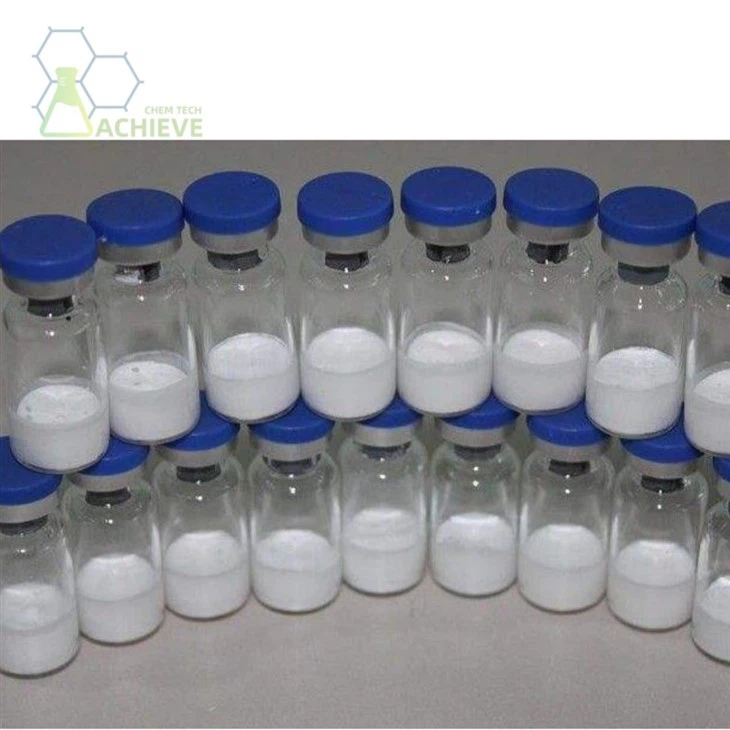

BPC 157 Cream is formulated into an external dosage form of this polypeptide. Through local administration, it directly acts on wounds or inflammatory sites to accelerate healing and alleviate inflammatory responses. As a new type of topical dosage form, it significantly accelerates the healing of burns, trauma, diabetic ulcers and inflammatory bowel disease through multiple mechanisms such as promoting angiogenesis, inhibiting inflammatory responses, accelerating cell proliferation and antioxidation and antiapoptosis. In animal experiments, this product demonstrated good efficacy and safety, suggesting that it has broad prospects for clinical application. Future research should further verify its efficacy and safety in humans, and optimize its formulation and administration methods, providing new options for the treatment of burns, trauma, diabetic ulcers and inflammatory bowel disease.
It also modulates dopamine and serotonin pathways. Following intraperitoneal administration in rat models, BPC-157 increased serotonin synthesis in the substantia nigra reticulate and medial anterior olfactory nucleus; decreased serotonin synthesis in the dorsal thalamus, hippocampus, lateral geniculate body and hypothalamu; and blocked amphetamine-induced heightened startle response and stereotypy.
|
|
|


BPC-157 Powder COA

Key steps in the manufacturing process
Raw Material Preparation and Quality Control
BPC 157 polypeptide raw material
Chemical properties and purity requirements: It is a synthetic polypeptide composed of 15 amino acids with a molecular weight of 1419.56. During the manufacturing process, it is necessary to ensure that the purity of raw materials is ≥95% to guarantee the effectiveness and safety of the product.
Storage conditions: The raw materials should be stored away from light in an inert atmosphere at -20°C to prevent moisture absorption and chemical degradation.
Selection of matrix and excipients
Base type: The base of a cream usually includes emulsifiers, moisturizers and thickeners. When choosing the substrate, its solubility for BPC 157, stability and skin permeability need to be considered.
Excipient quality: All excipients must comply with pharmacopoeia standards to ensure they are free of impurities and microbial contamination.
Peptide Synthesis and Purification
Solid-phase peptide synthesis method
Synthesis process: The synthesis of BPC 157 usually adopts the solid-phase peptide synthesis method, and the polypeptide chain is constructed by gradually adding amino acid residues. During the synthesis process, the reaction conditions such as temperature, pH value and reagent concentration need to be precisely controlled.
Selection of condensing agents: Commonly used condensing agents include DIC/HOBt, HBTU/HOBt, etc. Choosing the appropriate condensing agent can enhance reaction efficiency and product purity.
Purification and Detection
High performance liquid chromatography (HPLC) purification: The synthesized polypeptides need to be purified by HPLC to remove impurities and unreacted raw materials, ensuring that the purity meets the pharmaceutic-grade standard.
Quality inspection: The purified polypeptides need to undergo mass spectrometry analysis, amino acid sequence determination and purity testing to ensure they meet the quality requirements.
Cream Preparation and Process Control
Emulsification and homogenization
Emulsification process: The purified BPC 157 cream is mixed with the matrix and emulsified through an emulsification pot. During the emulsification process, the stirring speed and temperature need to be controlled to ensure the uniformity of the cream.
Homogenization treatment: The emulsified cream needs to be homogenized through a homogenizer to further refine the milk droplets and enhance the stability and comfort of use of the cream.
pH value and viscosity adjustment
pH value adjustment: The pH value of the cream needs to be adjusted to an appropriate range (usually 5.5-7.0) to conform to the physiological environment of the skin and reduce irritation.
Viscosity adjustment: Adjust the viscosity of the cream by adding thickeners to ensure it is easy to apply and does not flow easily.
Aseptic Operation and Packaging

Aseptic operation
Clean workshop: The preparation of cream must be carried out in a clean workshop that meets GMP standards, and the air cleanliness should reach Class 100 or Class 1000 standards.
Aseptic protection: Operators must wear aseptic protective clothing and strictly follow aseptic operation procedures to prevent microbial contamination.
Packaging and Storage
Packaging materials: Creams are usually packaged in light-proof and sealed materials, such as brown glass bottles or aluminum-plastic composite tubes, to prevent the degradation of polypeptides by light and oxygen.
Storage conditions: The cream should be stored at 2-8°C and avoid repeated freezing and thawing. Cold chain logistics should be used during transportation to ensure that the products remain stable in a low-temperature environment.

Quality Inspection and Stability Test

Quality inspection
Physical property testing: including appearance, viscosity, pH value, etc., to ensure that the cream meets the quality standards.
Chemical property testing: The content and purity of polypeptides are detected by methods such as HPLC to ensure compliance with regulations.
Stability test
Accelerated test: Conduct an accelerated test under high temperature and high humidity conditions to evaluate the stability of the cream.
Long-term testing: Conduct long-term tests under recommended storage conditions to observe changes in the physical and chemical properties of the cream and determine its validity period.

Research and Development and Optimization
Formulation optimization
Skin permeability research: Evaluate the skin permeability of the cream through in vitro penetration tests, optimize the matrix formula, and improve the bioavailability of polypeptides.
Novel delivery systems: Explore novel delivery systems such as liposomes and nanoparticles to enhance the retention time of polypeptides in the skin and improve their therapeutic effects.
Preclinical research
Pharmacodynamic research: Evaluating the efficacy of creams in animal models, such as promoting wound healing and anti-inflammatory effects.
Safety evaluation: The safety of the cream is assessed through acute toxicity tests, long-term toxicity tests, etc., to ensure that it has no toxic or side effects.
Sterility test and validity verification
As an external preparation containing active polypeptide ingredients, the sterility test and expiration date verification of BPC 157 Cream are the core links to ensure product quality and safety. The following analysis is conducted from three aspects: sterility testing methods, expiration date verification processes, and key control points.
Sterility Testing methods
Membrane filtration method
This method is applicable to large-volume liquid samples. Microorganisms are retained through a sterile filter membrane (pore size ≤0.45μm), and the filter membrane is then transferred to a culture medium for cultivation.
Key points of operation:
The filter membrane needs to be sterilized by radiation and its integrity verified to ensure that the retention rate is ≥99.9995%.
The test solution should be transferred with a sterile syringe to avoid external contamination.
The flushing volume of the filter membrane should be optimized according to the characteristics of the sample. The total flushing volume should not be too large to prevent microbial damage.
Cultivation conditions:
Aerobic and anaerobic bacteria media (such as thioglycolate fluid media) were incubated at 30-35℃ for 14 days.
Fungal culture media (such as modified Martens medium) were incubated at 23-28℃ for 14 days.
Result determination:
The negative control should grow aseptically, while the positive control should become turbid within 48 to 72 hours.
If the test tube is clear or confirmed to have aseptic growth, it is judged as qualified.
Direct vaccination method
It is suitable for small or small samples and can be directly inoculated into the culture medium for cultivation.
Limitations: It has relatively low sensitivity and is not suitable for samples with strong antibacterial properties.
Improvement measures: Neutralizing agents can be combined to eliminate the interference of antibacterial components, or membrane filtration can be adopted to enhance sensitivity.
Positive control and negative control
Positive control: Select the control strain based on the characteristics of the test sample (such as Staphylococcus aureus, Escherichia coli, etc.), with an inoculation amount of less than 100CFU. After culture, it should grow well.
Negative control: The diluent and the rinsing solution should be operated in the same way, and no bacterial growth should occur.
Validity Period Verification Process

Accelerated test
Condition: 40℃±2℃/75%RH±5%RH for 6 consecutive months.
Test items: appearance, content, related substances, microbial limit and sterility.
Data analysis: Calculate the expiration date under normal storage conditions through chemical kinetics models (such as the Q10 rule).

Long-term experiment
Condition: 25℃±2℃/60%RH±5%RH for 24 consecutive months.
Detection frequency: once every 3 months in the initial stage and once every 6 months in the later stage.
Termination criteria: If the key indicators (such as content decrease >10%, increase of related substances >1.0%) exceed the limit values, the test shall be terminated and the expiration date determined.

Real-time stability test
Conditions: Simulate actual storage conditions (such as in a cool place ≤20℃).
Objective: To verify the reliability of the accelerated and long-term test results and provide a basis for the expiration date of product labels.
Critical Control Points
Aseptic testing quality control
Environmental monitoring: The detection environment must meet the C-level cleanliness standard, with local A-level unidirectional air flow areas. Regularly monitor the number of settled bacteria and suspended particles.
Personnel training: The testing personnel must pass the aseptic operation assessment to avoid human contamination.
Equipment verification: Incubators, filters and other equipment need to be calibrated and verified regularly to ensure stable performance.
Challenges and Responses to Expiration Date Validation
Peptide degradation: The cream is prone to degradation under high temperature and high humidity conditions. It is necessary to optimize the formula (such as adding antioxidants) or packaging materials (such as oxygen barrier bottles) to improve stability.
Microbial contamination: The microbial limit should be continuously monitored during the shelf life to ensure the product is sterile.
Data integrity: Electronic recording systems (such as LIMS) are adopted to track the detection data in real time to ensure traceability.
Regulatory compliance
Domestic standards: Follow the "Chinese Pharmacopoeia 2020 Edition, Part 4, 1101 Sterility Test Method" and the "Guidelines for Drug Stability Testing".
International standards: Refer to ISO 11737-2, USP <71>, etc., to ensure that the products meet the requirements of global market access.
Unfortunately, there have been limited in vivo clinical trials conducted to demonstrate the effectiveness of BPC-157 usage in humans. To our knowledge, there have only been three published studies. In a 2021 retrospective study, Lee and Padgett compared the effectiveness of knee injections using BPC- 157 alone to knee injections using a combination of BPC-157 and thymosin-beta-4 (TB4), which is another peptide shown to have anti-inflammatory properties. Sixteen patients were contacted to review their knee pain symptom improvements 6 months to 1 year after receiving the injections. In total, 14 of the 16 patients had significant pain relief when given an intraarticular knee injection with BPC-157 or BPC-157 plus TB4. While this study had many limitations (e.g. small sample size, lack of control group, lack of common diagnosis), it did demonstrate improved pain in 87.5% of patients who received injections containing BPC-157. In another pilot study of 12 individuals, conducted by Lee et al. (2024), intravesicular (bladder) injections of BPC-157 were reported to result in 80–100% resolution of moderate to severe interstitial cystitis at 6 weeks post- treatment. Notably, all patients had previously been treated with pentosan polysulfate, which is currently the only FDA approved treatment for interstitial cystitis, and had not responded.
Frequently Asked Questions
Does BPC-157 work immediately?
+
-
BPC-157 timelines depend on your injury, overall health, and protocol quality. Most patients see initial improvements within 3-4 weeks, with continued progress over months. Key takeaways: Soft tissue injuries typically respond in 2-6 weeks.
Is BPC-157 hard on kidneys?
+
-
Current animal studies suggest BPC-157 is protective for kidneys, showing it can improve function and mitigate damage from injuries like ischemia-reperfusion, but human data is limited, so caution is advised, especially for those with pre-existing kidney issues, and professional medical advice is essential before use. It's metabolized and cleared by the kidneys, and while preclinical data shows promise for kidney recovery, comprehensive human safety isn't established.
Are there negative side effects of BPC-157?
+
-
BPC-157 shows promise in animal studies with few serious side effects, but human data is limited, with potential risks including injection site issues (pain, swelling, infection) and theoretical concerns like pathological angiogenesis (tumor growth) or hormonal imbalance. The biggest risk stems from its unregulated status; products often lack quality control, raising fears of contamination, incorrect dosing, or dangerous ingredients, with the FDA warning against compounding it due to insufficient safety data.
Hot Tags: bpc 157 cream, suppliers, manufacturers, factory, wholesale, buy, price, bulk, for sale