




Shaanxi BLOOM Tech Co., Ltd. is one of the most experienced manufacturers and suppliers of lidocaine prilocaine ointment in China. Welcome to wholesale bulk high quality lidocaine prilocaine ointment for sale here from our factory. Good service and reasonable price are available.
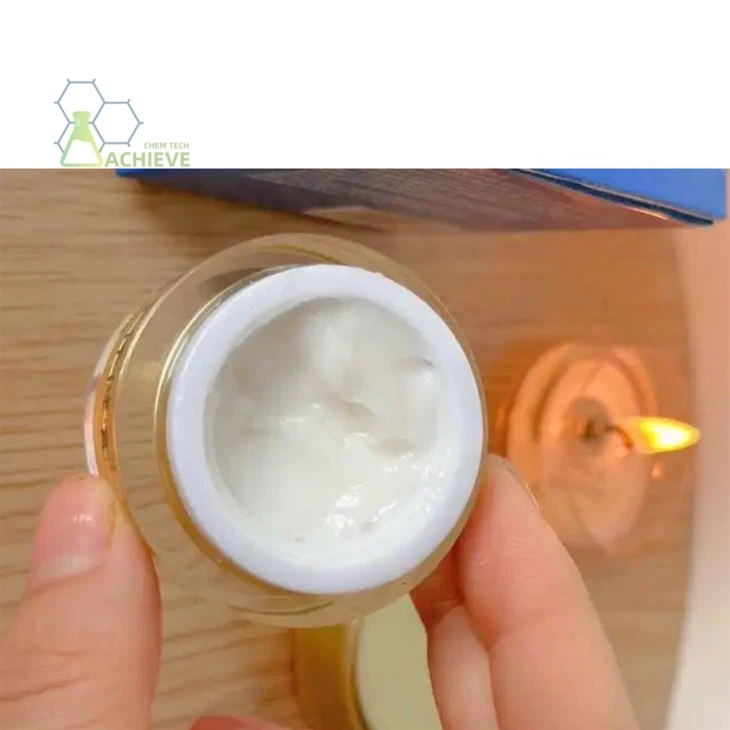
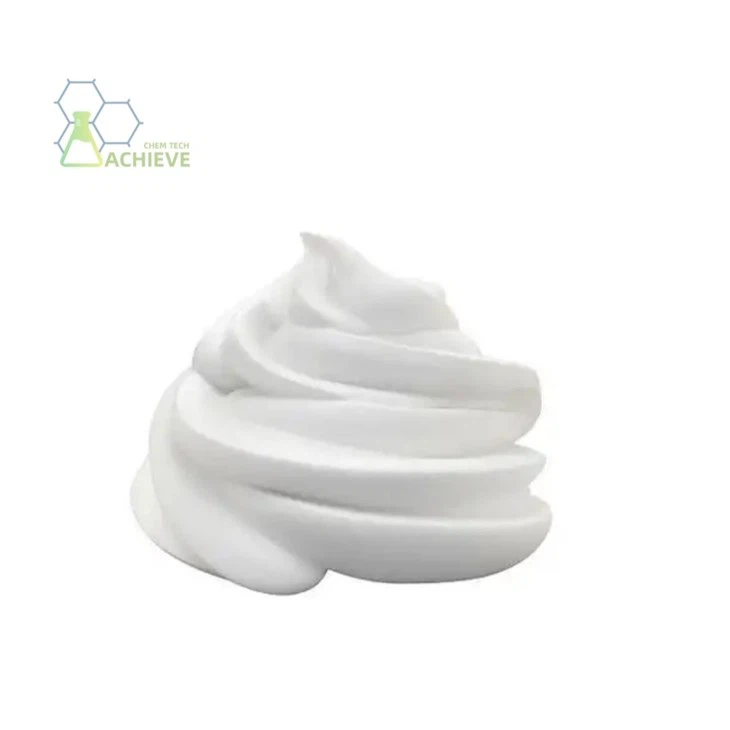
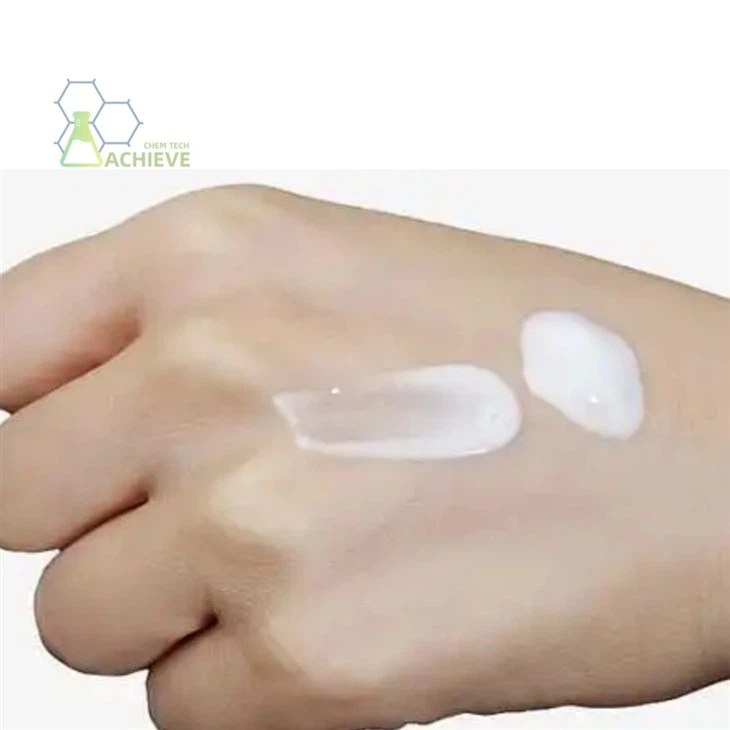
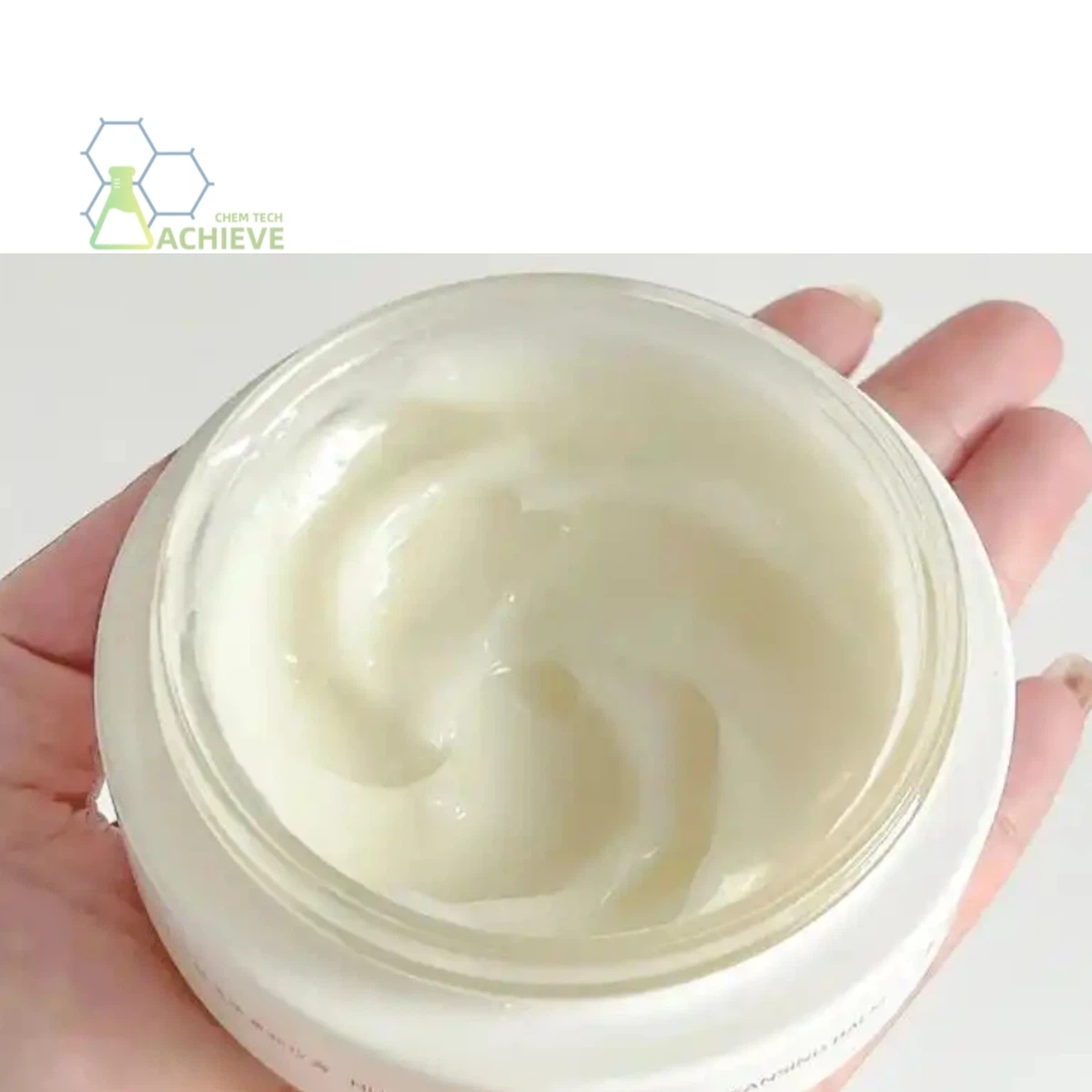
Lidocaine prilocaine ointment, as a compound local anesthetic preparation, plays an important role in clinical application. This ointment is generally in the form of a white cream, which is easy to apply on the surface of the skin and can evenly cover the area that needs anesthesia, allowing the drug to be better absorbed by the skin and achieving local anesthesia. In the medical field, local anesthetics play a crucial role in reducing patient pain, improving the feasibility of medical procedures, and enhancing patient comfort. As a common compound local anesthetic preparation, prilocane lidocaine ointment combines the advantages of prilocane and lidocaine. Through the synergistic effect of prilocane and lidocaine, it can effectively reduce pain during superficial medical procedures, medical beauty, and other processes, improve patient comfort and the safety of medical operations. Widely used in various medical scenarios.

Propavacaine and lidocaine ointment are usually compound preparations, with the main ingredients being lidocaine and lidocaine. The content of the two ingredients may vary slightly in different products, for example, lidocaine 25mg and prilocaine 7.5mg are contained in 1 gram of lidocaine dipropivacaine cream, and there are also products with a 1:1 ratio of prilocane and lidocaine, which means each gram of cream contains 25mg. These two components are both amide type local anesthetcs, which synergistically exert local anesthetc effets through different mechanisms of action.
Our product



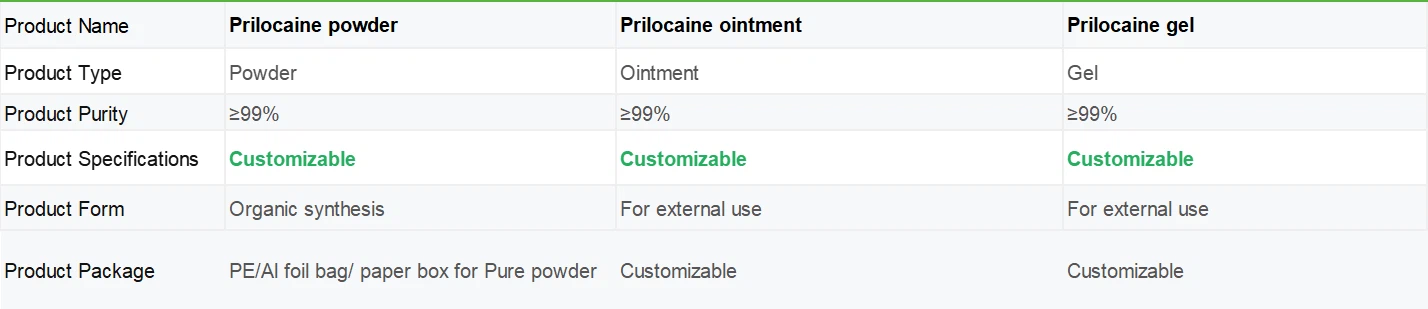
Additional information of chemical compound:
|
|
|

Propionacaine+. COA


(1) Mechanism of action
Lidocaine prilocaine ointment belongs to the amide class of local anesthetics, and its local anesthetc effect is mainly achieved by inhibiting sodium ion channels on the nerve cell membrane. The transmission of nerve impulses depends on the opening and closing of ion channels on the nerve cell membrane, and sodium ion channels play a crucial role in the generation and transmission of nerve impulses. When prilocane binds to a specific site of the sodium ion channel, it prevents the influx of sodium ions, causing the nerve cell membrane to be in a hyperpolarized state, thereby hindering the generation and transmission of nerve impulses. This blocking effect is reversible. When the drug concentration decreases or is metabolized, the function of sodium ion channels will gradually recover, and the transmission of nerve impulses will also return to normal.
(2) Effective time and duration
The onset time of prilocane is relatively fast, taking about 10 minutes to exert its anesthetic effect. Its duration of action is similar to lidocaine, ranging from 2.5 to 3 hours, but there are also claims that its duration of action is longer, up to 6-8 hours, which may be related to different usage methods, dosages, and individual differences. For example, in local infiltration anesthesia, prilocane can quickly inhibit the conduction of sensory nerve fibers in local tissues, thereby providing good anesthesia conditions for surgery or operation.


(3) Scope of application
Propionine can be used for various local anesthesia methods, including infiltration anesthesia, nerve block, epidural block, etc. It can also be used for intravenous local anesthesia. In dental treatment, it is commonly used for surface anesthesia and local infiltration anesthesia. For example, when performing procedures such as tooth extraction and pulp treatment, the use of prilocane can effectively alleviate patients' pain. In the examination and treatment of the urethra, rectum and other parts, prilocane can also play a local anesthetc role, allowing patients to complete the examination or operation in a relatively painless state.
(1) Principles of analgesia
Propionacaine can selectively inhibit sensory nerve fiber conduction, thereby producing analgesic effets. The sensory nerve fibers are responsible for transmitting pain signals from various parts of the body to the central nervous system, and prilocane interferes with this transmission process, reducing or eliminating the patient's perception of pain. This analgesic effect is not limited to immediate analgesia during local anesthesia, but can also alleviate pain symptoms caused by surgery to a certain extent.
(2) Clinical application
During the surgical process, prilocane is often used in combination with other anesthetics to enhance the analgesic effect. For example, in epidural anesthesia, prilocane can block nerve conduction, reduce the transmission of pain stimuli from the surgical site to the central nervous system, and thus alleviate the patient's pain during the surgical process. In addition, in some superficial skin surgeries such as skin biopsy, laser therapy, etc., the use of prilocane for surface anesthesia or local infiltration anesthesia can effectively alleviate patients' pain, improve patient tolerance, and increase the success rate of surgery.


(3) Comparison with other analgesic drugs
Compared with some nonsteroidal anti-inflammatory drugs or opioid analgesics, the analgesic effect of prilocane has its unique features. Non steroidal anti-inflammatory drugs mainly exert analgesic effets by inhibiting the activity of cyclooxygenase and reducing the synthesis of prostaglandins, but their efficacy in treating neuropathic pain is limited. Although opioid analgesics have strong analgesic effets, they also have adverse reactions such as addiction and respiratory depression. As a local anesthetic, prilocane directly acts on the nerve conduction pathway, producing analgesic effets locally with relatively few systemic adverse reactions, making it particularly suitable for the treatment of local pain.
(1) Mechanism of nerve block
Propavacaine interferes with the synthesis or release of neurotransmitters, affecting the transmission of nerve impulses and achieving long-term nerve blockade. Neurotransmitters play a crucial role in the transmission of information between neurons, and prilocane can act on the relevant links of neurotransmitters to block the normal transmission of nerve impulses, causing the sensory and motor functions of the blocked nerve innervated areas to temporarily disappear.
(3) Advantages and limitations
The advantage of using prilocane for nerve block is its precise anesthetc effect, relatively fast onset, and minimal impact on the circulatory system. However, it also has certain limitations, such as the operation of nerve block requiring a certain level of technical expertise and experience. Improper operation may lead to complications such as nerve damage and hematoma. In addition, the effectiveness of nerve block may be influenced by individual differences, anatomical variations, and other factors.


(2) Clinical application scenarios
In surgical procedures, prilocane is commonly used for nerve block anesthesia, such as brachial plexus block, sciatic nerve block, etc. By blocking specific nerves, good anesthesia effets can be achieved at the surgical site, reducing the use of general anesthesia drugs and lowering the risk of general anesthesia. At the same time, nerve block anesthesia can provide a longer postoperative analgesic effect, which is beneficial for the patient's postoperative recovery. For example, during lower limb surgery, sciatic nerve block anesthesia can suppress the patient's lower limb sensation and motor function during and after the surgery, reducing pain.

Medical beauty anesthesia:
In the field of medical beauty, such as eyebrow tattooing and tattooing, patients have a lower tolerance for pain. Lidocaine prilocaine ointment can be applied to the corresponding area before operation to provide surface pain relief, allowing patients to complete cosmetic procedures in a relatively painless state and improving patient satisfaction.
Anesthesia for genital mucosal surgery:
Patients are more sensitive to pain during genital mucosal surgery, such as the removal of warts. Propacacaine lidocaine ointment can be used for local anesthesia in this area, reducing pain during surgery and improving patient comfort. Meanwhile, due to its relatively low irritation to the mucosa, it reduces the risk of surgical complications to a certain extent.
Other applications:
General anesthesia tracheal intubation assistance: During general anesthesia tracheal intubation, applying lidocaine and prilocane ointment to the surface of the tracheal tube can reduce the stimulation of the throat during intubation and extubation, and lower the patient's discomfort and incidence of complications.
Gastric tube insertion assistance: Applying ointment to the surface of the gastric tube during insertion can reduce irritation to the throat and alleviate the patient's throat reaction, making the insertion process smoother.


Interactions with other drugs
When the prilocane gel is combined with ethanol or other central nervous system inhibitors, the central inhibitory effect may be enhanced. This may lead to serious adverse reactions such as drowsiness and respiratory depression in patients. Therefore, alcohol consumption or other central nervous system inhibitory drugs should be avoided during the use of prilocane gel.
When used in combination with all antihypertensive drugs, it is prone to orthostatic hypotension. This is because prilocane may affect the vasomotor function of blood vessels, overlapping with the effets of antihypertensive drugs, leading to rapid or low blood pressure drops. When patients use both medications simultaneously, they should pay attention to monitoring changes in blood pressure and seek medical attention promptly if they experience any discomfort.
The combination of prilocane gel and levodopa is prohibited. The combination of the two may cause serious adverse reactions or affect the efficacy of the drug, but the specific mechanism of interaction is not yet clear. In clinical medication, the use of such drug combinations should be strictly avoided.
Partial combination of prilocane ointment products with lidocaine (such as compound lidocaine cream) can enhance anesthesia effets and be used in a wider range of skin areas. Lidocaine and prilocane are both amide based local anesthetcs that block the transmission of nerve impulses through different mechanisms. When used in combination, they can produce a synergistic effect, improve anesthesia efficacy, and reduce the dosage and adverse reactions of a single drug.
Amide local anesthetics (such as prilocane) can exacerbate myocardial depression. Therefore, when using Lidocaine prilocaine ointment, if patients also use other drugs that may affect cardiac function, such as beta blockers, calcium channel blockers, etc., their cardiac function should be closely monitored to avoid serious adverse reactions.
Hot Tags: lidocaine prilocaine ointment, suppliers, manufacturers, factory, wholesale, buy, price, bulk, for sale