


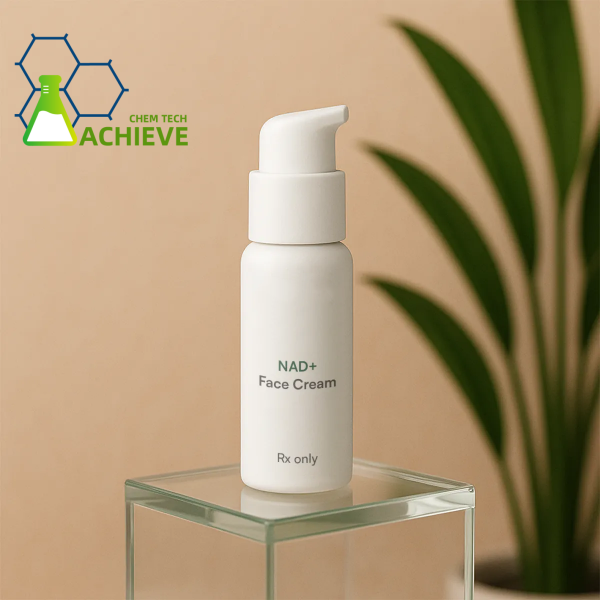
Shaanxi BLOOM Tech Co., Ltd. is one of the most experienced manufacturers and suppliers of nad+ cream in China. Welcome to wholesale bulk high quality nad+ cream for sale here from our factory. Good service and reasonable price are available.
NAD+ Cream has been widely recognized and welcomed by the market for its unique cellular-level anti-aging mechanism and remarkable results, as a new star in the field of anti-aging skincare, However, consumers need to be rational in choosing products and choose regular channels to buy them to avoid buying fake and shoddy products. Meanwhile, brands should also strengthen product research and development and innovation to improve the quality and safety of their products to meet the growing demand of consumers.
Our product form



|
|
|


NAD+ COA


NAD ⁺ Drug targets neuroprotection and cognitive function: a brain 'nutrient'
Nicotinamide adenine dinucleotide (NAD+ Cream) is a core coenzyme in the central nervous system, highly expressed in neurons, glial cells, and vascular endothelial cells. It runs through six key neurophysiological processes: energy metabolism, DNA repair, antioxidant, inflammation regulation, neuroplasticity, and blood-brain barrier maintenance. The brain, as the highest energy consuming organ in the human body, has no energy reserve for neurons and relies entirely on NAD ⁺ - mediated mitochondrial function to maintain survival and function; The level of NAD ⁺ significantly decreases with age and is a core driving factor for neuroaging, cognitive decline, and neurodegenerative diseases.
Distribution, metabolism, and age-related decline of NAD ⁺ in the central nervous system

Distribution characteristics within brain tissue: high concentration of neurons and strong regional specificity
NAD ⁺ exhibits cell specificity and regional differential distribution in the brain, with the highest concentration in the core functional area
Neurons: Neurons in the cortex, hippocampus, thalamus, and cerebellar granule layer have the highest NAD ⁺ content, especially in the presynaptic membrane and mitochondria, which directly support synaptic transmission and energy supply.
Vascular endothelial cells: Brain microvascular endothelial cells highly express NAMPT (NAD ⁺ synthesis rate limiting enzyme), which is the main source of NAD ⁺ in the blood-brain barrier (BBB) and regulates BBB permeability and substance transport.
Regional differences: The concentration of NAD ⁺ in the CA1-CA3 area of the hippocampus and the prefrontal cortex is significantly higher than in other brain regions, and is highly correlated with learning, memory, and executive function; The concentration in the brainstem and spinal cord is low, with a focus on basic nerve conduction.


NAD ⁺ metabolic pathway in brain tissue: salvage pathway dominant, neuronal glial cell synergy
NAD ⁺ in the brain cannot penetrate the blood-brain barrier and relies entirely on in situ synthesis, with remedial pathways accounting for over 95%. Neurons and glial cells form a metabolic synergy network:
Remedial synthesis pathway (core): Using nicotinamide (NAM) as a precursor, NMN is generated through NAMPT catalysis, and then converted to NAD ⁺ through NMNAT; Neurons highly express NAMPT, but their activity drops sharply during aging or injury, leading to NAD depletion.
De novo synthesis pathway (secondary): using tryptophan as raw material, synthesized in the liver and glial cells with extremely low efficiency, only activated in severe deficiency.
Degradation pathways: CD38, PARP, Sirtuins are the main consuming enzymes: PARP activation (DNA damage) can rapidly deplete NAD ⁺; CD38 increases with age and accelerates NAD ⁺ hydrolysis; Sirtuins consume NAD ⁺ to generate NAM and return to the remedial cycle.


Age dependent decline: a core marker of neural aging
After birth, the level of NAD ⁺ in the brain steadily decreases with age, accelerating after the age of 30, and at the age of 60 it is only 1/2 to 1/3 of that in youth. The hippocampus and cortex show the most significant decline, directly corresponding to the process of cognitive decline.
Downward mechanism:
Reduced NAMPT activity (main cause): During aging, the expression and activity of NAMPT in neurons significantly decrease, the remedial pathway is blocked, and NAD ⁺ synthesis is insufficient.
Overactivation of PARP: Aging is accompanied by the accumulation of DNA damage, and PARP continues to be activated, consuming a large amount of NAD ⁺.
Elevated CD38 expression: CD38 levels in elderly brain tissue are upregulated by 2-3 times, accelerating NAD ⁺ degradation.
Oxidative stress and inflammation: Aging related chronic neuroinflammation and ROS accumulation inhibit NAMPT activity, forming a vicious cycle.

The core molecular mechanism of NAD ⁺ neuroprotection: multi pathway collaborative protection of neurons

Energy Metabolism Support: Neuronal "Energy Engines" Maintain Survival and Function
Neurons are high energy consuming and lack energy reserves. The brain consumes 20% of the body's oxygen and energy, relying entirely on NAD ⁺ - mediated mitochondrial oxidative phosphorylation to generate ATP, which is the fundamental guarantee for the survival of neurons.
Glucose metabolism coupling: Neurons take up glucose, which undergoes glycolysis to produce pyruvate, which enters mitochondria and undergoes the tricarboxylic acid cycle to produce NADH; NADH transfers electrons through the electron transfer chain (ETC), driving a proton gradient and ultimately generating ATP -1 molecule of NADH generates 2.5 molecules of ATP, with NAD ⁺ levels directly determining neuronal productivity efficiency.
Synaptic energy supply: ATP is required for presynaptic membrane neurotransmitter release, postsynaptic membrane receptor activation, and ion channel transport; When NAD ⁺ is insufficient, synaptic transmission efficiency decreases, neurotransmitter synthesis decreases, leading to a decline in learning and memory abilities and delayed responses.
Mitochondrial function maintenance: NAD+ Cream activates SIRT3, deacetylates mitochondrial complexes I-III and ATP synthase, enhances ETC efficiency, reduces electron leakage and ROS generation; During aging, NAD ⁺ decreases, mitochondrial structure is disrupted, ATP production is insufficient, ROS bursts occur, leading to neuronal energy depletion and apoptosis.


DNA repair and genome stability: Neuronal "protective shield" against accumulated damage
Neuronal terminal differentiation and inability to divide, DNA damage cannot be repaired through cell division, relying on PARP enzyme mediated repair mechanism; NAD ⁺ is the only substrate of PARP, providing "fuel" for DNA repair and maintaining neuronal genome integrity.
DNA single strand break repair: Oxidative stress, radiation, and neurotoxic substances (such as A β) cause DNA single strand breaks, and PARP is rapidly activated, consuming NAD ⁺ to generate poly ADP ribose (PAR).
DNA double strand break repair: PARP collaborates with BRCA1/2 to repair double strand breaks. When NAD ⁺ is insufficient, repair fails, causing gene mutations, chromosomal abnormalities, and accelerating neuronal aging and death.
Telomere protection: NAD ⁺ activates SIRT1/SIRT6, inhibits telomerase reverse transcriptase (TERT) degradation, and maintains telomere length; During aging, NAD ⁺ decreases, telomeres shorten rapidly, and neurons enter the aging/apoptosis program.
RNA splicing error correction (new mechanism): Research in 2025 has confirmed that NAD ⁺ corrects RNA splicing errors by regulating the EVA1C protein, reversing neuronal damage and memory loss caused by tau protein aggregation;


Anti oxidative stress: Clearing free radicals and blocking the cascade of oxidative damage
The brain has a high oxygen environment, high lipid content, and low expression of antioxidant enzymes, making it highly susceptible to attacks from reactive oxygen species (ROS); NAD ⁺ constructs a neuronal "antioxidant barrier" through a triple mechanism of direct antioxidant activity, activation of the antioxidant system, and inhibition of ROS generation.
NADPH mediated reduction antioxidant: NAD ⁺ is converted into NADPH through the pentose phosphate pathway (PPP), which acts as a glutathione reductase coenzyme to reduce oxidized glutathione (GSSG) to reduced glutathione (GSH) - the strongest antioxidant in neurons.
Inhibition of ROS generation: NAD ⁺ activates SIRT3, deacetylates mitochondrial complexes I/III, reduces electron leakage, and lowers ROS production; During aging, NAD ⁺ decreases, ROS accumulates, leading to oxidative stress cascade damage, resulting in neuronal membrane lipid peroxidation, protein carbonylation, and DNA breakage.


Inhibiting neuroinflammation: balancing immune response, blocking inflammatory damage
Chronic neuroinflammation is the core pathological feature of neuroaging, cognitive decline, and neurodegenerative diseases; NAD ⁺ regulates the polarization of microglia, inhibits pro-inflammatory signals, promotes the secretion of anti-inflammatory factors, balances central immune responses, and reduces inflammatory damage.
NAD+ activates the SIRT1/NF - κ B pathway, inhibits M1 polarization (reduces TNF - α, IL-1 β, IFN - γ release), promotes M2 polarization (increases IL-10, TGF - β secretion), alleviates neuroinflammation, and accelerates tissue repair.
Inhibition of astrocyte inflammation: NAD ⁺ inhibits the release of pro-inflammatory cytokines and overexpression of glial fibrillary acidic protein (GFAP) in astrocytes, reduces glial scar formation, and maintains stable neuronal microenvironment.

Maintaining the integrity of the blood-brain barrier: guarding the "firewall" of the brain
The blood-brain barrier (BBB) is a selective barrier in the brain that prevents the invasion of peripheral toxins, maintains ion balance in the brain, and regulates nutrient transport; BBB leakage during aging and neurological disorders can lead to neuroinflammation, neuronal damage, and cognitive decline.
Maintenance of endothelial cell function: NAD ⁺ activates SIRT1, promotes nitric oxide (NO) synthesis, dilates cerebral blood vessels, and improves cerebral microcirculation; Inhibit endothelial cell apoptosis and maintain BBB structural integrity.
Regulation of tight junction proteins: NAD ⁺ upregulates the expression of tight junction proteins (ZO-1, occludin, claudin-5), enhances BBB tight junction, and reduces leakage; During aging, NAD ⁺ decreases, tight junction proteins degrade, and BBB permeability increases.


Inhibiting neuronal apoptosis and promoting survival: reducing neuronal loss
The increase and decrease in neuronal apoptosis are the direct causes of cognitive decline and neurodegenerative diseases; NAD ⁺ promotes neuronal survival by regulating the apoptotic pathway, activating survival signals, inhibiting autophagy abnormalities.
Autophagy regulation: NAD+ Cream activates the SIRT3/AMPK pathway, promoting physiological autophagy (clearing damaged mitochondria and toxic proteins), inhibiting pathological autophagy (excessive autophagy leading to neuronal death), and maintaining neuronal homeostasis.
Neurotrophic factor promotion: NAD ⁺ upregulates the expression of brain-derived neurotrophic factor (BDNF) and nerve growth factor (NGF), activates TrkB/PI3K/Akt survival signals, and promotes neuronal survival, proliferation, and differentiation.

Reference
- Chinese Medical Association Chinese Expert Consensus on the Role and Clinical Application of NAD ⁺ in Aging Related Diseases (2026 Edition) Chinese Journal of Geriatrics, 2026
- School of Pharmacy, Tsinghua University. Wang Goering's team reveals the mechanism by which key enzymes involved in NAD synthesis regulate energy stress.2025.
- Peking University School of Basic Medicine The mechanism of CX43-PARP1-NAD+pathway regulating cerebral vascular aging.2023.
- The role of NAD+ metabolism and its modulation of mitochondria in aging and disease(https://pmc.ncbi.nlm.nih.gov/articles/PMC12177089/)
- What is NAD+ and Why is it So Popular?(https://www.delmarvapain.com/blog/what-is-nad-and-why-is-it-so-popular)
- The Role of NAD+ in Regenerative Medicine(https://pmc.ncbi.nlm.nih.gov/articles/PMC9512238/)
FAQ
What does NAD+ do?
+
-
NAD+ (Nicotinamide Adenine Dinucleotide) is a vital coenzyme found in all living cells. It acts as a primary cellular engine, driving two core jobs: turning food into energy (metabolism) and repairing damaged DNA.
Is NAD+ like Ozempic?
+
-
No, NAD+ is not like Ozempic. While Ozempic is a prescription medication that directly suppresses appetite and regulates blood sugar, NAD+ is a natural coenzyme that supports cellular energy and metabolism.
Can NAD make you look younger?
+
-
Yes, NAD+ can support a more youthful appearance and vitality. It works from the inside out by restoring cellular energy, aiding in DNA repair, and promoting collagen production. While it is not a "magic bullet" or quick fix, it helps slow aging and improves skin elasticity.
Hot Tags: nad+ cream, suppliers, manufacturers, factory, wholesale, buy, price, bulk, for sale