


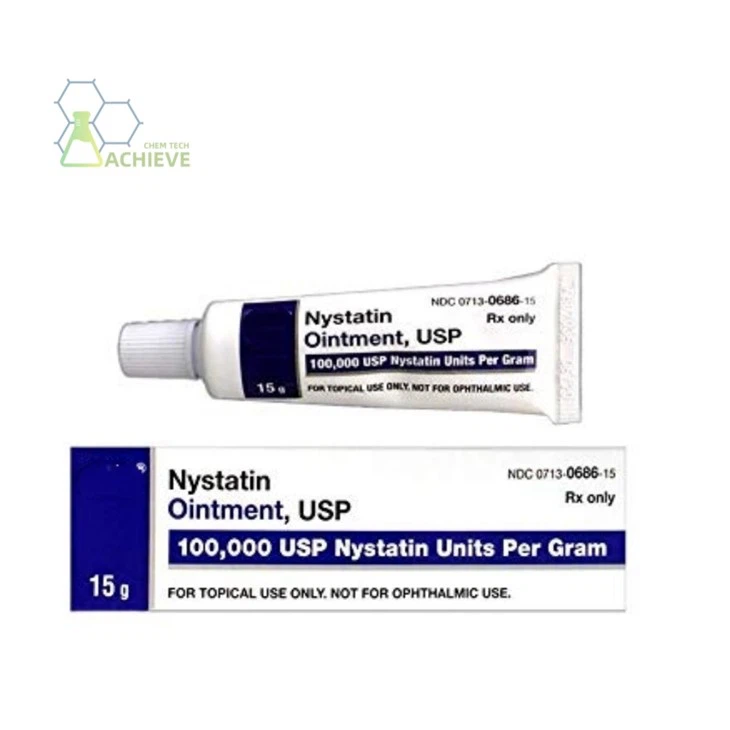


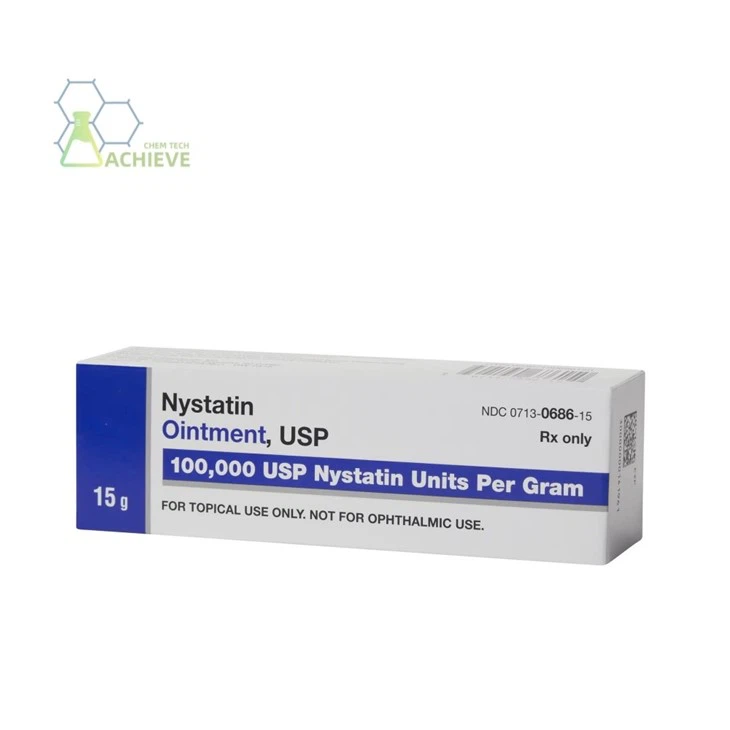

Shaanxi BLOOM Tech Co., Ltd. is one of the most experienced manufacturers and suppliers of nystatin ointment 15g in China. Welcome to wholesale bulk high quality nystatin ointment 15g for sale here from our factory. Good service and reasonable price are available.
Nystatin ointment 15g is a classic polyene antifungal topical medication mainly used to treat superficial skin and mucosal infections caused by sensitive fungi such as Candida albicans. Its core component, mycostatin, binds to ergosterol in the fungal cell membrane, disrupting membrane permeability and causing key substances such as potassium ions and nucleotides to leak out of the cell, ultimately leading to fungal death. It has dual antibacterial and bactericidal effects.


Pharmacological characteristics and formulation design:
The commercially available emulsifiable paste usually contains 100000 units/gram of active ingredient, and the matrix is a mixture of light mineral oil and white Vaseline, ensuring that the drug forms a protective film on the skin surface and prolongs the local action time. This non water soluble matrix can prolong the retention time of drugs on the skin surface, enhance local permeability, and avoid contact dermatitis that may be caused by water-based matrices. It should be noted that lanolin, as an excipient in certain emulsifiable pastes, may induce allergic reactions. Clinical reports have shown that patients with scrotal eczema experience increased itching after medication, and patch tests have confirmed sensitivity to lanolin. Switching to creams without this ingredient can alleviate symptoms. High chemical stability, can be stored for 36 months in a cool environment at 20-25 ℃. It is recommended to use it within 3 months after opening to avoid microbial contamination.
Medication specifications:
The standard course of treatment is to smear the affected area twice a day for 10-14 days; Mucosal infection needs to be prolonged for 14-21 days. Combined use of antibiotic emulsifiable paste or antifungal lotion is recommended for mixed infection or stubborn cases, such as candidal balanitis in patients with diabetes who need to be treated with ketoconazole.

Additional information of chemical compound:

Our product form

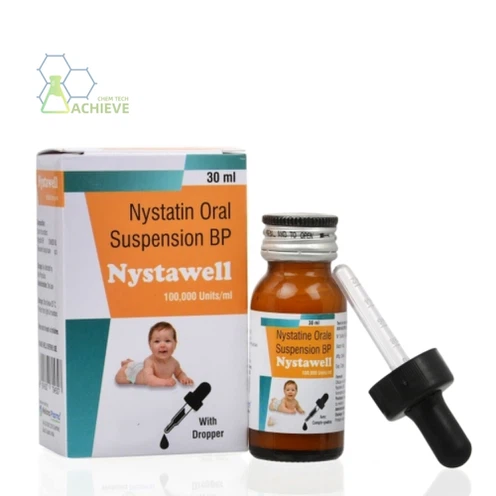
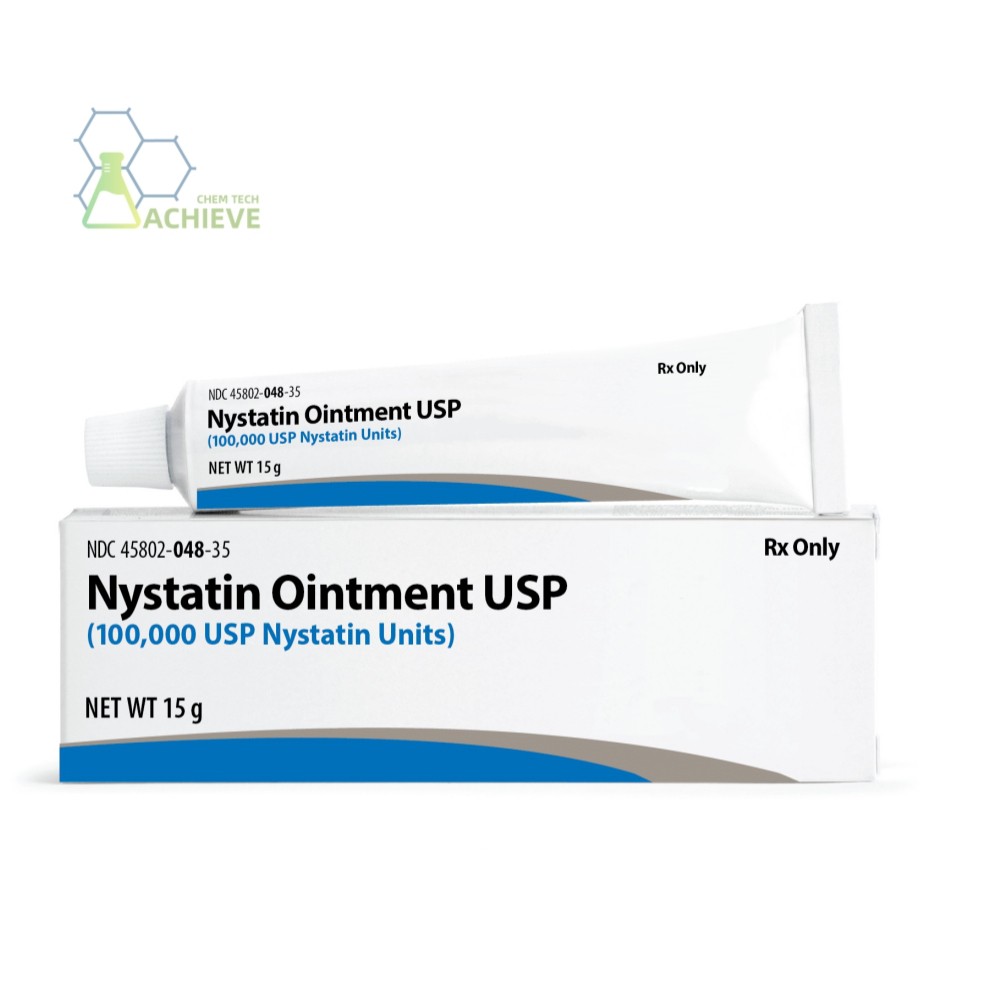
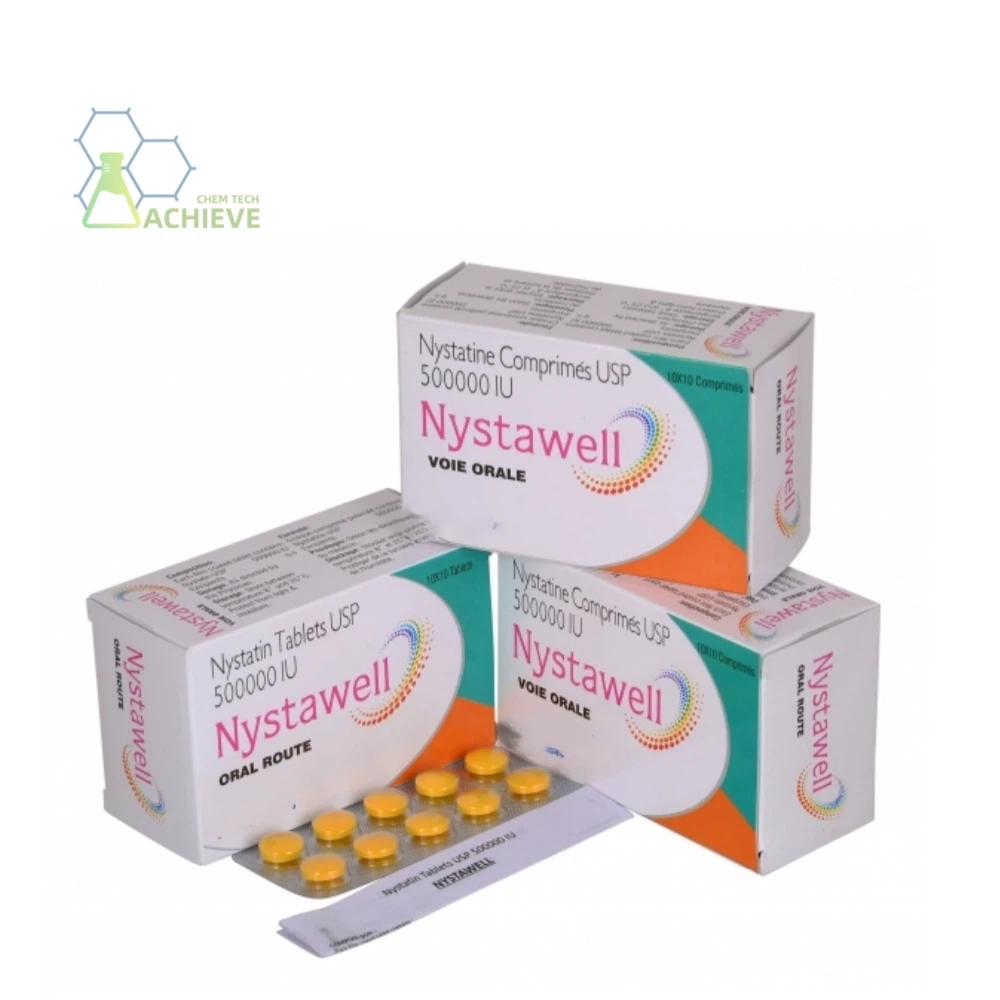
Nystatin +. COA


As a classic polyene antifungal drug, nystatin ointment 15g has become a cornerstone drug for treating superficial fungal permeates since its emergence in the mid-20th century, thanks to its unique mechanism of action and wide clinical applications.
Tinea corporis and cruris and perianal permeate: It is applicable to refractory cutaneous candidiasis in immunosuppressed patients (such as AIDS, long-term glucocorticoid users). Clinical data shows that after 2 weeks of treatment with simple antifungal emulsifiable paste, 85% of patients achieve fungal cure, but mixed permeates (such as coexistence of bacteria and fungi) require the use of antibiotic emulsifiable paste in combination.
Diaper rash combined with Candida infection: The diaper area of newborns is prone to secondary Candida permeate due to the humid environment, manifested as well-defined erythema with satellite lesions. It is recommended to smear emulsifiable paste after daily cleaning for 7-10 days, and to increase the frequency of diaper changes to reduce recurrence.
Oral candidiasis (thrush): Although cemulsifiable paste is not the preferred dosage form, it is often mixed with glycerol and used for oral mucosal application in clinical practice, especially for infants and young children who are resistant to oral suspensions. Be careful not to swallow and fast within 30 minutes after taking the medication.

2. Application in the field of gynecology:

Vulvar Vaginal Candidiasis (VVC): Compound preparations such as Nifedorax Mycostatin Vaginal mycostatinor (containing 0.5g Nifedorax and 200000 units of Mycostatin) enhance therapeutic efficacy through synergistic effects. The single dose regimen is equivalent to a 7-day course of treatment in terms of efficacy, but patient compliance is higher. It should be emphasized that menstrual cessation is necessary, and sexual partners do not require routine treatment.
Prevention of recurrent VVC: For patients with ≥ 4 episodes per year, it is recommended to administer vaginal medication once a week for 6 months. However, long-term use requires caution against drug resistance. There has been a case reported in clinical practice where resistant strains appeared after repeated use of medication.
Compound mycostatinor (containing triamcinolone acetonide, neomyci sulfate, and permethrin) is widely used for the treatment of otitis externa in dogs and cats. Its combination of antifungal, antibacterial, anti-inflammatory, and insecticidal properties can significantly shorten the treatment course. For example, in patients with Malassezia otitis externa treated with combination therapy, the cure rate increased from 62% using Mycostatin alone to 89%.

Usage, dosage and treatment course
Adult Standard Programne
Skin infection: Smeartwice a day to the affected area for a treatment period of 14-21 days. For erosive tinea pedis between fingers, nystatin ointment 15g is recommended to use a combination of 10% salicylic acid cream to soften the stratum corneum and enhance penetration.
Vaginal infection: Administer a single dose of 200000 units of emulsifiable paste intravaginal or once daily for 7 consecutive days. Special drug delivery devices are required to ensure that the medication reaches the cervix directly.
Oral infection: Smear 500000 units (mixed with glycerin) to the affected area 4 times a day after meals to reduce gastrointestinal irritation.

The usage process can be summarized as follows:
1. Preparation before medication
Cleaning the affected area: Thoroughly clean the infected area with mild water or saline solution to remove surface dirt and secretions.
Confirm indication: Ensure that the permeate is caused by sensitive fungi such as Candida, and avoid using it for bacterial or viral permeates.
Allergy screening: Check the composition of drugs (such as lanolin matrix), and prohibit use for those allergic to mycostatinor excipients.
2. Medication methods and frequency
Skin infection: Take an appropriate amount of emulsifiable paste (about 100000 units/gram) twice a day and smear it evenly to the affected area and 1-2 centimeters of healthy skin around it. Gently massage until absorbed.
Mucosal infection (such as oral candidiasis): It should be mixed with glycerol and applied four times a day. Fasting should be done within 30 minutes after medication; Vaginal permeate requires the use of a specialized medication dispenser, once a day, inserted deep into the vagina before bedtime for administration.
Special areas: such as perianal permeates, the affected area should be cleaned after defecation before medication is administered; Foot permeates can be accompanied by wearing breathable shoes and socks.
3. Treatment management
Standard treatment course: Skin permeates usually last for 10-14 days, mucosal permeates take 14-21 days, and even if symptoms disappear, the entire treatment process needs to be completed to prevent recurrence.
Efficacy evaluation: Fungal culture should be rechecked every 2 weeks. If there is no improvement after 4 weeks, the diagnosis or treatment plan should be re evaluated or adjusted.
Relapse prevention: For patients with recurrent permeates (such as ≥ 4 times per year), it is recommended to maintain treatment once a week for 6 months.
4. Post medication care
Keep the affected area dry: Avoid prolonged sealing and bandaging, as damp environments may worsen the permeate.
Avoid irritation: Suspend the use of alcoholic skincare products or irritating cleansers during medication.
Observation reaction: If there is a burning sensation, erythema or other local irritation, the drug concentration can be diluted or a emulsifiable paste can be used instead; Severe allergies require immediate discontinuation of medication and medical attention.

Nystatin ointment 15g, as a local antifungal drug, although its drug interactions are not as significant as systemic medication, the following key points still need to be considered to ensure medication safety and efficacy:
Interaction with local drugs
1. Allergy risk of lanolin containing matrix
The matrix of cream contains lanolin, which may induce contact allergic reactions. If patients are sensitive to lanolin (such as a scrotal eczema patient who experiences increased itching after medication and is confirmed to be allergic through patch testing), they should switch to creams or creams that do not contain this ingredient to avoid aggravating the permeate caused by allergic reactions.
2. Risks associated with combined use of glucocorticoids
Compound preparations, such as the combination of mycostatinor and Triamcinolone Acetylide, may mask permeate symptoms or exacerbate fungal spread. For example, long-term use of compound creams containing corticosteroids may suppress local immune responses, leading to persistent candidal infections. Therefore, limited to short-term, small-scale use, and strict monitoring of permeate progression.
3. Synergistic/antagonistic effect with antibiotic mycostatinor
Synergistic effect: For mixed permeates (such as bacterial fungal copermeate), antibiotic creams (such as mupirocin) can be used in combination. But it needs to be applied in layers, first smear antibiotic mycostatinor, and then smear cream after a 30 minute interval to avoid drug interactions affecting absorption.
Antagonistic risk: Avoid using mycostatinors containing aminoglycoside antibiotics such as amikacin sulfate and gentamicin, as Mycostatin's matrix may reduce the local permeability of antibiotics and weaken their antibacterial effect.
Interaction with oral/injectable medications
1. The synergistic effect of oral antifungal drugs
Indication for combined use: mycostatinor can be combined with oral ketoconazole or fluconazole for intractable or systemic candidal permeate (such as refractory candidal balanitis in diabetes patients). For example, in cases where mycostatinor alone did not heal for 4 weeks, the symptoms were quickly controlled when combined with ketoconazole detergent.
Attention: Liver function needs to be monitored as imidazole antifungal drugs may cause liver damage, while mycostatinor is not absorbed orally and does not pose this risk. However, a comprehensive evaluation is required for combination therapy.
2. Interaction with immunosuppressants
Long term use of immunosuppressants (such as glucocorticoids and cyclosporine) increases the risk of Candida permeate in patients. Emulsifiable paste can be used preventively in the oral cavity or skin mucosa, but caution should be exercised that immunosuppression may mask permeate symptoms and cause delayed medication.
3. The absorption effect of stomach acid lowering drugs
The absorption of mycostatinor oral preparations depends on the gastric acid environment. If patients use proton pump inhibitors (such as omeprazole) or H ₂ receptor antagonists (such as ranitidine) simultaneously, it may reduce the oral absorption rate of mycostatinor, but local use (such as mycostatinor) is not affected.
Drug food interaction
Nystatin ointment 15g is a topical medication that usually does not require dietary adjustments. But if the patient takes mycostatinorpreparations orally at the same time, attention should be paid to:
High fat diet: may delay drug absorption, but its clinical significance is limited as mycostatinor is almost not absorbed when taken orally.
Calcium/magnesium containing foods: If taken together with oral mycostatinor, it may reduce absorption due to chelation, but local use does not have this concern.

The 1940s was the 'golden age' of antibiotics. In 1928, Fleming discovered penicillin and achieved large-scale production in the early 1940s, greatly inspiring the scientific community's enthusiasm for searching for "magical bullets" from microorganisms. However, penicillin mainly targets bacteria and is powerless against fungal infections. At that time, thrush, vaginitis, and skin fungal infections caused by Candida were very common, and there was a lack of effective treatment methods, resulting in unbearable pain for patients. The medical community is eagerly looking forward to an antibiotic that can resist fungi.
In 1944, two microbiologists from the Northern Regional Research Laboratory (NRRL) of the United States Department of Agriculture (USDA), Rachel Fuller Brown and Elizabeth Lee Hazy, collected a soil sample from a private estate in Orleans County, New Jersey, USA.
Rachel Brown is an experienced chemist who obtained a Ph.D. in Chemistry from the University of Illinois at Urbana Champaign, specializing in fungal chemistry. Elizabeth Hazy is an outstanding microbiologist. Their combination - the perfect combination of chemistry and microbiology - laid the foundation for the successful discovery of nystatin.
After the soil sample was brought back to the laboratory, Dr. Hazy isolated and cultured the microorganisms in it. She quickly noticed an actinomycete from the sample, whose culture supernatant showed strong antifungal activity, especially in inhibiting the growth of Candida albicans. This actinomycete was later identified as Streptomyces norvegicus.
Hot Tags: nystatin ointment 15g, suppliers, manufacturers, factory, wholesale, buy, price, bulk, for sale