


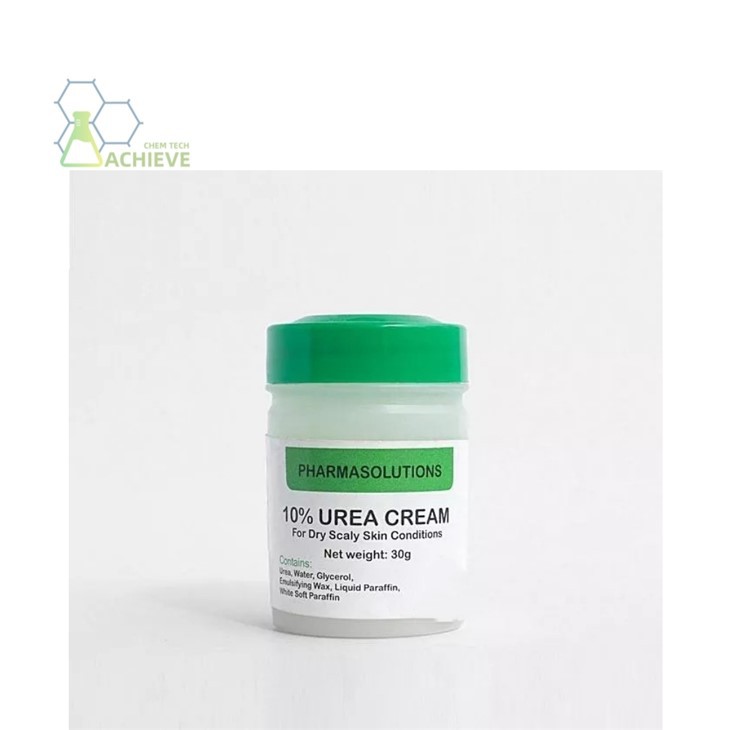




Shaanxi BLOOM Tech Co., Ltd. is one of the most experienced manufacturers and suppliers of vermox cream in China. Welcome to wholesale bulk high quality vermox cream for sale here from our factory. Good service and reasonable price are available.
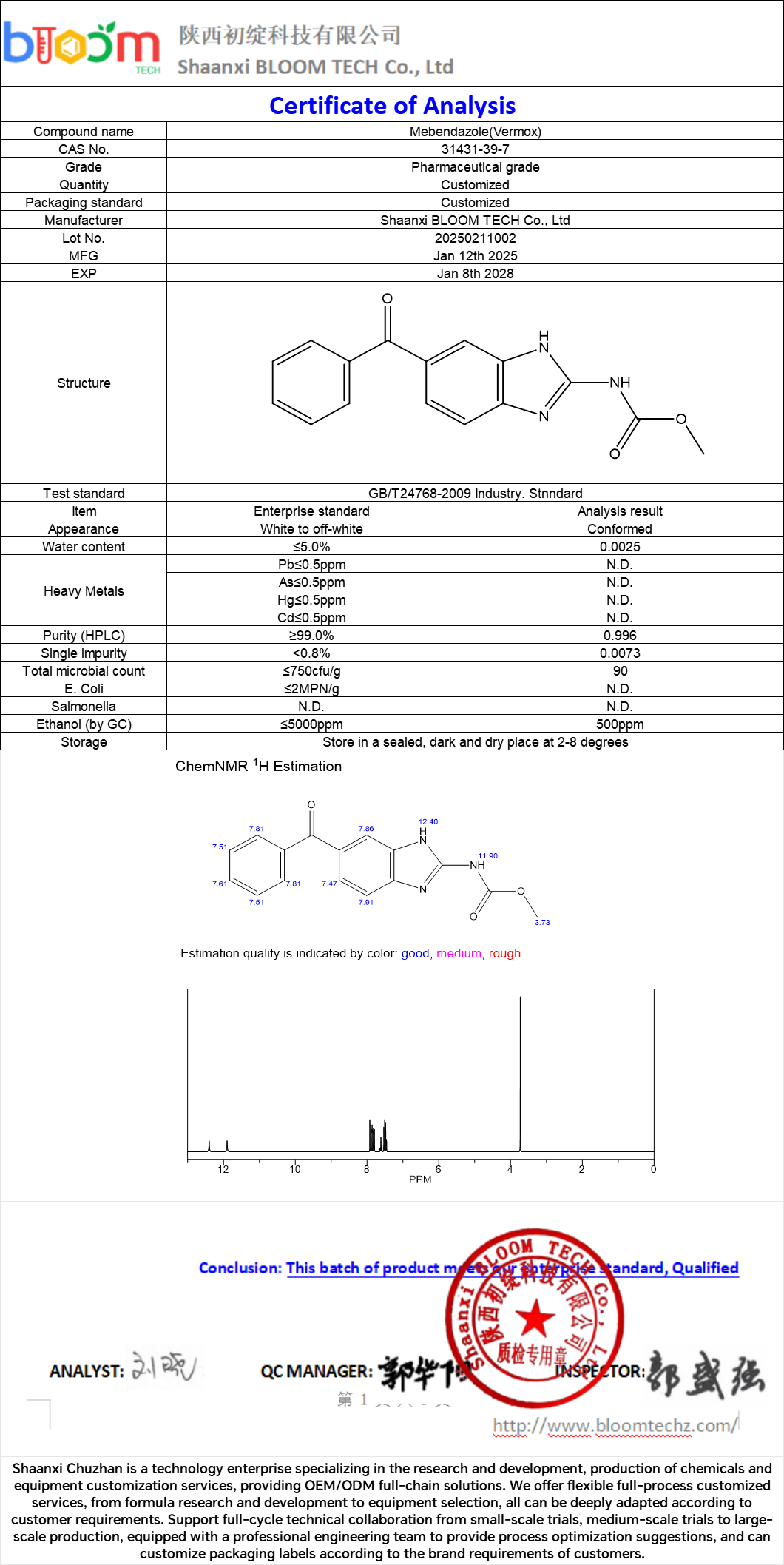
Vermox cream is an organic compound with the chemical formula C16H13N3O3 and CAS 31431-39-7. It is a broad-spectrum anthelmintic and has significant effects in killing larvae and inhibiting the development of insect eggs. Both in vivo and in vitro experiments have shown that it can directly inhibit the uptake of glucose by nematodes, leading to glycogen depletion and reducing the formation of adenosine triphosphate in the parasite, making it unable to survive, but it does not affect the blood glucose levels in the human body. Observation of ultrastructure shows that microtubules in the cytoplasm of the insect's membrane cells and intestinal cells undergo degeneration, causing the aggregation of secretory granules in the Golgi apparatus, resulting in transport blockage, cytoplasmic dissolution and absorption, complete cell degeneration, and insect death.


Additional information of chemical compound:

Our Product


Toltrazuril +. COA

Tretment of intestinal parasitic infections:
Mebendazole is one of the preferred drugs for treating intestinal parasitic infections. For common intestinal parasitic infections such as roundworm disease, pinworm disease, whipworm disease, and hookworm disease, tebuconazole has shown good therapeutic effects. The specific usage and dosage vary depending on the type of infection and the age of the patient. For example, when treating roundworm disease and pinworm disease, adults and children over 2 years old usually take 200mg orally; When treating hookworm disease and whipworm disease, 200mg should be taken once, twice a day, for three consecutive days.
Tretment of parasitic infections within tissues:
In addition to intestinal parasitic infections, metronidazole can also be used to treat certain tissue parasitic infections, such as cerebral cysticercosis, echinococcosis, and trichomoniasis.


For these infections, the dosage and course of tretment of metronidazole usually need to be adjusted according to the specific situation of the patient. For example, when treating cerebral cysticercosis, it may be necessary to use higher doses and longer tretment courses to ensure that the drug reaches an effective concentration in brain tissue.
Combination therapy:
In some cases, metronidazole can be used in combination with other antiparasitic drugs to enhance efficacy or expand the antiparasitic spectrum. For example, in the tretment of echinococcosis, metronidazole is often used in combination with praziquantel to improve tretment efficacy. However, when using combination therapy, attention should be paid to the interactions between drugs and the accumulation of adverse reactions.

Vermox cream, also known as benzimidazole, is an artificially synthesized benzimidazole compound. Since its first synthesis and clinical application in 1971, it has become an important drug for treating various parasitic infections. Its unique pharmacological mechanism of action, broad-spectrum antiparasitic spectrum, and relatively low incidence of adverse reactions make tebuconazole an important player in the tretment of parasitic diseases. The following will provide a detailed explanation of the pharmacology of metronidazole from the perspectives of pharmacodynamics, pharmacokinetics, clinical application, and safety.
Pharmacology
Mechanism of antiparasitic action:
Mebendazole achieves the goal of killing parasites by inhibiting their glucose uptake and interfering with their energy metabolism. Specifically, tebuconazole can irreversibly block the synthesis of microtubules in nematodes, thereby inhibiting their uptake of glucose. This process leads to depletion of glycogen in the parasite, reduced formation of adenosine triphosphate (ATP), inability of the parasite to maintain normal physiological functions, and ultimately death. It is worth noting that the mechanism of action of metronidazole has no significant effect on human blood glucose levels, therefore it is relatively safe.
Observation of ultrastructure showed that after tretment with metronidazole, microtubules in the membrane cells and intestinal cytoplasm of the insect were denatured, and granules secreted by Golgi were aggregated, resulting in transport blockage, cytoplasmic dissolution and absorption, complete cell degeneration, and insect death. This process further confirms the direct killing effect of metronidazole on parasites.


Broad spectrum anti parasitic spectrum:
Mebendazole has broad-spectrum antiparasitic activity and has good therapeutic effects on various intestinal nematodes and flatworms. Specifically, metronidazole can be used to treat conditions such as pinworms, roundworms, whipworms, hookworms, roundworms, tapeworms, echinococcosis, and trichomoniasis. In addition, tebuconazole can also inhibit the development of insect eggs, thereby reducing the spread of parasites.
For roundworms and whipworms, tebuconazole not only has the effect of killing adults, but also kills eggs, effectively blocking the transmission chain of parasites. For hookworms, tebuconazole can disrupt their biological synthesis process, making them unable to survive. For tapeworms, tebuconazole achieves its goal of killing tapeworms by interfering with their metabolic activity.
Pharmacokinetics
Absorption and distribution:
Ketoconazole is absorbed less after oral administration, with a bioavailability of only about 22%. This is mainly due to the insolubility of metronidazole in water and the rapid first pass liver effect experienced after oral administration. However, about 95% of the absorbed drugs still bind to plasma proteins and are widely distributed in tissues and organs throughout the body.
The distribution of metronidazole in the body has tissue specificity and can penetrate the blood-brain barrier, entering brain tissue. Therefore, it also has certain therapeutic effects on central nervous system parasitic infections such as cerebral cysticercosis. In addition, metronidazole can also enter the fetal body through the placental barrier, so pregnant women should use it with caution.


Metabolism and excretion:
Mebendazole is rapidly metabolized in the liver, mainly converted into inactive metabolites. These metabolites and a small amount of prototype drugs are excreted from the body through bile and urine. After oral administration, most drugs are excreted from the urine in their original form or as metabolites after decarboxylation within 24-48 hours, with a half-life of 2-6 hours. However, in patients with liver dysfunction, the half-life of metronidazole may be extended to 35 hours.

Vermox cream is a broad-spectrum antiparasitic drug that inhibits the parasite's uptake of glucose, leading to glycogen depletion and interfering with its survival and reproduction. In clinical applications, it may interact with other drugs, affecting their efficacy or increasing the risk of adverse reactions. The following is a detailed analysis of drug interactions:
Drug interactions typically involve two aspects pharmacokinetics (absorption, distribution, metabolism, excretion) and pharmacodynamics (the effects of drugs on the body). The interaction between mebendazole may occur through the following mechanisms:
Metabolic enzyme inhibition or induction:
Mebendazole metabolism may be affected by other drugs' effects on liver microsomal enzymes (such as CYP450 enzyme system), thereby altering its blood drug concentration and efficacy.
The impact of drug transporters:
Certain drugs may affect the drug transporters in the intestinal epithelium, thereby affecting the absorption and distribution of mebendazole.
Pharmacodynamic synergy or antagonism:
Mebendazole may have synergistic or antagonistic effects with other drugs in terms of pharmacodynamics, affecting the therapeutic effect.
Liver microsomal enzyme inhibitors:
Cimetidine: Cimetidine can inhibit liver microsomal enzyme activity, slow down the metabolism of mebendazole, lead to increased blood drug concentration, and may increase the risk of adverse reactions.
Other enzyme inhibitors, such as erythromycin, clarithromycin and other macrolide antibiotics, as well as certain antifungal drugs (such as itraconazole, ketoconazole), may also affect the metabolism of mebendazole by inhibiting liver microsomal enzyme activity.
Liver microsomal enzyme inducer:
Phenytoin Sodium: Phenytoin sodium can induce liver microsomal enzyme activity, accelerate mebendazole metabolism, reduce blood drug concentration, and may weaken therapeutic efficacy.
Carbamazepine: Carbamazepine also has a liver microsomal enzyme induction effect, which may reduce the efficacy of mebendazole.
Rifampicin: Rifampicin is a potent inducer of liver microsomal enzymes, and when used in combination with mebendzaole, it may significantly reduce its blood drug concentration.
Other drugs that may affect mebendazole absorption:
Antacids: Some antacids may alter the pH value of the gastrointestinal tract, affecting the dissolution and absorption of mebendazole.
Adsorbents: Adsorbents such as activated carbon may adsorb mebendzaole, reducing its absorption.
Medications that may interact with each other in pharmacology:
Other antiparasitic drugs: When used in combination with mebendazole, they may enhance efficacy due to synergistic pharmacological effects, but may also increase the risk of adverse reactions.
Medications with central inhibitory effects, such as sedatives, hypnotics, antihistamines, etc., may exacerbate central inhibitory effects when used in combination with mebendazole, leading to increased adverse reactions such as drowsiness and dizziness.
Weakened therapeutic effect:
When mebendazole is combined with liver microsomal enzyme inducers (such as phenytoin sodium and carbamazepine), its metabolism accelerates, blood drug concentration decreases, and the therapeutic effect may be weakened.
This situation is particularly critical in cases that require long-term tretment or severe parasitic infections, which may affect the patient's recovery process.
Increased adverse reactions:
When mebendazole is combined with liver microsomal enzyme inhibitors such as cimetidine, its metabolism slows down and blood drug concentration increases, which may increase the risk of adverse reactions.
Common adverse reactions include digestive symptoms such as nausea, abdominal discomfort, abdominal pain, diarrhea, as well as allergic reactions such as fatigue and rash.
In rare cases, severe allergic reactions (such as exfoliative dermatitis, systemic depilation) or liver and kidney dysfunction may occur.
Synergistic or antagonistic effects in pharmacology:
When used in combination with other antiparasitic drugs, Vermox cream may enhance efficacy due to synergistic pharmacological effects, but it may also increase the risk of adverse reactions.
When used in combination with drugs with central inhibitory effects, it may exacerbate the central inhibitory effects, leading to increased adverse reactions such as drowsiness and dizziness, and affecting the patient's daily life and work ability.
Hot Tags: vermox cream, suppliers, manufacturers, factory, wholesale, buy, price, bulk, for sale