




Shaanxi BLOOM Tech Co., Ltd. is one of the most experienced manufacturers and suppliers of gabapentin ointment in China. Welcome to wholesale bulk high quality gabapentin ointment for sale here from our factory. Good service and reasonable price are available.
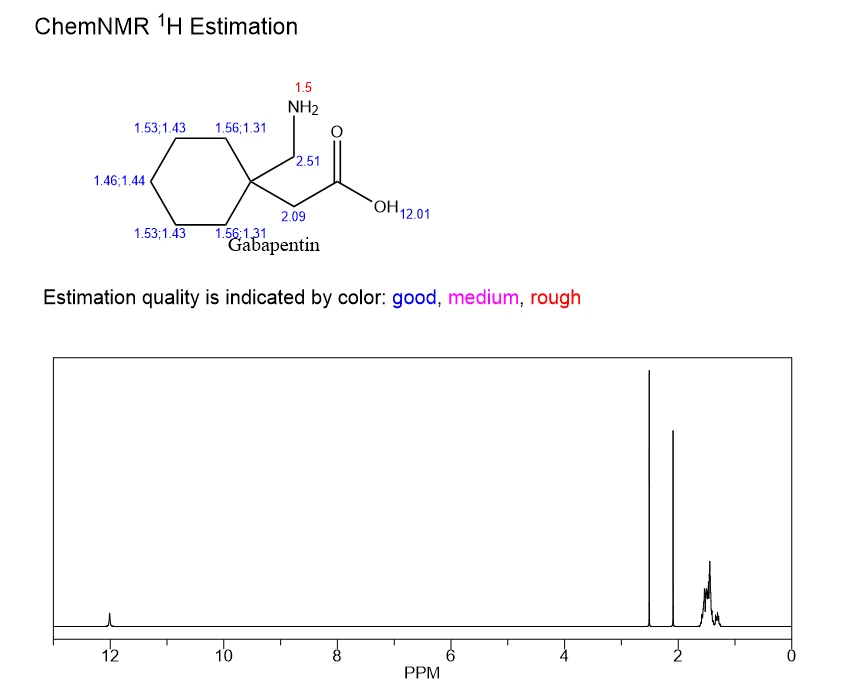
Gabapentin Ointment (chemical name: 1- (aminomethyl) cyclohexanecarboxylic acid) is a cyclic derivative of gamma aminobutyric acid (GABA). Its cyclic structure endows it with high lipid solubility, making it easy to penetrate the blood-brain barrier and achieve effective concentrations in the central nervous system (CNS). The molecule contains an aminomethyl side chain, which has a chemical structure similar to GABA but does not directly act on GABA receptors. It can treat peripheral neuropathic pain, such as diabetes peripheral neuropathy, PHN, etc. Local application can directly act on the pain site to reduce systemic side effects. It can also affect local neuronal excitability through transdermal absorption, but clinical evidence is insufficient. For pain related to skin diseases, such as acute skin pain in herpes zoster, local administration may accelerate symptom relief. Gabapentin containing hydrogel or liposome gel can partially improve the local efficacy by improving drug solubility and skin retention time. Clinical feedback shows that local application can alleviate pain in PHN patients, but requires frequent administration (2-4 times a day).
Additional information of chemical compound:

|
|
|


Gabapentin COA
 |
|
|
|
|

Gabapentin Ointment's theory of "temporary pores" in the lipid bilayer of the stratum corneum
Gabapentin, as a voltage dependent calcium channel α ₂ δ subunit modulator, was initially developed for antiepileptic therapy and later expanded to indications such as neuropathic pain and restless leg syndrome. Its oral preparations often have systemic side effects such as drowsiness and dizziness due to the need to exert central functions through the blood-brain barrier. To reduce systemic exposure and improve local efficacy, the development of Gabapentin Ointment has become a focus. However, the lipid bilayer structure of the stratum corneum as the main barrier significantly limits the transdermal absorption of drugs. In recent years, the theory of "temporary pores" has provided a new perspective for transdermal drug delivery, which involves using specific techniques or penetration enhancers to temporarily disrupt the lipid arrangement in the stratum corneum, forming reversible microchannels to promote drug penetration.
The structure and barrier function of the lipid bilayer in the stratum corneum
The "brick wall" model of the stratum corneum
The stratum corneum (SC) is the outermost layer of the skin, composed of 10-20 layers of flattened keratinocytes ("bricks") and intercellular lipids ("mortar"). Among them, the lipid components are mainly cholesterol, ceramides, and free fatty acids, arranged in a mass ratio of 25:50:15, forming a highly ordered lipid bilayer structure. This structure not only prevents the invasion of external pathogens, but also maintains skin moisture balance, which is the main obstacle to transdermal drug delivery.
Dynamic characteristics of lipid bilayer
Although the lipid bilayer of the stratum corneum has stability, it is not completely static. Research has shown that lipid molecules undergo a thermally induced phase transition under physiological conditions, characterized by changes in the endothermic peak. For example, the human stratum corneum exhibits four endothermic peaks at 35 ℃, 70 ℃, 80 ℃, and 90 ℃, corresponding to processes such as lipid side chain vibration, polar head region disruption, and protein denaturation. This dynamic characteristic provides a theoretical basis for the formation of "temporary pores": external interventions (such as penetration enhancers, physical stimuli) can temporarily alter lipid arrangement and reduce barrier resistance.
Classic pathways and limitations of transdermal absorption

Classic transdermal route
The transdermal absorption of drugs mainly occurs through three pathways:
Intercellular pathway: Drugs bypass keratinocytes and diffuse through intercellular lipids. This pathway has low resistance, but the hydrophobicity of the lipid bilayer limits the penetration of hydrophilic drugs.
Cross cellular pathway: drugs directly penetrate keratinocytes and intercellular matrix. Due to the abundance of keratin microfilaments in keratinocytes, the efficiency of this pathway is extremely low.
Bypass pathway: Drugs enter the skin through hair follicles, sebaceous glands, or sweat glands. Although these appendages only account for 1% of the skin area, they play an important auxiliary role in large molecules or ionic substances.
Gabapentin's Transdermal Challenge
Gabapentin has a molecular weight of 171.24, low lipid solubility (log P ≈ 1.05), and requires a therapeutic concentration (several milligrams per square centimeter for local pain treatment) to be effective. However, the barrier effect of the stratum corneum makes it difficult to achieve effective penetration through passive diffusion. Research has shown that simply adding Gabapentin to the cream base is not sufficient to achieve clinical efficacy in terms of transdermal rate, and penetration enhancement techniques are needed to break through barriers.

The scientific basis of the theory of "temporary pores"
Mechanism of action of penetration enhancers
Penetrating agents induce "temporary pores" through the following methods:
Disrupting lipid arrangement: Chemical enhancers such as azone and azone can insert into the lipid bilayer, disrupting the tight arrangement of fatty acid chains and forming hydrophobic channels. For example, after treatment with azone, the CH stretching vibration peak of the stratum corneum shifted towards longer wavelengths at 2800-2950 cm ⁻¹, indicating a change in lipid side chain conformation and an increase in disorder.
Extracting lipid components: Organic solvents such as methanol and chloroform can dissolve intercellular lipids and directly expand drug diffusion channels.
Changing the structure of keratinocytes: Fruit acids, salicylic acids, etc. reduce diffusion resistance by peeling off the stratum corneum, but may cause skin irritation.


Synergistic effects of physical infiltration technology
Ion introduction method: using an electric field to drive charged drug molecules to penetrate the skin. Research has shown that iontophoresis can increase the transdermal rate of Gabapentin by 3-5 times, especially for ionic drugs.
Microneedle technology: By using micrometer sized needles to form microchannels in the stratum corneum, drugs can directly enter the dermis layer. Animal experiments have shown that after microneedle pretreatment, the local bioavailability of Gabapentin increases by 40%.
Ultrasonic import: Utilizing the cavitation effect generated by low-frequency ultrasound to temporarily loosen the lipid bilayer structure. Preclinical data shows that ultrasound treatment can increase drug penetration by 2-3 times.
Reversibility of "Temporary Pores"
The key lies in the transience of the pores: after the cessation of penetration enhancers or physical stimuli, the lipid bilayer can restore its barrier function through self-assembly. For example, after treatment with azone, the lipid phase transition temperature of the stratum corneum returned to baseline levels within 24 hours, indicating reversible structural damage. This characteristic ensures drug penetration efficiency while avoiding skin damage caused by long-term barrier disruption.

Gabapentin Ointment's R&D Strategy

Selection and optimization of penetration enhancers
Chemical penetration enhancer: Azone has become a candidate penetration enhancer for Gabapentin Ointment due to its strong and low irritant properties. Research has shown that 1% azone can increase the transdermal rate of Gabapentin from 0.5 μ g/cm ²/h to 2.8 μ g/cm ²/h.
Natural penetration enhancers: Menthol, eucalyptus oil, etc. indirectly enhance drug penetration by dilating blood vessels and nerve endings sensitivity. Although its mechanism is not fully understood, clinical feedback shows that formulations containing menthol can significantly alleviate pain in PHN patients.
Composite infiltration system: Combining chemical and physical infiltration techniques, such as azone+microneedles, can produce synergistic effects. In vitro experiments have shown that the composite system increases the cumulative permeation of Gabapentin by 6 times compared to using a single penetration enhancer.
Innovation in Formulation Process
Nanocarrier technology:
Liposomes: Gabapentin is encapsulated in a phospholipid bilayer, utilizing its similarity to stratum corneum lipids to prolong drug retention time. The rabbit skin experiment showed that the transdermal rate of the liposome drug delivery system was 2.3 times that of ordinary cream.
Solid lipid nanoparticles (SLN): using solid lipids as carriers to improve drug stability. The particle size of SLN (50-200 nm) allows it to penetrate the hair follicle opening and achieve targeted delivery.
Hydrogel matrix: Soften the cuticle through high moisture content, and control drug release at the same time. Polyacrylic acid hydrogel can reduce the release rate of Gabapentin to 0.2 μ g/cm ²/h, which is suitable for long-term analgesia.


Preclinical evaluation and safety
In vitro permeation experiment: Use Franz diffusion cell to evaluate the effect of different penetration enhancers on the transdermal rate of Gabapentin. For example, an ointment containing 5% azone had a cumulative permeation of 12.5 μ g/cm ² within 8 hours, significantly higher than the control group (2.1 μ g/cm ²).
Skin irritation test: Evaluate the safety of the formulation through Draize test. When the concentration of azone exceeds 3%, it may cause mild erythema, so its dosage needs to be optimized.
Pharmacodynamic validation: In the PHN animal model, Gabapentin Ointment (containing 2% azone) can increase the pain threshold by 40%, which is equivalent to oral formulations, but reduces systemic exposure by 80%.
Gabapentin Ointment is a chemical penetration enhancer: a "molecular lever" that leverages the barrier of the stratum corneum
As the largest organ in the human body, the skin's stratum corneum structure forms a natural barrier for drug penetration. The stratum corneum is composed of multiple layers of dead keratinocytes and intercellular lipids, forming a "brick wall structure" that significantly hinders the transdermal absorption of water-soluble, macromolecular, and ionic drugs. Traditional transdermal drug delivery systems (TDDS) often rely on chemical penetration enhancers (CPEs) such as ethanol, propylene glycol, and azone to enhance drug penetration by disrupting the lipid bilayer or extracting lipids from the stratum corneum. However, such methods may cause side effects such as skin irritation and damage to barrier function, limiting their long-term application.
Neuropharmacological basis of GABA analogues
Gabapentin was initially developed as an antiepileptic drug, with a structure similar to GABA but not a GABA receptor agonist. Research has shown that Gabapentin inhibits calcium ion influx by binding to the α 2 δ subunit of voltage-gated calcium channels (VGCCs) with high affinity, thereby reducing the release of neurotransmitters such as glutamate and substance P. This mechanism has been widely validated in the treatment of neuropathic pain, for example:
Post herpetic neuralgia (PHN): Gabapentin can significantly reduce the patient's pain score (VAS) and improve sleep quality.
Diabetes peripheral neuropathy: clinical trials show that Gabapentin can improve the pain relief rate of patients.
Potential mechanisms of stratum corneum penetration
The barrier function is maintained between keratinocytes through tight junctions (TJs) and lipid matrix. The effect of Gabapentin on the stratum corneum may be achieved through the following pathways:
Calcium channel regulation: Keratinocytes (KCs) express VGCCs, and Gabapentin may reduce the phosphorylation of calcium dependent adhesion molecules (such as E-cadherin) between cells by inhibiting the activity of the α 2 δ subunit, thereby loosening the "brick wall structure" of the stratum corneum.
Lipid arrangement interference: The arrangement of lipids in the stratum corneum (ceramides, cholesterol, free fatty acids) directly affects drug penetration. Gabapentin may alter the lipid phase and increase the drug diffusion coefficient by regulating the activity of lipid metabolism related enzymes, such as sphingomyelinase.
Enhanced hydration: The carboxylic acid groups of Gabapentin have hygroscopicity, which can increase the moisture content of the stratum corneum and promote drug distribution.
Hot Tags: gabapentin ointment, suppliers, manufacturers, factory, wholesale, buy, price, bulk, for sale