




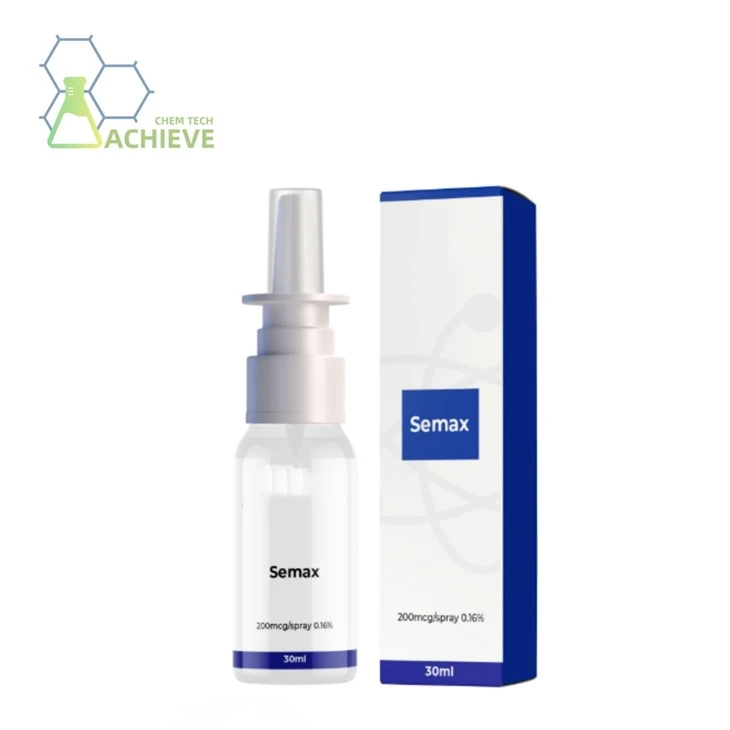
Shaanxi BLOOM Tech Co., Ltd. is one of the most experienced manufacturers and suppliers of semax spray in China. Welcome to wholesale bulk high quality semax spray for sale here from our factory. Good service and reasonable price are available.
Semax spray represents an innovative and well-developed nasal formulation whose primary active component is the synthetic heptapeptide known as Semax. This unique bioactive substance is structurally derived from a specific fragment of adrenocorticotropic hormone, yet it undergoes distinct modifications that fully eliminate the original hormonal properties of the parent molecule, evolving into a highly potent agent with prominent neuroprotective and cognitive-stimulating effects. When delivered via convenient nasal inhalation, the active compound can rapidly permeate the blood-brain barrier and exert direct pharmacological actions on the human central nervous system.
It produces a comprehensive range of beneficial effects through multiple working mechanisms: elevating the endogenous level of brain-derived neurotrophic factor (BDNF), modulating the balance and function of key neurotransmitters, as well as strengthening the resilience of brain cells against hypoxia, oxidative damage and chronic stress. In clinical practice, this nasal spray possesses remarkable therapeutic and auxiliary value, as it is capable of notably improving overall cognitive performance, which covers facilitating the formation and consolidation of memory, boosting sustained attention and focus, and effectively accelerating the speed and agility of mental thinking.
 |  |


Semax COA


Analysis of the product in Ocular Health Applications
As a peptide preparation for nasal administration, Semax spray has become an important dosage form for ocular neuroprotection thanks to its convenient use and efficient transmucosal absorption properties. By targeting and regulating the expression of nerve growth factor, it provides targeted intervention for ocular diseases associated with optic nerve damage and plays a key role in the adjuvant treatment of conditions such as optic atrophy and glaucoma and the improvement of visual function.
This preparation can delay the process of nerve fiber atrophy by promoting optic nerve repair.Improve symptoms such as visual loss and visual field defect in patients, and enhance visual quality.For glaucoma, in addition to alleviating the progressive optic nerve damage caused by high intraocular pressure through NGF-mediated neuroprotective effects, it can also assist in improving ocular microcirculation and relieving the ischemia and hypoxia of optic nerve tissue, providing neuroprotective support for the comprehensive treatment of glaucoma.


Core Mechanism of Targeted Support for Optic Nerve Health
The core of it's ocular protective effect lies in its targeted action on ocular nerve tissue after nasal absorption, which accurately elevates the expression level of nerve growth factor (NGF) in the eye. NGF is a critical substance for the survival, repair and regeneration of optic nerve cells. When optic nerve cells are damaged due to ocular pathological changes or injuries, the NGF level drops significantly, which in turn leads to the deterioration of optic nerve function.After rapid absorption through the nasal mucosa, it can cross the blood-ocular barrier to reach the optic nerve tissue, stimulate the synthesis and release of NGF.
Provide nutritional support for damaged optic nerve fibers, and promote the repair and regeneration of injured nerve cells.Meanwhile, it enhances the activity and tolerance of optic nerve cells, fundamentally maintaining the structural and functional integrity of the optic nerve and laying a foundation for the improvement of visual function.
Clinical Application Value for Ocular Diseases
In the clinical intervention of ocular diseases, it is mainly focused on conditions characterized by optic nerve damage as the core pathological feature, such as optic atrophy and glaucoma. For optic atrophy, regardless of the causes being primary, secondary or traumatic.

Analysis of the product in the Adjuvant Treatment of ADHD
The pathogenesis of ADHD is closely associated with the imbalance of neurotransmitters such as dopamine and norepinephrine in the brain. Insufficient secretion or transmission disorders of these transmitters directly impair functions including attention regulation and behavioral inhibition.

After rapid absorption through the nasal mucosa, it can cross the blood-brain barrier and act on brain regions related to attention and behavioral regulation-such as the prefrontal cortex and striatum-in a targeted manner.By regulating the balance of the central neurotransmitter system, it elevates the effective concentrations and transmission efficiency of dopamine and norepinephrine, and simultaneously enhances the signal transduction capacity of nerve cells. This improves the brain's functions of attention regulation, impulse inhibition and behavioral management at a physiological level, laying a core foundational role for alleviating ADHD symptoms.
Clinical Value in Adjuvant Treatment
In the adjuvant treatment of ADHD, it primarily exerts ameliorative effects on the three core symptoms: inattention, hyperactivity and impulsivity, and is suitable for ADHD patients of all age groups including children, adolescents and adults. In clinical application, it can serve as an adjunct to conventional therapy and be used in conjunction with standardized intervention regimens. It helps patients extend attention span, improve distractibility, reduce purposeless hyperactive behaviors and impulsive decision-making, and enhance their behavioral self-control as well as learning and work efficiency.In addition, this preparation adopts a nasal administration route with the advantages of convenient operation and rapid onset of action.

It has no obvious hormonal activity and good tolerability, making it suitable for long-term adjuvant use and effectively improving patients' treatment compliance. It provides a safe and convenient adjuvant option for the comprehensive management of ADHD, and is particularly applicable to patient groups with refined demands for symptom improvement.


Semax spray, as a heptapeptide neuromodulator, its stability is directly related to the efficacy and safety of the drug. The following is a detailed analysis from five aspects: chemical stability, physical stability, storage conditions, usage stability, and stability performance in clinical applications.The chemical structure of Semax is a heptapeppeptide compound (Met-Glu-His-Phe-Pro-Gly Pro), with a molecular weight of 813.92 g/mol. Its chemical stability is significantly affected by temperature, light and pH value.
Chemical Stability
Temperature sensitivity
Semax is prone to degradation at room temperature and should be stored refrigerated at -20°C. If the storage temperature exceeds 10°C, the drug activity may decrease.
Light degradation
Semax is sensitive to light. After being exposed to strong light for 24 hours, the drug activity may decrease by 50%. Therefore, This spray is usually packaged in dark glass bottles.
pH value influence
Semax has the best stability in aqueous solutions with a pH range of 5.5 to 6.5. If the pH value deviates from this range, the drug may undergo hydrolysis or polymerization reactions.
Physical Stability
The physical stability of this spray is mainly reflected in the clarity of the solution and the content of particulate matter:
Clarity
The Semax solution should be a colorless and transparent liquid. If it becomes cloudy or precipitates, it may indicate drug degradation or microbial contamination.
Particulate matter content
According to the International Pharmacopoeia standard, the particulate matter content in Semax solution should be less than 100 per milliliter (diameter ≥10μm).


Excessive particulate matter may affect the nasal absorption efficiency of drugs and even cause local irritation.
Viscosity variation
The viscosity of Semax solution should be maintained within the range of 1 to 5 mPa·s. Excessively high viscosity may lead to uneven spraying, while too low viscosity may affect the retention time of the drug in the nasal mucosa.
The Influence of Storage Conditions on Stability
The storage conditions of this product need to be strictly controlled to ensure the long-term stability of the drug
Temperature
It is recommended to store at a temperature of 2-8°C. If the storage temperature is too high, the activity of the drug may decrease. If the temperature is too low (such as freezing), the medicine may crystallize, causing the sprayer to clog.
Humidity
This spray should be stored in a dry environment. Excessive humidity can cause the packaging materials to become damp, affecting the stability of the medicine.
Lighting
It should be stored away from light. It is recommended to use opaque packaging materials. Light exposure may cause the photolysis reaction of Semax, generating inactive degradation products.
Stability after opening
It is recommended to use up within 30 days after opening the bottle. After opening, the medicine may come into contact with oxygen and moisture in the air, resulting in a decrease in activity.
Stability during Use
Its stability during the usage process is affected by multiple factors
The performance of the sprayer
The design of the sprayer must ensure that the drug can be sprayed evenly and the particle size is moderate (5-10μm in diameter). If the performance of the sprayer is poor, it may lead to uneven distribution of the drug in the nasal mucosa, affecting the therapeutic effect.

Nasal cavity environment
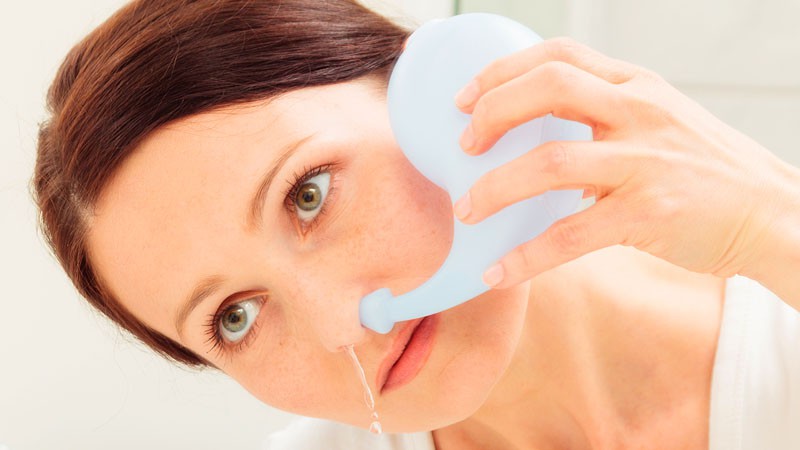
The internal pH value and temperature of the nasal cavity are important physiological factors that can obviously influence the absorption efficiency of Semax after nasal administration. To minimize local mucosal irritation and prevent unwanted drug degradation during use, it is strongly recommended to thoroughly clean the nasal cavity prior.
Administration frequency
The usage frequency of this spray requires reasonable adjustment based on corresponding clinical symptoms. Frequent and excessive use tends to cause irritation to the nasal mucosa, potentially resulting in nasal hemorrhage. Meanwhile, insufficient administration will greatly weaken the intended therapeutic effect.

Stability performance in Clinical Application
Short-term stability: Under storage conditions of 2-8℃, its activity can be maintained for more than 24 months. The drug activity shall not decrease by more than 5% within 30 days after opening.
Long-term stability: Long-term storage tests show that the spray can be stored for more than 36 months under freezing conditions at -20°C, with a decrease in activity of no more than 10%.

Transportation stability: It should avoid severe vibration and high temperature during transportation. The simulation transportation test shows that when the drug is transported at 25°C for 7 days, its activity decreases by no more than 3%.
Clinical efficacy stability: Multiple clinical studies have shown that there is no significant difference in the therapeutic effect of this spray when used under different storage conditions. For example, in patients with cerebral ischemia, it can significantly improve the neurological function score, and the therapeutic effect is independent of the storage conditions.
Measures to Enhance Stability
Optimize packaging materials
Use opaque dark glass bottles and moisture-proof packaging to reduce the impact of light and humidity.
01
Adding stabilizers
Add antioxidants (such as vitamin C) and pH regulators (such as phosphate buffer solution) to the drug solution to enhance the chemical stability.
02
Improve the design of the sprayer
Adopt a new type of sprayer to ensure that the drug can be sprayed evenly and reduce the generation of particulate matter.
03
Strengthen storage management
Establish strict storage and transportation management systems to ensure that drugs are stored and transported.
04
At the same time, the purity is calculated by the peak area normalization method of the primary component, and the limits of total impurities and individual impurities are strictly controlled. This method enables qualitative and semi-quantitative analysis of impurities, provides key data for the quality control and stability study of it, and ensures the safety and effectiveness of the preparation.


High Performance Liquid Chromatography (HPLC)

HPLC is the most core analytical method for Semax spray, mainly used for the content determination and qualitative identification of the primary component Semax, and is suitable for the polar and biological activity characteristics of peptides. The detection employs a reversed-phase HPLC column, with water-acetonitrile/methanol as the mobile phase supplemented with ion-pair reagents such as trifluoroacetic acid, and a gradient elution program is adjusted. The target peak is detected by an ultraviolet detector (214 nm or 280 nm).For qualitative analysis, specific identification is achieved by comparing the retention time of the sample with that of the Semax reference standard.
For quantitative analysis, the external standard method is used to plot a standard curve for calculating the accurate content of Semax in the spray. Meanwhile, the uniformity of the spray volume per actuation and the total spray volume per vial is controlled to meet the dosage requirements of nasal preparations. This method features high precision and good recovery, and its limit of detection and limit of quantitation can meet the testing requirements for trace peptides.


High Performance Liquid Chromatography-Mass Spectrometry (HPLC-MS)
HPLC-MS is used for purity analysis and impurity identification of it, making up for the limitations of single HPLC. HPLC is used to achieve effective separation of impurities from the primary component, and combined with the high sensitivity and specific qualitative capability of mass spectrometry, it accurately detects process impurities (e.g., peptide synthesis intermediates, truncated peptides), degradation impurities (e.g., oxidized peptides, hydrolyzed peptides) and trace excipient impurities in the preparation.
FAQ
How to store it?
+
-
Proper storage management is equally critical for preserving the chemical stability and pharmacological activity of Semax. To prevent active ingredient degradation and guarantee consistent product quality, the preparation should be kept in a cool and dry environment at all times. Additionally, it must be shielded from prolonged exposure to direct sunlight, as strong ultraviolet rays and high light intensity can accelerate the deterioration of its effective components.
How many sprays of Semax per day?
+
-
Sources and Dosing Guidelines
As for administration sources and dosage regimens, the usage varies among different groups and medical conditions. For healthy people for daily maintenance, the standard dose is 1 to 2 drops of 0.1% solution, administered twice daily. For patients suffering from stroke, a stronger 1% solution is adopted, with 2 to 4 drops taken three to four times per day to meet therapeutic demands.
Hot Tags: semax spray, suppliers, manufacturers, factory, wholesale, buy, price, bulk, for sale