




Shaanxi BLOOM Tech Co., Ltd. is one of the most experienced manufacturers and suppliers of ethyl pyruvate cas 617-35-6 in China. Welcome to wholesale bulk high quality ethyl pyruvate cas 617-35-6 for sale here from our factory. Good service and reasonable price are available.
Ethyl pyruvate, is an organic compound belonging to the family of esters. It is a colorless to slightly yellow liquid with a characteristic fruity odor. Its density is slightly lower than water, and it is miscible with most organic solvents. The boiling point of it is relatively low, which allows it to be easily vaporized or distilled.
It is also known to be stable under normal conditions but can be reactive towards strong oxidizing agents or acids. It is generally considered non-toxic but should be handled with care due to its flammability.

|
Chemical Formula |
C5H8O3 |
|
Exact Mass |
116 |
|
Molecular Weight |
116 |
|
m/z |
116 (100.0%), 117 (5.4%) |
|
Elemental Analysis |
C, 51.72; H, 6.94; O, 41.34 |
|
|
|
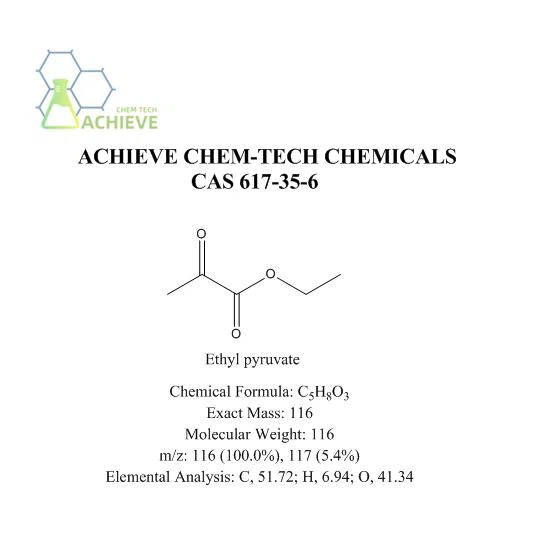
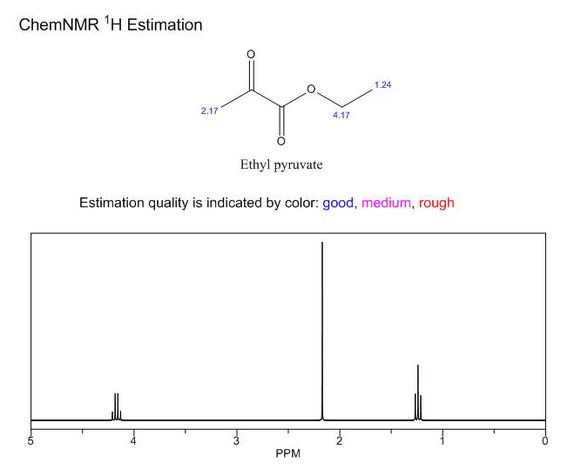
Melting point - 58 ° C, Boiling point 144 ° C (lit.), Density 1.045 g / ml at 25 ° C (lit.), FEMA 2457 | Ethyl 2-oxopropanoate, Refractive index N20 / D 1.404 (lit.), Flashpoint 114 ° f, Storage conditions store at + 2 ° C to + 8 ° C, Solubility 10g / L.

It is widely used in the flavor and fragrance industry due to its fruity and floral notes. It adds a pleasant aroma and taste to food and beverage products, enhancing their overall palatability. It can be used in the preparation of apple, citrus, chocolate and other flavors. It is commonly found in fruit-flavored candies, beverages, and even bakery products.

Solvent Applications

It can be used as a solvent in various industrial processes. Its miscibility with organic solvents and low boiling point make it suitable for use as a solvent in coatings, inks, adhesives, and other chemical formulations. It helps in dissolving and dispersing other components, ensuring smooth application and uniform distribution.
It serves as an important intermediate in the synthesis of various organic compounds. It can undergo esterification, transesterification, and other organic reactions to produce a range of derivatives with diverse applications. It is widely used in pharmaceuticals (synthetic thiamidate drugs), pesticides (herbicides and thiimidine fungicides produced by DuPont), food (can be used as preservatives, preservatives, etc.), cosmetics and other industries.

Pharmaceutical Industry

Ethyl pyruvate and its derivatives have potential applications in the pharmaceutical industry. Some of its compounds may be used as intermediates in the synthesis of drugs or as excipients in pharmaceutical formulations. It has a good effect on inhibiting the formation of tyrosinase in the epidermis, so it can prevent the formation of epidermal melanin and whiten the skin.
In addition to the above-mentioned uses, it may also find applications in other industries such as cosmetics, personal care products, and even in some industrial cleaning and degreasing processes. It can also be added to air fresheners as an efficient active ingredient, which can effectively remove ammonia and methyl mercaptan in the air, and has a fresh and natural smell.


We are the supplier of Ethyl Pyruvate.
Remark: BLOOM TECH(Since 2008), ACHIEVE CHEM-TECH is the subsidiary of us.
Preparation methods & sources
It is prepared by direct esterification of pyruvic acid and absolute ethanol at boiling temperature, followed by vacuum distillation. It can also be prepared by oxidation of ethyl lactate steam at 155°C in the presence of V2O5. To a round-bottomed flask equipped with a stirrer and thermometer, add 130ml saturated potassium permanganate solution, 500ml petroleum ether (boiling point 40-60°C), 50g (0.42mol) ethyl lactate (99%) and 20g (0.13mol) ) Sodium dihydrogen phosphate (NaH2PO4·2H2O). Start stirring, raise the temperature to 15°C, cool with ice water, add powdered potassium permanganate for 25-30 minutes, and continue stirring until oxidation is complete. Keep the temperature close to 15°C during the whole process. When the reaction is completed, pour out the petroleum ether and extract the slurry with 50ml of petroleum ether each time, stirring for a total of 3 times. Combine the petroleum ether extracts and use a short fractionating column to remove the petroleum ether over the water solution. Shake the residual oil thoroughly with 2 parts of 10ml calcium chloride saturated solution, separate the oil layer, and perform vacuum distillation. Almost all the products are steamed at 56-57℃/2666Pa (20mmHg) to obtain 25-27g, with a yield of 51-54 %.

Ethyl pyruvate is an important organic compound with extensive applications in fields such as food, medicine, and chemical industry. It can be prepared by oxidation of ethyl lactate vapor in the presence of V2O5 at 155 ℃.
The specific steps are as follows:
1. Experimental materials and equipment
Reagents: ethyl lactate, V2O5 (vanadium pentoxide), potassium permanganate, petroleum ether, sodium dihydrogen phosphate
Equipment: round bottom flask, stirrer, thermometer, constant temperature heating device
2. Experimental steps
Mixing reagents: Add an appropriate amount of potassium permanganate solution to a round bottom flask, then add petroleum ether, sodium dihydrogen phosphate, and ethyl lactate to ensure uniform mixing.
Installation of experimental device: Place the round bottomed flask on the heating device and install a stirrer and thermometer to ensure good sealing of the device.
Heating reaction: Heat the round bottomed flask to 155 ℃ and maintain a constant temperature. During the heating process, observe the changes in the reaction mixture.
Oxidation reaction: Under heating and stirring conditions, potassium permanganate oxidizes ethyl lactate to product. During the reaction process, pay attention to observing changes in color and the generation of products.
Collect products: When the reaction is nearing completion, cool the products in the round bottomed flask to room temperature, and then collect the generated product.
Purified product: If high purity of the substance is required, purification operations such as recrystallization or distillation can be performed.
3. Chemical equation
This reaction involves multiple steps and intermediate products, so its complete chemical equation is relatively complex. However, it can be simplified as follows:
C6H10O6 + 2MnO4- + 6H+→ C6H8O6 + 2Mn2 + 4H2O + 2CO2
where C6H10O6 represents glucose molecules, MnO4- represents permanganate ions, Mn2+represents divalent manganese ions, C6H8O6 represents benzoic acid molecules, H+represents hydrogen ions, H2O represents water molecules, and CO2 represents carbon dioxide molecules. This equation only represents the main reaction steps and products, and there may actually be other by-products and intermediate products generated.
Research on the dual regulatory mechanism of "microbiota host axis" in metabolic diseases
Metabolic diseases (such as type 2 diabetes, non-alcoholic fatty liver, obesity, etc.) have become a major challenge in the global public health field. The pathogenesis involves the interaction of multiple factors such as genetics, environment, and lifestyle, and the dynamic balance between gut microbiota and host metabolism (i.e., the "microbiota host axis") is considered the core regulatory network. In recent years, ethyl pyruvate (EP), as a small molecule compound with anti-inflammatory, antioxidant, and metabolic regulatory activities, has gradually attracted attention for its potential role in metabolic diseases.
EP can improve microbial dysbiosis through the following mechanisms:
Inhibition of pathogen growth: EP has a direct inhibitory effect on pathogens such as Staphylococcus aureus and Escherichia coli, and its antibacterial activity is related to the destruction of bacterial cell membrane integrity.
Promoting the proliferation of beneficial bacteria: EP can promote the growth of SCFAs producing bacteria (such as Rosella and Fecal bacteria) and increase the content of SCFAs such as acetic acid and butyric acid in feces.
Regulating the metabolic function of the microbiota: EP can inhibit the activity of lysine decarboxylase (LDC) in the microbiota, reducing the production of pro-inflammatory metabolites such as cadaverine.

Improving intestinal barrier function

EP enhances intestinal barrier integrity through the following pathways:
Upregulation of tight junction protein expression: EP can activate the AMPK signaling pathway, promote the synthesis of occludin and claudin-1, and reduce intestinal leakage.
Inhibition of mucosal inflammation: EP reduces the expression of TNF - α and IL-6 in intestinal mucosa by inhibiting the NF - κ B signaling pathway, thereby alleviating inflammatory damage.
Promote mucus layer secretion: EP can stimulate goblet cells to secrete mucin (MUC2), enhance mucus layer thickness, and prevent pathogen adhesion.
EP improves insulin resistance through the following mechanisms:
Activation of AMPK signaling pathway: EP can promote AMPK phosphorylation, increase GLUT4 translocation to the cell membrane, and promote glucose uptake.
Inhibition of DPP-4 activity: EP can specifically inhibit the activity of bacterial derived dipeptidyl peptidase-4 (DPP-4), reduce GLP-1 degradation, and enhance insulin secretion.
Regulating bile acid metabolism: EP can promote the generation of secondary bile acids (such as ursodeoxycholic acid, UDCA) by the microbiota, activate FXR receptors, and inhibit gluconeogenesis.

Regulating lipid metabolism

EP improves lipid disorders through the following pathways:
Promote fatty acid oxidation: EP can activate the PPAR α signaling pathway, upregulate the expression of fatty acid oxidases such as CPT-1A, and reduce fat accumulation.
Inhibition of lipid synthesis: EP can inhibit the activity of SREBP-1c, reduce the expression of lipid synthesis enzymes such as FAS and ACC, and decrease triglyceride synthesis.
Regulating cholesterol metabolism: EP can promote the production of chenodeoxycholic acid (CDCA) by the microbiota, activate LXR receptors, increase ABCA1 expression, and promote cholesterol efflux.
Frequently Asked Questions
Its "antioxidant" ability is often mentioned, but is there a significant difference in its effectiveness in clearing different free radicals?
+
-
There is an order of magnitude difference. It has a strong ability to remove superoxide anions (IC50 ≈ 0.02mM), but weak ability to remove hydroxyl free bases (IC50 ≈ 116.1mM). This means that its antioxidant effect has strong "selectivity" and cannot be simply generalized as a universal antioxidant.
What is a confirmed "direct and specific" mechanism of free radical scavenging on molecular targets, in addition to the commonly recognized free radical scavenging?
+
-
It can directly inhibit the activation of NLRP3 inflammasome, and the mechanism is very unique: it does not rely on potassium efflux, lysosome rupture, or mitochondrial ROS, but works by protecting mitochondrial integrity and preventing mitochondrial DNA from leaking into the cytoplasm. This is a precise mechanism that distinguishes it from ordinary antioxidants.
What is the fundamental contradiction between its significant effectiveness in animal experiments and its failure in human clinical trials?
+
-
This is its biggest dilemma: it has been proven safe in clinical trials for heart surgery patients, but it is not superior to placebo in improving clinical outcomes (prognosis). This suggests that its excellent preclinical data may not directly translate into actual benefits for complex human diseases.
What is the recognized 'stable black hole' when its powder is mixed into a solution?
+
-
The stability data of the solution is extremely missing. The supplier explicitly stated that there are "few reports" on its stability in solution, and only recommends packaging, sealing, and use within one month after preparation, while avoiding repeated freeze-thaw cycles. This is the most overlooked technical pain point when used as a reagent.
Is its inhibitory effect on tumor growth considered a direct anti-cancer or indirect anti-inflammatory byproduct by the mainstream view?
+
-
Tends to have indirect anti-inflammatory effects. The mainstream view is that its anti-tumor activity is "likely related to its anti-inflammatory effect", that is, by inhibiting inflammation in the systemic or local microenvironment (such as HMGB1, IL-1 β, etc.), rather than directly killing tumor cells. It is more like a 'cleaner' of the tumor microenvironment than a 'killer'.
Hot Tags: ethyl pyruvate cas 617-35-6, suppliers, manufacturers, factory, wholesale, buy, price, bulk, for sale, D Tetrandrine CAS 518 34 3, Cyclohexyldimethoxymethylsilane, 5-hydroxymethylfurfural synthesis, Sucrose Powder CAS 57 50 1, Pure Talc Powder CAS 14807 96 6, Sodium Polyacrylate Solution CAS 9003 04 7