




Shaanxi BLOOM Tech Co., Ltd. is one of the most experienced manufacturers and suppliers of 5-fluorocytidine cas 2341-22-2 in China. Welcome to wholesale bulk high quality 5-fluorocytidine cas 2341-22-2 for sale here from our factory. Good service and reasonable price are available.
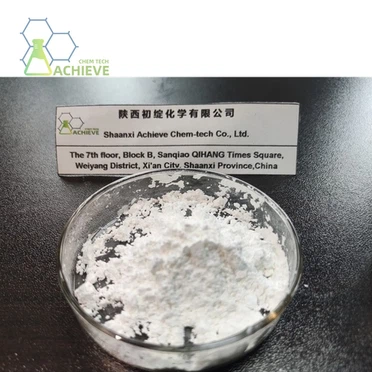
5-Fluorocytidine is a white or almost white powder with hygroscopicity. Its chemical structure is similar to that of cytidine, except that a fluorine atom replaces the hydrogen atom on the fifth carbon atom. The solubility in water is relatively low, but it has good solubility in organic solvents such as alcohols, esters, ketones, and chloroform. In addition, it may also undergo hydrolysis reactions under strong acidic or alkaline conditions. It has good thermal stability, but may undergo hydrolysis or degradation reactions due to temperature influence. Under high temperature conditions, the solution may gradually turn yellow or brown. Has certain toxicity. As an important alkaloid, it has broad application value in the synthesis of anti-tumor drugs, antiviral drugs, and other bioactive molecules. It has a unique structure and chemical properties, and is often used as an intermediate or starting material for synthesizing more complex molecular structures. By reacting with different chemical groups, compounds with specific functions and uses can be generated. Based on the structural characteristics of this substance, it can combine with other compounds to form biomaterials or organic compounds with specific functions. The applications of these compounds in enzyme activity research, cell signal transduction, fluorescent probes, and other fields provide inspiration and foundation for drug design and development.

|
|
|

|
Chemical Formula |
C9H12FN3O5 |
|
Exact Mass |
261 |
|
Molecular Weight |
261 |
|
m/z |
261 (100.0%), 262 (9.7%), 262 (1.1%), 263 (1.0%) |
|
Elemental Analysis |
C, 41.38; H, 4.63; F, 7.27; N, 16.09; O, 30.62 |

Research as an inhibitor: It can also be studied as an enzyme inhibitor. By studying how it binds to enzyme active sites and inhibits enzyme activity, we can gain a deeper understanding of the enzyme's mechanism of action, providing reference for drug design and development. In addition, enzyme inhibitors based on 5-Fluorocytidine may have potential applications in fields such as agriculture, industry, and environmental protection.

1. Inhibit the maturation of 45S ribosomal RNA precursor
5-fluorocytidine, as a cytidine analogue, can inhibit the maturation of 45S ribosomal RNA precursor. Ribosomal RNA (rRNA) is an important component of protein synthesis in cells, and the maturation process of its precursors is regulated by various factors. 5-fluorocytidine can interfere with this process, affecting the synthesis and metabolism of intracellular proteins, thereby exerting inhibitory effects on cell growth and proliferation.
2. DNA methyltransferase (DNMT) inhibitors
In addition to its inhibitory effect on RNA precursor maturation, 5-fluorocytidine has also been found to be an inhibitor of DNA methyltransferase (DNMT). DNA methylation is an important epigenetic modification that regulates cell growth and differentiation by affecting gene expression and chromosome stability. DNMT is a key enzyme that catalyzes DNA methylation reactions, and its activity is regulated by multiple factors. 5-fluorocytidine can affect DNA methylation levels by inhibiting the activity of DNMT, thereby regulating gene expression and cellular biological behavior.


3. Interference with DNA replication and repair
Research has shown that 5-fluorocytidine can enter cells and be incorporated into DNA strands, forming stable fluorinated base pairs. This kind of doping can interfere with the normal replication process of DNA, leading to the breakage and damage of DNA strands. Meanwhile, 5-fluorocytidine may also inhibit the repair of DNA damage by interfering with the activity of DNA repair enzymes, thereby exacerbating the degree of DNA damage. This DNA damage triggers the apoptosis mechanism of cells, leading to cell death.
4. Inducing cell apoptosis
Apoptosis is a programmed cell death process that plays an important role in maintaining the stability of the internal environment and preventing the occurrence of tumors. 5-fluorocytidine induces apoptosis by interfering with DNA replication and repair processes, leading to DNA damage and cell cycle arrest. In addition, 5-fluorocytidine may also regulate the process of cell apoptosis by affecting intracellular signaling pathways and the expression of apoptosis related genes.


3. Preventing the occurrence of drug resistance
The occurrence of drug resistance is an urgent problem to be solved in tumor treatment. Research has shown that 5-fluorocytidine may prevent the occurrence of drug resistance by interfering with the repair function of polymerase θ. Polymerase θ is an enzyme involved in DNA double strand break repair, and its abnormal activity is closely related to drug resistance in tumor cells. 5-fluorocytidine can block the repair process of DNA double strand breaks by inhibiting the activity of polymerase θ, thereby enhancing the sensitivity of tumor cells to chemotherapy drugs and preventing the occurrence of drug resistance.

5-Fluorocytidine is a fluorine-containing pyrimidine nucleoside analogue. Its molecular structure is obtained by replacing the specific position of cytidine with a fluorine atom, endowing it with unique chemical and biological activities. This compound has significant value in pharmaceutical research and development, genetic engineering, and anti-tumor treatment, and the following analysis is conducted from the three core application directions.
Anti-tumor Therapy: Breakthroughs from Basic Research to Clinical Trials

As a prodrug and metabolic activation mechanism
5-Fluorocytidine is a precursor drug of 5-FU. It is metabolized in the cell through the pyrimidine salvage pathway to generate 5-FU, which is then converted into fluorouracil deoxyribonucleotide (FdUMP). FdUMP can inhibit thymidylate synthase (TS), block DNA synthesis, and interfere with RNA function, leading to tumor cell death. This mechanism makes it a research hotspot in the treatment of solid tumors such as colorectal cancer, breast cancer, and non-small cell lung cancer. For example, 2'-deoxy-5-fluorocytidine (FCdR), as a DNA methyltransferase (DNMT) inhibitor, activates tumor suppressor gene expression by reducing DNA methylation levels and has been used in clinical trials for combined treatment of solid tumors such as colorectal cancer.
Combination Therapy and Synergistic Strategies
5-Fluorocytidine is often used in combination with other chemotherapy drugs to enhance efficacy. For instance, combined with folic acid calcium (LV) can stabilize the complex of FdUMP and TS, prolonging the inhibitory effect; combined with oxaliplatin or irinotecan can synergistically block the DNA repair pathway. Additionally, 5-Fluorocytidine formulations encapsulated by nanotechnology (such as liposomes or polymer microspheres) can achieve targeted delivery, reducing systemic toxicity and increasing drug concentration in tumor tissues.


Side Effect Management and Optimization
Traditional fluorouracil drugs are prone to cause side effects such as bone marrow suppression and mucositis. The deoxy form of 5-Fluorocytidine (such as FCdR) shows lower cytotoxicity to normal cells in vitro experiments, possibly achieving side effect optimization by reducing drug accumulation in non-target tissues. For example, FCdR, while inhibiting tumor cell growth, has significantly lower toxicity to human primary cells than 5-Fluorocytidine, suggesting potential advantages for clinical application.
Anti-viral and Anti-fungal Therapy: Transformation from Laboratory to Clinical
Exploration of Anti-viral Mechanisms
5-Fluorocytidine can exert anti-viral effects by interfering with viral RNA synthesis. Its structure is similar to natural nucleotides and can be mistakenly recognized and incorporated into the nascent RNA chain by viral RNA polymerase, resulting in chain termination or accumulation of mutations. Studies have shown that 5-Fluorocytidine has inhibitory activity against RNA viruses such as influenza virus and hepatitis C virus (HCV), especially showing potential in the treatment of drug-resistant strains. For example, oligonucleotides containing 5-Fluorocytidine can effectively block HCV replication in vitro experiments, providing new ideas for the treatment of chronic hepatitis.
Application of Anti-fungal Therapy
As a similar compound to 5-FC, 5-Fluorocytidine is also used in the field of anti-fungals. 5-FC is converted into 5-FU by the cytosine deaminase in fungal cells, inhibiting DNA and RNA synthesis, and is commonly used in the treatment of invasive fungal infections such as cryptococcal meningitis and candidiasis. Although the direct anti-fungal activity of 5-Fluorocytidine is weak, its design as a prodrug provides a structural template for the development of new anti-fungal agents.
Genetic Engineering and Biotechnology: Expansion of Tool-Based Applications
RNA Modification and Gene Editing
5-Fluorocytidine is a key raw material for synthesizing modified nucleotides and can be used to construct RNA molecules with enhanced stability or targeting properties. For example, fluoromodified siRNA can resist degradation by nucleases and prolong its half-life in vivo; fluorine-containing uridine analogues can interfere with the gene editing efficiency of the CRISPR-Cas9 system, providing tools for precise regulation of gene expression.


Nucleic acid drug development
Oligonucleotide drugs based on 5-Fluorocytidine (such as antisense oligonucleotides, aptamers) can bind to target RNA through base pairing to regulate gene expression or block viral replication. For example, antisense oligonucleotides targeting tumor-related mRNAs can induce their degradation and inhibit tumor growth; aptamers containing 5-Fluorocytidine can specifically bind to cancer cell surface markers to achieve targeted drug delivery.
Synthetic Biology and Metabolic Engineering
In the field of synthetic biology, 5-Fluorocytidine can be used to construct non-natural metabolic pathways to produce high-value compounds. For instance, by introducing fluorinated nucleoside synthetases, microbial cells can use 5-Fluorocytidine as a raw material to synthesize fluorinated antibiotics or antiviral drugs, expanding the substrate range for biomanufacturing.

Safety and Operating Standards: Dual Considerations for Laboratory and Clinical Applications
Laboratory Safety Measures
5-Fluorocytidine is a potentially irritating compound. When handling it, protective glasses, gloves, and lab coats should be worn to avoid skin or mucous membrane contact. It should be stored in a dry, well-ventilated environment, away from heat sources and oxidants. Waste disposal should follow chemical hazardous material management regulations to prevent environmental pollution.
Clinical Risk Assessment
Although 5-Fluorocytidine shows potential in anti-tumor therapy, the toxicity of its metabolite 5-FU (such as bone marrow suppression, gastrointestinal reactions) still needs to be considered. Before clinical use, factors such as liver and kidney function, genetic polymorphisms (such as DPD enzyme deficiency) of patients should be evaluated to adjust the dose individually. In addition, long-term treatment requires monitoring of blood routine, liver enzymes, etc., and timely handling of adverse reactions.

Future Prospects: The Bridge from Basic Research to Clinical Translation
With the development of gene editing, nanotechnology, and synthetic biology, the application boundaries of 5-Fluorocytidine will continue to expand. For example, gene therapy based on CRISPR may utilize its modified nucleotides for precise editing; targeted delivery systems can enhance its anti-tumor efficacy and reduce toxicity; the design of non-natural metabolic pathways will promote the green transformation of biomanufacturing. However, its clinical translation still needs to address challenges such as metabolic stability and off-target effects, and requires optimization of molecular structure and delivery strategies through multidisciplinary collaboration.
FAQ
1. What is 5-Fluorocytidine?
5-Fluorocytidine is a fluorinated nucleoside compound, mainly used in the fields of biochemistry and pharmaceutical research. It is often used as a key intermediate in the synthesis of antiviral or anti-tumor drugs or as a research probe.
2. What are its main purposes?
It is mainly used for the development and mechanism research of nucleoside drugs in scientific research laboratories. For example, it has significant application value in the molecular design and synthesis of anti-tumor and anti-viral drugs.
3. How to Store Correctly?
It is recommended to store it in a dark and dry place, sealed and kept in a low-temperature and dry environment (such as -20℃), and ensure it is kept away from non-professionals to maintain its chemical stability.
4. What should be noted when using?
This product is a research-grade raw material. It should be handled under the guidance of professionals, and strict adherence to experimental protocols must be observed. It is only for laboratory research purposes and should not be directly used on humans or in clinical settings.
Hot Tags: 5-fluorocytidine cas 2341-22-2, suppliers, manufacturers, factory, wholesale, buy, price, bulk, for sale, Atomoxetine Hydrochloride Powder CAS 82248 59 7, Atropine Sulfate Monohydrate CAS 5908 99 6, Primidone powder, tetracaine hcl powder, Ethacridine Lactate Monohydrate CAS 6402 23 9, Medetomidine HCl