


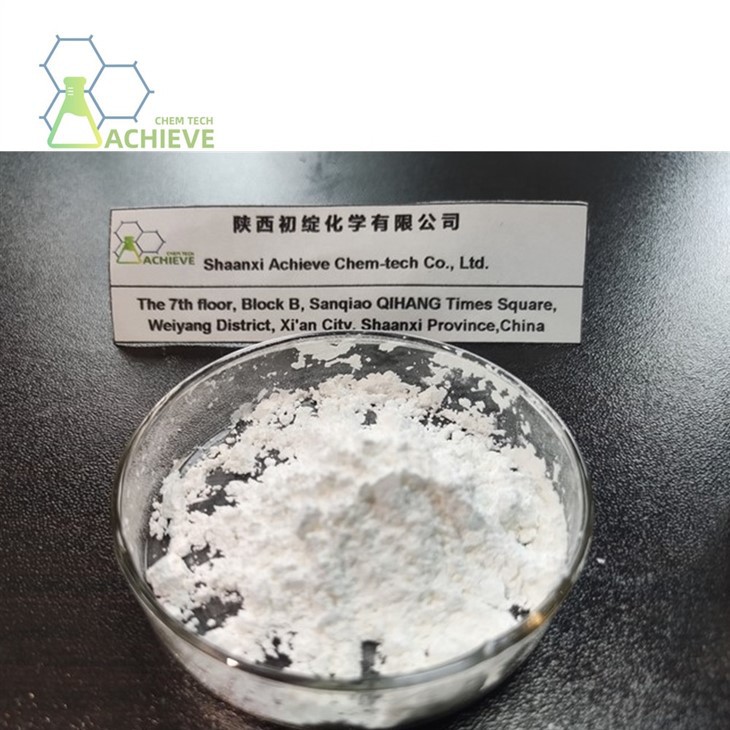


Shaanxi BLOOM Tech Co., Ltd. is one of the most experienced manufacturers and suppliers of 5-chlorouracil cas 1820-81-1 in China. Welcome to wholesale bulk high quality 5-chlorouracil cas 1820-81-1 for sale here from our factory. Good service and reasonable price are available.
5-Chlorouracil is an organic compound that is a white to almost white solid powder, typically exhibiting a slight crystalline structure. The molecular weight is 146.53, CAS 1820-81-1, and the molecular formula is C4H3ClN2O2. The solubility in water is 1M NH4OH: soluble at 50mg/mL, and the acidity coefficient (pKa) is 6.77 ± 0.10 (Predicted). It is a pyrimidine analogue mainly used for the treatment of tumors. It is a type of anti metabolic drug. Often used in combination with leucovorin. After reacting with uracil, xenon difluoride produces 5-fluorouracil. It can also be used to synthesize capecitabine, which is absorbed orally and converted into 5-FU in tissues to exert anti-tumor effects. As an anti-tumor drug, fluorouracil also has application value in the synthesis of other pyrimidine derivatives. These compounds have a wide range of applications in life science research, such as being used as biomaterials or organic compounds to study biological processes such as DNA synthesis and metabolism, enzyme activity, etc. In addition, these compounds can also be used to prepare materials such as fluorescent dyes, pigments, and surfactants.

|
|
|

|
Chemical Formula |
C4H3ClN2O2 |
|
Exact Mass |
146 |
|
Molecular Weight |
147 |
|
m/z |
146 (100.0%), 148 (32.0%), 147 (4.3%), 149 (1.4%) |
|
Elemental Analysis |
C, 32.79; H, 2.06; Cl, 24.19; N, 19.12; O, 21.84 |

5-Chlorouracil is an organic compound primarily used for the synthesis of other drugs and chemicals, with various uses.

1. Synthetic anti-tumor drug
It is an organic compound with the structural characteristics of pyrimidine, which is a key component of nucleic acids. This structural feature enables it to be widely used in the synthesis of anti-tumor drugs, mainly by specifically inhibiting thymidine nucleotide synthase to interfere with the normal synthesis of DNA in cells. This enzyme is one of the key enzymes in the process of cell replication, responsible for synthesizing thymidine nucleotides required for DNA replication and repair. By inhibiting the activity of this enzyme, 5-Chlorouracil can effectively block DNA synthesis, thereby inhibiting the abnormal growth and uncontrolled proliferation of tumor cells.
In terms of clinical treatment, it is mainly used as an intermediate for drugs treating colorectal cancer, breast cancer, gastric cancer and other common malignant tumors. These cancers typically have a high demand for DNA synthesis due to their rapid cell division rate, thus being able to effectively inhibit tumor cell growth by interfering with DNA synthesis. In clinical practice, the combination use with other anti-tumor drugs (such as platinum-based drugs) can significantly enhance their killing effect on tumor cells and further improve the overall therapeutic effect, reducing the risk of tumor recurrence.
2. Synthetic fluorouracil
5-Chlorouracil plays an important role in the process of synthesizing fluorouracil, a classic and widely used anti-tumor drug in clinical practice. The mechanism of action of fluorouracil is similar to the related drugs synthesized from 5-Chlorouracil, which is to inhibit the growth and proliferation of tumor cells by interfering with DNA and RNA synthesis, and this process is crucial for controlling and treating various malignant tumors.


In the process of synthesizing fluorouracil, it is necessary to replace the chlorine atom in 5-Chlorouracil with fluorine elements through nucleophilic substitution reaction. This reaction usually needs to be carried out under specific chemical conditions (such as appropriate temperature, pressure and catalyst) to ensure the smooth progress of the reaction and the high purity of the final product. By combining with fluorine, the chemical structure of 5-Chlorouracil undergoes a targeted change, forming a new compound called fluorouracil, which has stronger anti-tumor activity and better clinical applicability.
Fluorouracil has significant anti-tumor activity and can be used to treat a variety of malignant tumors, such as colorectal cancer, breast cancer, gastric cancer and head and neck cancer. Its efficacy has been fully validated in a large number of clinical trials and is widely used in clinical treatment worldwide. Similar to other anti-tumor drugs, its combination use with other drugs (such as folic acid preparations) can further enhance their killing effect on tumor cells and improve the therapeutic effect while reducing adverse reactions.
3. Synthetic capecitabine
Capecitabine is an oral anti-tumor prodrug that is convenient for patients to take and has good bioavailability. It works by being converted into 5-fluorouracil in the body (mainly in tumor tissues) through a series of enzymatic reactions, thereby exerting anti-tumor effects. 5-Chlorouracil is a key intermediate in the synthesis of capecitabine, which can be prepared into capecitabine by combining it with appropriate chemical groups (such as carbamate groups) through multi-step reactions.

Due to its oral administration and tumor-targeted conversion characteristics, capecitabine is mainly used to treat colorectal cancer, breast cancer, gastric cancer and other malignant tumors, especially suitable for patients who cannot tolerate intravenous chemotherapy. It not only maintains the anti-tumor efficacy of 5-fluorouracil but also reduces the systemic adverse reactions caused by direct administration of 5-fluorouracil.
What are the side effects of this substance?
1. Digestive system side effects
Nausea and vomiting: These are the most common digestive system side effects, usually more pronounced in the early stages of medication, and may gradually alleviate as treatment progresses.
Decreased appetite: Patients may experience loss of appetite due to the influence of medication.
Abdominal pain and diarrhea: Some patients may feel discomfort or diarrhea in the abdomen, and in severe cases, bloody diarrhea or rectal bleeding may occur. At this time, medication should be stopped immediately and symptomatic treatment should be given.
2. Blood system side effects
Bone marrow suppression: This compound can inhibit the hematopoietic function of the bone marrow, leading to a decrease in the number of white blood cells, red blood cells, and platelets. This may increase the risk of infection, anemia, and bleeding.
Decreased white blood cells: This is one of the main manifestations of blood system side effects, usually reaching its lowest point within 2-3 weeks after the start of treatment, and may return to normal after 3-4 weeks.
3. Oral mucosa and skin side effects
Oral mucositis or ulceration: One of the specific side effects of this compound is oral mucositis, which may lead to ulceration in severe cases.
Skin pigmentation: Patients may experience skin pigmentation on the face, nails, and other areas after use.
Hair loss and dermatitis: Long term use may lead to skin problems such as hair loss and dermatitis.
4. Liver toxicity
Liver function impairment: It is metabolized in the liver and can cause reversible liver damage. Therefore, regular monitoring of liver function is necessary during use.
5. Cardiotoxicity
Cardiovascular reactions: In rare cases, this compound may cause cardiovascular reactions such as arrhythmia, angina, or changes in electrocardiogram. Once these reactions occur, the use of fluorouracil should be immediately stopped and appropriate treatment measures should be taken.
6. Neurotoxicity
Peripheral neuropathy: It can affect the nervous system, leading to peripheral neuropathy. Some patients may experience symptoms such as abnormal sensations, numbness in their hands and feet, and neuralgia.
Long term neurotoxicity: Long term use of fluorouracil may lead to increased toxicity to the nervous system.
7. Local side effects
Venous inflammation: When injecting this substance, local venous inflammation may occur.
8. Other side effects
Enhanced cardiotoxicity: For patients with underlying diseases such as coronary heart disease, its cardiotoxicity may be more pronounced.
Drug accumulation: Due to its slow metabolism, this substance is prone to accumulation in the body, and prolonged and excessive use can lead to increased toxicity.
What are the sales channels for this substance?
Chemical reagent supplier
Many professional chemical reagent suppliers provide sales services for 5-Chlorouracil. These suppliers typically have a wide inventory of chemical reagents, including various pharmaceutical intermediates, active pharmaceutical ingredients, and fine chemicals.Online platforms such as Gaide Chemical Network, Dingxiangtong, and Booker Chemical Network have a large number of chemical reagent suppliers posting product information. You can search for the substance on these platforms and contact the supplier for consultation and purchase.
Direct contact with suppliers: Some suppliers will publish product information on their official websites, and you can directly visit these websites to contact suppliers for consultation and purchase.
Pharmaceutical companies
Pharmaceutical companies specializing in the production and trade of pharmaceutical intermediates and active pharmaceutical ingredients are also important channels for purchasing this compound. These companies usually have a well-established production, quality inspection, and sales system, which can provide customers with high-quality products and services.
Official websites: Some pharmaceutical companies will publish product information on their official websites, and you can directly visit these websites and contact the company for consultation and purchase.
Pharmaceutical companies
Industry exhibitions: The pharmaceutical industry often holds various exhibitions, which are good opportunities to learn about industry trends, meet suppliers, and purchase products. You can search for pharmaceutical companies that provide this substance at the exhibition and have face-to-face communication and purchasing with them.

Research institutions and universities
Some research institutions and universities may also have its inventory and be willing to sell it to the outside world. These institutions typically have advanced laboratories and research equipment capable of producing high-quality chemical reagents.
Research institutions and universities
Research Cooperation: If you are a researcher from a research institution or university, you can try to establish cooperative relationships with other research institutions or universities to jointly carry out research projects and share reagent resources.
Direct purchase: Some research institutions or universities may be willing to sell their inventory of the compound directly to customers in need. You can contact the research management department or laboratory head of these institutions for consultation and purchase.
Precautions
Product quality: When purchasing, it is important to pay attention to the quality of the product. Choose reputable suppliers or companies to ensure that the purchased products meet relevant standards and requirements.
Price and delivery time: Prices and delivery times may vary among different suppliers or companies. Before purchasing, please communicate fully with the supplier or company to understand detailed information such as price and delivery time.
Legal regulations: Please comply with relevant laws, regulations, and rules when purchasing and using 5-Chlorouracil. Ensure that your purchasing and usage behavior is legal and compliant.


Basic Information and Chemical Properties
5-Chlorouracil is a chlorinated pyrimidine compound with the chemical formula C₄H₃ClN₂O₂, having a molecular weight of 146.53 and a CAS number of 1820-81-1. Its appearance is white crystals, with a density of 1.61 g/cm³, a melting point above 300°C, a flash point of 203.9°C, and a refractive index of 1.587. As a chlorinated derivative of uracil, the chlorine atom in its molecular structure replaces the hydrogen atom at the 5th position of uracil, significantly enhancing the polarity and reactivity of the molecule.
Manufacturing Process and Key Steps
The core raw materials are uracil (C₄H₄N₂O₂) and chlorine gas (Cl₂). The purity of uracil must be ≥ 99% to reduce side reactions. Chlorine gas needs to be dried (e.g., through a concentrated sulfuric acid scrubber) to remove moisture and prevent the formation of hydrolysis by-products.
The reaction is carried out under anhydrous conditions. Common solvents include dichloromethane or trichloromethane. Uracil is dissolved in the solvent, and dry chlorine gas is slowly introduced. The reaction temperature is controlled at 25-40°C to avoid excessive chlorination. During the reaction, continuous stirring is required to ensure uniform distribution of chlorine gas. The reaction equation is as follows: C₄H₄N₂O₂ + Cl₂ → C₄H₃ClN₂O₂ + HCl
The generated hydrogen chloride (HCl) is removed through nitrogen purging or an alkali solution absorption device, facilitating the reaction to proceed in the forward direction.
After the reaction, the mixture undergoes vacuum distillation to remove the solvent, and the residue is washed with cold water to remove unreacted uracil and inorganic salts. The crude product is further purified by recrystallization, using an ethanol-water mixture (volume ratio 3:1) as the solvent. The recrystallization temperature is controlled at 60-70°C, and after cooling, white needle-like crystals precipitate. The purified product needs to be vacuum-dried at 50°C until a constant weight is achieved, with the final purity reaching over 99%.
The purity was detected by high-performance liquid chromatography (HPLC), the crystalline integrity was verified by melting point determination, and the molecular structure was confirmed by ¹H NMR. The key quality control standards include: purity ≥ 99%, melting point range 300-302°C, and impurity ≤ 0.1%.
Optimization of Industrial-scale Production

Continuous reactor design
In large-scale production, tubular reactors were used to achieve countercurrent contact between chlorine gas and uracil solution, improving mass transfer efficiency. The reactor was equipped with a cooling coil to precisely control the temperature at 30 ± 2°C, avoiding local overheating that leads to the formation of by-products (such as dichlorouracil).

Solvent recovery system
The distilled solvent was dried by molecular sieves and recycled, with a recovery rate of ≥ 95%, significantly reducing production costs. The exhaust gas treatment unit used an alkaline liquid spray tower to ensure that the HCl emission concentration was < 10 ppm, meeting environmental protection requirements.

Automation control
The PLC system was used to monitor the pressure, temperature, and chlorine gas flow in the reaction vessel in real time. Key parameters were linked with emergency shut-off devices to ensure production safety. For example, when the chlorine gas flow was abnormal, the system automatically stopped the feed and initiated the nitrogen purge program.
Application Areas and Market Demand
Pharmaceutical intermediates
As a key intermediate for the synthesis of anti-tumor drugs (such as 5-fluorouracil), the global annual demand is approximately 200 tons. Its derivative, 5-chloro-6-(chloromethyl)uracil, is used to prepare DNA methylation inhibitors, with a market price of 48,600 yuan/ton.
Research reagents
Used by universities and research institutes for nucleic acid chemical research, such as investigating the effect of chloro-uracil on DNA replication fidelity. High-purity reagents (≥ 99.5%) cost approximately 1,500 yuan/kg, with an annual sales volume of over 50 tons.
Materials Science
As a functional unit participating in the copolymerization reaction, it is used to prepare resin materials with special adsorption properties. For example, the resin obtained through copolymerization with styrene has an adsorption capacity of 120 mg/g for heavy metal ions (such as Pb²⁺).
Safety and Environmental Protection Measures
Personal Protection
Operators need to wear gas masks, chemical protective suits and nitrile gloves. Regular occupational health checks should be conducted, with a focus on respiratory and skin contact risks.
Waste Disposal
The waste liquid is treated by oxidation (such as with sodium hypochlorite) and then enters the biochemical system. The COD removal rate is ≥ 90%. The exhaust gas is absorbed by two levels of alkaline solution + activated carbon adsorption, and the non-methane total hydrocarbon emission concentration is < 20 mg/m³. The waste residue is entrusted to a qualified unit for incineration disposal.
Emergency Plan
The workshop is equipped with chlorine leakage alarm instruments (with a detection limit of 0.5 ppm) and emergency spray devices. Regular drills are organized. In case of leakage, the negative pressure ventilation system is immediately activated, and 10% sodium hydroxide solution is used for neutralization.
FAQ
What is the use of Chlorouracil?
+
-
5-Chlorouracil was used as a control in resazurin-based cytotoxicity assay for screening of cytotoxicity in hepatocytes and liver cell lines.
What is 5 chloro uracil?
+
-
5-chlorouracil is an organochlorine compound consisting of uracil having an chloro substituent at the 5-position. It is functionally related to a uracil.
Hot Tags: 5-chlorouracil cas 1820-81-1, suppliers, manufacturers, factory, wholesale, buy, price, bulk, for sale, 3 4 5 Trimethoxy trans stilbene, Atropine Sulfate Monohydrate CAS 5908 99 6, daidzein powder, Methylergonovine Maleate Salt CAS 57432 61 8, Paliperidone powder, iptg powder