


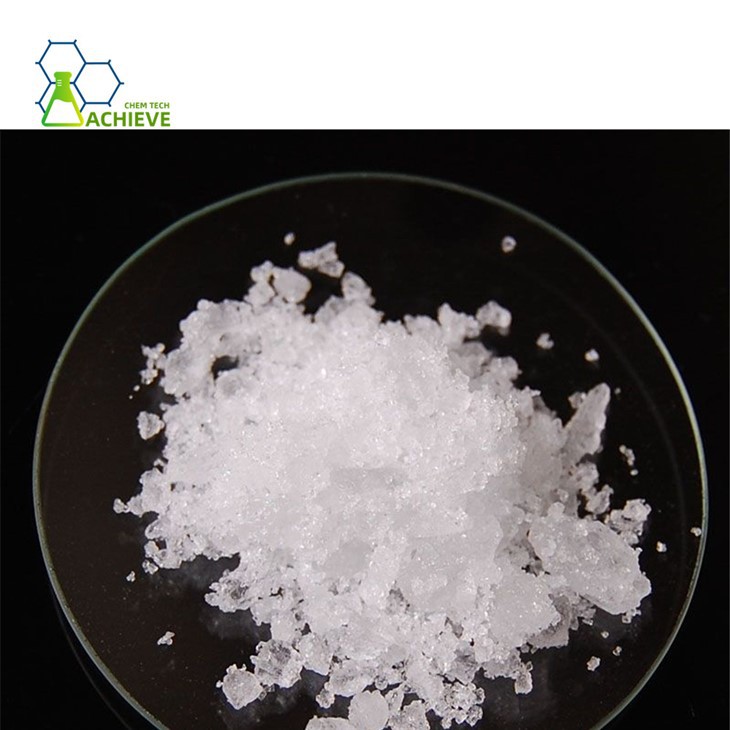

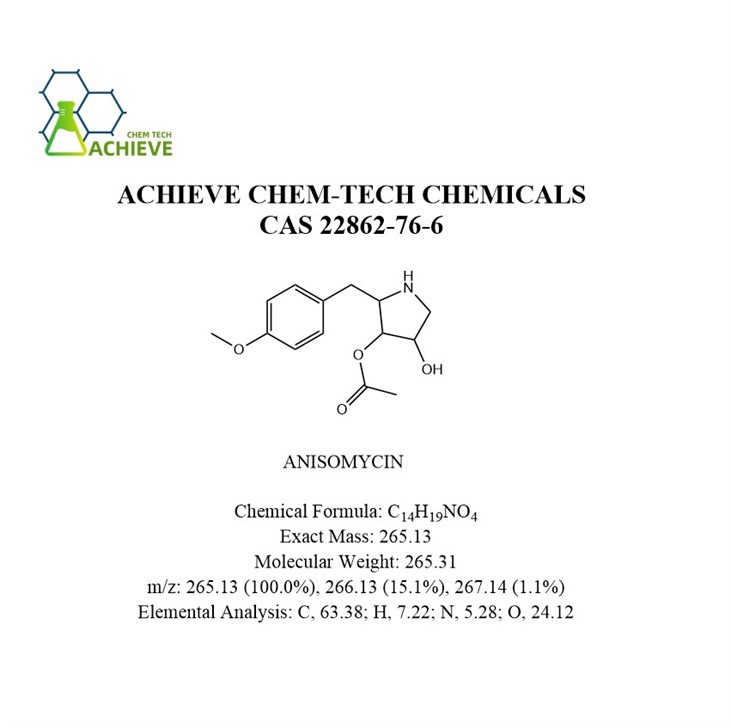
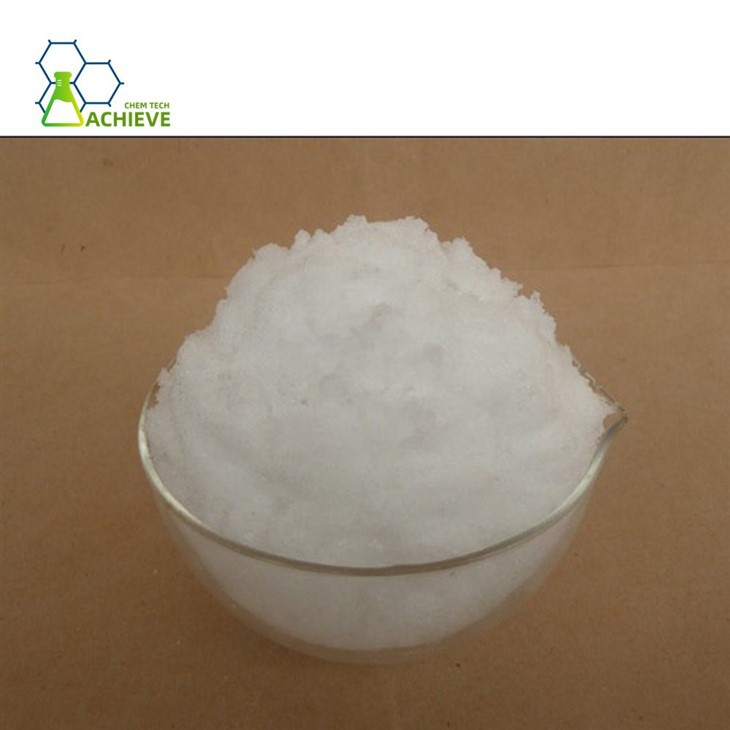
Anisomycin is a chemical substance, CAS 22862-76-6, The molecular formula C14H19NO4 represents the types and quantities of various elements in a chemical substance. Anismycin is composed of 14 carbon atoms, 19 hydrogen atoms, 1 nitrogen atom, and 4 oxygen atoms. At room temperature, it is a white crystalline solid with a fixed crystal morphology. Dissolve in 2 mg/mL of water, 20 mg/mL of DMSO (dimethyl sulfoxide), and 20 mg/mL of methanol. In cell experiments, the levels of PP2A/C subunits in cells can be reduced and exhibit time-dependent behavior. In animal experiments, it has a protective effect on the myocardium of mice and may affect the recovery of cardiac function in mice. Can be used for eradicating legume plant mold and inhibiting the growth of pathological molds in plants. As a bioactive substance, it has potential application value in the field of agriculture.

|
|
|

|
Chemical Formula |
C14H19NO4 |
|
Exact Mass |
265.13 |
|
Molecular Weight |
265.31 |
|
m/z |
265.13 (100.0%), 266.13 (15.1%), 267.14 (1.1%) |
|
Elemental Analysis |
C, 63.38; H, 7.22; N, 5.28; O, 24.12 |

Anisomycin itself is an antibiotic, but its primary application in agriculture is as a base substance for herbicides. Through chemical synthesis, compounds with highly efficient herbicidal activity, such as Methoxyphylline, can be synthesized using anismycin as the active crystalline matrix.
Deoxystrobin is an efficient herbicide mainly used for pre emergence treatment to control annual weeds. Its herbicidal activity is manifested in two aspects: firstly, it can control weeds such as Echinochloa crus and Echinochloa crus at a concentration of 50 μ g/ml, causing the young shoots of weeds to wither and die; The second is that the growth of mixed grass roots can be inhibited by a concentration of 12.5 μ g/ml.


Specific examples:
(1) Weeding in farmland: In farmland, herbicides are commonly used to control annual weeds that pose a threat to crop growth. For example, in live rice fields, the use of herbicides such as Echinochloa crus and Echinochloa crus can effectively control the growth of weeds, ensuring the healthy growth of rice.
(2) Orchard weed control: There are often many weeds competing with fruit trees for nutrients and water in the orchard. Using herbicides can significantly reduce the number of weeds and improve the yield and quality of fruit trees.
(3) Lawn weeding: Weeds in the lawn not only affect aesthetics, but may also affect the growth of the lawn. Using herbicide can keep the lawn clean and beautiful.
In addition to herbicide, it can also be used as a synthetic material for other herbicides. For example, in the process of screening herbicides in Japan, a non selective herbicide NK-049 was developed from anismycin. This herbicide has significant control effects on various weeds.
Specific examples:
Application of NK-049: As a non selective herbicide, NK-049 can be used for weed control in various places such as farmland, orchards, lawns, etc. Its weed control effect is rapid and long-lasting, which can significantly improve the yield and quality of crops.

Application in Plant Growth Regulation
In addition to serving as a base substance for herbicides, it can also be used for regulating plant growth. Among them, the most common are gibberellin plant growth regulators.
1. Synthesis and Application of Gibberellin

Gibberellin is an efficient plant growth regulator widely used in vegetables, fruit trees, and grain and cotton crops. It can promote the growth, germination, flowering and fruiting of crops, stimulate fruit growth, improve fruit setting rate, and have significant yield increasing effects.
Specific examples:
(1) Vegetable yield increase: In vegetable cultivation, the use of gibberellin can promote the growth and development of vegetables, improve their yield and quality. For example, in cucumber cultivation, the use of gibberellin can increase the yield and length of cucumbers, and enhance their commercial value.
(2) Fruit tree yield increase: In fruit tree planting, the use of gibberellin can promote the flowering and fruiting of fruit trees, improve fruit yield and quality. For example, in apple cultivation, the use of gibberellin can increase the yield and size of apples, improve their taste and nutritional value.
(3) Grain and cotton crop yield increase: In the cultivation of grain and cotton crops, the use of gibberellin can promote crop growth and development, improve crop yield and quality. For example, in rice cultivation, the use of gibberellin can increase rice yield and thousand grain weight, and improve rice's lodging resistance.

2. Usage and precautions of gibberellin

Gibberellin mainly comes in two forms: powder and water. When using, the following points should be noted:
Use of powder: Gibberellin powder is insoluble in water, so it needs to be dissolved with a small amount of ethanol or Baijiu before being diluted with water to the required concentration. Water solutions are prone to failure and should be prepared and used immediately. Cannot be mixed with alkaline pesticides to avoid failure.
The use of water agent: Gibberellin water agent does not require ethanol dissolution during use, and can be directly diluted for use. Dilute directly when in use, with a dilution factor of 1200-1500 times.
Attention: When using gibberellin, adjustments should be made according to the growth of crops and climatic conditions. Meanwhile, it is important to avoid excessive use to prevent negative impacts on crops.

Application in pesticide damage control

In addition to being used as herbicides and plant growth regulators, fenicol and its derivatives can also be used for controlling pesticide damage. Especially when crops are damaged by herbicides, the use of fenicol and its derivatives can significantly alleviate the effects of herbicide damage.
Specific examples:
(1) Elimination of herbicide damage: In farmland, herbicides are sometimes needed to control weed growth. However, excessive use of herbicides may cause phytotoxicity to crops. At this point, the use of fenicol and its derivatives can significantly reduce the impact of drug damage, promote crop recovery and growth.
(2) Elimination of other pesticide harms: In addition to herbicides, other pesticides may also cause pesticide harm to crops. The use of fenicol and its derivatives can also alleviate the negative effects of these pesticides on crops.

Other Applications of Anisomycin and Its Derivatives

In addition to the above applications, there are other applications in the field of agriculture. For example, as a plant growth regulator, actinomycetes have the characteristics of strong systemic absorption and significant bactericidal function. It can induce the production of ethylene in the fruit and quickly transport it to the fruit stalk, promoting the formation of abscission layers and making the fruit easy to fall off, thereby reducing the labor force of fruit picking.
Specific examples:
Fruit picking: In fruit tree cultivation, the use of actinomycetes can promote fruit shedding and reduce the labor required for fruit picking. For example, in apple cultivation, the use of actinomycetes can make apples easier to fall off the tree and improve harvesting efficiency.
Anismycin has broad application prospects and enormous development potential in the field of agriculture. As an important raw material for herbicides, plant growth regulators, and pesticide damage control agents, fenicol will continuously promote the progress and development of agricultural technology. In the future, with the continuous innovation and optimization of technologies such as new herbicides, plant growth regulators, and pesticide damage control agents, the application of fenicol in the agricultural field will be more extensive and in-depth. At the same time, the promotion of sustainable agricultural development technologies will also provide broader space and opportunities for the application of fenicol.

Anismycin, as an effective protein synthesis inhibitor, plays an important role in the fields of biology and medicine research. It interferes with the function of eukaryotic ribosomes through specific mechanisms of action, thereby inhibiting protein synthesis. The following is a detailed explanation of the mechanism of action as a protein inhibitor.
Mechanism of action
Mainly by inhibiting the peptidyl transferase activity of eukaryotic ribosomes to interfere with protein synthesis. Ribosomes are key machines responsible for protein synthesis within cells, and peptidyl transferase is a crucial enzyme on ribosomes that connects amino acids one by one during the elongation of peptide chains.
1. Inhibit peptidyl transferase activity
Can bind to peptidyl transferase on ribosomes, thereby reducing their catalytic activity. When the activity of peptidyl transferase is inhibited, ribosomes are unable to effectively link amino acids into peptide chains, leading to the interruption of protein synthesis.
2. Interference with ribosome function
In addition to directly inhibiting peptidyl transferase activity, it may also interfere with ribosome function through other means. For example, it may alter the conformation of ribosomes, making it unable to correctly recognize and bind codons on mRNA templates, or affect the transport and localization of tRNA, thereby further hindering protein synthesis.
Biological Effects
Due to its ability to inhibit protein synthesis, it has significant effects in various biological processes.
Inducing cell apoptosis
It can induce apoptosis in various cells, including promyelocytic leukemia cells, Jurkat cells, ventricular myocytes, and colon adenocarcinoma cells. Apoptosis is a programmed cell death process that plays an important role in maintaining the homeostasis of organisms and clearing damaged cells. By inhibiting protein synthesis, it interferes with the normal physiological functions of cells, thereby triggering the mechanism of apoptosis.


Affects signal pathways
It is also a potent JNK (c-Jun N-terminal kinase) activator that can activate MAP kinases (JNK/SAPK and p38/RK). These kinases play an important role in cellular signaling, participating in regulating processes such as cell proliferation, differentiation, apoptosis, and stress response. By activating kinases such as JNK, it further affects intracellular signaling pathways and gene expression patterns.
Immunosuppressive activity
It also exhibits certain immunosuppressive activity. In animal experiments, it can block T cell proliferation in skin transplant mice, thereby reducing immune rejection reactions. This discovery provides potential possibilities for its application in the field of immunotherapy.

Anisomycin, as an effective protein synthesis inhibitor, interferes with protein synthesis by inhibiting the peptidyl transferase activity of eukaryotic ribosomes. This mechanism of action makes it widely applicable in the fields of biology and medical research. However, it should be noted that fenicol is not a commercially available clinical drug and is only used for scientific research purposes. When further researching and developing its potential clinical applications, it is necessary to carefully evaluate its safety and efficacy.
FAQ
What is anisomycin used for?
Anisomycin (sometimes known as flagecidin), is an antibiotic retrieved from the bacteria Streptomyces griseolus. This drug acts to inhibit bacterial protein and DNA synthesis. Anisomycin has been reported in Streptomyces hygrospinosus and Streptomyces with data available.
What does anisomycin do to memory?
The process of memory consolidation involves the synthesis of new proteins, and interfering with protein synthesis through anisomycin can impair memory. Memory deficits due to aging and sleep disorders may also result from a reduction in protein synthesis.
Is anisomycin FDA approved?
These products are specifically designed for research use and are not approved for human or animal consumption. Not FDA approved.
What is the mode of action of anisomycin?
Anisomycin (2-p-methoxyphenylmethyl-3-acetoxy-4-hydroxypyrrolidine) inhibits protein synthesis in HeLa cells, rabbit reticulocytes, Saccharomyces fragilis, and cell-free extracts prepared from these sources, but it is inactive against extracts of Escherichia coli.
Hot Tags: anisomycin cas 22862-76-6, suppliers, manufacturers, factory, wholesale, buy, price, bulk, for sale, Hydrocortisone Powder CAS 50 23 7, Pure Dexmedetomidine CAS 113775 47 6, Daidzin, Chrysophanic Acid CAS 481 74 3, isoflurane powder, Pramipexole Powder CAS 104632 26 0