




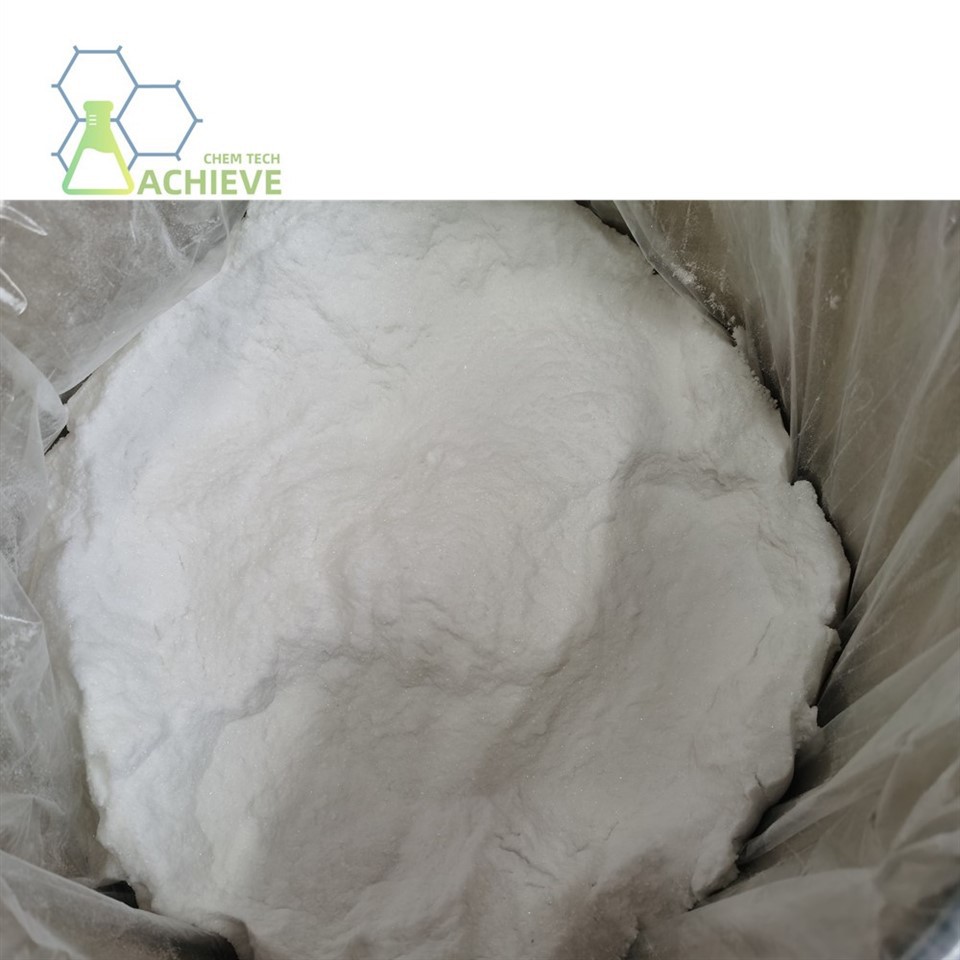
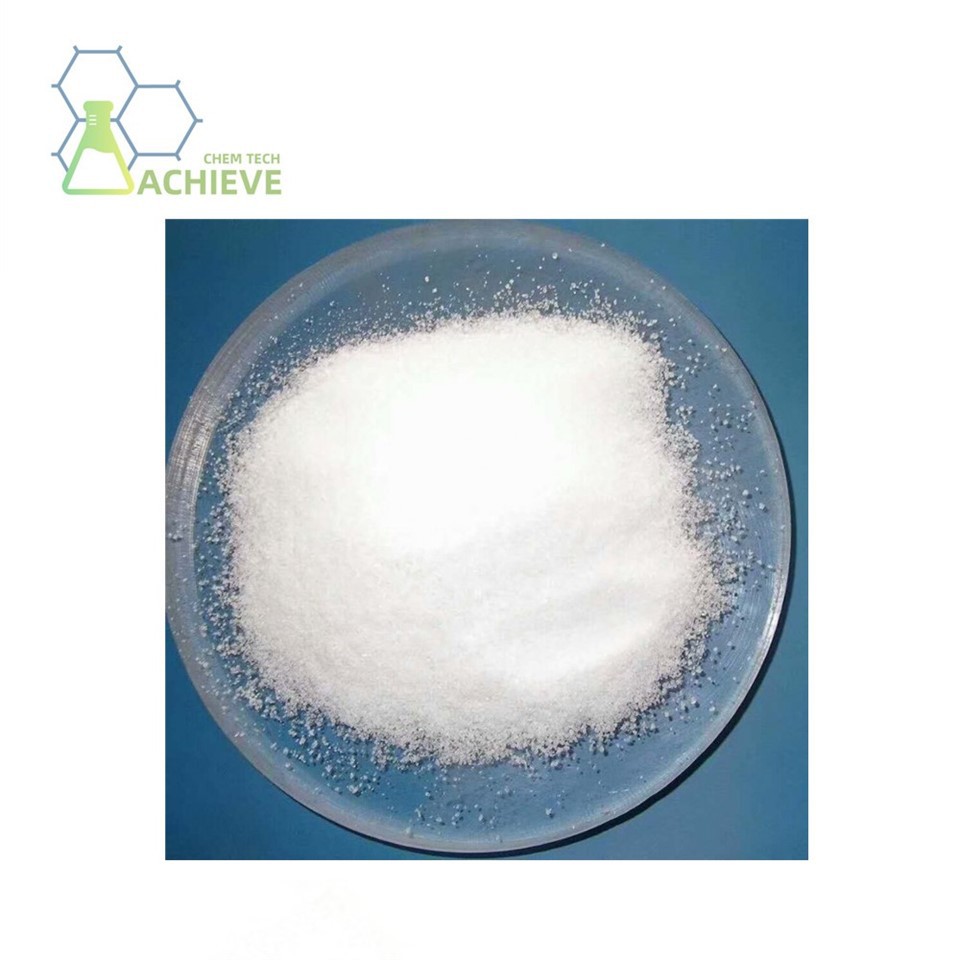
Bloomtechz supplies Esculin, which can be extracted from certain plants. The high-purity product appears as white needle-like crystals or powder. This crystalline form shows that the molecular structure is well-ordered and stable. In water solutions with pH above 5.8, it can exhibit blue fluorescence. The raw extract often comes with coumarin compounds like aesculin, phellodendrine, phellodendrin, and eugenol glucoside, as well as tannins and alkaloid impurities.
Bloomtechz uses plant extraction and purification techniques to make Esculin, carefully controlling extraction, separation, and recrystallization steps, effectively keeping the levels of tannins, alkaloids, and other impurities low, ensuring consistent quality across batches to meet research, reagent, and downstream formulation needs. For storage and cross-border shipping, the product should be kept sealed and away from light, in a cool, dry place, avoiding light and high temperatures that could cause degradation. Packaging is done with moisture-proof sealed containers, and transport precautions protect against compression. Bloomtechz can provide a chemical safety datasheet (SDS), support global shipping declarations, and comply with chemical storage and transport safety standards, ensuring the product reaches customers in perfect condition.

|
|
|

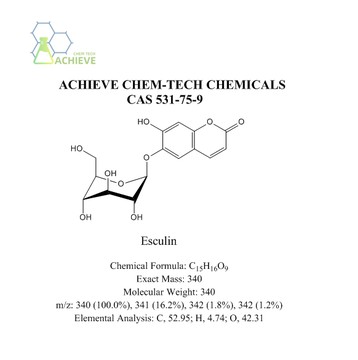
|
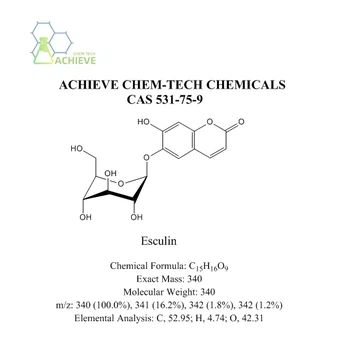
Chemical Formula |
C15H16O9 |
|
Exact Mass |
340 |
|
Molecular Weight |
340 |
|
m/z |
340 (100.0%), 341 (16.2%), 342 (1.8%), 342 (1.2%) |
|
Elemental Analysis |
C, 52.95; H, 4.74; O, 42.31 |

Soluble in organic solvents such as hot alcohol, methanol, pyridine, ethyl acetate, and acetic acid (hydrate), this characteristic provides convenience for its application in the pharmaceutical and chemical fields. However, its low solubility in water indicates weak hydrophilicity, which is related to the non-polar part of its molecular structure. A bitter flavoring agent. This product is hydrolyzed and hydrogenated to obtain naringin dihydrochalcone as a sweetener, with a sweetness about 150 times that of sucrose. It has anti-inflammatory, antibacterial, anticoagulant, analgesic and other activities, and has a significant diuretic effect on mice. It can inhibit aldose reductase in rat lenses and is a growth inhibitor of Bacillus subtilis. It also has an inhibitory effect on chemical carcinogenesis.
Application areas of this
Esculin, as a compound with extensive pharmacological activity, has shown unique value and potential in fields such as medicine, cosmetics, and health products.
1. Anti inflammatory effect:
Qinpi Jia Su has significant anti-inflammatory activity and can effectively inhibit the production and release of various inflammatory factors. Research has shown that Qinpi Jia Su can inhibit the inflammatory response of rats with intraperitoneal injection of carrageenan induced, dextrose induced, serotonin induced, and histamine induced arthritis, with inhibition intensities of 35%, 28%, 20%, and 8%, respectively. In addition, Qinpi Jia Su also has an inhibitory effect on formaldehyde induced arthritis, but its effect is slightly weaker.


2. Diuretic effect:
Qinpi Jia Su has a significant diuretic effect on mice, and various administration routes can enhance the excretion of uric acid in rats and rabbits. This effect is of great significance for the treatment of urinary system diseases such as nephritis and urinary tract stones. At the same time, Qinpi Jia Su can also lower blood pressure, enhance capillary resistance, reduce capillary fragility, lower blood lipids, dilate coronary arteries, increase coronary blood flow, etc. It also has a certain auxiliary therapeutic effect on patients with cardiovascular diseases such as hypertension and coronary heart disease.
3. Antibacterial effect: Qinpi Jia Su has inhibitory effects on various bacteria, including Bacillus subtilis. This characteristic makes Esculin have potential application value in the treatment of bacterial dysentery, tracheitis and other infectious diseases.
4. Analgesic effect: Qinpi Jia Su has a certain analgesic effect, which has inhibitory effects on the formation of granulomas in rats, erythema reaction caused by ultraviolet radiation on the back of guinea pigs, and increased capillary permeability caused by histamine. This characteristic provides a natural analgesic for pain patients.


5. Relieve skin aging: Qinpi Jia Su has antioxidant activity and prevents chemically induced carcinogenesis, which makes it have potential application value in the cosmetics field. In skincare products, quercetin can serve as an antioxidant, effectively clearing free radicals and delaying the aging process of the skin.
6. Enhancing skin resistance: For the skin itself, it can reduce damage from the external environment to the skin. In cosmetics, Qinpi Jia Su can be used as a preservative to extend the shelf life of products. In addition, Qinpi Jia Su also has whitening and freckle removing effects, which can improve problems such as uneven skin tone and dullness.
7. In the field of health products, as a natural extract, its safety and efficacy have been widely recognized. In the field of health products, Qinpi Jia Su can serve as a nutritional supplement, providing a variety of bioactive substances that are beneficial to the human body. For example, it can serve as an anti-inflammatory and antibacterial supplement to help enhance the human immune system; Meanwhile, it can also serve as an adjunct to diuretics and antihypertensive drugs, helping to improve symptoms in patients with cardiovascular diseases.


8. The inhibitory effect of chemical carcinogenesis: Qinpi Jia Su has an inhibitory effect on chemical carcinogenesis, which provides a possibility for its application in cancer prevention and treatment.
9. Other fields: In addition to pharmaceuticals, cosmetics, and health products, Qinpi Jia Su also has certain application value in other fields. For example, in microbiology, quercetin can be used for the isolation and identification of Enterococcus (Group D Streptococcus). In addition, Qinpi Jia Su can also be used as a chemical reagent, analytical reagent, etc., playing an important role in scientific research and industrial production.

Esculin, also known as horse chestnut bark glycoside, seven leaf spirit or seven leaf glycoside, is a natural product extracted from specific plants. It has various pharmacological activities such as anti-inflammatory, antibacterial, anticoagulant, and analgesic, and has broad application prospects in fields such as medicine, cosmetics, and health products. Therefore, researching and developing synthetic methods for quercetin is of great significance for meeting market demand and promoting the development of related industries. As a compound with extensive pharmacological activity, its synthesis method has always been a focus of attention in scientific research and industrial fields.
The synthesis method of Qinpi Jia Su
The synthesis methods of quercetin mainly include multiple pathways such as extraction from plants, chemical synthesis, and biosynthesis. The specific steps and characteristics of these methods will be introduced separately below.
1. Extract from plants
Extracting quercetin from plants is the most direct and commonly used method. The ethanol reflux extraction method is generally used. Firstly, the raw materials of Qinpi are crushed and a certain concentration of ethanol is added for reflux extraction. After the extraction solution undergoes steps such as concentration and crystallization, high purity Qinpi Jia Su can be obtained. This method is simple and easy to implement, with low cost, but it is greatly affected by the source of raw materials and extraction conditions, and the purity is often difficult to meet the requirements of industrial applications.
2. Chemical synthesis method
Chemical synthesis is a method of synthesizing quercetin through chemical reactions. At present, various chemical synthesis routes have been reported, but most synthesis routes are cumbersome, have harsh conditions, high costs, and are prone to producing by-products and waste, causing certain environmental pollution. Here is a relatively simple and cost-effective chemical synthesis method:
- (1) Raw material preparation: Select appropriate starting materials, such as coumarin compounds.
- (2) Reaction steps: Under the action of a catalyst, the molecular structure of quercetin is gradually constructed through chemical reaction steps such as addition, oxidation, and reduction. The specific reaction conditions include temperature, pressure, reaction time, solvent, etc., which need to be optimized according to experimental conditions and product requirements.
- (3) Post treatment: After the reaction is completed, crude Qinpi Jia Su is obtained through steps such as filtration, washing, and drying. Then, purification steps such as recrystallization and chromatographic separation are carried out to improve the purity and quality of the product.
- (4) Inspection and characterization: By analyzing methods such as melting point, specific rotation, mass spectrometry, nuclear magnetic resonance, etc., the product is inspected and characterized to ensure that its structure and purity meet the requirements.
The chemical synthesis method has the advantages of a wide range of raw material sources, controllable reaction conditions, and high product purity. However, due to the multiple reaction steps, harsh conditions, and high cost, its industrial application is limited.
3. Biosynthesis method
Biosynthesis is a method of synthesizing quercetin using microbial or plant cell culture techniques. This method has the advantages of a wide range of raw material sources, environmental friendliness, and mild reaction conditions.
At present, various microorganisms and plant cells have been used for the biosynthesis research of quercetin. For example, through genetic engineering technology, microbial metabolic pathways can be modified to synthesize quercetin;
Alternatively, using plant cell culture techniques to simulate the plant's internal environment in vitro and promote the synthesis of quercetin. However, the biosynthesis method still faces problems such as low yield, long cycle, and poor stability, which require further research and optimization.

4. Comparison and selection of synthesis methods
Extraction, chemical synthesis, and biosynthesis from plants are the three main methods for the synthesis of quercetin. They each have their own advantages and disadvantages, and need to be selected based on specific application needs and actual situations. The extraction method from plants is simple, feasible, and cost-effective, but it is greatly influenced by the source of raw materials and extraction conditions;
The chemical synthesis method has a wide range of raw materials, controllable reaction conditions, and high product purity, but the steps are cumbersome, the conditions are harsh, and the cost is high; The biosynthesis method has a wide range of raw materials, is environmentally friendly, and has mild reaction conditions, but its yield is low, cycle time is long, and stability is poor. Therefore, when choosing a synthesis method, it is necessary to comprehensively consider factors such as cost, yield, purity, and environmental friendliness to choose the most suitable method.

Esculin mainly comes from the dry bark and branch bark of plants in the Oleaceae family, as well as some parts of plants in the Aesculaceae, Asteraceae, and Rubiaceae families. High purity of quercetin can be obtained through traditional plant extraction and purification techniques.
01.Plant sources
Qinpi Jia Su mainly comes from various plants, especially Oleaceae plants. Specifically, it can be extracted from the dry bark and branches of plants such as Fraxinus rhynchophylla Hance, Fraxinus chinensis Roxb., Fraxinus szaboana Lingelsh., or Fraxinus stylosa Lingelsh. These plants are mainly distributed in Northeast China, Hebei, Henan, Inner Mongolia, Shaanxi, Shanxi, and the Yangtze River Basin, and are mostly wild or cultivated.


In addition, it can also be extracted from the bark of the Aesculus hippocastanum L., the whole grass of the Cichorium intybus L. in the Asteraceae family, and the Hymenodictyon excelsum in the Rubiaceae family. The diversity of these plant sources not only provides abundant resources for the extraction of quercetin, but also lays the foundation for the study of its pharmacological activity.
02.Extraction and purification
The extraction of quercetin mainly relies on traditional plant extraction techniques, such as boiling, soaking, reflux, etc. During the extraction process, organic solvents such as ethanol and methanol are usually used to extract effective components from plants. After the extraction solution undergoes steps such as concentration and crystallization, it can obtain high purity Qinpi Jia Su.


The purification process mainly includes techniques such as crystallization, recrystallization, and chromatographic separation. These technologies can effectively remove impurities from the extraction solution and improve the purity and quality of quercetin. For example, through thin layer chromatography technology, qualitative and quantitative analysis of Qinpi Jia Su can be carried out to ensure the quality and stability of the product.
03.Pharmacological activity and application
Qinpi Jia Su has various pharmacological activities, such as anti-inflammatory, antibacterial, anticoagulant, analgesic, etc. These activities make quercetin have broad application prospects in the pharmaceutical field. For example, it can be used to treat diseases such as bacterial dysentery and tracheitis;


Meanwhile, due to its diuretic effect, it can also be used to treat urinary system diseases such as nephritis. In addition, Qinpi Jia Su can also be used to prepare drugs for the prevention and treatment of osteoporosis, and its naturally extracted characteristics make it safe to use with minimal toxic side effects
Transport
Esculin is a high-value natural flavonoid compound. Thanks to its excellent antioxidant, anti-inflammatory, antibacterial, and UV-protection properties, it's widely used in biomedicine, cosmetics development, food additives, and research labs. As a company focused on high-end fine chemicals R&D and production, Bloomtechz has been deeply involved in the industry for 12 years and has a mature large-scale production system. Our products have stable purity, compliant quality, and are exported to dozens of countries and regions across Europe, America, Southeast Asia, and Oceania. For fine chemical bio-materials like this, product stability and compliance are crucial, and overseas cross-border shipping is key to ensuring product quality, opening up global markets, and maintaining international client relationships. Drawing on years of hands-on cross-border logistics experience, Bloomtechz has built a standardized, full-process, traceable overseas transport system that precisely matches product characteristics with international shipping regulations, achieving efficient, safe, and compliant global delivery.
Because this powder is prone to moisture, oxidation, and pressure damage, the company uses a multi-layer sealed protective packaging process to create a comprehensive protection system. The inner layer uses food-grade, pharmaceutical-grade sealed aluminum foil bags with vacuum sealing to completely block out air, moisture, and UV rays, preventing oxidation and moisture damage during transport. The middle layer is made of thick shockproof foam to cushion bumps, pressure, and vibrations during long-distance shipping,

avoiding powder compaction, clumping, and packaging damage. The outer layer uses high-strength anti-static cardboard that is wear-resistant, compressive, and moisture-proof, suitable for sea, air, and land transport.

All packaging is strictly customized according to UN standards, with uniform specifications, labels, and protection levels, eliminating transport risks from packaging differences. Additionally, each batch has clear product labels, protection tips, shipping instructions, and batch tracking codes on the outside, clearly stating product properties, storage temperature, and moisture/light protection requirements, providing precise guidance for cross-border transport, interim warehousing, and final delivery, helping avoid product loss from the start.
Frequently Asked Questions
Q1: How can we prevent fluorescence decay from repeatedly opening the container?
+
-
Esculin's fluorescence is very sensitive to trace amounts of oxygen and moisture. Repeatedly opening the lid for sampling gradually reduces detection sensitivity. Bloomtechz uses nitrogen-filled, light-proof, sealed packaging at the factory. We recommend customers take small amounts at a time, close the lid immediately after use, and avoid long-term exposure to air. This helps maintain batch fluorescence stability and ensures repeatable microbiological testing and experimental data.
Q2: Why should we avoid prolonged heating at high temperatures when preparing solutions?
+
-
Many users overlook the risk of thermal degradation. Dissolving at high temperatures for a long time can slightly damage Esculin's structure, create light-colored impurities, and reduce color accuracy. We suggest gentle dissolving at low temperatures and allowing natural cooling. Bloomtechz strictly controls the thermal stability of raw materials, ensuring consistent heat resistance across batches, effectively reducing sources of experimental error.
Q3: How to prevent hidden moisture absorption in a humid maritime environment?
+
-
Esculin powder absorbs moisture slowly but continuously. Prolonged exposure to high humidity during ocean shipping can cause internal slight caking, which is not easily visible but affects dissolution uniformity. Bloomtechz uses vacuum aluminum foil with separate desiccants for dual-layer protection in export packaging. The moisture-proof level matches long-term maritime conditions, ensuring the powder arrives loose, dissolves well, and has no hidden moisture risk.
Q4: Why is it not recommended to pack with aromatic materials during cross-border shipping?
+
-
Esculin is used for precise color development and antibacterial experiments and is highly sensitive to odors and trace organic volatiles. Packing with aromatic materials can lead to adsorption contamination, interfering with results. Bloomtechz follows isolation packing standards during transport, placing items in separate zones to prevent cross-contamination and maintain research-grade purity.
Q5: How to avoid customs disputes over reagent/intermediate classification?
+
-
Esculin has both biochemical reagent and chemical raw material properties, and customs can be unclear on classification, causing inspection delays. Bloomtechz provides customized classification guidance, complete compliance documentation, and physical property certification, clearly defining product usage and category. This reduces the chance of manual inspections and ensures efficient customs clearance and stable delivery during cross-border transport.
Hot Tags: esculin cas 531-75-9, suppliers, manufacturers, factory, wholesale, buy, price, bulk, for sale, Adapalene Powder CAS 106685 40 9, API Researching Only , phenacetin crystal, eriodictyol powder, Hydrocortisone Powder CAS 50 23 7, articaine hydrochloride powder