





Shaanxi BLOOM Tech Co., Ltd. is one of the most experienced manufacturers and suppliers of etelcalcetide peptide in China. Welcome to wholesale bulk high quality etelcalcetide peptide for sale here from our factory. Good service and reasonable price are available.
Etelcalcetide peptide, also known as AMG416, has a CAS number of 1262780-97-1 and a CAS number of 1334237-71-6 for its hydrochloride form. The molecular formula is C38H73N21O10S2, with a molecular weight of 1048.25 (for the peptide itself), and the hydrochloride form has a molecular weight of 1084.71186.
It is a compound formed by a seven amino acid peptide and a single cysteine (Cys) through intermolecular thiol groups. Its chemical structure is unique, with amino acid residues in the peptide chain connected by peptide bonds. The connection between cysteine thiol groups and the peptide chain affects the overall stability, charge distribution, and ability to interact with other molecules of the peptide.
Our Products Form
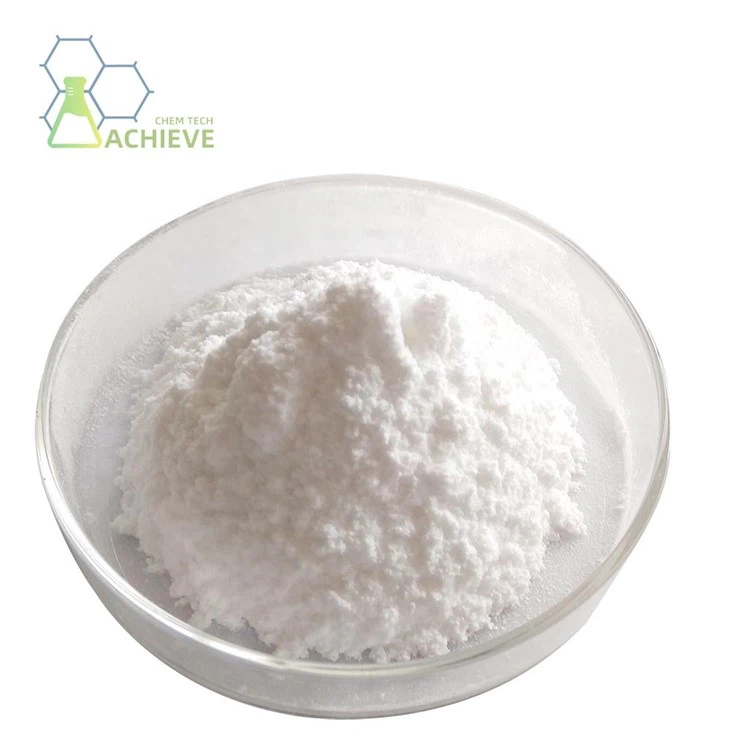
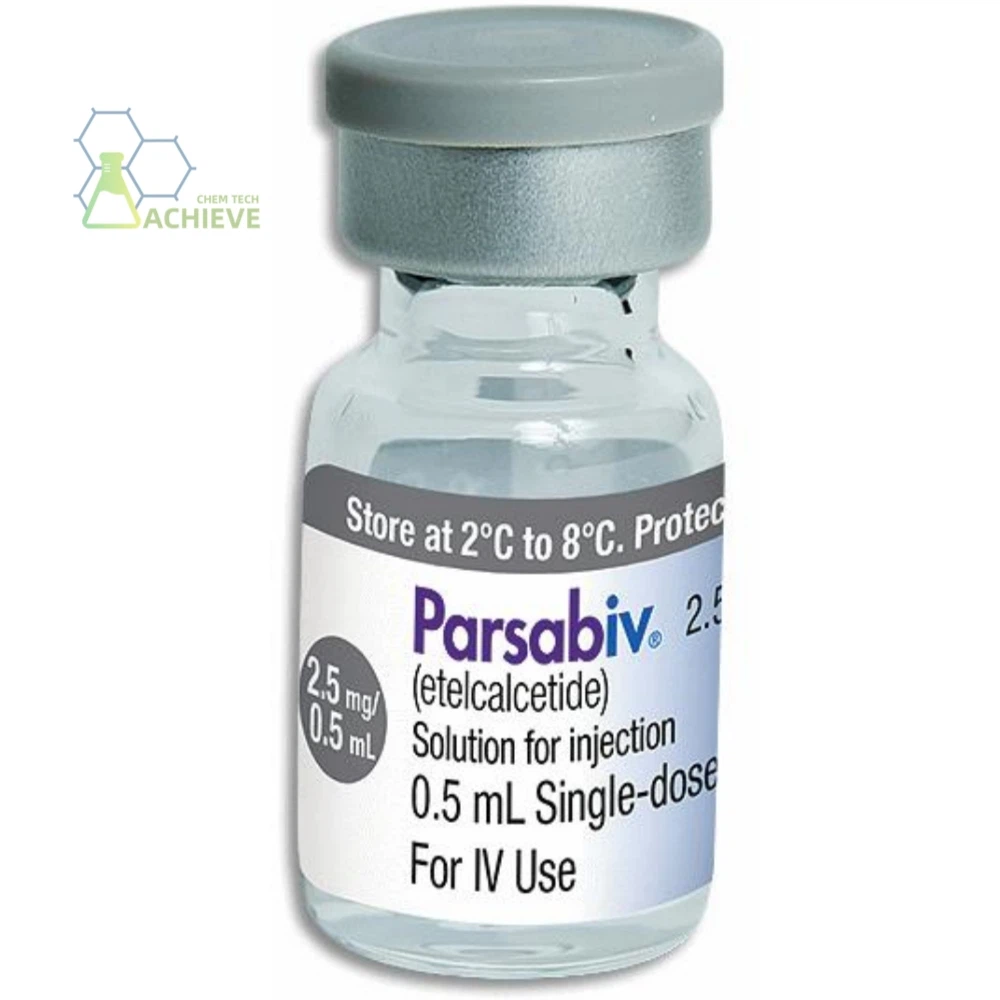

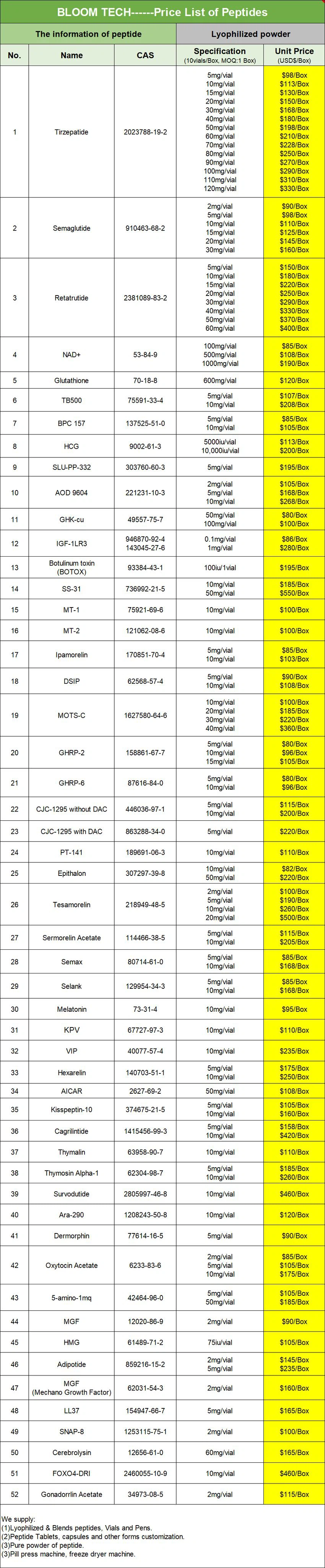
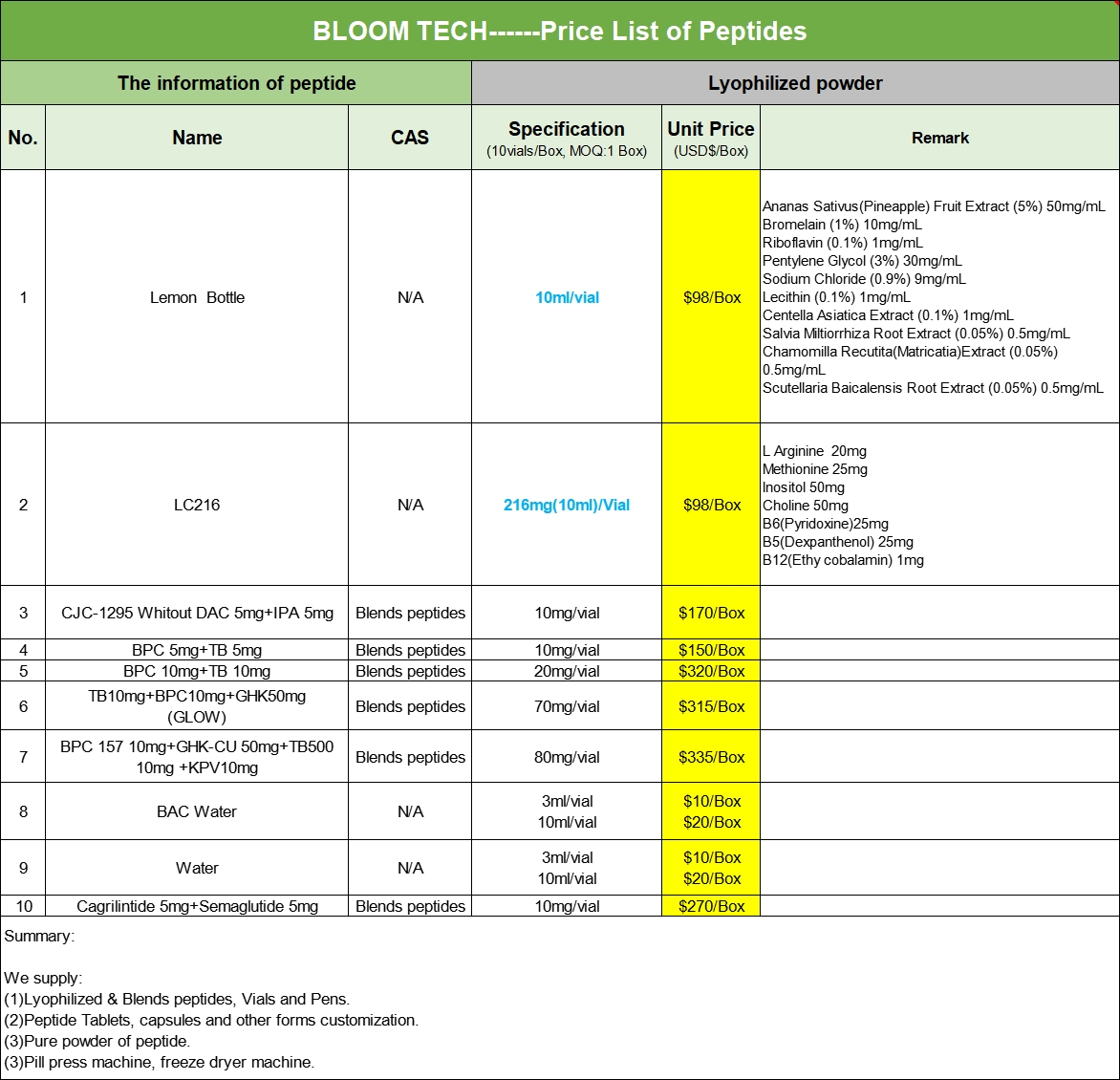

Etelcalcetide COA
 |
||
| Certificate of Analysis | ||
| Compound name | Etelcalcetide | |
| Grade | Pharmaceutical grade | |
| CAS No. | 1262780-97-1 | |
| Quantity | 40g | |
| Packaging standard | PE bag+Al foil bag | |
| Manufacturer | Shaanxi BLOOM TECH Co., Ltd | |
| Lot No. | 202601090057 | |
| MFG | Jan 9th 2026 | |
| EXP | Jan 8th 2029 | |
| Structure |
|
|
| Item | Enterprise standard | Analysis result |
| Appearance | White or almost white powder | Conformed |
| Water content | ≤5.0% | 0.47% |
| Loss on drying | ≤1.0% | 0.35% |
| Heavy Metals | Pb≤0.5ppm | N.D. |
| As≤0.5ppm | N.D. | |
| Hg≤0.5ppm | N.D. | |
| Cd≤0.5ppm | N.D. | |
| Purity (HPLC) | ≥99.0% | 99.90% |
| Single impurity | <0.8% | 0.56% |
| Total microbial count | ≤750cfu/g | 170 |
| E. Coli | ≤2MPN/g | N.D. |
| Salmonella | N.D. | N.D. |
| Ethanol (by GC) | ≤5000ppm | 400ppm |
| Storage | Store in a sealed, dark, and dry place below -20°C | |
|
|
||


| Chemical Formula: | C38H73N21O10S2 |
| Exact Mass: | 1048 |
| Molecular Weight: | 1048 |
| m/z: | 1048 (100.0%), 1049 (41.1%), 1050 (9.0%), 1050 (8.2%), 1049 (7.8%), 1051 (3.7%), 1050 (3.2%), 1050 (2.1%), 1049 (1.6%), 1051 (1.1%) |
| Elemental Analysis: | C, 43.54; H, 7.02; N, 28.06; O, 15.26; S, 6.12 |

Etelcalcetide peptide (trade name Parsabiv, formerly AMG416) is a novel calcicat sensitive receptor (CaSR) agonist primarily used for the treatment of secondary hyperparathyroidism (SHPT) in dialysis sick people with chronic kidney disease (CKD). Its mechanism of action involves multiple biological processes, which will be elaborated in detail from four aspects: molecular targets, signal transduction, physiological effects, and clinical significance.
Molecular target: Activation of calcicat sensitive receptors (CaSR)

Its core mechanism of action lies in its role as a specific agonist of CaSR, regulating the secretion of parathyroid hormone (PTH) by directly binding and activating CaSR on the surface of parathyroid cells. CaSR is a G protein coupled receptor (GPCR) widely distributed in tissues such as parathyroid glands, kidneys, and skeletons, and is crucial for maintaining calcicat and phosphorus balance in the body. Under normal physiological conditions, an increase in extracellular calcicat ion (Ca² ⁺) concentration activates CaSR, inhibits PTH secretion, and thus reduces blood calcicat levels; On the contrary, hypocalcemia inhibits CaSR activity and promotes PTH release to maintain blood calcicat stability.
In CKD sick people, renal failure leads to reduced phosphorus excretion and abnormal vitamin D metabolism, which in turn causes hypocalcemia and hyperphosphatemia. This calcicat and phosphorus metabolism disorder will continue to stimulate parathyroid cells, leading to downregulation of CaSR expression or impaired function, loss of PTH secretion, and ultimately the formation of SHPT. By simulating the effect of extracellular calcicat ions, the sensitivity of CaSR to physiological concentrations of calcicat ions is enhanced. Even if blood calcicat levels do not significantly increase, CaSR can be effectively activated to inhibit excessive secretion of PTH.

Information source:
ChemicalBook clearly states that it activates parathyroid calcicat sensitive receptors and inhibits PTH synthesis and secretion (published on April 3, 2026).
Zhihu Column and Sohu Public Platform further explain that verapamil "specifically binds and activates CaSR, triggers intracellular signal transduction, and inhibits PTH secretion" (published on November 12, 2024, September 4, 2024).
Signal transduction: a molecular pathway that inhibits PTH secretion

After binding with CaSR, it activates the G protein coupled phospholipase C (PLC) - protein kinase C (PKC) pathway, causing an increase in intracellular calcicat ion (Ca ² ⁺) concentration and hydrolysis of phosphatidylinositol-4,5-diphosphate (PIP ₂) to produce diacylglycerol (DAG) and inositol triphosphate (IPv3).
IP v3 further promotes the release of Ca² ⁺ from the endoplasmic reticulum, forming an intracellular calcicat signaling cascade that ultimately inhibits PTH gene transcription and secretion. In addition, CaSR activation can also block the cAMP dependent PTH secretion pathway by inhibiting adenylate cyclase (AC) activity and reducing intracellular cyclic adenosine monophosphate (cAMP) levels.

Research support:
NetEase News reported that a phase III clinical trial conducted by Anjin Company (2014) showed that after 26 weeks of treatment with verapamil, 75.3% of sick people had a decrease in PTH levels of more than 30%, far exceeding the placebo group (9.6%), confirming its significant inhibition of PTH secretion through CaSR activation (published on July 18, 2014).
The Bilibili column article emphasizes that verapamil "enhances the sensitivity of CaSR to calcicat ions, triggers downstream signaling pathways, inhibits parathyroid cell proliferation and PTH secretion" (published on December 6, 2024).
Physiological effects: comprehensive regulation of calcicat and phosphorus metabolism
It exerts multidimensional regulatory effects on calcicat and phosphorus metabolism by inhibiting PTH secretion:

Lowering blood phosphorus levels: PTH is a key hormone that promotes renal tubular phosphorus excretion. SHPT sick people suffer from hyperphosphatemia due to excessive secretion of PTH, while verapamil inhibits PTH, increases urinary phosphorus excretion, and reduces blood phosphorus concentration. Clinical trials have shown that treatment with verapamil can reduce blood phosphorus levels by 7.71%, while the placebo group only decreased by 1.31% (Mingyi Online, September 28, 2025).
Maintaining blood calcicat stability: PTH maintains blood calcicat balance by promoting skeleton calcicat release and renal tubular calcicat reabsorption. After inhibiting PTH, although verapamil may temporarily lower blood calcicat, long-term use can avoid excessive secretion of PTH leading to skeleton calcicat loss, and indirectly maintain blood calcicat stability by regulating vitamin D metabolism.


Improving skeleton health: SHPT sick people often experience renal skeleton malnutrition (such as skeleton pain and increased risk of fractures) due to PTH driven skeleton resorption enhancement. Vilacatide reduces PTH levels, decreases skeleton resorption, alleviates skeleton pain symptoms, and improves skeleton structure (Hangzhou Gutuo Biotechnology Co., Ltd., June 9, 2020).
Reducing vascular calcification: Hyperphosphatemia and excessive secretion of PTH are important triggers of vascular calcification. It reduces the risk of cardiovascular events by lowering blood phosphorus and PTH, inhibiting calcicat deposition in the vascular wall (Chemical Book, 2026-04-03).
Clinical significance: a new breakthrough in SHPT treatment
The mechanism of action of verapamil makes it a revolutionary drug for SHPT treatment, and its advantages are reflected in:
Intravenous administration with high compliance: Etelcalcetide peptide is an intravenous injection type that can be administered intravenously through the dialysis circuit at the end of dialysis, avoiding the problem of unstable absorption of oral drugs, especially suitable for dialysis sick people with gastrointestinal dysfunction (Hangzhou Gutuo Biotechnology Co., Ltd., June 9, 2020).


Low risk of drug interactions: The D-amino acid peptide skeleton of verapamil is not easily degraded by metabolic enzymes in the body, and its efficacy is long-lasting until it is cleared during the next dialysis, reducing interactions with other drugs (Sohu Public Platform, September 4, 2024).
Significant therapeutic effect and controllable safety: Multiple clinical trials have confirmed that the efficacy of verapamil in reducing PTH is superior to placebo and not inferior to oral calcicat mimetic cinacalcet. At the same time, adverse reactions such as hypocalcemia can be effectively managed through dose adjustment and calcicat supplementation (NetEase News, July 18, 2014; Mingyi Online, September 28, 2025).

Research progress and future directions
Since the FDA approved the listing of verapamil in 2017, its research focus has shifted towards long-term safety and optimization of combination therapy regimens

Long term safety: Long term use may increase the risk of hypocalcemia and upper gastrointestinal bleeding, and personalized dosing regimens (such as initial dose adjustment and blood calcicat monitoring) should be used to reduce adverse reactions (ChemicalBook, March 6, 2025).
Combination therapy: Its combination with vitamin D analogues and phosphate binders can synergistically regulate calcicat and phosphorus metabolism, reducing dose-dependent side effects of single drugs (Zhihu Column, 2024-11-12).
Indications expansion: Investigating the potential application of sorafenib in non dialysis CKD sick people, primary hyperparathyroidism, and osteoporosis (Bilibili column, December 6, 2024).
Vilacatide achieves precise regulation of calcicat and phosphorus metabolism by activating CaSR and inhibiting PTH secretion, providing an efficient and safe treatment option for SHPT sick people. Its unique mechanism of action and administration not only fills the limitations of traditional treatment, but also opens up a new path for the comprehensive management of complications of chronic kidney disease. With the deepening of research, it is expected to play an important role in a wider range of metabolic diseases.

Summary of Information Sources:
ChemicalBook (Booker Chemical Network): 2026-04-03, 2025-03-06
NetEase News: July 18, 2014
Famous Doctor Online: September 28, 2025
Hangzhou Gutuo Biotechnology Co., Ltd.: June 9, 2020
Sohu Public Platform: September 4, 2024
Zhihu Column: November 12, 2024
Bilibili Column: December 6, 2024

Etelcalcetide peptide, as a calcicat sensitive receptor (CaSR) agonist, can be clearly divided into the following key stages in its development process:
The mechanism of action is clear: by activating the calcicat sensitive receptor (CaSR) on the surface of parathyroid cells, the synthesis and secretion of parathyroid hormone (PTH) are inhibited, thereby reducing PTH levels in the blood and regulating calcicat and phosphorus metabolism.
Optimization of synthesis process: During the research and development process, scientists continuously optimize the synthesis process. For example, using solid-phase synthesis strategy, Fmoc-D-Ala-D-Arg (pbf) - OH, X-D-Cys (SS-Y-L-Cys (Ot Bu)), and Fmoc-D-Arg (pbf) - OH are used as starting materials to obtain crude verapamil peptide through coupling, cleavage, and other steps, and then purified to obtain high-purity products. This process optimization has increased yield, reduced costs, and laid the foundation for the subsequent development of verapamil peptide.
FDA approval: After rigorous clinical trials and approval processes, the US Food and Drug Administration (FDA) officially approved the market on February 7, 2017, for the treatment of secondary hyperparathyroidism (SHPT) in dialysis sick people with chronic kidney disease (CKD). This approval marks the official entry of verapamil into the clinical application phase, providing a new treatment option for SHPT sick people.
Significantly reduce PTH levels: Multiple clinical trials have confirmed that it can significantly reduce PTH levels in SHPT sick people. For example, a phase III clinical trial involving hundreds of sick people showed that after 26 weeks of treatment with verapamil, 75.3% of sick people had a decrease in PTH levels of more than 30%, far exceeding the placebo group (9.6%).
Improving calcicat and phosphorus metabolism: By regulating calcicat and phosphorus metabolism, promoting the excretion of phosphorus by the kidneys, reducing blood phosphorus concentration, and reducing skeleton calcicat release, maintaining blood calcicat stability. This helps to improve the calcicat and phosphorus metabolism disorders in SHPT sick people and reduce the risk of complications such as vascular calcification.
Relieve symptoms and improve quality of life: It can alleviate symptoms such as skeleton pain and skin itching caused by high PTH levels in SHPT sick people, and improve their quality of life. Meanwhile, by reducing the risk of complications, verapamil can also help prolong the survival of sick people.
Exploring new indications: Currently, researchers are exploring its potential applications in other disease areas, such as SHPT in non dialysis CKD sick people and primary hyperparathyroidism.
Optimizing treatment plan: In order to improve its efficacy and safety, researchers are still exploring its combination therapy with other drugs. For example, the combination with vitamin D analogues and phosphate binders can synergistically regulate calcicat and phosphorus metabolism, reducing dose-dependent side effects of single drugs.
Hot Tags: etelcalcetide peptide, suppliers, manufacturers, factory, wholesale, buy, price, bulk, for sale, 4 Fluorotropacocaine, paracetamol powder, Hydrocortisone Powder CAS 50 23 7, Adapalene Powder CAS 106685 40 9, 18 Glycyrrhetinic Acid CAS 471 53 4, 3-Hydroxytyramine