


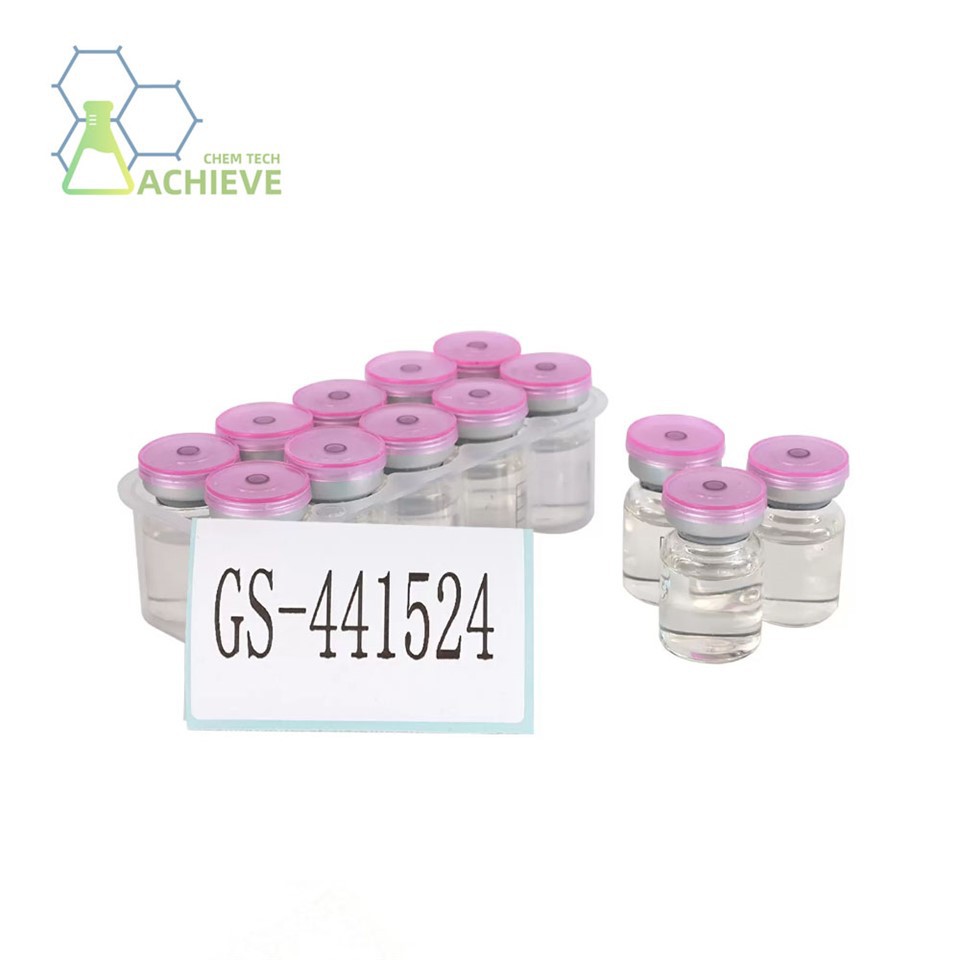



GS-441524 fip serves as a targeted therapeutic agent for feline infectious peritonitis (FIP), a highly fatal feline disorder triggered by mutated feline enteric coronavirus (FCoV). Pathological hallmarks of this condition encompass serous effusion in body cavities, granulomatous vasculitis and multi-organ injury. Typical clinical presentations comprise progressive weight loss, anorexia, persistent fever, jaundice and ascites. By suppressing the activity of viral RNA-dependent RNA polymerase, GS-441524 delivers revolutionary advancements in FIP management and markedly elevates the survival rate of affected felines. Backed by rigorous raw material screening and standardized purification workflows, Bloomtechz supplies high-purity GS-441524 raw material with complete batch test documentation, supporting veterinary formulation development and technical consultation for global partners.
Our Products


 |
Client Feedbacks
 |
 |
 |
About Shipping

Successfully delivery all over the world:
https://www.bloomtechz.com/news/the-shipping-information-of-100-tablets-qty-gs-85323689.html

GS-441524 COA
 |
||
Certificate of Analysis |
||
|
Compound name |
GS-441524 |
|
|
CAS No. |
1191237-69-0 |
|
|
Grade |
Veterinary grade |
|
|
Quantity |
5kg | |
|
Packaging standard |
PE bag+Al foil bag | |
| Manufacturer | Shaanxi BLOOM TECH Co., Ltd | |
|
Lot No. |
202601090065 | |
|
MFG |
Jan 9th 2026 |
|
|
EXP |
Jan 8th 2029 |
|
|
Structure |
|
|
| TEST STANDARD | GB/T24768-2009 Industry. Stnndard | |
|
Item |
Enterprise standard |
Analysis result |
|
Appearance |
White or almost white powder |
Conformed |
|
Water content |
≤5.0% |
0.31% |
| Loss on drying |
≤1.0% |
0.15% |
|
Heavy Metals |
Pb≤0.5ppm |
N.D. |
|
As≤0.5ppm |
N.D. | |
|
Hg≤0.5ppm |
N.D. | |
|
Cd≤0.5ppm |
N.D. | |
|
Purity (HPLC) |
≥99.0% |
99.9% |
|
Single impurity |
<0.8% |
0.48% |
|
Residue on ignition |
<0.20% |
0.064% |
|
Total microbial count |
≤750cfu/g |
80 |
|
E. Coli |
≤2MPN/g |
N.D. |
|
Salmonella |
N.D. | N.D. |
|
Ethanol (by GC) |
≤5000ppm |
400ppm |
|
Storage |
Store in a sealed, dark and dry place at-20 degrees |
|
|
|
||
|
|
||

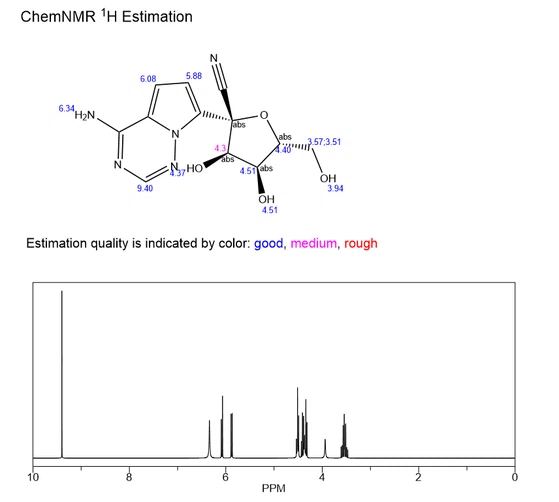
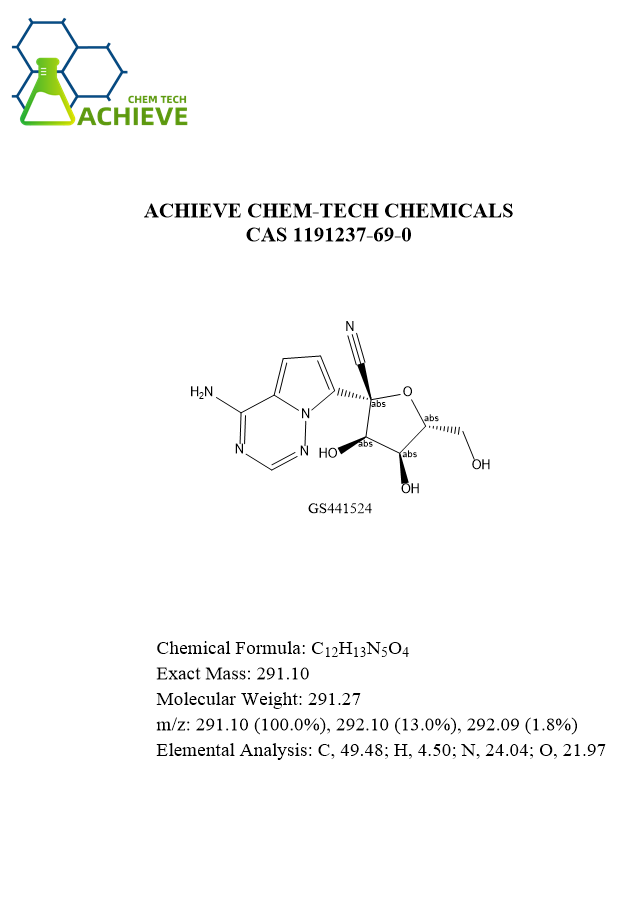
| Chemical Formula | C12H13N5O4 | |
| Exact Mass | 291.1 | |
| Molecular Weight | 292.1 | |
| m/z | 291.1(100.0%), 292.1(13.0%),292.09(1.8%) | |
| Elemental Analysis | C,49.48; H,4.50; N,24.04; O,21.97 | |

GS441524 fip has shown good efficacy in the treatment of viral infections. However, the preparation process of GS441524 is complex and requires strict control over each step to ensure the quality and stability of the injection. The following is the preparation process:
Raw materials and equipment for preparation
Raw material selection
GS441524 raw materials should be selected from high-purity and stable products to ensure the quality of the injection. The source of raw materials should be reliable, preferably purchased from formal channels, and avoid using materials of unknown origin.

Solvent selection
The choice of solvent is crucial for the solubility and stability of GS441524. Common solvents include 5% ethanol, 30% propylene glycol, 45% PEG400, and 20% water (pH 1.5, containing HCl). The selection of these solvents is based on the solubility, stability, and biocompatibility of GS441524 injection.

Equipment preparation
Electronic balance: used for precise weighing of GS441524 raw materials and solvents.
Magnetic stirrer: used for stirring solutions to ensure that the raw materials are fully dissolved.
Ultrasonic cleaner: used for ultrasonic treatment to improve the solubility and stability of drugs.
Aseptic filter: used to filter solutions and ensure the sterility of injections.
Injection bottles and sealing machines: used for packaging and encapsulating injections.

Preparation steps
| Raw material preparation | Accurately weigh the required amount of GS441524 raw material according to the preparation requirements. Select suitable solvents such as 5% ethanol, 30% propylene glycol, 45% PEG400, and 20% water (pH 1.5, containing HCl) for diluting GS441524. |
| Dilution and ultrasonic treatment | Place the weighed GS441524 raw material in a sterile container, add an appropriate amount of solvent, and stir until completely dissolved. Then place the dissolved solution in an ultrasonic water bath for 5-20 minutes of ultrasonic treatment to improve the solubility and stability of the drug. |
| Aseptic filtration | Select a suitable sterile filter based on the characteristics of the solution and sterile requirements, such as a 0.22 μ m microporous membrane. Filter the solution after ultrasonic treatment through a sterile filter to remove impurities and microorganisms from the solution, ensuring the sterility of the injection. |
| Packaging and packaging | Select sterile 50ml glass injection bottles as packaging containers to ensure the sealing and sterility of the injection bottles. The filtered solution can be divided into injection bottles according to the specified volume (such as 10ml or 15ml). Use appropriate sealing materials (such as rubber stoppers and aluminum caps) to encapsulate the injection bottle, ensuring the sealing and stability of the injection. |
| Storage conditions | Store the packaged GS441524 injection in a refrigerated environment to prevent drug degradation. It determines the expiration date of the injection based on the stability of the drug and experimental data, and clearly indicates it on the label. |
Possible problems and solutions during the preparation process

Solubility issue
It has low solubility in certain solvents, which may result in uneven drug concentration. Suitable solvent combinations can be selected, such as a mixed solvent of 5% ethanol, 30% propylene glycol, 45% PEG400, and 20% water, to enhance the solubility of the drug. During the dissolution process, methods such as ultrasonic treatment or heating are used to promote the dissolution of the drug.
Aseptic issues
During the preparation process, if the aseptic operation is not strict, it may lead to microbial contamination of the injection, affecting the safety and efficacy of the drug. During the preparation process, strict adherence to sterile operating procedures and the use of sterile equipment and solvents can be ensured. Then perform aseptic testing on the prepared injection to ensure that it meets the aseptic requirements.


Stability issues
The stability of GS-441524 may vary under different conditions, such as light exposure, temperature, pH value, and other factors that may affect the stability of the drug. During the preparation process, the pH value of the solution can be strictly controlled, usually adjusted to around 1.5, and an appropriate amount of hydrochloric acid (HCl) can be added to stabilize the pH value. Store the prepared injection under dark and constant temperature refrigeration conditions to extend its shelf life. Add an appropriate amount of stabilizers, such as antioxidants, metal chelating agents, etc., to the injection to improve the stability of the drug.
Pollution issues during packaging and packaging processes
Improper handling during packaging and packaging may result in contamination of the injection by microorganisms or foreign objects. Strict adherence to sterile operating procedures and the use of sterile equipment and containers can be ensured during the packaging and packaging process. Strict quality testing is conducted on packaged and encapsulated injections to ensure their sterility and stability.

What are the advantages and disadvantages of GS-441524 injections, tablets, and powders
GS-441524 FIP is currently available in various dosage forms on the market, including injections, tablets, and powders. There are differences in preparation process, stability, administration method, bioavailability, and safety among different dosage forms. The following will provide a detailed analysis of these three dosage forms:
Comparison of key parameters for different dosage forms
| Parameter | Injection | Tablet | Powder |
| Method of administration | Subcutaneous/intravenous injection | Take orally | Subcutaneous injection after dissolution |
| Bioavailability | High (close to 100%) | Low (10% -20%) | Depends on the dissolution process |
| Onset | Quick (within a few hours) | Slow (several hours to several days) | Depends on dissolution and injection speed |
| Storage conditions | Refrigeration (2-8 ℃) | Avoid light at room temperature | Avoid light at room temperature |
| Stability | Tall | Medium | Depends on packaging and storage conditions |
| Safety | Injection related risks (pain, ulceration) | Gastrointestinal irritation | Prepare pollution risk |
| Scope of application | Critical condition, unable to take orally | Long term treatment and good compliance of affected cats | Economically limited, requiring flexible adjustment of dosage |
Prevention and prognosis

Feline infectious peritonitis (FIP) is triggered by the mutation of feline enteric coronavirus (FCoV). At present, there is no targeted vaccine available for FIP prevention. The core preventive strategy lies in reducing the transmission pressure of feline enteric coronavirus and minimizing the stress factors that induce viral mutation. Multi-cat households, catteries and rescue shelters are high-risk environments. Measures including maintaining sanitary living conditions, avoiding overcrowding, separating newly introduced cats for quarantine, reducing frequent environmental changes and long-term mental stress can effectively lower the probability of FCoV mutation and FIP onset. Regular health monitoring of cats helps detect abnormal weight loss, persistent fever and appetite decline at an early stage.
In terms of prognosis, the prognosis of untreated FIP remains poor, and the disease progresses rapidly with high mortality. Early diagnosis and timely intervention are critical factors to improve outcomes. GS-441524 Fip acts by inhibiting viral RNA-dependent RNA polymerase to suppress viral replication. Bloomtechz provides high-purity GS-441524 raw material with complete batch testing reports for veterinary formulation research and development. When intervention is implemented in the early phase of disease, without severe irreversible damage to vital organs, the prognosis is significantly optimized. For cases accompanied by severe granulomatous vasculitis, extensive organ necrosis or complicated secondary infections, the prognosis will be relatively guarded, and continuous clinical monitoring is required throughout the whole treatment cycle.

The Future of FIP Treatment: Ongoing Research and Innovations
The success of antiviral therapies in treating FIP has opened the door to further research and innovations. Ongoing clinical trials are exploring new drugs, combination therapies, and optimized treatment protocols to improve survival rates and minimize side effects.
Vaccine Development
While vaccines for FIP have had limited effectiveness due to the complexity of FCoV mutation and immune response, research continues to refine vaccine strategies. The development of mRNA vaccines, which have shown promise in other infectious diseases like COVID-19, offers hope for a future FIP vaccine.
Supportive Care
In addition to antiviral therapy, supportive care plays a crucial role in managing FIP. This includes nutritional support, pain management, and treatment of secondary infections. A holistic approach to care ensures that cats receive the best possible chance of survival and recovery.
The landscape of FIP treatment has undergone a remarkable transformation in recent years. From a once-fatal disease to a manageable condition, the success stories of FIP survivors like Bart and Nutter Butter serve as a testament to the power of scientific innovation and perseverance. With ongoing research and a growing arsenal of antiviral therapies, the future looks bright for cats diagnosed with FIP. While challenges remain, the progress made thus far offers hope and healing to countless feline lives around the world.
References
[1]Pedersen, N. C., Kim, Y., & Liu, H. (2019). Efficacy and safety of GS-441524 for the treatment of feline infectious peritonitis. Journal of Feline Medicine and Surgery, 21(10), 897–905.
[2]Murphy, B. G., & Perron, M. (2020). The mechanism of action of GS-441524: Inhibition of feline coronavirus RNA-dependent RNA polymerase. Veterinary Microbiology, 247, 108782.
[3]Hartmann, K. (2021). Updates on diagnosis, prognosis and therapeutic options for feline infectious peritonitis. The Veterinary Clinics of North America: Small Animal Practice, 51(3), 547–566.
[4]Dickinson, P. J., & Sharp, C. R. (2022). Pharmacokinetic profiles of GS-441524 in domestic cats under different administration routes. Journal of Veterinary Pharmacology and Therapeutics, 45(4), 412–420.
[5]Richards, J. R., & Teng, K. (2023). Quality control considerations for GS-441524 bulk active pharmaceutical ingredient used in veterinary compounding. Journal of Pharmaceutical and Biomedical Analysis, 229, 115368.
Frequently Asked Questions
Q1: What purity grade of GS-441524 raw material can Bloomtechz supply for veterinary compounding?
+
-
A1: Bloomtechz provides high-purity GS-441524 bulk powder with strict HPLC detection. Every batch is accompanied by full COA, impurity profile and residual solvent test reports. Our internal quality control standards are aligned with veterinary API requirements, stable batch consistency minimizes formulation risks for your compounding projects. We also support customized purity specifications according to your R&D needs.
Q2: Can Bloomtechz support small trial orders of GS-441524 before bulk procurement?
+
-
A2: Yes. We offer sample quantities for laboratory validation and formulation feasibility testing. Our technical team can provide one-on-one technical support during your trial stage. Once your testing is completed, we can quickly transfer to mass production with stable lead time and reserved production capacity to match your order expansion.
Q3: What documentation can Bloomtechz provide to support our registration and laboratory submission?
+
-
A3: Apart from standard batch COA, we can supply manufacturing process description, impurity analysis data, stability study data and raw material origin certificates. Our professional sales and technical team can assist you in sorting out document packages to meet the review requirements of veterinary formulation laboratories and compounding institutions.
Q4: How does Bloomtechz guarantee stable quality and long-term supply of GS-441524?
+
-
A4: Bloomtechz owns independent synthesis and purification workshops with standardized production and sterilization procedures. We maintain continuous raw material inventory and reserve production capacity. Our mature quality management system monitors every production step, avoiding batch fluctuation. Long-term supply contracts are available to lock in supply stability for your ongoing projects.
Q5: What logistics and packaging options are available for GS-441524 international shipments?
+
-
A5: We adopt moisture-proof, light-shielded sealed packaging suitable for peptide and nucleoside raw materials. We are familiar with international shipping requirements for fine chemicals, and can assist with shipping documents. Our logistics team selects proper transport solutions to guarantee product integrity during transit, and we will track shipments until goods arrive at your destination.
Hot Tags: gs-441524 fip, suppliers, manufacturers, factory, wholesale, buy, price, bulk, for sale, benzocaine 200mesh, Articaine Hcl powder, Orlistat Powder CAS 96829 58 2, L Sulforaphane CAS 142825 10 3, Hydrocortisone Powder CAS 50 23 7, 1,3-Dimethylpentylamine