




Shaanxi BLOOM Tech Co., Ltd. is one of the most experienced manufacturers and suppliers of lixisenatide peptide in China. Welcome to wholesale bulk high quality lixisenatide peptide for sale here from our factory. Good service and reasonable price are available.
Lixisenatide peptide, it is an alkaline polypeptide composed of 44 amino acids, with a molecular formula of C215H347N61O65S and a molecular weight of approximately 4858.5. As a glucagon like peptide-1 (GLP-1) receptor agonist, it exerts hypoglycemic effects by activating GLP-1 receptors, enhancing iletin secretion, and inhibiting glucagon secretion. Its mechanism of action is glucose dependent, promoting iletin release only when blood sugar is elevated, with a lower risk of hypoglycemia.
Our Products Form
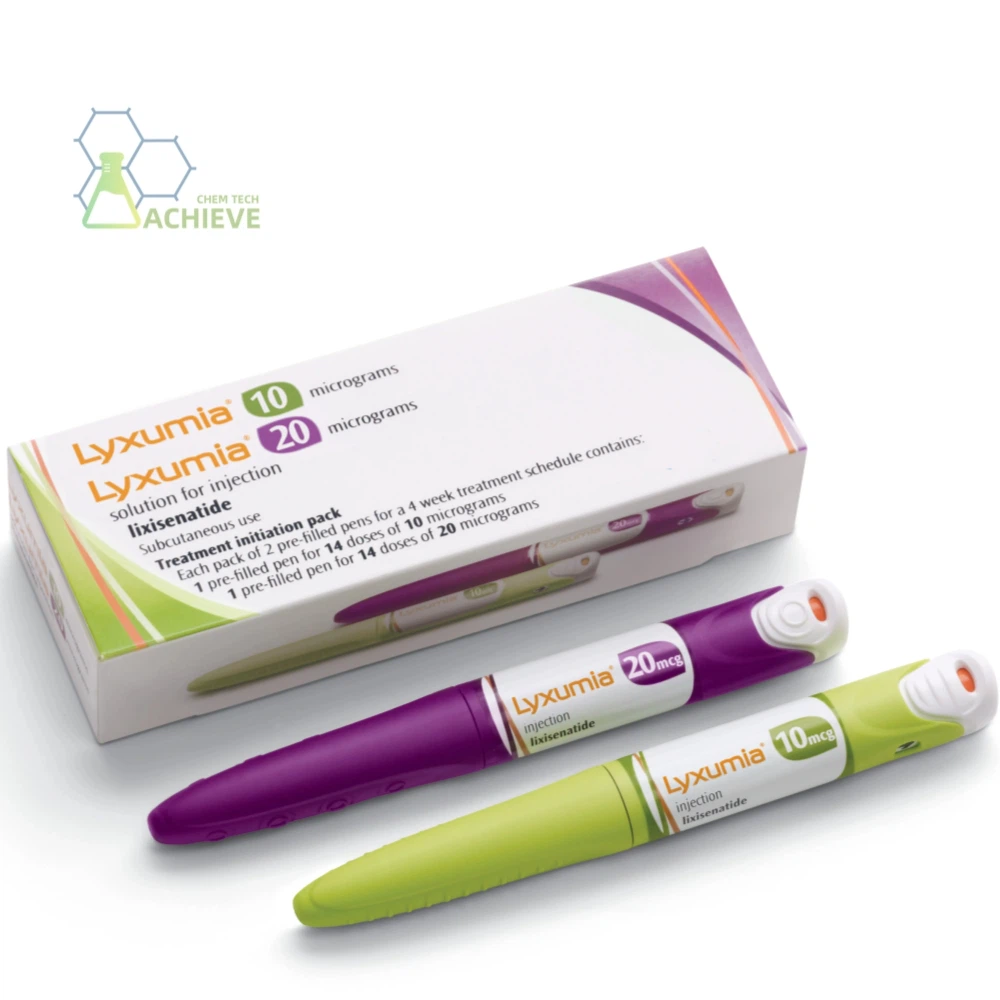


Lixisenatide COA
 |
||
| Certificate of Analysis | ||
| Compound name | Lixisenatide | |
| Grade | Pharmaceutical grade | |
| CAS No. | 320367-13-3 | |
| Quantity | 40g | |
| Packaging standard | PE bag+Al foil bag | |
| Manufacturer | Shaanxi BLOOM TECH Co., Ltd | |
| Lot No. | 202601090057 | |
| MFG | Jan 9th 2026 | |
| EXP | Jan 8th 2029 | |
| Structure |
|
|
| Item | Enterprise standard | Analysis result |
| Appearance | White or almost white powder | Conformed |
| Water content | ≤5.0% | 0.47% |
| Loss on drying | ≤1.0% | 0.35% |
| Heavy Metals | Pb≤0.5ppm | N.D. |
| As≤0.5ppm | N.D. | |
| Hg≤0.5ppm | N.D. | |
| Cd≤0.5ppm | N.D. | |
| Purity (HPLC) | ≥99.0% | 99.90% |
| Single impurity | <0.8% | 0.56% |
| Total microbial count | ≤750cfu/g | 170 |
| E. Coli | ≤2MPN/g | N.D. |
| Salmonella | N.D. | N.D. |
| Ethanol (by GC) | ≤5000ppm | 400ppm |
| Storage | Store in a sealed, dark, and dry place below -20°C | |
|
|
||
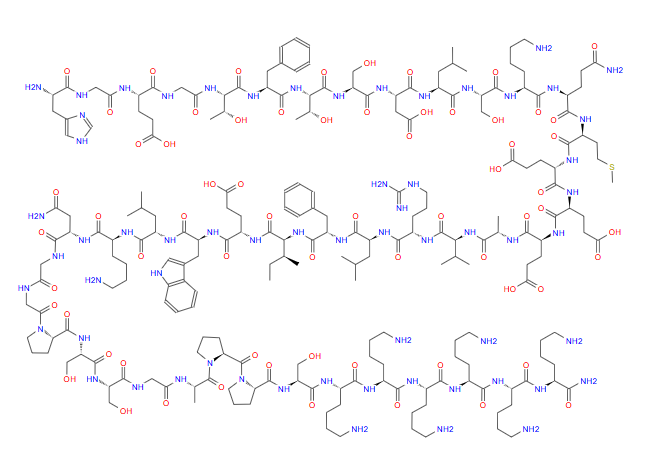

Chemical Structure and Physical Properties
Lixisenatide peptide is a synthetic peptide pharmaceuticals with a sequence of 44 amino acids. Its chemical name is: des-38-proline-exendin-4 (Heloderma suspectum)-(1-39)-peptidylpenta-L-lysyl-L-lysinamide.
Its molecular formula is C215H347N61O65S, with a relative molecular weight of approximately 4858.5 g/mol.
Data source: PubChem database of the National Center for Biotechnology Information in the United States
Structural optimization and design intention

The structure of Lysimal is artificially modified based on Exendin-4, a natural peptide isolated from the saliva of American lizards. Natural GLP-1 is easily degraded by dipeptidyl peptidase-4 (DPP-4) in the human body, with a half-life of only a few minutes. In order to extend its half-life and improve its bioavailability, scientists have made key structural modifications to Lysimab:
Proline at position 38 is missing: Compared to Exendin-4, Lysimab removes Proline at position 38.
Add six lysine tails to the C-terminus: A suffix consisting of six lysine residues is attached to the C-terminus of the peptide chain.
This specific spatial structure and polylysine tail not only endow Lisila with high resistance to DPP-4 enzyme, but also significantly increase its solubility and physical stability in aqueous solution, enabling it to be formulated into a relatively stable aqueous injection solution at room temperature without the need for freezing.

Data source: Journal of Medicinal Chemistry, literature on structural design of GLP-1 analogs, 2014
Lixisenatide peptide, as a typical "short acting" or "prandial" GLP-1 receptor agonist, its pharmacokinetic properties determine its unique pharmacological performance. There is an essential pharmacological distinction between "long-acting" GLP-1 receptor agonists represented by semaglutide and dulaglutide, which activate receptors continuously for 24 hours and mainly target basal/fasting blood glucose control. This substance has a short half-life, and this intermittent receptor activation pattern avoids rapid tolerance of target organs, giving it an irreplaceable core clinic advantage: it has extremely strong control over postprandial glucose (PPG) and can "accurately peak".
Data source: Lancet diabetics and Endocrinology, comparative study on pharmacology of short-term and long-term GLP-1 receptor agonists, 2015

1. High affinity receptor binding and intracellular signaling cascade
Its molecular structure has been finely modified to bind and activate the GLP-1 receptor (a classic B-class G protein coupled receptor) on the cell membrane with high specificity and affinity, GPCR). Once it binds to the extracellular domain of the receptor, it will cause a profound change in the receptor conformation, thereby activating the coupled excitatory Gs protein. The Gs protein subsequently activates the adenylate cyclase (AC) on the cell membrane, catalyzing the conversion of ATP into a second messenger, resulting in a sharp and dose-dependent increase in intracellular cyclic adenosine monophosphate (cAMP) levels.
The massive accumulation of cAMP is the hub of the entire signal transduction, which subsequently activates two extremely critical downstream pathways in parallel: the protein kinase A (PKA) pathway and the exchange protein 2 (Epac2) signaling pathway directly activated by cAMP. The synergistic effect of these two pathways not only rapidly regulates the activity of various ion channels to promote vesicle release, but also promotes the expression of iletin genes at the transcriptional level and participates in the proliferation and anti apoptotic protection of pancreatic islet cells.

Data source: Molecular Endocrinology, GLP-1 signaling pathway research, 2012

2. Glucose dependent intelligent iletin secretion mechanism
Within pancreatic islet cells, induction of elevated cAMP by liraglutide triggers a series of complex biochemical cascade reactions. It first promotes the release of calcium ions (Ca2+) from intracellular calcium storage pools such as the endoplasmic reticulum, while closing ATP sensitive potassium channels (K-ATP) on the cell membrane through PKA phosphorylation, leading to depolarization of the cell membrane. This potential change further promotes the extensive opening of voltage dependent calcium channels (VDCC) on the cell membrane, leading to rapid influx of extracellular Ca2+.
The surge of local Ca2+concentration finally triggered the migration of iletin containing microbubbles to the cell membrane and fusion efflux (exocytosis), which effectively restored the early (first phase) iletin secretion that was generally damaged in type 2 diabetics.
The key point here is that the secretion promoting process of Lysimab is strictly regulated by the "glucose dependent" mechanism.


This means that only when there is an abnormal increase in glucose concentration in the blood (such as after consuming carbohydrates), can the amplified cAMP signal be truly converted into the driving force for iletin secretion when the cells produce sufficient ATP due to glucose metabolism. On the contrary, when patiets are on an empty stomach or have normal or low blood sugar levels, this biochemical pathway is naturally "dormant", and its iletin secretion promoting effect will be extremely weakened or even stopped. This inherent 'intelligent braking' mechanism fundamentally reduces the risk of fatal hypoglycemia in clinic practice.
3. Reshaping of paracrine microenvironment and inhibition of glucagon secretion
Type 2 diabetics is not only a disease of insufficient iletin secretion, but also a disease of abnormal hyperglucagon secretion. In pancreatic islet cells, improper secretion of glucagon is also inhibited in a strict glucose dependent manner. At present, the academic community believes that this inhibitory effect includes both direct action of pharmaceuticals on GLP-1 receptors on the cell surface and local paracrine inhibition by stimulating adjacent cells to secrete iletin and somatostatin.


Lixisenatide peptide strongly promotes glycogen breakdown and gluconeogenesis in the liver under physiological conditions. By effectively suppressing the surge of postprandial glucagon, the excessive output of endogenous glucose from the liver is cut off. This dual hormone regulatory valve of "insulinotropic+hypoglycemic" is crucial for controlling postprandial blood glucose peaks from the source.
4. Effectively delaying gastric emptying (distinguishing the core characteristics of long and short acting pharmaceuticals)
This is its most proud 'core weapon' as a short acting GLP-1 receptor agonist. Unlike long-acting GLP-1 receptor agonists, which act continuously on receptors for 24 hours, long-acting formulations can cause rapid desensitization and rapid tolerance of the gastrointestinal vagus nerve receptors (Tachyphylaxis) within a few weeks. Their intermittent daily administration perfectly avoids this tolerance, allowing their ability to delay gastric emptying to be maintained for a long time. Mainly by activating the vagus nerve related nerves in the gastrointestinal tract, the satiety signal is transmitted to the brainstem.


And then the vagus nerve strongly inhibits the peristalsis and contraction of gastric smooth muscle, thereby significantly and persistently slowing down the rate of gastric contents being discharged into the duodenum. This physical "throttling" effect greatly prolongs the rate at which carbohydrates in food are broken down, absorbed, and enter the portal vein system by digestive enzymes in the small intestine. The absorption curve of postprandial glucose has been smoothed from a "steep peak" to a "gentle hill", effectively reducing the violent fluctuations of postprandial blood glucose (glucose drift), thereby greatly reducing the metabolic burden on pancreatic islet cells.
Data source: diabetics Care, clinic study on the effect of GLP-1 receptor agonist on gastric emptying, 2014
5. Brain gut axis communication and regulation of satiety in the central nervous system
In addition to its role in peripheral organs such as the pancreas and gastrointestinal tract, Liraglutide also has the ability to cross the BBB (BBB) or directly act on periventricular organs with incomplete BBB, such as the posterior area (Area Postrema). It can deeply act on key energy metabolism and satiety regulation centers such as the arcuate nucleus (ARC) in the hypothalamus. At the synaptic level of neurons, on the one hand, POMC/ART (melanocortin/cocaine amphetamine regulated transcript) neurons that produce signals of anorexia and satiety are directly activated.


And on the other hand, NPY/AgRP neurons that produce signals of hunger are indirectly inhibited. By regulating this dual central nervous system circuit, patiets can effectively enhance their sense of fullness during the eating process, prompt them to terminate their eating behavior in advance, and psychologically reduce their desire for high calorie foods such as high sugar and high fat. This mechanism of reducing total calorie intake from top to bottom through the "brain gut axis" not only helps to further maintain the blood glucose homeostasis of the whole body, but also brings about clinically beneficial light to moderate weight loss for most type 2 diabetics patiets with overweight and obesity.
Data source: Frontiers in Neuroscience, Review of the Central Mechanism of Action of Enteropancreatin, 2018
Data source:
1. The New England Journal of Medicine (NEJM): Complete results data from the ELIXA trial published in 2015. Provided core clinic conclusions on 6068 patient size, hazard ratio HR 1.02, and cardiovascular safety non inferiority.
2. CJASN: The secondary analysis published in 2017 based on ELIXA data points out that risilanid can significantly prevent kidney damage and microalbuminuria in high-risk patits with type 2 diabetics.
3. diabetics Branch of Chinese Medical Association: Guidelines for the Prevention and Treatment of Type 2 diabetics in China (2020 Edition), which provides clinic guidance on the risk of hypoglycemia in the combination of GLP-1 and iletin/sulfonylureas.
4. diabetics: The study on immunogenicity in 2016 provided data on 70% of patiets producing anti risilade antibodies; Pharmacological advantage analysis of LixiLan experiment (mechanism of Shuangyida compound) in 2018.
5. Nature Reviews Neuroscience: A 2020 literature review analyzed the mechanism basis of GLP-1 receptor agonists in the central nervous system for anti apoptosis and improving mitochondrial function.
6. The New England Journal of Medicine (NEJM): The latest LIXIPARK Phase II clinic trial data report published in April 2024. Core breakthrough trial data were provided for 156 Parkinson's patiets with motor symptom scores (-0.04 vs+3.04) during a 12-month follow-up period.
7. Hepatology: Research literature in 2022, exploring the expansion of GLP-1 pharmaceuticals in the fields of lipid metabolism and fatty liver disease.
8. Medical and Life Sciences Database (MCE and other research platforms): Explanation of the scientific research basic data on the use of Liragliflozin as a molecular targeted pharmaceuticals in inhibiting apoptosis and inflammation (2023 reference data).
9. diabetics, Obesity and Metabolism: The summary analysis of GetGoal series clinic trials published in 2015 provides specific data on the decline of HbA and the efficacy of single pharmaceuticals/combination treatment.
10. Journal of the American Medical Association (JAMA): Data from the GetGoal-L trial published in 2015 demonstrated the advantage of basal iletin combined with levocetirizine for postprandial blood glucose control.
Hot Tags: lixisenatide peptide, suppliers, manufacturers, factory, wholesale, buy, price, bulk, for sale, cholesterol powder, eriodictyol powder, 18 Glycyrrhetinic Acid CAS 471 53 4, Chenodeoxycholic Acid CDCA CAS 474 25 9, Meglumine powder, tetrahydrobiopterin synthesis