




Mesna (Mesnaum), short for 2-Mercaptoethane sulfonic acid sodium salt, is a medication primarily used to prevent or minimize the adverse effects associated with the administration of certain chemotherapy drugs. These chemotherapeutics can cause hemorrhagic cystitis, a painful and potentially serious inflammation of the bladder, due to their metabolites forming toxic byproducts. It acts as a uroprotectant by providing a sulfur donor group that reacts with these toxic metabolites, converting them into inactive, water-soluble forms that are readily excreted through urine, thereby reducing their bladder toxicity. It is commonly administered intravenously or orally, depending on the treatment regimen and patient's condition.
In addition to its protective role, it also helps maintain the efficacy of the chemotherapy by preventing the premature inactivation of the drugs outside the target tissues. This dual action makes it an essential adjunct in many cancer treatment protocols.

|
|
|

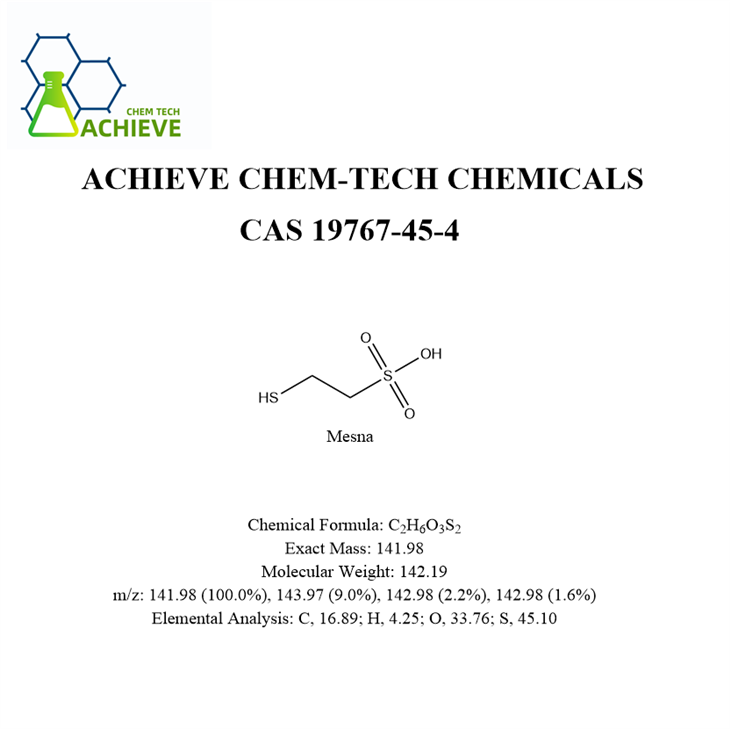
| Chemical Formula | C2H6O3S2 |
| Exact Mass | 141.98 |
| Molecular Weight | 142.19 |
| m/z | 141.98 (100.0%), 143.97 (9.0%), 142.98 (2.2%), 142.98 (1.6%) |
| Elemental Analysis | C, 16.89; H, 4.25; O, 33.76; S, 45.10 |

Core Pharmacological Mechanism

Circulation and Activation Mechanism In Vivo
Mesna bears free thiol groups on its chemical structure. After intravenous or oral administration into blood circulation, it rapidly oxidizes and dimerizes into inactive dimesna disulfide. Devoid of detoxifying activity, dimesna cannot penetrate tumor tissues or systemic interstitial spaces and merely circulates within blood vessels. Dimesna is completely filtered by renal glomeruli into renal tubules. The reductive microenvironment inside tubules breaks disulfide bonds to regenerate bioactive mesnaum with free thiols, which accumulates abundantly in urine and bladder lumen to form a high local detoxifying concentration.
Meanwhile, the concentration of free active mesnaum in blood and tumor lesions remains extremely low, fundamentally eliminating the risk of interfering with chemotherapeutic efficacy.
Targeted Neutralization of Urotoxic Metabolites
Cyclophosphamide and ifosfamide are metabolized by hepatic cytochrome P450 to produce two highly urotoxic substances: acrolein and 4-hydroxyifosfamide. Acrolein contains highly reactive carbon-carbon double bonds, which can covalently crosslink with epithelial proteins and cysteine residues of bladder mucosa.


This disrupts the mucosal barrier, triggering capillary rupture, mucosal edema and inflammatory infiltration, clinically manifesting as hemorrhagic cystitis, gross hematuria and bladder ulceration.4-hydroxyifosfamide also induces oxidative damage and pro-inflammatory factor release in the urinary tract. The thiol groups of activated mesnaum in urine act as nucleophiles and preferentially undergo Michael addition with the double bonds of acrolein, while conjugating with 4-hydroxyifosfamide simultaneously. The reaction generates stable, water-soluble, non-cytotoxic thioether complexes that are fully excreted via urine. This blocks the binding pathway between toxic metabolites and bladder epithelium, preventing urinary tract injury at the source.
Auxiliary Anti-Inflammatory and Antioxidative Protective Pathway
Acrolein stimulates bladder epithelium to secrete pro-inflammatory factors including TNF-α and IL-1β, activating oxidative stress pathways and exacerbating mucosal damage. The free thiols of mesnaum scavenge reactive oxygen species in urine, suppress the myeloperoxidase-mediated pro-inflammatory cascade, downregulate local inflammatory mediator release, and alleviate irritative symptoms such as bladder congestion, stinging pain, frequent micturition and urgent urination.


Core Advantage of Pharmacological Selectivity
Mesnaum is only activated under the reductive environment of urine; it exists as inactive dimeric dimesna in tumor tissues and intact visceral organs. It cannot neutralize the alkylating cytotoxicity of chemotherapeutic agents within lesions, thus preserving anti-tumor therapeutic effects. Over 90% of the drug is renally excreted within 24 hours with a short half-life and no in vivo accumulation.
Fractionated administration (0 h, 4 h, 8 h) sustains effective urinary detoxifying concentrations throughout the complete metabolic and excretory cycle of alkylating chemotherapeutics, drastically reducing the incidence of severe hemorrhagic cystitis. Mesnaum serves as the standardized uroprotective agent for alkylating chemotherapy regimens.

potential clinical utilities

The thiol group endows it with antioxidant properties, making it a promising candidate for treating conditions involving oxidative stress. Studies suggest its efficacy in mitigating radiation-induced tissue damage, particularly in the bladder and rectum, by scavenging free radicals and reducing inflammation.
In addition, it demonstrates anti-inflammatory activities, hinting at its potential use in inflammatory bowel diseases, such as ulcerative colitis, by modulating immune responses and reducing tissue damage. Its ability to protect against ischemia-reperfusion injury also makes it a potential therapeutic option in conditions like myocardial infarction and stroke, where restoring blood flow can paradoxically harm tissues.
Moreover, the ability to bind and detoxify aldehydes may extend its application to the management of certain toxic exposures and metabolic disorders. Research is ongoing to explore its use in conditions like uremic pruritus, where it could alleviate itching by scavenging uremic toxins.
Furthermore, the cytoprotective effects are being investigated for the prevention of chemotherapy-induced peripheral neuropathy, aiming to preserve nerve function and improve patient quality of life.
In summary, the multifaceted properties position it as a versatile therapeutic with potential across diverse clinical scenarios, from mitigating radiation damage to treating inflammatory conditions and metabolic disorders. Ongoing research continues to unravel its full therapeutic potential.


Mesna, also known as Sodium 2-mercaptoethanesulfonate, is a compound with significant biological activity and pharmacological properties. Its CAS number is 19767-45-4.
In terms of biological activity, it acts as an antioxidant with cell-protective effects. It has been widely utilized as a systemic protective agent against chemotherapy toxicity. It can reduce the concentrations of H2O2, HOCl, and OH• in a dose-dependent manner, with IC50 values of 32, 21, and 305 μM respectively in cell-free experiments. This indicates its ability to scavenge reactive oxygen species and protect cells from oxidative stress.
Pharmacologically, it is primarily used to decrease the incidence of hemorrhagic cystitis associated with certain chemotherapy agents, such as cyclophosphamide. It achieves this by protecting the urothelium and bladder from damage caused by these toxic agents. Additionally, it has shown protective effects in animal models against traumatic brain injury and cisplatin-induced ovarian damage, further demonstrating its broad spectrum of pharmacological activities.
In summary, it is a versatile compound with potent antioxidant and cell-protective properties. Its ability to scavenge reactive oxygen species and protect cells from damage makes it a valuable tool in the treatment of chemotherapy-induced toxicities, particularly hemorrhagic cystitis. With further research, mesnaum may find additional applications in the medical field.


Dominant Industrial Thiourea Hydrolysis Route (General for Mass Production)
Step 1: Synthesis of intermediate thiouronium ethyl sulfonate
Sodium 2-chloroethanesulfonate and thiourea are used as raw materials, with water as solvent. The mixture undergoes reflux reaction at 70–80 °C for 6–10 hours, where halogen atoms are substituted by thiourea to form β-thiouronium ethanesulfonate intermediate. Raw materials are low-cost and readily available, with mild reaction conditions requiring no high-pressure catalysis, suitable for large-scale feeding. The only byproduct is sodium chloride, which is easily separated and removed.
Step 2: Alkaline ammonolysis ring-opening for crude mercaptoethanesulfonic acid
Concentrated aqueous ammonia is added to the thiourea intermediate for heated hydrolysis; thiourea rings cleave to release free thiol groups. Excess ammonia is evaporated from the system to obtain a mixed solution containing guanidinyl mercaptoethanesulfonic acid. The mixed solution passes through strongly acidic cation exchange resin to strip guanidinium ions, yielding aqueous 2-mercaptoethanesulfonic acid.
The ion exchange conversion rate exceeds 93%, efficiently removing metallic cation impurities to ensure compliance with heavy metal limits for pharmaceutical active pharmaceutical ingredients (APIs).
Step 3: Neutralization, reduction, purification and salt formation
The sulfonic acid mother liquor is precisely neutralized to neutral pH with sodium hydroxide solution to obtain crude aqueous mesna solution. The system is prone to oxidation forming dimesna impurities; zinc or magnesium powder is added for mild reduction to convert dimeric impurities into the target monothiol product.
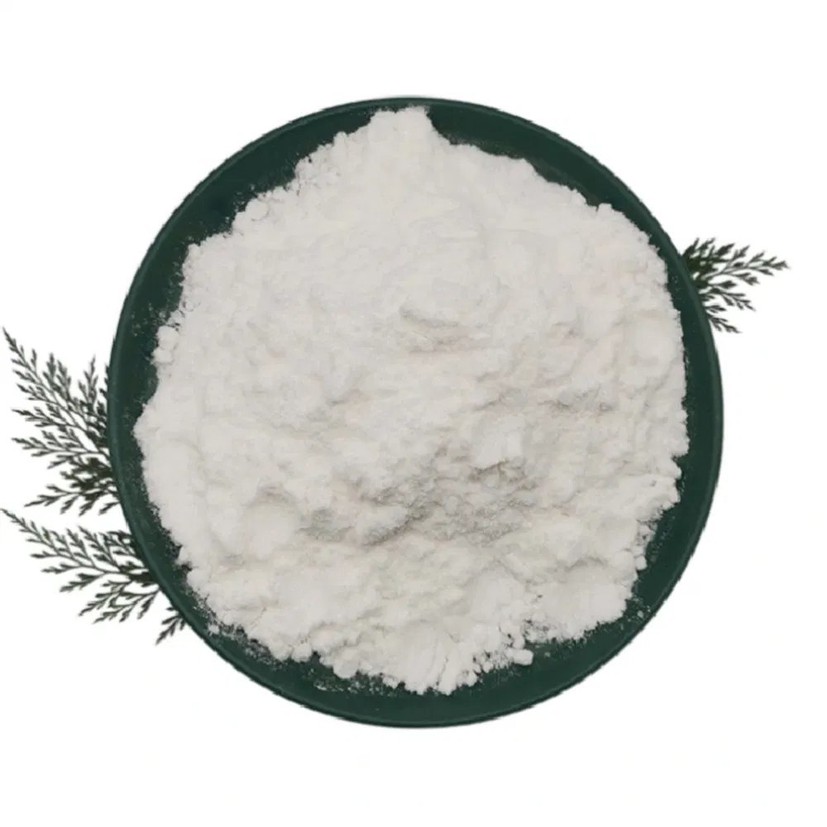
Most water is removed by vacuum concentration, followed by low-temperature recrystallization using ethanol-water mixed solvent under nitrogen protection to isolate oxygen and avoid oxidation. Crystallization proceeds at 0 °C, filter cake is rinsed with cold ethanol and dried under low-temperature vacuum to yield white crystalline mesnaum powder. The HPLC purity reaches ≥99.0%, with dithio impurities controlled below 0.5%, complying with pharmacopoeial API specifications.
Alternative High-Pressure Hydrogenation Route (High-Purity Backup for Fine Preparation)
Sodium 1,2-dibromoethane, sodium hydrosulfide and sodium sulfite react stepwise to synthesize sodium dithiodiethanesulfonate intermediate. Disulfide bonds are cleaved via hydrogen reduction under palladium-carbon catalysis and pressurized hydrogen in an autoclave. Catalysts are removed from the reduced solution prior to concentration and recrystallization.
This route delivers higher product purity yet incurs elevated production costs due to precious metal catalysts and high-pressure equipment. It is mainly adopted for small-batch manufacturing of high-purity APIs for injections, while thiourea hydrolysis remains the preferred process for large-scale industrial mass production.


Mesnaum represents a critical advancement in the management of chemotherapy-induced hemorrhagic cystitis, offering a safe and effective means of preventing this debilitating complication in patients receiving oxazaphosphorine chemotherapeutic agents. Its unique mechanism of action, favorable pharmacokinetic profile, and proven efficacy in clinical trials have solidified its position as a standard of care in oncology practice. Moreover, its potential role in preventing ifosfamide-induced encephalopathy and other chemotherapy-related complications opens new avenues for its clinical application.
As our understanding of mesnaum's pharmacological properties and clinical applications continues to evolve, ongoing research will undoubtedly uncover additional indications and refine its role in the management of chemotherapy-induced toxicities. With its excellent safety profile and minimal drug interaction potential, mesnaum is poised to remain a cornerstone of supportive care in oncology for years to come.

FAQ
Is mesna chemotherapy or immunotherapy?
+
-
What is this medication? MESNA (MES na) reduces the risk of bleeding in the bladder caused by ifosfamide, a type of chemotherapy. It works by protecting your bladder from substances in the urine that may irritate it.
Is mesna safe to take?
+
-
This medication may cause serious skin reactions. They can happen weeks to months after starting the medication. Contact your care team right away if you notice fevers or flu-like symptoms with a rash. The rash may be red or purple and then turn into blisters or peeling of the skin.
What chemo needs mesna?
+
-
People being treated with ifosfamide will always have mesna. Cyclophosphamide only causes bleeding from the bladder when it is given in high doses. Most people who have treatment with cyclophosphamide do not have a high dose. This means they will not need mesna.
What is the 7 day rule in chemotherapy?
+
-
The 7-day rule for chemotherapy is designed to do a few things to get rid of cancer and make treatment easier on your body: It helps maintain consistent pressure on cancer cells by ensuring a balanced treatment that can interrupt the growth cycle. It reduces the toxicity of treatment and can help minimize side effects.
What are good signs that chemo is working?
+
-
You might notice an improvement in cancer symptoms, such as less pain, reduced lymph node swelling, and improved energy levels. If you use topical chemotherapy on skin lesions, the area might feel irritated and look red and swollen for the first few weeks. These are all signs that chemotherapy is working.
Hot Tags: mesna cas 19767-45-4, suppliers, manufacturers, factory, wholesale, buy, price, bulk, for sale, Primidone powder, Cyclosporin A, epinephrine hcl powder, 3 DiMethylaMino 1 4 Methoxyphenyl prop 2 en 1 one CAS 18096 70 3, cholesterol powder, Pure Creatine Monohydrate Powder CAS 6020 87 7