




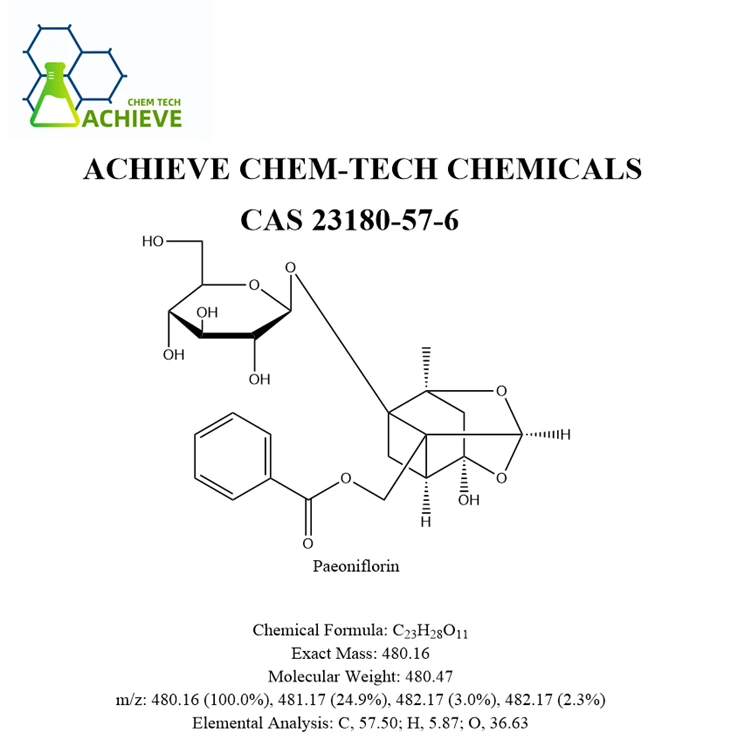


Shaanxi BLOOM Tech Co., Ltd. is one of the most experienced manufacturers and suppliers of paeoniflorin cas 23180-57-6 in China. Welcome to wholesale bulk high quality paeoniflorin cas 23180-57-6 for sale here from our factory. Good service and reasonable price are available.
Paeoniflorin, also known as paeony glycoside or peony lactone, is a naturally occurring monoterpene glycoside primarily isolated from the roots of the Chinese herbal plant Paeonia lactiflora, commonly known as white peony. This compound belongs to the class of flavonoids and holds significant pharmacological activities that have garnered considerable interest in traditional Chinese medicine (TCM) and modern pharmacological research.It is characterized by its white crystalline appearance and moderate water solubility.

|
|
|


|
Chemical Formula |
C23H28O11 |
|
Exact Mass |
480.16 |
|
Molecular Weight |
480.47 |
|
m/z |
480.16 (100.0%), 481.17 (24.9%), 482.17 (3.0%), 482.17 (2.3%) |
|
Elemental Analysis |
C, 57.50; H, 5.87; O, 36.63 |
It is renowned for its anti-inflammatory, antioxidant, and immunomodulatory properties. Studies have shown that it can effectively alleviate inflammatory responses by inhibiting the release of inflammatory cytokines and reducing the activation of nuclear factor-κB (NF-κB), a key mediator of inflammation.
Furthermore, it exhibits neuroprotective effects, protecting neurons against oxidative stress and apoptosis, which are crucial in the treatment of neurodegenerative diseases. Its antioxidant capabilities help scavenge reactive oxygen species (ROS), thus mitigating oxidative damage to cellular components.
In traditional Chinese medicine, paeoniflorin-rich herbs are used to treat conditions such as menstrual disorders, pain, and muscle spasms. Modern research continues to explore its potential in managing chronic pain, cardiovascular diseases, and autoimmune disorders. However, despite its promising therapeutic effects, further clinical trials and research are necessary to fully elucidate its mechanisms of action and establish safe and effective dosing protocols. In conclusion, it stands as a promising natural compound with a wide array of health benefits, further research is needed.

Molecular Structure and Physical Characteristics
Pterostilbene, chemically designated as 3,5-dimethoxy-4'-hydroxystilbene, belongs to the stilbene family of polyphenolic compounds. Its molecular formula is C₁₆H₁₆O₃, with a molecular weight of 256.3 g/mol. The compound exists as a white to off-white crystalline powder, exhibiting high sensitivity to air and light, which necessitates storage under refrigeration (2-8°C) or even cryopreservation (-20°C for long-term stability) in sealed, light-proof containers to maintain its integrity.
Synthetic Pathways
While pterostilbene can be naturally sourced from plants, industrial-scale production often relies on chemical synthesis to ensure consistency and cost-effectiveness. A common synthetic route involves the Wittig-Horner reaction between 3,5-dimethoxybenzyl bromide and p-nitrobenzaldehyde, followed by reduction, diazotization, and hydrolysis steps to yield the final product. This method boasts a total yield of approximately 53.9%, making it a viable option for large-scale manufacturing. Alternative approaches, such as the Heck reaction, have also been explored, offering potential improvements in yield and purity.

Pharmaceutical Applications

Anticonvulsant Effects: Paeoniflorin has demonstrated significant anticonvulsant properties in preclinical studies, effectively suppressing abnormal neuronal activity that triggers seizures. This makes it a potential candidate for the treatment of various seizures and related neurological disorders, such as epilepsy.
Hypoglycemic Effects: This compound also exhibits obvious hypoglycemic effects by regulating glucose metabolism and improving insulin sensitivity. This suggests its potential use in managing blood sugar levels in individuals with diabetes or prediabetes, aiding in the prevention of glucose-related complications.


Cardiovascular Benefits: By specifically activating Adenosine A1R in the brain, paeoniflorin can effectively reverse guanethidine-induced hypotension, stabilize blood pressure levels, and thus contribute positively to overall cardiovascular health and function.
Treatment Of Rheumatoid Arthritis: In traditional Chinese medicine, extracts containing paeoniflorin-such as those from white peony root (Paeonia lactiflora Pall.)-have long been used to treat rheumatoid arthritis. This is due to their potent anti-inflammatory and analgesic properties, which alleviate joint swelling, pain and stiffness associated with the condition.

Cosmetic And Skincare Applications

Skin Whitening and Anti-Aging
Prized in skincare products for its ability to inhibit peroxidase activity and reduce free radical generation, which are key factors in skin aging and pigmentation. This leads to improved skin gloss and a lighter complexion.
Regulation of Sebaceous Glands
It also helps regulate the function of sebaceous glands, maintaining a balanced skin state that is neither too oily nor too dry. This balance enhances the absorption of other skincare products and contributes to a soft and supple skin texture.

Functional Foods and Dietary Supplements
Due to its various health benefits, paeoniflorin is also incorporated into functional foods and dietary supplements. These products aim to provide additional health benefits beyond basic nutrition, such as improved blood sugar control, enhanced cardiovascular health, and anti-aging effects.
Industrial And Research Applications
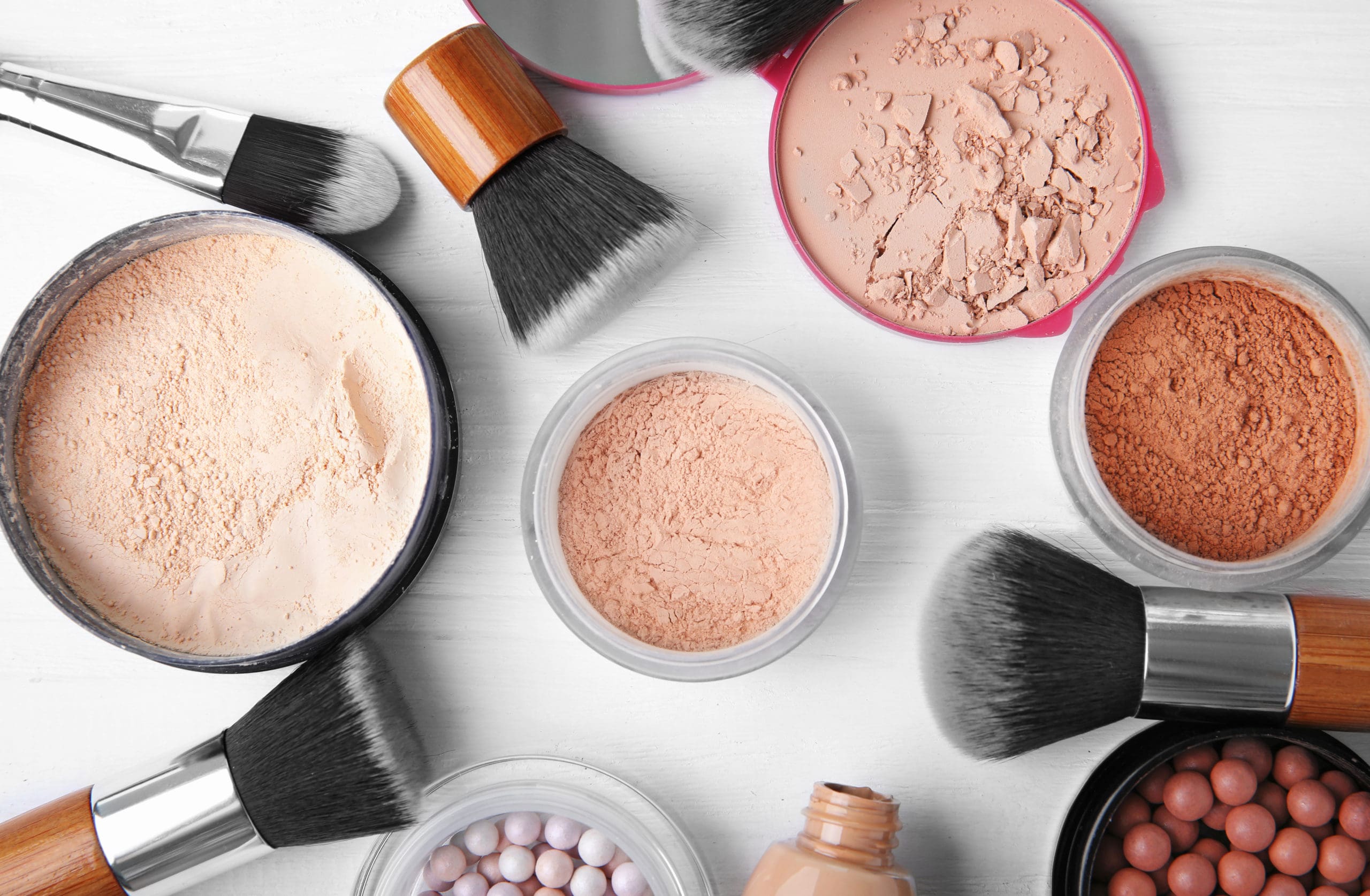
Cosmetics and Personal Care
Given its antioxidant, anti-inflammatory, and skin-whitening properties, pterostilbene powder has found widespread use in the cosmetics industry. It is incorporated into various skincare formulations, including creams, serums, and masks, to combat signs of aging, such as wrinkles, fine lines, and age spots. Pterostilbene's ability to inhibit tyrosinase, the enzyme responsible for melanin production, makes it an effective ingredient in skin-lightening products. Additionally, its UVB-absorbing capacity provides natural sun protection, reducing the risk of sunburn and photoaging.
Nutraceuticals and Dietary Supplements
As a dietary supplement, pterostilbene is marketed for its anti-aging, cardiovascular, cognitive, and metabolic health benefits. It is available in various forms, including capsules, tablets, and powders, and is often combined with other bioactive compounds, such as resveratrol, quercetin, and curcumin, to enhance its efficacy. The recommended dosage of pterostilbene varies depending on the intended use, but typical daily intakes range from 50 to 200 mg.
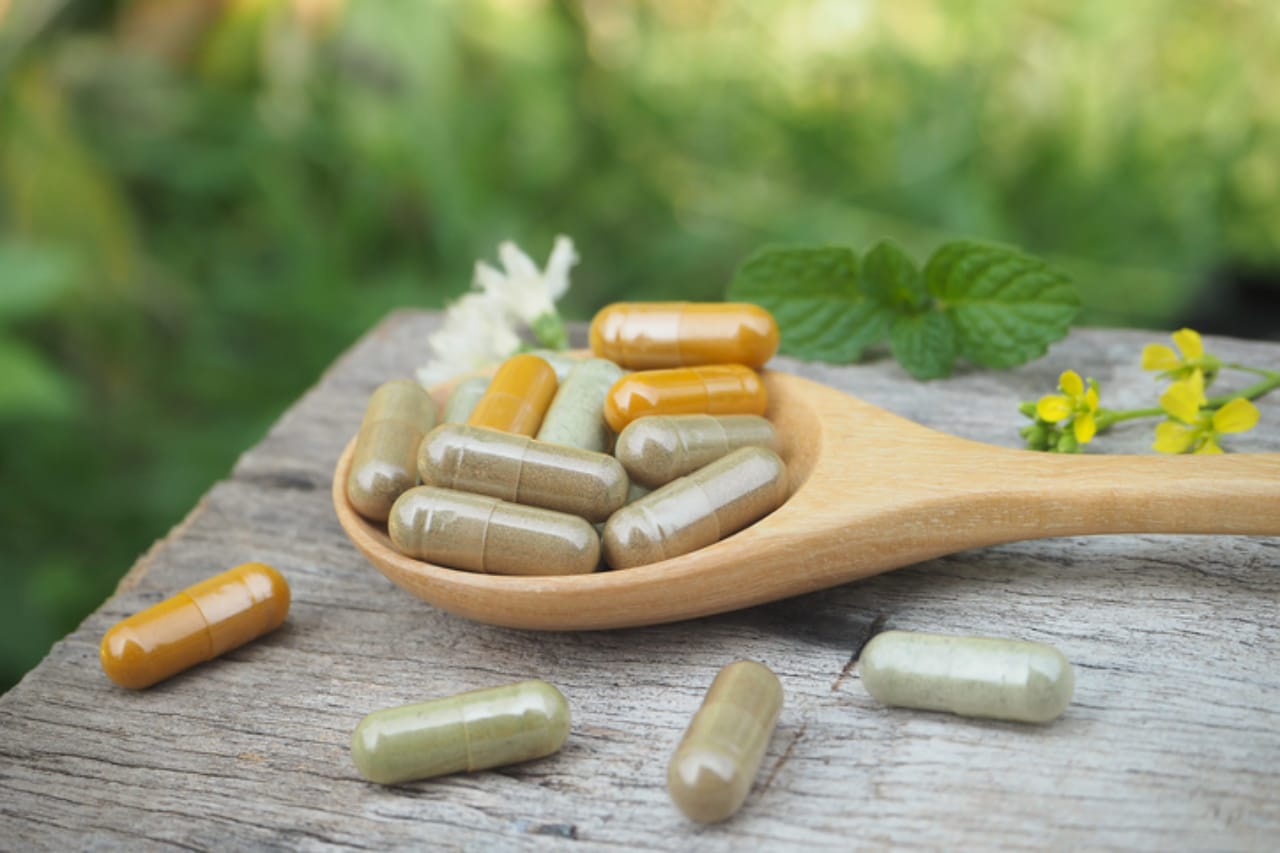

Pharmaceuticals
While pterostilbene is primarily used as a dietary supplement, its therapeutic potential has spurred interest in its development as a pharmaceutical agent. Ongoing research is exploring its efficacy in treating specific medical conditions, such as cancer, neurodegenerative diseases, and metabolic disorders. If successful, pterostilbene could be formulated into targeted drug delivery systems, such as nanoparticles or liposomes, to improve its bioavailability and therapeutic outcomes.
Manufacturing Information
Preparation Method
Material Preparation:
- Weigh 40kg of white peony root as the raw material.
Extraction:
- Soak the white peony root in 70% ethanol overnight to facilitate the extraction process.
- Perform reflux extraction twice, each lasting for 2 hours.
- Filter the extract after each reflux to remove impurities and combine the filtrates.
Concentration:
- Use a rotary evaporator to evaporate the combined filtrates until the ethanol odor is no longer detectable.
- Adjust the concentration of the extract so that each milliliter of the liquid corresponds to 0.5g of the raw herbal material.
Column Chromatography:
- Prepare 120kg (wet weight) of LX38 resin and pack it into a stainless steel column with dimensions of 300×2300cm and a volume of 60L.
- Load the adjusted extract onto the column and allow it to adsorb for 1 hour.
- Initially, use 300L of water followed by 300L of 10% ethanol to wash away impurities.
- Subsequently, elute it and other compounds like albiflorin with 360L of 50% ethanol.
- Finally, regenerate the resin with 95% ethanol at a flow rate of 150-200L/h.
Concentration and Purification:
- Concentrate the 50% ethanol eluate to obtain a solid residue.
- Further purification steps, such as column chromatography or crystallization, may be necessary to increase the purity.
Yield and Purity:
- Typically, the yield of the solid residue from the above process is around 2.52kg.
- The purity in this residue can be as high as 24%, with albiflorin accounting for an additional 16%.
Challenges and Future Directions
Despite promising results, several challenges hinder paeoniflorin's clinical translation:
1) Bioavailability: Low oral bioavailability (~3–4%) due to poor absorption and rapid metabolism limits its efficacy. Strategies like nanoparticle encapsulation or structural modifications (e.g., paeoniflorin-6′-O-benzoyl) are under investigation.
2) Standardization: Variability in peony root extracts complicates quality control. Standardized formulations with defined PF/AF ratios are essential for reproducibility.
3) Long-Term Safety: While acute toxicity is low (LD₅₀ > 5 g/kg in rats), chronic use effects remain unclear, necessitating long-term safety studies.
4) Mechanistic Depth: Many studies rely on in vitro or animal models; human mechanistic data are scarce, particularly for antitumor and cognitive effects.
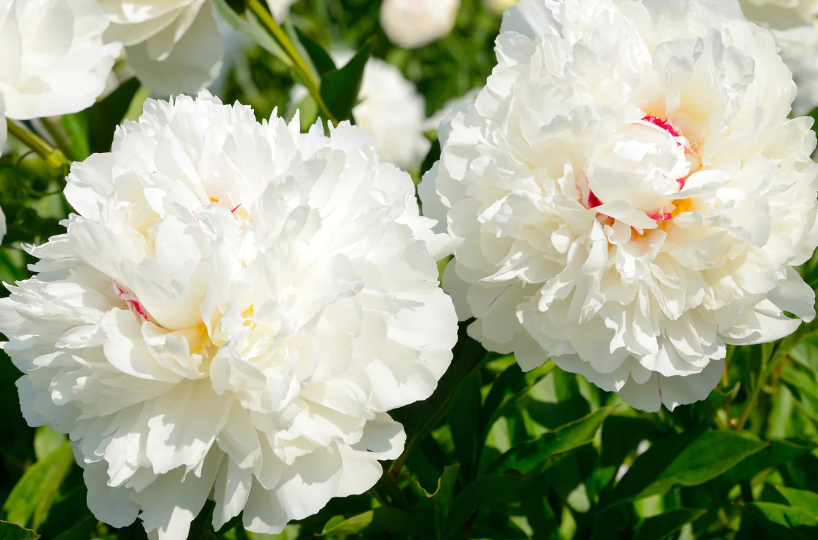
Paeoniflorin, a monoterpene glycoside, is the major bioactive constituent extracted from the root of Paeonia lactiflora Pall. (Ranunculaceae), commonly known as peony. This natural compound has garnered significant attention in recent years due to its diverse pharmacological effects, rapid pharmacodynamics, and low toxicity profile.
It has been traditionally used in Chinese herbal formulae for the treatment of depression-like disorders. Its use in traditional medicine is based on centuries-old practices and empirical evidence.
Pterostilbene powder, a naturally derived stilbene compound, exhibits a wide array of biological activities, including antioxidant, anti-inflammatory, anti-cancer, cardiovascular protective, neuroprotective, anti-diabetic, and anti-obesity effects. Its versatility has led to its incorporation into cosmetics, nutraceuticals, pharmaceuticals, and food products, catering to diverse consumer needs. While pterostilbene is generally safe, further research is warranted to elucidate its long-term effects, optimal dosage, and potential drug interactions. As scientific understanding of pterostilbene deepens, its applications are poised to expand, offering novel solutions for promoting health and well-being across various industries.


Research suggests that its antidepressant effects may be mediated through multiple pathways. It has been shown to enhance adult neurogenesis in the hippocampus, a brain region crucial for learning, memory, and mood regulation.
It also increases the expression of BDNF (brain-derived neurotrophic factor) and VEGF (vascular endothelial growth factor) in the hippocampus, which are known to play important roles in neuronal survival, differentiation, and synaptic plasticity.
Additionally, paeoniflorin exhibits anti-inflammatory, antioxidant, and neuroprotective properties, which may contribute to its overall antidepressant effect.
Numerous studies have evaluated the antidepressant effects in various rodent animal models of depression. These include the forced swimming test (FST), the novelty-suppressed feeding (NSF) test, and the chronic mild stress (CMS) paradigm. Results from these studies indicate that significantly decreases the total time of immobility in the FST and reduces the latency in the NSF test. These effects are observed after a certain duration administration and can last up to a month. Furthermore, studies have shown that reverses anhedonia (inability to experience pleasure) in rats exposed to chronic stress protocols, similar to the effects of imipramine, a commonly used antidepressant.
Hot Tags: paeoniflorin cas 23180-57-6, suppliers, manufacturers, factory, wholesale, buy, price, bulk, for sale, 1 3 dimethylpentylamine hydrochloride, lidocaine hydrochloride powder, filgotinib, tetravisc, Isoflurane Solution, articaine hydrochloride powder