


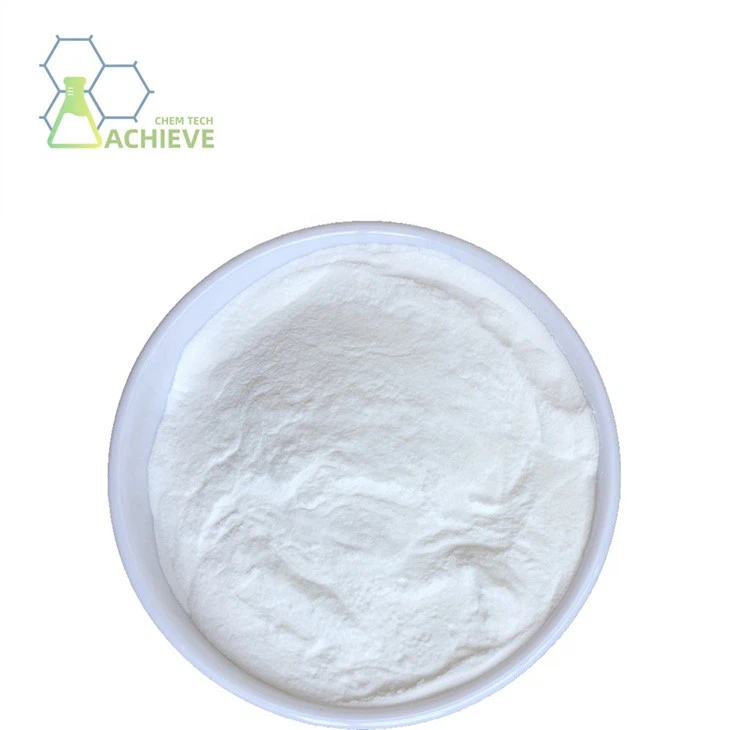


Shaanxi BLOOM Tech Co., Ltd. is one of the most experienced manufacturers and suppliers of rotenone chemical cas 83-79-4 in China. Welcome to wholesale bulk high quality rotenone chemical cas 83-79-4 for sale here from our factory. Good service and reasonable price are available.
Rotenone Chemical is a naturally occurring insecticide and pesticide derived from the roots and bark of certain plants, primarily the genus Derris and Lonchocarpus. It belongs to the class of compounds known as isoflavones and is characterized by its potent fish-toxic and insecticidal properties. As a biological pesticide, which has been used for centuries in traditional agriculture and fishing practices around the world.
Chemically, it acts as a mitochondrial complex I inhibitor, disrupting the electron transport chain in the cells of target organisms, leading to ATP depletion and eventual cell death. This mechanism of action makes it highly effective against a wide range of insects and aquatic pests, including mosquitoes, flies, and certain aquatic weeds.

 |
 |
| Chemical Formula | C23H22O6 |
| Exact Mass | 394.14 |
| Molecular Weight | 394.42 |
| m/z | 394.14 (100.0%), 395.14 (24.9%), 396.15 (2.7%), 396.15 (1.2%) |
| Elemental Analysis | C, 70.04; H, 5.62; O, 24.34 |

However, its use has come under scrutiny due to its environmental impact and potential health risks. It is highly toxic to aquatic life, and its residues can persist in water bodies, affecting non-target species. In humans, exposure to rotenone has been linked to neurological disorders and Parkinson's-like symptoms, particularly in those who handle it regularly without proper protection.Despite these concerns, it continues to be employed in organic farming and integrated pest management (IPM) programs, where its natural origin and specificity for pest control are valued.


Researchers are also exploring alternative formulations and delivery methods to minimize its environmental footprint and enhance its safety profile. Overall, rotenone chemical remains a significant yet controversial tool in the arsenal of pest control measures.Rotenone, also known as Barbasco, Dactinol, Paraderil, Rotenon, and Rotocide, is a plant-derived insecticide extracted from leguminous plants. It possesses cell toxicity and acts as an inhibitor of the mitochondrial complex I electron transport chain.
Agricultural Use
Insecticide and Miticide
Primarily used as an insecticide and miticide in agriculture. It has a strong insecticidal effect on a wide range of pests, including aphids, planthoppers, leaf beetles, thrips, melon flies, leaf miners, cabbage worms, and noctuid moths. Its mode of action involves inhibiting the mitochondrial respiratory chain of insects, causing respiratory disturbances, slow movement, and paralysis, ultimately leading to death.


Selective and Non-systemic
Selective in its action and non-systemic, meaning it does not penetrate plant tissues to be transported throughout the plant. This makes it an effective choice for controlling pests on the surface of leaves and fruits.
Photodegradable and Low Residue
Decomposed easily when exposed to light, reducing environmental pollution. This characteristic makes it suitable for use in organic farming or in situations where low pesticide residues are desired.
Biochemical Research
Inhibition of Mitochondrial Respiration
The ability to inhibit mitochondrial complex I has made it a valuable tool in biochemical research. It is used to study the function and regulation of mitochondrial respiration, as well as the effects of respiratory chain inhibitors on cell metabolism and survival.


Model for Neurodegenerative Diseases
Rotenone has been used to induce models of neurodegenerative diseases, such as Parkinson's disease, in animals. By inhibiting mitochondrial respiration, it mimics some of the pathological processes observed in these diseases, providing a platform for studying disease mechanisms and potential therapeutic interventions.
Analysis Methods
Qualitative analysis is a method that uses chemical reagents or instruments to determine whether a certain component is present in a chemical product based on the chemical reactions of different substances with specific reagents. For rotenone, its unique chemical properties can be utilized for qualitative detection. For instance, rotenone can undergo color reactions or form specific precipitates with certain reagents under specific conditions, thereby confirming its presence.


Toxicological testing mainly involves assessing the acute toxicity, subacute toxicity, and long-term toxicity of chemical products. By administering different doses of chemical products to experimental animals and observing their physiological and pathological reactions, the safety of the chemical products can be determined.For rotenone, toxicological testing can evaluate its toxic effects on experimental animals, including acute poisoning symptoms (such as nausea, vomiting, stomach pain, diarrhea, convulsions, tremors, etc.), damage to organs such as the liver and kidneys, as well as possible carcinogenic, teratogenic, and mutagenic effects.
Precautions
The toxicity of rotenone is a critical factor that must be taken into serious consideration when using this compound. It is highly toxic to aquatic organisms such as fish, and can also be harmful to pigs, silkworms, and even humans and livestock. Therefore, it is essential to handle it with extreme caution to prevent accidental poisoning.
Long-term exposure to even small doses of rotenone can lead to significant health issues, including damage to the nervous system. This is due to its ability to inhibit the mitochondrial respiratory chain, which is crucial for cellular energy production and survival.


Moreover, its photodegradability means that it can decompose when exposed to light, reducing its effectiveness over time. Therefore, it is important to store it in a cool, dark place to maintain its potency and ensure its safe use.
In summary, while rotenone has a wide range of applications, its toxicity and photodegradability must be carefully managed to ensure safe and effective use. Proper handling, storage, and disposal practices are essential to minimize the risk of poisoning and environmental contamination.
Sources & extraction method
Rotenone, derived from the roots and rhizomes of certain species of plants belonging primarily to the genus Derris and Lonchocarpus, is a naturally occurring insecticide and piscicide with a long history of use. It is particularly abundant in the subtropical and tropical regions of Asia, Africa, and South America, where these plants are endemic. Its insecticidal properties stem from its ability to inhibit mitochondrial complex I, disrupting cellular respiration and leading to the death of targeted organisms.
The extraction method of rotenone typically involves several steps.
Initially, the plant material is collected and thoroughly cleaned to remove any impurities.
The cleaned material is then dried, often under the sun or using artificial drying methods, to concentrate the active ingredients.
Once dried, the plant parts are finely powdered to increase surface area for efficient extraction.
Extraction can be carried out using various solvents, with methanol, ethanol, or acetone being common choices due to their effectiveness in dissolving it.
The solvent-plant mixture is agitated or stirred for an extended period to ensure maximum extraction, followed by filtration to separate the solid residue from the extract.
Subsequent steps involve evaporating the solvent to concentrate it, often through distillation or vacuum evaporation.
Finally, purification techniques such as crystallization may be employed to isolate pure product from the concentrated extract. This meticulous process ensures the production of a potent and relatively pure form suitable for agricultural and research applications.
|
|
|


Cordycepin, a nucleoside derived from Cordyceps militaris, has been shown to possess various pharmacological activities, including antitumor, antiviral, and anti-inflammatory effects. Its potential applications in medicine and healthcare are vast, making it a highly valuable compound.
The discovery that rotenone chemical can enhance cordycepin synthesis during submerged fermentation of Cordyceps militaris represents a significant breakthrough in the production of this valuable compound. Traditional methods of cordycepin extraction from natural Cordyceps militaris are often limited by low yields and high costs. By utilizing it to promote cordycepin synthesis, researchers have found a more efficient and cost-effective way to produce cordycepin.This new strategy not only increases the yield of cordycepin but also has the potential to reduce the environmental impact of cordycepin production.Submerged fermentation is a more environmentally friendly and sustainable production method compared to traditional extraction methods.


By using it to enhance cordycepin synthesis during submerged fermentation, researchers can produce cordycepin in a more green and efficient manner.In conclusion, the discovery of the role in promoting cordycepin synthesis in Cordyceps militaris during submerged fermentation represents a significant advancement in the production of this valuable compound. It opens up new directions for the application of this in scientific research and holds great promise for the green and efficient production of cordycepin, potentially providing richer and higher-quality cordycepin resources for the pharmaceutical and healthcare industries.

The chemical analysis methods of Rotenone Chemical (fish tannin) mainly include qualitative analysis, quantitative analysis, spectroscopic analysis, mass spectrometry analysis, and toxicological testing. The following is a detailed introduction to these methods:


Quantitative Analysis
Quantitative analysis involves measuring and determining the percentage of each component in chemical products. For rotenone, common quantitative analysis methods include chemical titration analysis and high-performance liquid chromatography (HPLC), among others.
Chemical titration analysis method: The operation is simple, the instrument requirements are not high, and the accuracy is sufficiently high (error not exceeding 0.2%). However, it is necessary to ensure that the reaction is quantitatively completed according to the equation (usually requiring more than 99.9%), and the reaction can be completed rapidly, and coexisting substances do not interfere with the main reaction, or there are appropriate methods to eliminate their interference.
High-performance liquid chromatography (HPLC): It is a more precise and sensitive quantitative analysis method. It uses the difference in the distribution coefficient of different substances between the stationary phase and the mobile phase for separation and detection. Through HPLC, the content of rotenone can be accurately determined, and other possible impurities or degradation products can also be detected simultaneously.
Spectral analysis
Spectral analysis is a very important method for detecting the quality of chemical products, including ultraviolet spectroscopy, infrared spectroscopy, Raman spectroscopy, etc. These analysis methods study the changes in light absorption, emission, scattering, etc. caused by the interaction between the sample and light, thereby determining its components and structure.
Ultraviolet spectrum: It can be used to detect the conjugated system in the fisetin molecule, thereby confirming its existence and purity.
Infrared spectrum: By detecting the vibration patterns of chemical bonds in the fisetin molecule, the specific functional groups in the molecular structure can be confirmed.
Raman spectrum: Similar to the infrared spectrum, but it detects the changes in light scattering caused by molecular vibrations. It is more sensitive for the detection of certain specific structures.
Mass spectrometry analysis
Mass spectrometry analysis is a method of analysis that measures the mass-to-charge ratio (m/z) of ions. In the mass spectrum, the peak corresponding to the molecular ion is the molecular ion peak, and its mass-to-charge ratio is the relative molecular mass of the compound. Therefore, mass spectrometry can measure the molecular weight and infer the molecular formula of the compound. For fisetin, mass spectrometry analysis can confirm its molecular weight and infer specific parts of its molecular structure through the analysis of fragment ions.
FAQ
Rotenone is a natural isoflavonoid compound extracted primarily from the roots and stems of leguminous plants. It is a classic mitochondrial respiratory chain inhibitor, which can effectively block the electron transport process in organisms, interfere with energy metabolism, and thus exert insecticidal, acaricidal and certain pharmacological research activities. It is widely applied in pesticide development, biochemical research and raw material supply for fine chemicals.
Mainly used as biopesticide and biochemical research reagent.
Rotenone has certain biological toxicity to humans and mammals, and long-term or excessive exposure may cause potential damage to nerve cells and metabolic systems. During laboratory use and industrial handling, direct skin contact, inhalation of dust and vapor, and accidental ingestion should be strictly avoided. It needs to be operated in a well-ventilated environment with protective gloves and masks, and kept sealed away from oxidants, high temperature and fire sources to ensure safe use and storage stability.
Keep sealed, dry, cool and away from light.
Hot Tags: rotenone chemical cas 83-79-4, suppliers, manufacturers, factory, wholesale, buy, price, bulk, for sale, tetramisole hcl powder, epinephrine powder, Promethazine Hydrochloride Powder CAS 58 33 3, Scopolamine Butylbromide, daidzein powder, Primidone powder