




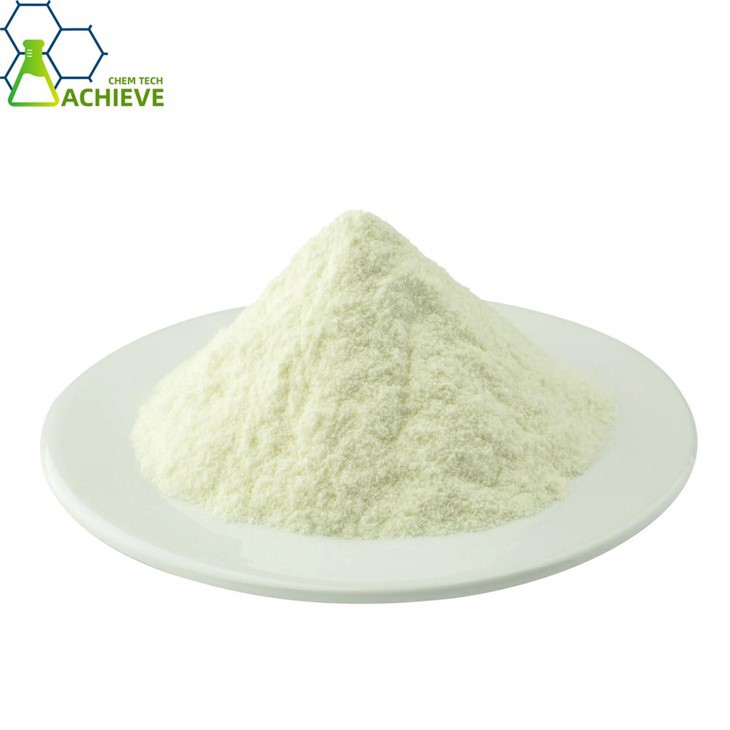


Shaanxi BLOOM Tech Co., Ltd. is one of the most experienced manufacturers and suppliers of sulphadimidine powder in China. Welcome to wholesale bulk high quality sulphadimidine powder for sale here from our factory. Good service and reasonable price are available.
Sulphadimidine powder is a broad-spectrum antibacterial drug of the sulfonamide class. Its main component is sulfadimidine. This drug inhibits the proliferation of various Gram-positive bacteria and some Gram-negative bacteria by competitively inhibiting the dihydrofolate synthase of bacteria and blocking the folate metabolism. In veterinary clinical practice, it is widely used to treat bacterial infections in livestock (such as pigs, cattle, and sheep) and poultry, especially for respiratory infections (such as pneumonia), digestive tract infections (such as enteritis), urinary tract infections, and bacterial dysentery, etc., showing significant therapeutic effects. The dosage should be calculated strictly based on body weight, and it is usually uniformly mixed into feed or drinking water for administration. It should be noted that some animals may experience allergic reactions or crystalluria and other adverse reactions. Therefore, it is necessary to ensure that the animals drink sufficient water during the medication period to promote excretion, and long-term and high-dose use should be avoided. In addition, this drug has a withdrawal period requirement. For food animals, it is necessary to strictly follow the withdrawal period after use to ensure the safety and no residue of the products.
|
|
|



| Product Name | Sulphadimidine Powder | Sulphadimidine Tablets | Sulphadimidine Injection | Sulphadimidine Bolus |
| Product Type | Powder | Pills | Injection | Bolus |
| Product Purity | ≥99% | ≥99% | ≥99% | ≥99% |
| Product Specifications | 1kg/25kg/etc. | 0.5g | 0.4g/0.1g/etc. | 0.5g/1g/etc. |
| Product Form | Organic synthesis | Take orally | Injection | Take orally |
Sulphadimidine Powder COA


|
|
|
|
|


Sulphadimidine powder, with the chemical name N-(4,6-dimethyl-2-pyrimidinyl)-4-amino-benzenesulfonylamine, has the molecular formula C₁₂H₁₄N₄O₂S and a molecular weight of 278.33. Its powder form is white or slightly yellow crystalline powder, odorless, slightly bitter in taste, and gradually darkens in color upon exposure to light. The following elaborates on its chemical properties from aspects such as physical properties, solubility, chemical stability, and reactivity.
Physical Properties
Appearance and Form: Sulfadimidine powder is a white or slightly yellow crystalline powder, with fine and uniform particles and no visible impurities.
Melting Point: Its melting point range is 197-200℃, indicating that the compound begins to melt when heated to around 200℃, demonstrating high thermal stability.
Density: The estimated density is approximately 1.2997 g/cm³ (approximate value), reflecting the tight packing of molecules.
Refractive Index: The estimated refractive index is 1.6440, related to the speed of light propagation in the substance, and can be used for substance identification.
Solubility
The solubility of sulfadimidine is highly selective:
Insoluble in water and ether: At 29℃, the solubility in water is only 150 mg/100 mL, increasing to 192 mg/100 mL at 37℃, still within the range of poor solubility; it is almost insoluble in ether.
Easy to dissolve in dilute acids and dilute bases: It can be rapidly dissolved in dilute hydrochloric acid or dilute sodium hydroxide solution, forming a transparent solution.
Soluble in hot ethanol and acetone: The solubility is higher in hot ethanol, and 50% acetone solution can dissolve 50 mg/mL, which is conducive to organic solvent extraction or preparation of formulations.
Chemical Stability
Light Sensitivity: Sulfadimidine is sensitive to light, and its color gradually deepens (from white to pale yellow or brown) after exposure to light (it may also undergo photochemical degradation, generating inactive or potentially toxic metabolites). Therefore, it should be stored in a light-proof container in a sealed container.
Thermal Stability: Within the temperature range below the melting point, the chemical properties of sulfadimidine are stable, but high temperatures (such as in the molten state) may cause decomposition, generating unknown products.
Redox Reactivity: It is incompatible with strong oxidants (such as potassium permanganate, hydrogen peroxide), and may undergo redox reactions, leading to structural damage or explosion risks.
Reactivity
Acid-base reaction: The sulfanilamide molecule contains a sulfonamide group (-SO₂NH₂) and a pyrimidine ring, exhibiting weak acidity (pKa ≈ 7.4) and weak basicity. It can react with strong acids or strong bases to form salts. For example, its sodium salt (sulfanilamide sodium) is soluble in water and is used in the preparation of injections.
Substitution reaction: The hydrogen on the sulfonamide group can be replaced by other groups to form derivatives (such as sulfadiazine, sulfamethoxazole), but the sulfanilamide itself has low activity in such reactions.
Cycloaddition reaction: Industrially, sulfanilimide is cyclized with acetylpyridine to synthesize sulfanilamide, demonstrating the ring-forming activity of its pyrimidine ring.
Pharmacological Related Chemical Properties
Competitive Inhibition: As a sulfonamide antibacterial drug, sulfadimidine inhibits bacterial dihydrofolate synthase through structural similarity to para-aminobenzoic acid (PABA), blocking folate synthesis and thereby inhibiting bacterial growth.
Metabolites: In the body, it is metabolized by N-acetyltransferase to form inactive acetylated compounds, which are excreted through urine.
Safety and Handling
Toxicity: The LD₅₀ for mice subcutaneous injection is 1776 mg/kg, indicating a relatively low acute toxicity, but long-term high-dose use may cause toxic reactions such as splenic hemorrhagic infarction and prolonged blood clotting time.
Environmental Impact: Sulfonamide antibiotics may remain in the environment, posing potential risks to aquatic organisms, and proper disposal of waste should be followed.
Storage Conditions: It is recommended to store at 2-8℃ in a dry, dark environment, sealed for prevention of moisture absorption and light degradation.
Quality Control
Sulphadimidine powder, as a widely used sulfonamide antibacterial drug, its quality control is of vital importance for ensuring the efficacy and safety of the medication. The following will elaborate on the quality control measures for sulphadimidine powder from five aspects: raw material inspection, reaction process monitoring, product identification and purity testing, stability tests, and packaging and storage conditions.
Raw Material Inspection
The synthesis of sulfadimidine uses sulfaguanidine as the main raw material. The production of sulfaguanidine, in turn, relies on various chemical raw materials such as dimethylformamide, sulfuric acid, sodium chloride, sodium hydroxide, ammonia water, and hydrochloric acid. Therefore, the quality control of raw materials is the first step in the production of sulfadimidine.
Purity testing
Modern analytical techniques such as high-performance liquid chromatography (HPLC) and gas chromatography (GC) are used to test the purity of the raw materials, ensuring they meet the reaction requirements. For example, the purity of dimethylformamide should be no less than 99%, and the concentration of sulfuric acid should be accurately controlled to avoid the formation of by-products during the reaction.
Limit of impurities
Impurities such as heavy metals, moisture, and residual solvents in the raw materials are tested for their limits to ensure they comply with pharmacopoeia standards. For instance, the content of heavy metals should not exceed 20 parts per million, and the moisture content should not exceed 0.5%.
Supplier audit
Regular audits of raw material suppliers are conducted to assess their production capacity, quality control systems, and credibility, ensuring the reliability and stability of the raw material sources.
Reaction process monitoring
The synthesis of sulfadimpyridine involves the cyclization reaction of sulfanilamide with acetylpyridone. The reaction conditions (such as temperature, time, type and dosage of catalyst) have a significant impact on the yield and purity of the product. Therefore, monitoring the reaction process is a crucial part of quality control.
Reaction temperature control
A precise temperature control system is adopted to ensure that the reaction temperature remains constant between 80 and 100℃, avoiding excessive temperature which may cause side reactions or insufficient temperature which may lead to a decrease in reaction rate.
Reaction time optimization
The optimal reaction time is determined through small-scale experiments and strictly monitored during the production process to ensure complete reaction. For example, ring-coupling reactions usually take several hours, and the specific time depends on the process.
Catalyst selection and dosage
Different alkaline catalysts (such as sodium hydroxide, sodium carbonate, potassium carbonate) are tried, and it is found that sodium hydroxide has the best catalytic effect, which can shorten the reaction time and increase the yield. At the same time, the dosage of the catalyst is precisely controlled to avoid a decrease in product purity due to excessive dosage.
Online detection
Online detection techniques such as thin-layer chromatography (TLC) and high-performance liquid chromatography (HPLC) are used to monitor the reaction process in real time, ensuring complete ring-coupling reactions and avoiding the residue of unreacted raw materials and by-products.
Product identification and purity testing
After the reaction is completed, the crude product needs to undergo post-treatment and purification to improve the purity and quality of the product. At the same time, various analytical techniques are used to identify and test the purity of the product to ensure it meets the standards of the pharmacopoeia.

Structure identification
The structure of the product was identified using techniques such as infrared spectroscopy (IR), proton nuclear magnetic resonance spectroscopy (¹H NMR), carbon nuclear magnetic resonance spectroscopy (¹³C NMR), and mass spectrometry (MS), confirming that its molecular structure is consistent with sulfadimidine.
Purity testing
The purity of the product was determined by HPLC, with a general requirement of ≥98.5%. At the same time, the content of impurities such as moisture and heavy metals was detected to ensure compliance with pharmacopoeia standards. For example, the residue after incineration should not exceed 0.1%, and selenium should not exceed 30 parts per million.


Crystal form and particle size control
Sulfadimidine is a white or slightly yellow crystalline or powder form. The crystal form and particle size of the drug have an impact on its solubility and bioavailability. Therefore, by controlling the crystallization conditions (such as solvent type and cooling rate), the desired crystal form and particle size distribution can be obtained.
Stability tests
Accelerated and long-term stability tests were conducted on the sulfadimidine powder to examine its degradation under different temperature and humidity conditions, providing a basis for the product's shelf life.
Accelerated stability test
Under high temperature (e.g. 40°C) and high humidity (e.g. 75% RH) conditions, an accelerated degradation test was conducted on sulfadimidine powder to examine its degradation products and degradation rate, and to predict the stability of the product under normal storage conditions.
Long-term stability test
Under normal temperature (e.g. 25°C) and normal humidity (e.g. 60% RH), a long-term storage test was carried out on sulfadimidine powder. Regular tests were conducted on its purity, moisture content, and impurity levels to assess its validity period.
Packaging material selection
Based on the results of the stability tests, suitable packaging materials (such as pharmaceutical low-density polyethylene bags and cardboard barrels) were selected to isolate light, moisture, and oxygen, thereby extending the product's shelf life.
Packaging and Storage Conditions
The packaging and storage conditions of sulfadimidine powder have a significant impact on its quality stability. Therefore, strict control of packaging materials and storage environments is necessary to ensure product quality.

Packaging material selection
Use medicinal low-density polyethylene bags or cardboard barrels for packaging. Ensure that the packaging materials are non-toxic, odorless, have good sealing performance, and can block light, moisture and oxygen.

Storage condition control
Store sulfadimidine powder in a dry, cool and well-ventilated warehouse, avoiding direct sunlight and high-temperature and high-humidity environments. At the same time, regularly check the warehouse temperature and humidity records to ensure that the storage conditions meet the requirements.

Reinspection period management
Based on the results of stability tests, determine the reinspection period for sulfadimidine powder (generally one year), and conduct a comprehensive inspection of the product before the reinspection period to ensure that its quality meets the standards.
Hot Tags: sulphadimidine powder, suppliers, manufacturers, factory, wholesale, buy, price, bulk, for sale, Pramipexole Powder CAS 104632 26 0, Orlistat Powder CAS 96829 58 2, Cyclophosphamide monohydrate powder, Methylergonovine Maleate Salt CAS 57432 61 8, phenacetin crystal, Tetrahydrobiopterin BH4 Powder