




Shaanxi BLOOM Tech Co., Ltd. is one of the most experienced manufacturers and suppliers of thiostrepton cas 1393-48-2 in China. Welcome to wholesale bulk high quality thiostrepton cas 1393-48-2 for sale here from our factory. Good service and reasonable price are available.
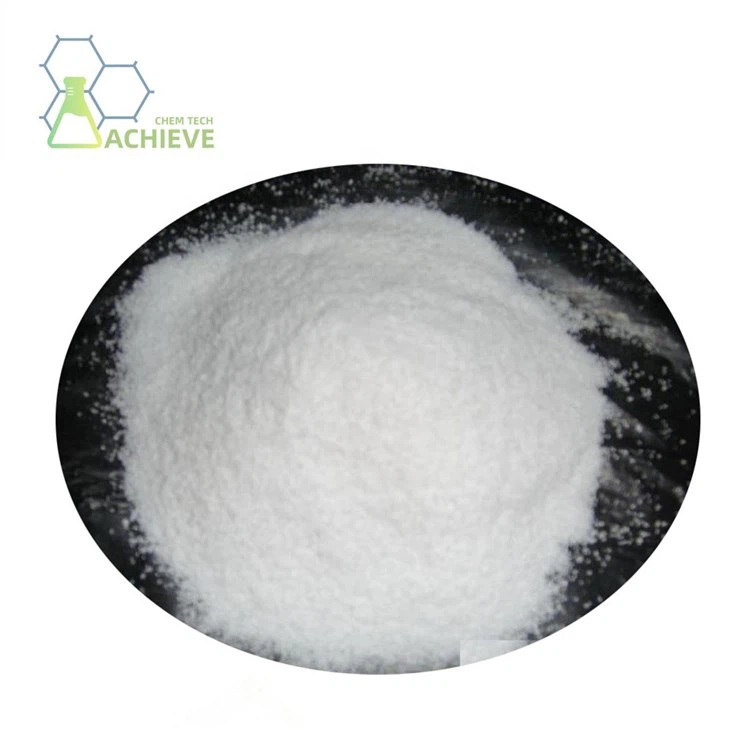
Thiostrepton, also known as NSC 170365, FOXM1 Inhibitor I,Protein synthesis inhibitor,Bryamycin,NSC 81722,Thiactin,Thiostreptin A, It is a compound with specific biological activity The appearance is a white to off white solid with a solubility of ≥ 10mg/mL in DMSO and 25mg/mL in DMF, insoluble in water. It has a solubility of approximately 0.5mg/ml in a 1:1 solution of DMF and PBS (pH 7.2). The purity is generally higher than 95%. It is a natural cyclic oligopeptide antibiotic and a natural product of ribosomal synthesis and post-translational modified peptides (RIPPs). It exhibits antibiotic activity by prolonging the steps in protein synthesis, blocking the dissociation of elongation factor G (EF-G) in ribosomes, and releasing inorganic phosphates from EF-G after GTP hydrolysis.
Additional information of chemical compound:
| Chemical Formula | C72H85N19O18S5 |
| Exact Mass | 1663.49 |
| Molecular Weight | 1664.89 |
| m/z | 1663.49(100.0%),1664.50(77.9%),1665.50(29.9%),1665.49(22.6%),1666.49(17.6%),1666.50(7.5%),1667.49(6.8%),1664.49(6.6%),1665.49(5.5%),1664.49(4.0%),1665.50(3.7%),1665.50(3.1%),1666.50(2.9%),1667.48(2.0%),1666.50(2.0%),1668.50(1.7%),1668.49(1.6%),1666.49(1.5%),1667.49(1.2%),1666.50 (1.2%),1667.50(1.1%),1667.51 (1.1%) |
| Elemental Analysis | C, 51.94; H, 5.15; N, 15.99; O, 17.30; S, 9.63 |
| Melting point | 248-257℃(dec.) |
| Density | 1.0824 (rough estimate) |
| Storage condition | under -20℃ |
|
|
|


At the same time, it is also an inhibitor of FOXM1, which can inhibit FoxM1 in mammalian cells, prevent the expression of genes regulated by FoxM1 (including FoxM1 itself), thereby preventing human cancer cell proliferation and inducing cell apoptosis. This compound has a wide range of applications in molecular biology, pharmacology, and other scientific research fields, and can be used as a research reagent. It can only be used for scientific research experiments and is strictly prohibited for clinical medical and other purposes. Its storage conditions are -20 ℃, away from light, moisture-proof, sealed and dry. After dissolving in the solvent, please try to use it within one month at -20 ℃.

Thiostrepton, also known as erythromycin, thiophanate, or thiostreptomycin, has a CAS number of 1393-48-2, a molecular formula of C72H85N19O18S5, and a molecular weight of approximately 1664.89. It is a thiazole containing cyclic peptide antibiotic produced by Streptomyces Azure and S. hawaiiensis, and belongs to the natural product class of ribosomal synthesis and post-translational modified peptides (RiPP). The appearance is a white to light yellow crystalline powder with a density of 1.64 g/cm ³. It decomposes at a melting point in the range of 248 to 257 ℃ and is almost insoluble in water. It is soluble in DMSO, acetic acid, and chloroform. It needs to be sealed and stored away from light at -20 ℃.

1. The underlying logic from molecular skeleton to multi domain penetration
The thiazole ring composed of five sulfur atoms interweaves with the quinoline acid ring to form a unique bicyclic configuration, endowing it with strong chemical stability and biological activity. It is precisely this "stable and fierce" molecular characteristic that enables thiostreptomycin to deeply penetrate into more than ten fields such as veterinary medicine, genetic engineering, anti-tumor, immune regulation, agriculture, etc., becoming an irreplaceable key molecule in the intersection of fine chemicals and biomedicine.
It is worth emphasizing that intravenous injection of LD ₅₀ in mice is 41 mg/kg, which is a toxic chemical. Protective equipment must be worn during operation. But it is precisely this balance of "toxicity" and "efficacy" that makes it a powerful tool for precise targeting at low doses.
2. Animal feed additives
The most mature and industrialized use is as a raw material for animal feed additives, playing an irreplaceable role in the global livestock industry.
Antibacterial and growth promoting mechanism: By competitively blocking the binding of GTP to the 50S subunit of bacterial ribosomes.


While inhibiting the ribosome dissociation mediated by elongation factor G (EF-G), bacterial protein synthesis is completely blocked. This mechanism has a selective inhibition rate of over 90% against Gram positive bacteria, effectively preventing and controlling common livestock and poultry pathogens such as Streptococcus suis, Clostridium perfringens, Staphylococcus aureus, and Streptococcus pneumoniae. At sub therapeutic doses, it does not directly kill bacteria, but improves feed conversion rate and animal growth performance by inhibiting pathogen proliferation and optimizing gut microbiota balance.
Advantage of no cross resistance: No cross resistance with tetracycline and beta lactam antibiotics, which is particularly valuable in today's increasingly severe bacterial resistance.
The EU standard requires that the concentration of feed additives should not exceed 200 ppm, and the Ministry of Agriculture and Rural Affairs of China also has clear regulations on the dosage and discontinuation period of additives.
Anti lactic acidosis: It is widely used in Europe, Australia, and North America to treat lactic acidosis in cattle, sheep, and horses, and is a unique application scenario in ruminant animal farming.
In practical applications, enterprises such as Wuhan Dingxintong Pharmaceutical use it as the core ingredient of feed premix, with a product purity of over 98%, heavy metal residues in accordance with GB 13078 standards, and manufacturers requiring veterinary drug GMP certification and feed additive production licenses.


3. Molecular Biology Screening Markers
In the fields of molecular biology and genetic engineering, the status of thiostreptomycin can be considered as the "standard level".
The thiostrepton resistance gene (tsr) is one of the most commonly used selective markers in recombinant DNA/plasmid cloning technology. The screening mechanism is extremely sophisticated: the tsr gene expresses a methyltransferase that specifically methylates a nucleotide on 23S rRNA, preventing thiostreptomycin from binding to ribosomes and leading to bacterial resistance. This resistance gene has been cloned into most Streptomyces cloning vectors, becoming the "gold standard" for screening successful recombinants in genetic engineering operations.
In addition to serving as screening markers, it is also used as a tool drug for studying ribosome function. By binding to the 23S rRNA of the 50S ribosomal subunit, thiostrepton can block the binding of elongation factor EF-G to ribosomes, making it a classic probe for studying protein translation mechanisms. In 2015, a research team from the Chinese Academy of Sciences and Fudan University published results in the journal Chemistry&Biology under Cell, revealing that it is currently the only antibiotic that can have dual effects on pathogenic bacteria and host cells. This discovery further consolidates its benchmark position in basic research.


4. Anti tumor
This is the most anticipated emerging use in the past decade, and it is also a key turning point for its transition from antibiotic crossover to anti-cancer drug development.
It has clear anti-tumor activity, and its core mechanism is the downregulation of FOXM1 transcription factor levels. FOXM1 is overexpressed in many malignant tumors and is a key switch driving tumor cell proliferation, metastasis, and drugresistance. By inhibiting FOXM1, the cell cycle progression of tumor cells can be effectively blocked, causing them to stagnate at specific stages and thus inhibiting division.
Specific research results include: a study published in Cell Death&Disease in 2015 confirmed the ability to target human colon cancer stem cells; In 2008, the research of Molecular Cancer Therapeutics showed that it can selectively target breast cancer cells. In vitro cytotoxicity studies, the working concentration for colon cancer cell lines such as HCT-15, HT-29, and HCT-116 is 5 μ M or 10 μ M (DMSO final concentration ≤ 0.1%).
In addition, it can also inhibit the mitochondrial PRX3 antioxidant signaling network, cutting off the survival pathway of tumor cells from the perspective of oxidative stress. At present, the development of new anti-tumor drugs using thiostreptomycin as a lead compound has become a hot topic in tumor pharmacology.


5. Immune regulation
It is a novel TLR7-9 small molecule inhibitor, which has shown great clinical potential in the field of autoimmune diseases.
The abnormal activation of TLR7-9 is closely related to autoimmune diseases such as rheumatoid arthritis, systemic lupus erythematosus, and psoriasis. Thiostreptomycin, as a TLR7-9 inhibitor, has higher targeting specificity than proteasome inhibitor bortezomib. A study published in the Journal of Immunology in 2015 confirmed that thiostreptomycin can effectively inhibit TLR7-9 induced psoriasis like inflammation. In the treatment of colitis, a breakthrough was made in 2023 by the research team led by Yang Shiming and Hu Changjiang from Third Military Medical University:
Streptomycin can improve experimental colitis by promoting the ubiquitination of ROR γ t protein, while alleviating inflammation by regulating intestinal microbiota imbalance. This discovery opens up a new path for the treatment of inflammatory bowel disease.
More noteworthy is that thiostreptomycin has also been found to inhibit the level of inflammatory cells in periodontal tissue, promote fibroblast generation, and contribute to the treatment of periodontitis without side effects such as loss of appetite or growth impact, demonstrating its application prospects in the field of dentistry.


6. Agricultural disease prevention and control
Its agricultural applications cannot be ignored either. The "endosymycin" (streptomycin) developed based on thiostreptomycin is widely used in the prevention and control of agricultural diseases such as rice bacterial leaf blight and cabbage rot heart disease.
The researchers also structurally modified thiostreptomycin by substituting fluorine on the quinoline H at the end of the side chain, obtaining a fluorinated thiostreptomycin analogue.
Compared with the parent organism, fluorothiostreptomycin showed a threefold increase in antibacterial activity against Gram negative bacteria such as Bacillus subtilis, providing a feasible pathway to overcome the weakness of thiostreptomycin's insufficient activity against Gram negative bacteria. However, the composition of streptomycin products is complex, and there are significant differences in activity between different components, which poses a challenge to improving the quality of intermediate microbial products. At present, a research group has analyzed the biosynthetic pathway of D-gulosamine units and identified two novel enzymes with activity, laying the foundation for simplifying the product spectrum and improving yield.


7. Development of new antibacterial drugs
Given the increasingly severe global problem of bacterial resistance, new antibacterial drugs are being developed as lead compounds.
Researchers optimized the structure of thiostreptomycin by changing sulfur-containing domains and adjusting amino acid side chains. Some derivatives have shown better inhibitory effects on drug-resistant bacteria in vitro experiments, and even exhibit activity against certain multidrug-resistant strains. This direction is considered an important reserve for addressing the threat of "superbugs".
8. Research reagents and experimental tools
In the field of scientific research, sulfur chain filamentous bacteria are widely circulated in the form of high-purity chemical reagents. Its main applications include:
Firstly, as a tool drug for ribosome research, it is used to explore the mechanism of protein translation; Secondly, as a FOXM1 inhibitor for the study of tumor signaling pathways; Thirdly, as TLR7-9 inhibitors for immunological research; Fourthly, as a genetic engineering screening marker for recombinant identification. The mainstream products on the market have a purity of ≥ 98% (HPLC), dissolved in DMSO to prepare a 10 mM storage solution, and stored in a closed container at room temperature for an effective period of 2 years.

They need to be stored at -20 ℃ in the dark. The market quotation in 2026 is between 1150 and 2000 yuan/kg, with major suppliers including Shanghai Aladdin, Hubei Weideli, and Weishi Chemical. The livestock and poultry feed trough extends to the genetic engineering laboratory, spanning from tumor wards to the forefront of autoimmune disease treatment, from rice paddies to periodontal clinics. Thiostrepton uses a thiazole ring containing five sulfur atoms as a fulcrum to leverage the key chains of six industries: veterinary medicine, genetic engineering, anti-tumor, immune regulation, agriculture, and new drug research and development.
FAQ
What is thiostrepton used for?
Is Nystatin neomycin thiostrepton and triamcinolone?
Is thiostrepton a small molecule?
Is thiostrepton soluble in DMSO?
Hot Tags: thiostrepton cas 1393-48-2, suppliers, manufacturers, factory, wholesale, buy, price, bulk, for sale, L Epicatechin CAS 490 46 0, 18 Glycyrrhetinic Acid CAS 471 53 4, 6 methylergoline 8beta carboxylic Acid CAS 5878 43 3, Pure Creatine Monohydrate Powder CAS 6020 87 7, filgotinib, tetracaine powder