





Shaanxi BLOOM Tech Co., Ltd. is one of the most experienced manufacturers and suppliers of topical vancomycin powder cas 1404-90-6 in China. Welcome to wholesale bulk high quality topical vancomycin powder cas 1404-90-6 for sale here from our factory. Good service and reasonable price are available.
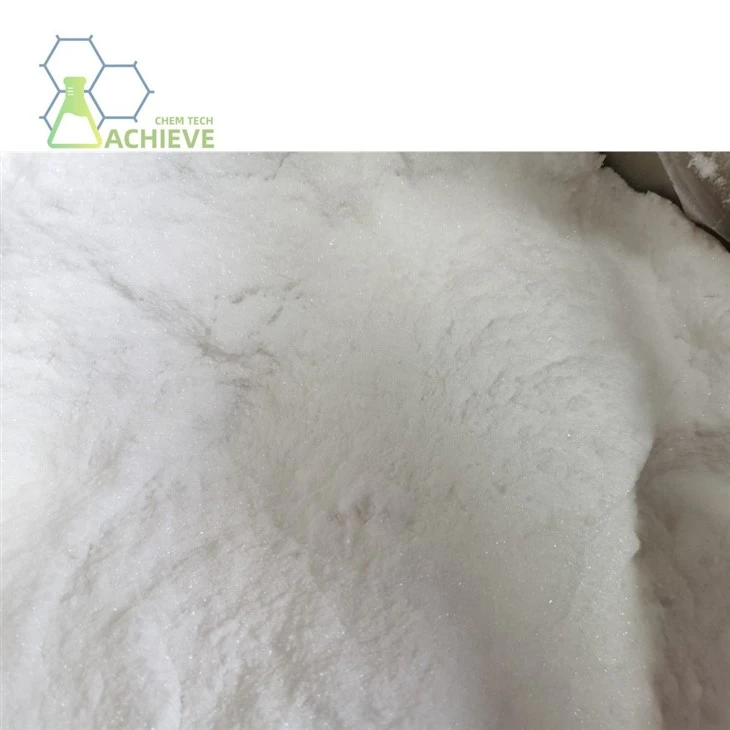
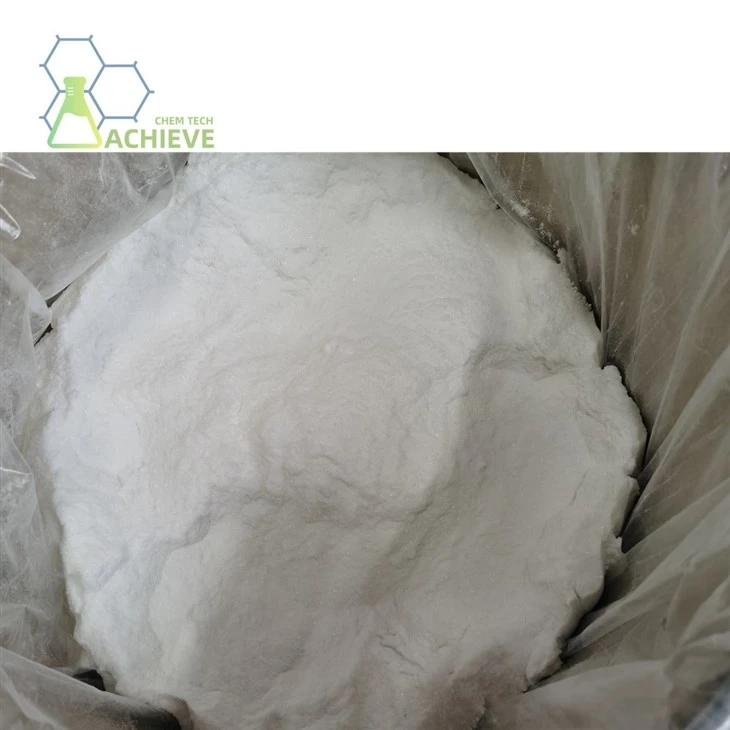
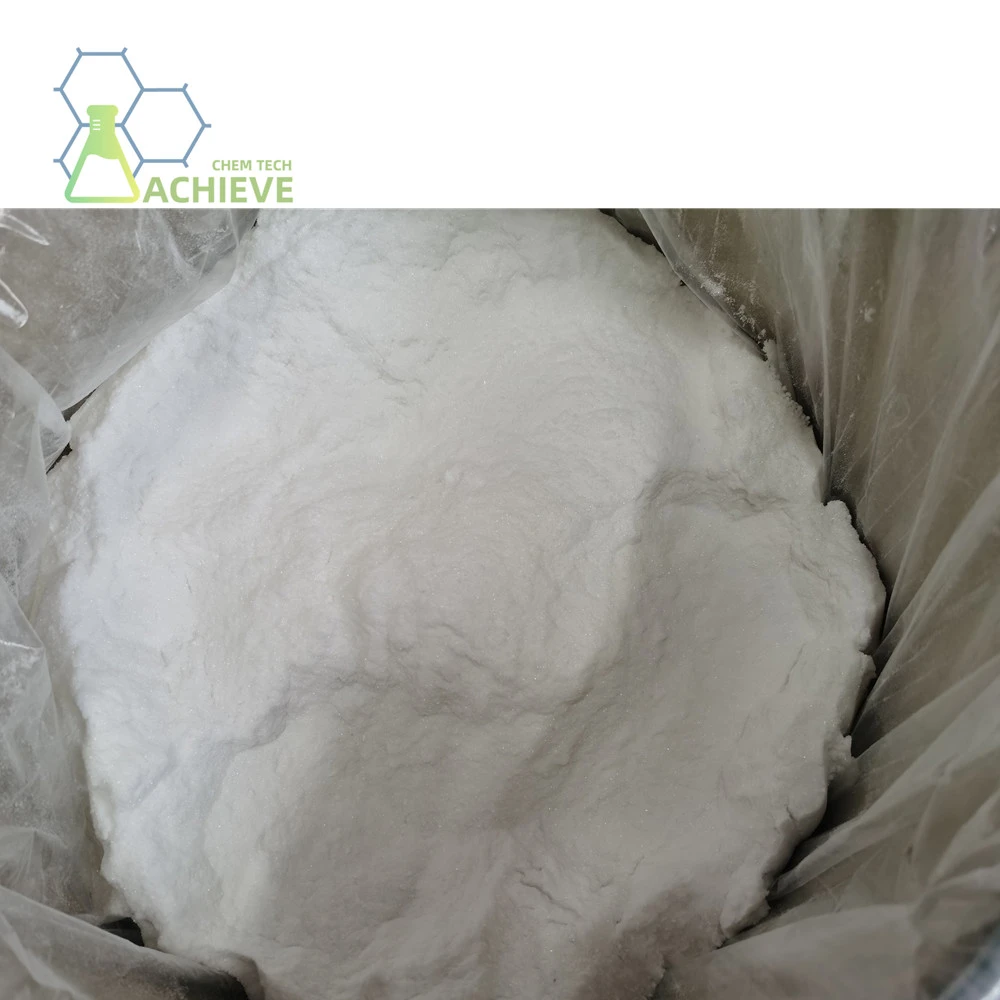
Topical vancomycin powder, Vancomycin powder is a locally applied antibiotic drug. By inhibiting the cell wall synthesis of susceptible bacteria and altering the permeability of the cell membrane, as well as selectively inhibiting the synthesis of ribonucleic acid, antibacterial effects are exerted. Its powder form is convenient for local application, such as directly sprinkling on wounds or surgical sites, without mixing with physiological saline or other materials. When using, attention should be paid to the dosage and frequency of medication, as well as the cleanliness and disinfection of the wound. Its appearance usually appears as white or off white powder. This powder is odorless, but has a bitter taste and is easily soluble in acidic aqueous solutions. Although it can dissolve in alkaline solutions, it is unstable. However, it is slightly soluble in methanol and difficult to dissolve in other organic solvents. It is used in surgeries that are prone to infection, such as tibial double plateau fractures, Pilon fractures, and calcaneal fractures, where vancomycin powder is directly applied to the wound, which can significantly reduce the infection rate at the surgical site. Simultaneously applying vancomycin powder locally can help reduce the bacterial count at the wound site, thereby alleviating inflammatory reactions and promoting wound healing.

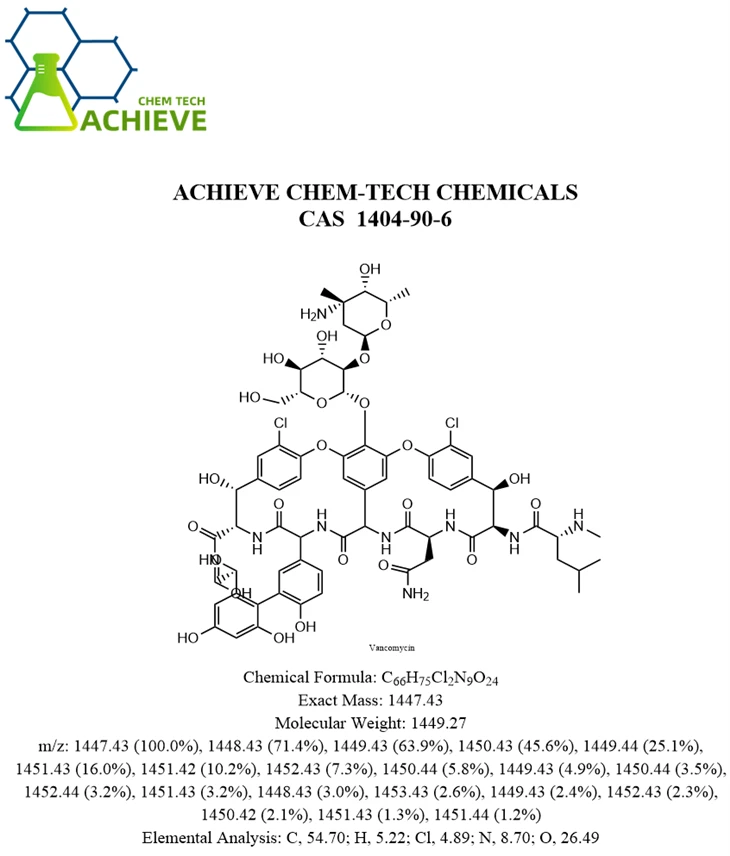
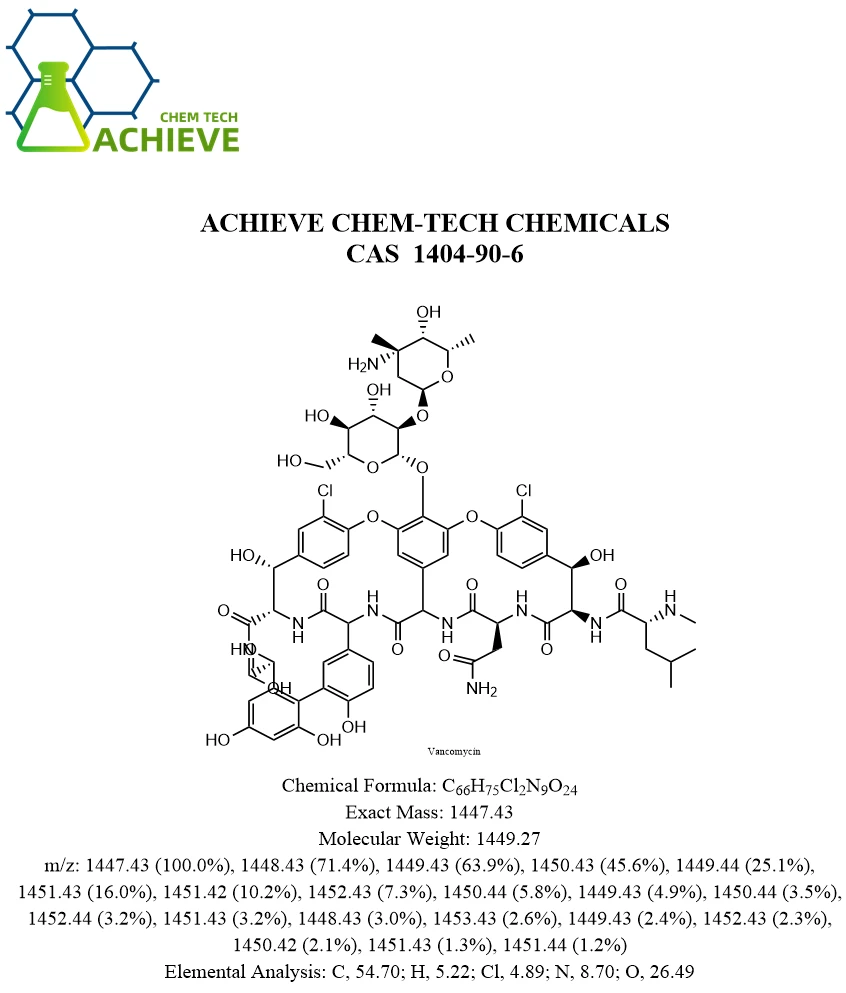
Additional information of chemical compound:
|
Chemical Formula |
C66H75Cl2N9O24 |
|
Exact Mass |
1447.43 |
|
Molecular Weight |
1449.27 |
|
m/z |
1447.43(100.0%),1448.43(71.4%),1449.43(63.9%),1450.43(45.6%),1449.44(25.1%), 1451.43(16.0%),1451.42(10.2%),1452.43(7.3%),1450.44(5.8%),1449.43(4.9%), 1450.44(3.5%),1452.44(3.2%),1451.43(3.2%),1448.43(3.0%),1453.43(2.6%), 1449.43(2.4%),1452.43(2.3%),1450.42(2.1%),1451.43(1.3%),1451.44(1.2%) |
|
Elemental Analysis |
C, 54.70; H, 5.22; Cl, 4.89; N, 8.70; O, 26.49 |
|
Melting point |
>274℃(dec.) |
|
Density |
1.2882 (rough estimate) |
|
Storage conditions |
2-8℃ |
 |
 |

Topical vancomycin powder is mainly used in the medical field, especially in the prevention and treatment of infections related to surgery or trauma. The following is a detailed summary of its uses:
Surgical site infection is one of the common complications after surgery, which may lead to surgical failure, prolonged hospitalization, increased medical costs, and even endanger the patient's life. Therefore, preventing surgical site infections is of great significance for the rehabilitation of patients and the improvement of medical quality. Vancomycin is a glycopeptide antibiotic with broad-spectrum antibacterial activity. It inhibits the synthesis of cell walls by interfering with the key component peptidoglycan in bacterial cell wall structure, thereby achieving bactericidal effects. Local use of vancomycin powder can ensure that the drug directly acts on the surgical site, increase drug concentration, and thus more effectively prevent bacterial infections.
Vancomycin powder can be directly applied to surgical wounds to reduce the risk of surgical site infections. This is particularly common in orthopedic surgery, especially in surgeries with higher risk of infection, such as tibial double plateau fractures, Pilon fractures, and calcaneal fractures. Research has shown that compared to the control group that did not use vancomycin powder, local application of vancomycin powder can significantly reduce the infection rate.

Preventing surgical site infections

Orthopedic surgery: In orthopedic surgery, especially those involving implants such as spinal surgery and trauma orthopedic surgery, the local use of vancomycin powder can significantly reduce the risk of surgical site infection. Studies have shown that compared to the control group that did not use vancomycin powder, patients who used vancomycin powder had a significantly lower infection rate. The use of this substance can also reduce the occurrence of deep surgical site infections, which is crucial for patient recovery and surgical success.
Other surgeries: In addition to orthopedic surgeries, vancomycin powder may also be used in other types of surgeries to prevent surgical site infections. For example, in joint replacement surgery, local use of vancomycin powder is also considered to reduce the risk of periprosthetic infections. However, the effectiveness of this application varies in different studies and further research is needed to verify it.
Vancomycin, as a glycopeptide antibiotic, has broad-spectrum antibacterial activity and has good antibacterial effects on various Gram positive bacteria, such as Staphylococcus aureus, Streptococcus pyogenes, Streptococcus pneumoniae, etc. Therefore, local application of vancomycin powder can also be used to treat infections caused by these bacteria, especially in wounds or skin and soft tissue infections.
When applying vancomycin powder locally, a certain dose of vancomycin powder is usually directly applied to the surgical site, such as the surface of internal plants, subcutaneous tissue, fascia, muscle layer, etc. The specific dosage and method of use may vary depending on factors such as the type of surgery and patient condition. Generally speaking, when using, it is necessary to ensure that the medication covers the surgical site evenly and avoid mixing it with physiological saline or other materials.

Treat specific infections

Spinal surgery: Local prophylactic application of vancomycin powder has been widely used in spinal surgery. Multiple studies have shown that the experimental group treated with vancomycin has a significant effect in reducing the incidence of spinal surgical site infections compared to the control group without vancomycin.
Subgroup analysis shows that vancomycin significantly reduces the risk of infection at the site of spinal fixation surgery.
Orthopedic surgery: Local application of vancomycin powder has also achieved good results in high-risk fracture surgeries such as tibial double plateau fractures, Pilon fractures, and calcaneal fractures in traumatic orthopedic surgery. Research has shown that the use of vancomycin can significantly reduce the surgical site infection rate after these fracture surgeries.
Notes and Summary
- Drug sensitivity: Before using vancomycin, bacterial culture and drug sensitivity testing should be performed to ensure that the selected drug is sensitive to the target bacteria.
- Adverse reactions: Although local application of vancomycin has relatively few adverse reactions, attention should still be paid to possible allergic reactions, nephrotoxicity, and other adverse reactions in patients. During use, patients' condition changes should be closely monitored and promptly addressed.
- Drug interactions: Vancomycin may interact with other drugs, so it is important to understand the patient's medication history before use to avoid adverse reactions caused by drug interactions.
The local application of vancomycin powder in the treatment of specific infections has significant effects, especially in preventing infections in spinal surgery and certain orthopedic surgical sites. However, there is still controversy regarding its dosage and method of use, and more high-quality research is needed to further evaluate its effectiveness and safety. During use, medical advice and medication guidelines should be strictly followed to ensure the safe and effective use of the medication.
What are the side effects of this substance?
Regarding the side effects of topical vancomycin powder, although it has lower systemic adverse reactions compared to systemic application, there are still some potential side effects and risks. The following is a detailed analysis of its side effects:
1.Local side effects
Skin irritation
Local application of vancomycin powder may cause skin irritation symptoms such as redness, swelling, pain, or itching. These symptoms are usually mild and can self resolve after discontinuation of medication.
Allergic reactions
Although local application reduces the risk of systemic allergic reactions, some patients may still develop local allergic reactions to vancomycin, manifested as rash, erythema, etc.
2.Systemic side effects (relatively few)
Renal toxicity
Although local application of vancomycin has relatively low nephrotoxicity, long-term or excessive use may still cause damage to the kidneys. Therefore, the patient's renal function should be closely monitored during use.
Hepatotoxicity
There are reports that local application of vancomycin may also lead to liver dysfunction, manifested as elevated transaminase levels. For patients with pre-existing liver disease, caution should be exercised when using it.
Other systemic reactions
A small number of patients may experience systemic adverse reactions, such as nausea, vomiting, headache, fever, etc. These symptoms are usually mild and can self resolve after discontinuation of medication.
3. Risks for special populations
Pregnant and lactating women
The safety of local application of vancomycin has not been fully evaluated for pregnant and lactating women. Therefore, caution should be exercised when using it in these populations and following the guidance of a doctor.
Children
The safety of using vancomycin in children also needs special attention. Due to the differences in physiological characteristics and metabolic processes between children and adults, appropriate adjustments should be made based on factors such as age, weight, and condition when using it.
4. Precautions for use
- Drug sensitivity: Before using topical vancomycin powder, bacterial culture and drug sensitivity testing should be performed to ensure that the selected drug is sensitive to the target bacteria.
- Avoid mixing with other drugs: When applying vancomycin topically, it should be avoided from mixing with other drugs to prevent drug interactions or affect the efficacy of the drug.
- Monitoring changes in the patient's condition: During use, the patient's condition should be closely monitored to promptly detect and address any potential adverse reactions.

The main component of Topical Vancomycin Powder is vancomycin, which is a glycopeptide antibiotic. Its chemical structure consists of a complex glycosylated peptide chain. The molecular formula is C₆₆H₇₅Cl₂N₉O₂₄, with a molecular weight of 1449.25. Its chemical properties give it unique advantages in local antibacterial applications, particularly in the prevention of infections in fields such as orthopedics and cardiac surgery.
|
|
|
|
|


Physical State and Stability
The local vancomycin powder is a nearly white fine powder with hygroscopic properties. It should be stored in a sealed container in a dry environment. Its stability is significantly affected by temperature: the powder form can be stored for 3 years at -25°C to -15°C, while when dissolved in a solvent (such as normal saline), it needs to be stored at -85°C to -65°C, with a shortened validity period to 2 years. This stability requirement necessitates strict temperature control during storage and transportation to prevent the reduction in activity due to repeated freezing and thawing.
Solubility and Compatibility
The powder form of vancomycin is slightly soluble in dimethyl sulfoxide (DMSO), and almost insoluble in common solvents such as water and ethanol. However, it can be prepared into a water-soluble formulation through specific processes. In local applications, 1g of the powder is usually directly spread onto the surgical wound or the surface of an implant without the need for mixing with solvents. This characteristic simplifies the operation process and reduces the risk of contamination. It should be noted that vancomycin has no cross-resistance with other antibiotics (such as β-lactam antibiotics), but compatibility during combination should avoid physical or chemical incompatibilities, such as the formation of precipitates with certain metal ions.
Antibacterial Mechanism and Chemical Activity
The antibacterial activity of vancomycin stems from its unique chemical structure: by highly affinity binding to the D-proline-D-alanine at the peptide terminus of the bacterial cell wall precursor, it blocks the synthesis of the peptidoglycan backbone, resulting in a cell wall defect. This mechanism is different from that of β-lactam antibiotics, which act at the transpeptidase stage of cell wall synthesis. The chemical activity of vancomycin is also reflected in:
Broad-spectrum antibacterial: It has a strong inhibitory effect on Gram-positive bacteria (such as methicillin-resistant Staphylococcus aureus MRSA, Enterococcus, Streptococcus pneumoniae), and is also effective against anaerobic bacteria such as Clostridium difficile.
Multi-target action: In addition to inhibiting cell wall synthesis, it can also alter the permeability of the bacterial cell membrane, interfere with RNA synthesis, and form multiple antibacterial barriers.
Low drug resistance: Due to its unique mechanism of action, it has no cross-resistance with other antibiotics, and clinical drug-resistant strains are rare.
Chemical advantages for local application
The topical vancomycin powder is applied directly to the wound or surface of internal implants, achieving high-concentration local antibacterial effects while avoiding systemic side effects of systemic medication. Its chemical properties play a key role in this process:
Quick release: The powder form can quickly dissolve in the tissue fluid, creating a local high-concentration environment and directly killing bacteria.
Long-lasting effect: A drug deposition layer forms on the wound surface, prolonging the antibacterial time, especially suitable for the period with high incidence of postoperative infections.
Reduced systemic exposure: Local application results in extremely low blood drug concentration, avoiding systemic side effects such as ototoxicity and nephrotoxicity.
Safety and Toxicity
The toxicity of vancomycin powder is mainly related to the glycosylated part in its chemical structure. When used locally, the following points should be noted:
Concentration control: Excessive concentration may cause tissue irritation. However, clinical studies have shown that applying 1g of powder directly to the wound did not result in significant adverse reactions.
Allergy risk: A small number of patients may be allergic to vancomycin, presenting with rashes and itching. It is necessary to inquire about the allergy history before application.
Special populations: Pregnant and lactating women should use it with caution. Children's medication dosage should be adjusted according to their weight.
Chemical considerations in clinical application
In orthopedic surgeries, local vancomycin powder has been widely used to prevent infections related to internal implants. For example, in open reduction and internal fixation surgeries for tibial plateau fractures, Pilon fractures, and calcaneal fractures, the use of vancomycin powder can reduce the infection rate from 10.6% to 0%. The chemical stability of the powder is crucial in this process: the powder form can maintain activity for several hours, sufficient to cover the critical period of the surgery. Additionally, vancomycin can also be combined with nanoscale delivery systems such as copper sulfide nanoparticles and liposomes to further enhance its local antibacterial effect.
Hot Tags: topical vancomycin powder cas 1404-90-6, suppliers, manufacturers, factory, wholesale, buy, price, bulk, for sale, sapropterin dihydrochloride powder, Tetrahydrobiopterin BH4 Powder, Oxytocin powder, pure Sevoflurane, tetracaine hcl powder, Organic Intermediate