




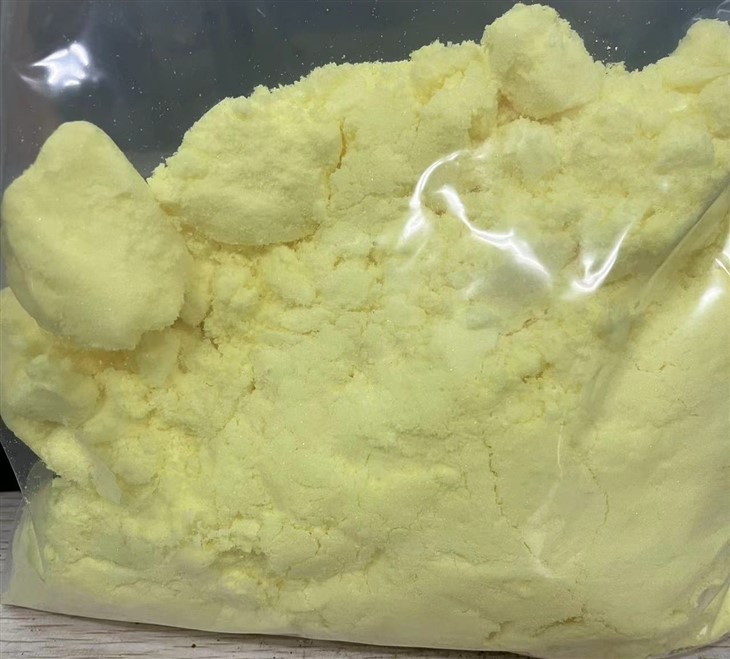
Shaanxi BLOOM Tech Co., Ltd. is one of the most experienced manufacturers and suppliers of 1-phenyl-2-nitropropene cas 705-60-2 in China. Welcome to wholesale bulk high quality 1-phenyl-2-nitropropene cas 705-60-2 for sale here from our factory. Good service and reasonable price are available.
Announcement
We don't sale this chemicals, here ONLY for check the basic information of this chemical compound.
Mar. 31th 2025
1-Phenyl-2-nitropropene(P2NP) is an organic compound with CAS 705-60-2 and molecular formula C9H9NO2. It usually appears as a light yellow liquid. Its molecular structure contains one phenyl group and one nitro group, and the presence of these two groups may cause it to exhibit color under certain conditions. It can be soluble in most organic solvents, such as alcohols, ethers, esters, etc., but not in water. This is due to the presence of hydrophobic phenyl and hydrophobic nitro groups in its molecular structure. However, under specific environmental conditions, such as high temperature or high pressure, it may increase its solubility in water. Has moderate to high volatility. This is mainly due to the interaction between the nitro and phenyl groups in its molecular structure, which gives it a certain degree of stability, but it can still volatilize at higher temperatures. In the agricultural field, this compound can be used to synthesize agricultural chemicals such as insecticides and herbicides; In the field of environmental science, it can be used to synthesize environmentally friendly materials and chemicals. In addition, phenyl 2 nitropropene can also be used for teaching and training purposes as an example compound to illustrate certain chemical reactions and synthesis steps.

|
|
|


|
Chemical Formula |
C9H9NO2 |
|
Exact Mass |
163 |
|
Molecular Weight |
163 |
|
m/z |
163 (100.0%), 164 (9.7%) |
|
Elemental Analysis |
C, 66.25; H, 5.56; N, 8.58; O, 19.61 |

1-Phenyl-2-nitropropene is an organic compound with specific structures and chemical properties, which may have multiple applications in the field of environmental protection.
1. Water treatment:
It is not directly used as a water treatment agent or photocatalyst/adsorbent. However, due to its susceptibility to addition reactions and the ability to transform into various functional groups through different methods, such as amines, hydroxylamines, nitriles, alcohols, aldehydes, ketones, and other compounds, these transformed compounds may have potential application value in water treatment processes.
The following is a summary of possible application directions based on the characteristics of phenyl 2 nitropropene:
1. Water treatment:
(1) Raw materials for synthesizing water treatment agents:
Water treatment agents with specific functions can be synthesized through the chemical reaction of 1 phenyl-2-nitropropene. These water treatment agents may have the ability to remove heavy metals, organic matter, or other pollutants from water.
(2) Modification of photocatalysts or adsorbents:
Although 1 phenyl-2-nitropropene itself is not directly used as a photocatalyst or adsorbent, its derivatives or modified products may have these functions. For example, by introducing specific functional groups into its molecular structure, materials with high photocatalytic or adsorption performance can be prepared.
(3) Adjuvants in the biodegradation process:
Some derivatives of 1 phenyl-2-nitropropene may have the effect of promoting growth or enhancing metabolic activity in certain microorganisms. These microorganisms can be used for the biodegradation of pollutants in water, therefore derivatives of 1 phenyl-2-nitropropene may serve as adjuvants in the biodegradation process.
2. Air purification:
(1) Chemical properties and air purification
Strong electron withdrawing effect: The nitro group in 1 phenyl-2-nitropropene has a strong electron withdrawing effect, which may cause its molecules to react with certain pollutants in the air under certain conditions.
Functional group conversion: This compound can be converted into various functional groups through different methods, such as amines, hydroxylamines, nitriles, alcohols, aldehydes, ketones, etc. These converted compounds may have different chemical properties from air pollutants, which can be used for air purification.
(2) Potential application directions
2. Air purification:
(1)As raw materials for synthetic air purification materials
Synthesize air purification materials with specific functions using 1 phenyl-2-nitropropene or its derivatives as raw materials. These materials may have the ability to adsorb, catalyze decomposition, or convert air pollutants.
(2)Catalyst modifiers
Some derivatives of 1 phenyl-2-nitropropene may serve as modifiers for catalysts, improving their adsorption or catalytic decomposition efficiency towards air pollutants.
(3)Synthesis of antibacterial and antiviral materials
Due to the antibacterial and bactericidal properties of 1 phenyl-2-nitropropene, its derivatives may be used to synthesize air purification materials with antibacterial and antiviral functions, reducing microbial contamination in the air.
There is also potential for application in the field of soil remediation. It can be used to improve the structure and properties of soil, enhance soil fertility and water retention capacity. By combining this compound with other soil remediation agents, its effectiveness in soil remediation can be enhanced. This helps to improve soil quality, promote plant growth, and restore the ecological environment.
Potential application directions:
3. Soil remediation:
(1) Degradation of organic pollutants:
In theory, 1 phenyl-2-nitropropene or its derivatives may degrade organic pollutants in soil through certain reaction pathways, such as petroleum hydrocarbons and pesticides. However, further research and experimental verification are needed.
(2) Raw materials for synthesizing soil remediation agents:
Soil remediation agents with specific functions can be synthesized through the chemical reaction of 1 phenyl-2-nitropropene. These remediation agents may have the ability to adsorb, oxidize, reduce, or biodegrade soil pollutants
(3) Participation in microbial remediation process:
1 phenyl-2-nitropropene or its derivatives may serve as metabolic substrates for certain microorganisms, promoting their growth and activity, thereby enhancing their ability to degrade soil pollutants.
4. Waste disposal:
(1) As a raw material for synthesizing new waste treatment agents
Utilizing functional group conversion: The functional group conversion characteristics of p2np chemical may provide a basis for its application in the field of waste treatment. Through specific chemical reactions, it can be transformed into waste treatment agents with specific functions, such as high-efficiency adsorbents, catalysts, etc.
(2) Research and development of new waste treatment technologies:
Based on the characteristics of 1-Phenyl-2-nitropropene and its derivatives, new waste treatment technologies can be developed, such as advanced oxidation technology, biodegradation technology, etc.
(3) Sterilization and antibacterial effects
Treatment of waste containing bacteria: 1 phenyl-2-nitropropene and its derivatives have a certain inhibitory effect on bacteria and viruses. Therefore, they may play a certain role in the treatment of waste containing bacteria, such as medical waste, livestock and poultry farming waste, etc.

1-Phenol-2-nitropropene is an organic compound with specific structure and chemical properties, which can be obtained through various synthesis methods.
Synthesis steps:
1. Heat equal moles of acetophenone and nitric acid in the presence of concentrated sulfuric acid for reaction.
2. Keep the reaction mixture under heating reflux for a certain period of time until the mixture fully reacts.
3. After the reaction is complete, cool the reaction mixture to room temperature and dilute with a large amount of water.
4. Adjust the pH value of the mixture to neutral using sodium hydroxide solution, and then proceed with extraction.
5. Purify the extraction solution by column chromatography or recrystallization to obtain the target product 1-Phenol-2-nitropropene.
Chemical equation:
C6H5COCH3 + HNO3 + H2SO4 → C6H5CH=CH2 + NO2 + H2O
Among them, C6H5COCH3 represents acetophenone, and C6H5CH=CH2 represents phenyl 2 nitropropene.

Storage
- Storage temperature: According to the search results, its storage condition is 2-8 ° C. Therefore, it should be stored in a cold environment of 2 ° C to 8 ° C to maintain its stability.
- Sealed container: It needs to be stored in a sealed container to prevent it from evaporating or reacting with oxygen in the air.
- Cool and dry: The container should be placed in a cool and dry place, avoiding high temperatures and humid environments, which may affect the stability of the compound.
- Keep away from oxidants: As it needs to be kept away from oxidants, the storage area should avoid contact with strong oxidants to prevent possible dangerous reactions.
- Locked storage: For safety reasons, the place where the substance is stored should be locked to prevent unauthorized access and use.
Hot Tags: 1-phenyl-2-nitropropene cas 705-60-2, suppliers, manufacturers, factory, wholesale, buy, price, bulk, for sale, 2 6 Pyridinedicarboxylic acid, BENZENE D6, 3 Phenyltoluene, 3 methyl 4 piperidone, squaric acid treatment, gs 441524 remdesivir