





Announcement
This chemicals was banned to sell, our website only can check the basic info. of chemicals here, we don't sell them!
May 25, 2026
2-Amino-4-phenylbutane, molecular formula C10H15N, CAS 22374-89-6, molecular weight 149.23300. Its English names include (2R)-4-phenylbutan-2-amine, (R)-1-methyl-3-phenylpropamine, etc. Its Chinese aliases include 1-methyl-3-phenylpropamine, (R)-(-)-1-methyl-3-phenylpropamine, etc. It has a certain alkalinity and can combine with common acidic substances to form salts, such as hydrochloride and sulfate. As an organic compound, it forms a white to colorless block like crystal at room temperature and pressure. It is easily soluble in organic solvents such as chloroform and ethyl acetate, which provides convenience for its application in organic synthesis and drug preparation. There are various synthesis methods, one of which is commonly obtained through the reduction amination reaction of benzylacetone. The specific steps are to react benzylacetone with ammonia or amine compounds in the presence of a catalyst to generate corresponding amine products. In addition, 1-methyl-3-phenylpropylamine can also be obtained through other organic synthesis methods such as alkylation, acylation, etc.
|
|
|


In the field of organic chemistry, amine compounds are a class of compounds with important applications and extensive research. Among them, 2-Amino-4-phenylbutane (CAS No. 22374-89-6) and N-benzylisopropylamine (CAS No. 102-97-6), as two specific amine compounds, play important roles in chemical, pharmaceutical, pesticide and other fields.

1. Security comparison:
1-Methyl-3-phenylpropylamine:
1-methyl-3-phenylpropylamine belongs to the category of hazardous materials and has certain toxicity and irritancy. The hazard category codes include 34 (causing burns), 22 (harmful by inhalation), 39/23/24/25 (irritating to the eyes, skin, and respiratory tract), etc. During storage and use, it is necessary to strictly comply with safety regulations and take necessary protective measures.
N-benzylisopropylamine:
N-benzylisopropylamine also belongs to the category of dangerous goods and has certain toxicity and irritancy. Its hazard category codes include Xi (irritant), T (toxic), etc. Corresponding safety measures need to be taken during storage and use, such as wearing protective goggles, gloves, etc. In addition, N-benzylisopropylamine also has a certain degree of flammability and needs to be kept away from fire and heat sources.
2. Structural comparison
1-Methyl-3-phenylpropylamine:
The molecular formula of 1-methyl-3-phenylpropylamine is C10H15N, with a molecular weight of 149.24. Its structure consists of a benzene ring, which is connected to a methyl group (CH3) and a propyl chain (CH2CH2CH2NH2), with a methyl substitution on the amino group (NH2) of the propyl chain. This structure enables 1-methyl-3-phenylpropylamine to exhibit certain activity and selectivity in chemical reactions.
N-benzylisopropylamine:
The molecular formula of N-benzylisopropylamine is C10H15N, with a molecular weight of 149.23, which is similar to the molecular weight of 1-methyl-3-phenylpropylamine. Its structure consists of an isopropyl group (CH (CH3) 2) and a benzyl group (C6H5CH2), connected by a nitrogen atom. This structure gives N-benzylisopropylamine certain uniqueness in physical and chemical properties
3. Property comparison
physical property:
The melting point of 1-methyl-3-phenylpropylamine is -50 ° C, the boiling point is 228-232 ° C, the density is 0.922 g/mL (25 ° C), the vapor pressure is 10.146 Pa (25 ° C), and the refractive index is n20/D 1.514. The physical properties of N-benzylisopropylamine vary due to factors such as purity and preparation process, but it is usually a colorless or light yellow transparent liquid.
chemical property:
1-methyl-3-phenylpropylamine and N-benzylisopropylamine both have certain alkalinity in their chemical properties and can undergo neutralization reactions with acids. In addition, due to the presence of functional groups such as amino and benzene rings, they exhibit certain activity and selectivity in chemical reactions. However, due to their different specific structures, their activity and selectivity in chemical reactions also differ.

4, Usage comparison
1-Methyl-3-phenylpropylamine:
1-methyl-3-phenylpropylamine is mainly used to synthesize N-substituted derivatives of 1-methyl-3-phenylpropylamine, which is an intermediate in the production of the cardiovascular drug sulfamethoxazole. In addition, it can also be used to prepare other drugs, pesticides, dyes and other chemicals. Due to its unique chemical properties, 1-methyl-3-phenylpropylamine has broad application prospects in the field of organic synthesis.
N-benzylisopropylamine:
N-benzylisopropylamine is an important intermediate in organic synthesis, widely used in fields such as pesticides, pharmaceuticals, dyes, etc. It can be used as a raw material for synthesizing various pesticides, such as insecticides, fungicides, etc. In addition, N-benzylisopropylamine can also be used to prepare certain drugs and dyes, such as anti-cancer drugs, fluorescent dyes, etc. Due to its wide range of applications and significant economic value, N-benzylisopropylamine holds an important position in the chemical industry.
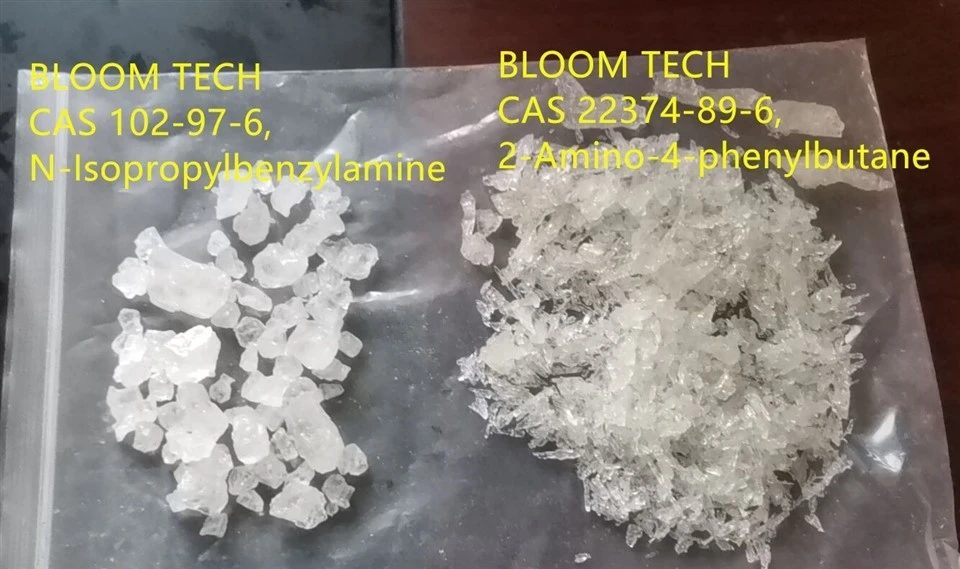
CAS 102-97-6, N-Isopropylbenzylamine(Short for N-ISO)
Three specifications:
I. Pure N-ISO(Melting point 200 degree)
3 shapes of crystal from the right 1st to 3rd, it has smell but the size of crystal is the biggest.
II. N-ISO mixed with MSM(CAS 67-71-0) (Melting point 180 degree)
The left 2ndis it, the size of crystal, smell and MP are all in medium.
III. N-ISO mixed with MSM(CAS 67-71-0) (Melting point 170 degree)
The left 1st is it, the size of crystal, smell and MP are all in min.


2-Amino-4-phenylbutane, as an important organic compound, has wide applications in the fields of chemistry and medicine. Its unique molecular structure and chemical properties make it demonstrate important value in drug synthesis, organic synthesis, and as a pharmaceutical intermediate.
1-methyl-3-phenylpropylamine is a key intermediate in the production of the cardiovascular drug sulfamethoxazole. Liuamoxicillin (also known as Liuamoxicillin) is a widely used antihypertensive drug in clinical practice, suitable for various types of hypertensive emergencies, such as hypertensive crisis, pheochromocytoma crisis, preeclampsia, etc. Due to the involvement of 1-methyl-3-phenylpropylamine, the synthesis process of sulfamethoxazole is more efficient and stable, thereby ensuring the quality and efficacy of the drug.


In addition to serving as an intermediate in the synthesis of sulfamethoxazole, 1-methyl-3-phenylpropylamine can also be used for structural modification and synthesis of other drug molecules and bioactive molecules. By modifying and derivatizing functional groups such as amino and benzene rings, new drugs with specific pharmacological and biological activities can be synthesized. This method of structural modification and synthesis not only broadens the thinking of drug design, but also provides an important material basis for the development of new drugs.
In organic synthesis, the amino group of 1-methyl-3-phenylpropylamine can undergo acylation reaction. By selecting appropriate acylation reagents and reaction conditions, derivatives with different acyl structures can be synthesized. These derivatives have broad application prospects in fields such as medicine, pesticides, dyes, etc.
In addition, the amino group of 1-methyl-3-phenylpropylamine can also undergo azide reaction. Through the azide reaction, azide groups can be introduced to synthesize compounds with special properties. These compounds have important application value in fields such as medicine, pesticides, explosives, etc.


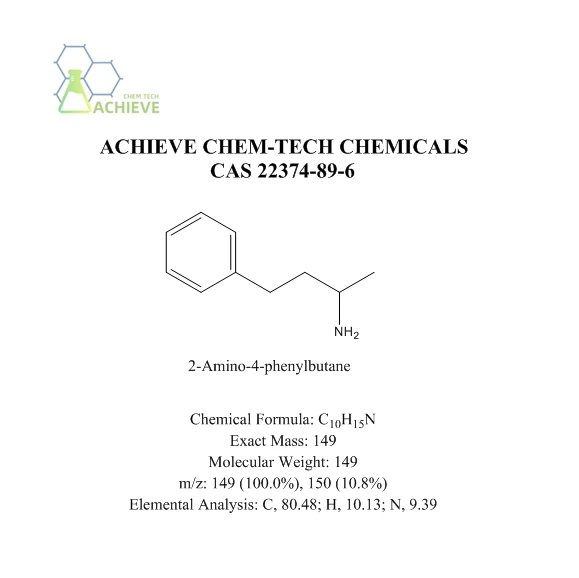
2-Amino-4-phenylbutane is an organic compound with the chemical formula C10H14N. Its molecular structure is as follows:
Let's gradually analyze the composition and characteristics of this molecular structure:
|
|
|


1. Methyl group (CH3):
-Located at the end of the main chain, connected to carbon atoms.
-Provides a carbon framework within the molecule while increasing its chemical reactivity and hydrophilicity.
2. Propylamine group (- CH2CH2CH2):
-This is the main skeleton of the molecule, connecting the methyl group and the benzene ring.
-Composed of one nitrogen atom (N) and three carbon atoms (C).
-The nitrogen atom carries a hydrogen atom (H), making it a secondary amine.
3. Phenyl ring (C6H5):
-This is the aromatic ring in the molecule, consisting of six carbon atoms and a hydrogen atom on a conjugated ring.
-The benzene ring is connected to the carbon atom of the propylamine group, forming a specific structure of methyl-3-phenylpropylamine.
Methyl-3-phenylpropylamine, as an organic compound, has several important characteristics and applications:
-Chemical reactivity: Due to the presence of methyl and phenyl groups in its molecules, it can participate in various organic reactions, such as alkylation, alkylation, substitution reactions, etc. These reactions are commonly used as intermediates in organic synthesis.
-Biological activity: Some substituted analogues may exhibit pharmacological activity, such as as as drug intermediates or drugs themselves. Its benzene ring structure and amino group can bind to corresponding receptors in the organism, exhibiting different biological effects.
adverse reaction
The adverse reactions of 1-methyl-3-phenylpropylamine mainly stem from its interference with the central nervous system, cardiovascular system, and metabolic processes, which can be divided into the following categories:
Central nervous system excitation and addiction
Mechanism: As a derivative of amphetamine, 1-methyl-3-phenylpropylamine can promote the release of neurotransmitters (such as dopamine and norepinephrine) and inhibit their reuptake, leading to an increase in neurotransmitter concentration in the synaptic cleft and triggering central nervous system overexcitation.
Acute effects: Pleasure, increased alertness, focused attention, reduced sleep demand, may be accompanied by anxiety, tremors, and headaches.
Long term effects: Adaptive changes in neurons (such as downregulation of dopamine receptors) can lead to cognitive decline (such as memory loss, impaired decision-making ability), emotional fluctuations (such as depression, irritability), and even trigger mental disorders (such as hallucinations, delusions).
Addictive: Long term use may lead to psychological and physiological dependence, with symptoms such as fatigue, drowsiness, and low mood during withdrawal.
Cardiovascular system toxicity
Mechanism: By activating the sympathetic nervous system, it increases heart rate, myocardial contractility, and peripheral vascular resistance, leading to an increase in blood pressure; At the same time, it may interfere with ion channels in myocardial cells and cause arrhythmia.
Hypertension: Long term use may increase the risk of hypertension, especially in hypertensive patients who need to use it with caution.
Arrhythmia: tachycardia, premature ventricular contractions, and in severe cases, ventricular fibrillation or cardiac arrest.
Myocardial injury: Animal experiments have shown that high doses may cause myocardial cell edema and necrosis.
Metabolic and endocrine disorders
Mechanism: Interference with hypothalamic pituitary adrenal axis function, affecting hormone secretion (such as cortisol and growth hormone); Simultaneously promoting fat breakdown, leading to an increase in metabolic rate.
Weight loss: Long term use may lead to malnutrition or cachexia.
Electrolyte imbalance, such as hypokalemia and hypomagnesemia, increases the risk of arrhythmia.
Blood glucose fluctuation: may induce hyperglycemia or hypoglycemia, especially in patients with diabetes.
Other adverse reactions
Respiratory system: High doses may inhibit the respiratory center, leading to respiratory depression or respiratory failure.
Digestive system: Nausea, vomiting, abdominal pain, long-term use may cause gastric ulcers or liver function damage.
Skin and mucous membranes: increased sweating, itching of the skin, and some patients may experience rash or allergic reactions.
Immune system: suppresses immune function and increases the risk of infection.
Frequently Asked Questions
What is 2 amino 4 cyano butanoic acid?
+
-
Alpha-amino-gamma-cyanobutanoic acid is an alpha-amino acid that is 2-aminobutanoic acid substituted at position 4 by a cyano group. It is a non-proteinogenic alpha-amino acid and an aliphatic nitrile. It is functionally related to a butyric acid.
What is 4 chloro 2 amino phenol used for?
+
-
4-Chloro 2-aminophenol (4C2AP) is an intermediate used commonly for the manufacture of dyes and pharmaceuticals.
Hot Tags: 2-amino-4-phenylbutane cas 22374-89-6, suppliers, manufacturers, factory, wholesale, buy, price, bulk, for sale, Tetramethyl orthosilicate, d erythrose, METHYL 5 TERT BUTYL 2 HYDROXYBENZOATE, Additive, Chlorocyclohexane CAS 542 18 7, 2 Chloro 5 Chloromethylpyridine CCMP