




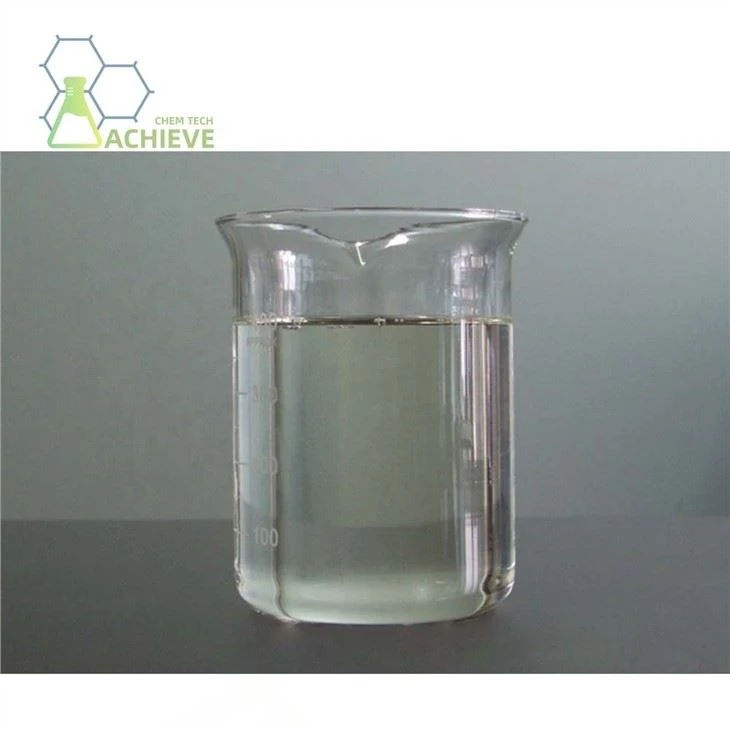
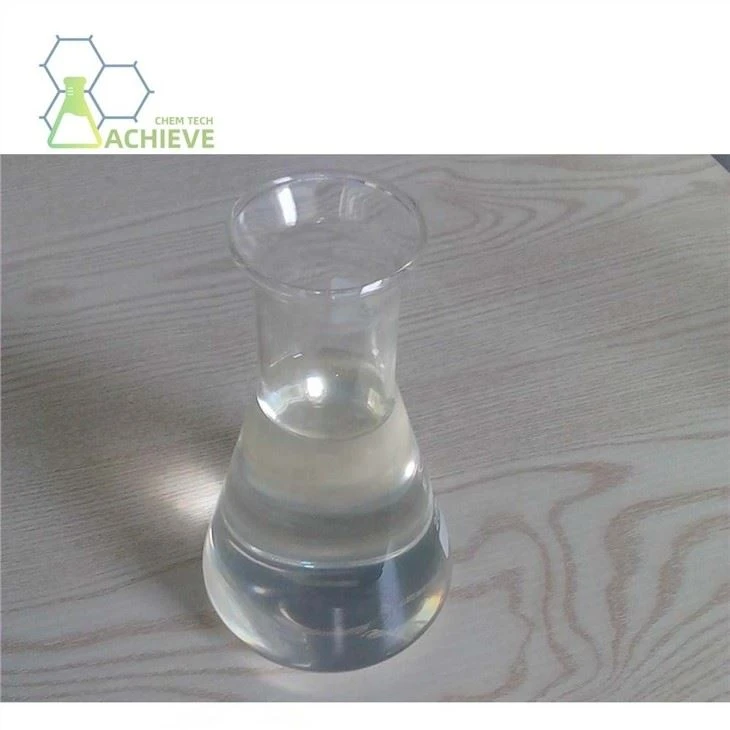
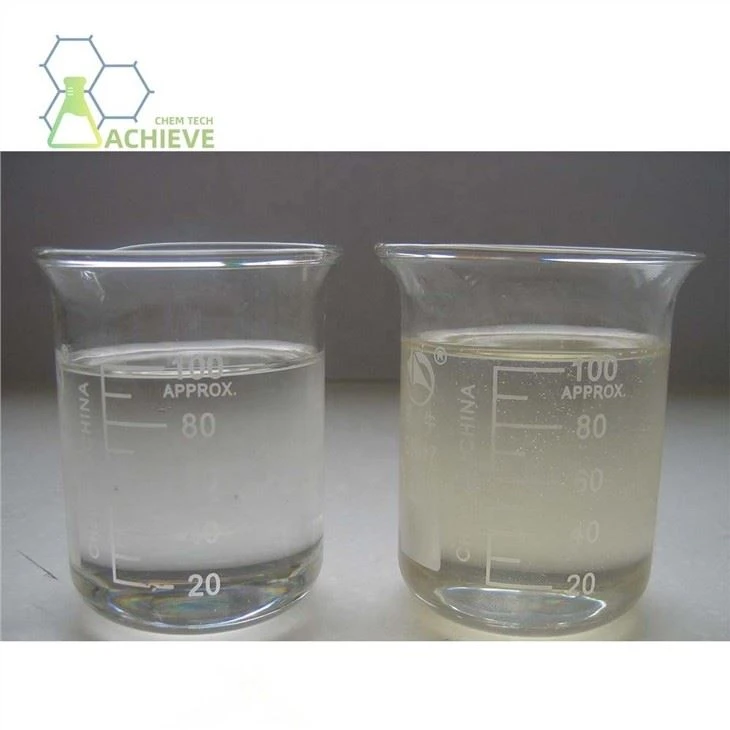
Ethanolamine solution, also known as 2-hydroxyethylamine, is an organic compound, CAS 141-43-5, The chemical formula is C2H7NO. Colorless transparent viscous liquid. It is miscible with water, ethanol, and acetone, and slightly soluble in ether and carbon tetrachloride. It can absorb acidic gases, release absorbed gases after heating, such as absorbing carbon dioxide from the air and absorbing sulfur dioxide and carbon dioxide from mixed gases. Has emulsifying and foaming properties. It can form salts with inorganic or organic acids and esters with acid anhydrides. Amino and hydroxyl groups can produce corresponding effects respectively. Used as chemical reagents, pesticides, pharmaceuticals, solvents, dye intermediates, rubber accelerators, corrosion inhibitors, and surfactants, as well as acid gas absorbents, emulsifiers, plasticizers, rubber vulcanizing agents, printing and dyeing whitening agents, fabric mothproofing agents, etc. It can also be used as a plasticizer, vulcanizing agent, accelerator, and foaming agent for synthetic resins and rubber, as well as an intermediate for pesticides, pharmaceuticals, and dyes. It is also a raw material for synthetic detergents, emulsifiers in cosmetics, and other products.

|
Chemical Formula |
C2H7NO |
|
Exact Mass |
880 |
|
Molecular Weight |
880 |
|
m/z |
61 (100.0%), 62 (2.2%) |
|
Elemental Analysis |
C, 28.81; H, 0.73; I, 60.87; O, 9.59 |
|
|
|


2-Hydroxyethylamine (also known as ethanolamine, monoethanolamine, chemical formula C ₂ H ₇ NO) is a colorless, transparent, viscous liquid with hygroscopicity and ammonia odor. Its molecular structure contains both amino (- NH ₂) and hydroxyl (- OH) groups, giving it unique chemical properties: it can react with acids as an alkaline substance, and participate in esterification, etherification and other reactions through hydroxyl groups. This "dual activity" makes it an indispensable organic compound in the industrial field, with an annual demand of over one million tons, widely used in more than 20 industries such as gas purification, surfactant synthesis, pharmaceutical manufacturing, textile printing and dyeing.
It is an efficient absorbent for acidic components (such as CO2, H2S, SO2) in industrial gases such as natural gas, refinery gas, and synthesis gas. Its absorption mechanism is based on the synergistic effect of alkaline neutralization reaction of amino groups and hygroscopicity of hydroxyl groups.
1. Natural gas desulfurization and decarbonization
In the field of natural gas purification, ethanolamine solution (concentration 15% -30%) can selectively absorb CO ₂ and H ₂ S by countercurrent contact with feed gas through an absorption tower, generating amino formate and thiol salts. For example, in a large natural gas processing plant, the use of ethanolamine methyl diethanolamine (MDEA) mixed solvent can reduce the CO ₂ content from 12% to 0.5% at 40 ℃, while reducing the H ₂ S concentration from 500ppm to below 4ppm, meeting the pipeline transportation standard (H ₂ S ≤ 20ppm). The absorbed rich solution is heated to 120 ℃ to achieve solvent regeneration, with a recycling rate of over 99%.


2. Refinery gas treatment
In the refining industry, it is used for catalytic cracking unit tail gas treatment, which can effectively remove SO ₂ and NO ₓ. Taking a certain refinery as an example, using ethanolamine sulfolane composite solvent, under the conditions of absorption tower pressure of 1.2 MPa and temperature of 45 ℃, the removal rate of SO ₂ reached 98%, and the conversion rate of NO ₓ exceeded 85%, significantly reducing the pollution of exhaust emissions to the environment.
3. Purification of synthesis gas
In processes such as coal gasification and biomass gasification, trace sulfides (such as COS and CS ₂) can be deeply removed from synthesis gas. Research has shown that under the conditions of ethanolamine concentration of 25%, temperature of 50 ℃, and pressure of 3MPa, the COS removal rate can reach 99.5%, meeting the purity requirements of the feed gas for Fischer Tropsch synthesis (S ≤ 0.1ppm).
Ethanolamine is a key intermediate for the synthesis of non-ionic and anionic surfactants, and its derivatives are widely used in detergents, cosmetics, personal care products, and other fields, with a global market share of over 40%.
1. Alkanolamide surfactants
Acylation reaction with fatty acids (such as coconut oleic acid and stearic acid) produces alkyl alcohol amides, such as coconut oleic monoethanolamide (CMEA). This kind of material has excellent foam stability and emulsification performance. Adding 2% -3% CMEA to shampoo can increase the amount of foam by 50%, and it remains stable in hard water. In addition, alkyl alcohol amides can also be used as industrial cleaning agents to effectively remove oil stains and oxide layers on metal surfaces.

2. Alcohol ether sulfate (AES)
Reacts with ethylene oxide (EO) to produce alcohol ethers, which are then sulfated to obtain alcohol ether sulfates. For example, Sodium Lauryl Polyether Sulfate (SLES) is the main surfactant in shampoo and shower gel, usually added in an amount of 10% -15%, which can significantly reduce the surface tension of water and enhance its cleaning ability. Research has shown that the critical micelle concentration (CMC) of SLES is only 0.008mol/L, which is much lower than traditional soap (CMC=0.015mol/L) and has higher cleaning efficiency.
3. Betaine based amphoteric surfactants
Cocoamide propyl betaine (CAB) can be synthesized by reacting with sodium chloroacetate. This substance has both anionic and cationic properties and remains stable over a wide pH range (pH=3-10) with low skin irritation. Adding 1.5% CAB to baby shampoo can achieve a "tear free formula" while providing a soft touch and good conditioning properties.
Ethanolamine solution is an important raw material for the synthesis of various drugs and pesticides, and its amino and hydroxyl groups can participate in various chemical reactions to construct complex molecular structures.
1. Pharmaceutical intermediates
Expulsive drugs for intestinal worms: Ethanolamine hydrochloride can be cyclized and neutralized to produce hexahydrate piperazine, which is used in the form of phosphate or citrate to treat roundworm and hookworm infections. Clinical data shows that piperazine phosphate has a deworming rate of over 95% against roundworms, with mild side effects.
Local anesthetic: Ethanolamine reacts with chloroacetyl chloride to produce chloroacetyl ethanolamine, which is then hydrolyzed and cyclized to obtain procaine. It is a commonly used local anesthetic in clinical practice. Procaine has an anesthetic onset time of 1-3 minutes and a duration of 30-60 minutes, and is widely used in dental and surgical procedures.


Antitumor drugs: Ethanolamine reacts with fluorouracil to form fluorouracil ethanolamine salt, which can improve the drug's lipid solubility and enhance its permeability to tumor tissue. Animal experiments have shown that the inhibitory rate of this derivative on mouse liver cancer is 20% higher than that of fluorouracil.
2. Pesticide intermediates
Aminoformate insecticides: Ethanolamine reacts with phosgene to form isocyanates, which then condense with methanol to obtain methyl carbamate. It is a key intermediate in the synthesis of insecticides such as carbapene and furandan. Xiweiyin has a significant insecticidal effect on cotton bollworms with an LC ₅₀ of 0.5mg/L.
Herbicide: Ethanolamine reacts with 2,4-dichlorophenoxyacetic acid (2,4-D) to form 2,4-D ethanolamine salt, which can improve the solubility and stability of herbicides. Field experiments have shown that 2,4-D ethanolamine salt has a 90% control effect on broadleaf weeds and is highly safe for crops.
Ethanolamine is used in the textile industry as a whitening agent, anti-static agent, anti moth agent, etc., which can significantly improve the processing and wearability of fabrics.
1. Printing and dyeing whitening agent
Ethanolamine reacts with fluorescein to produce fluorescent whitening agents, such as sodium 4,4 '- bis (2-hydroxyethylamino) stilbene-2,2' - disulfonate (VBL). This substance can absorb ultraviolet light and emit blue light, complementing the yellow light on the fabric to achieve whitening effect. Adding 0.1% VBL in cotton bleaching process can increase the whiteness value (CIE L *) from 80 to 95, significantly improving the product grade.


2. Antistatic agent
Ethanolamine reacts with long-chain fatty acids to form alkyl ethanolamides, such as stearic monoethanolamide (SME), which can reduce the surface resistivity of fabrics and prevent static electricity accumulation. Adding 1% -2% SME in the processing of synthetic fibers such as polyester and nylon can reduce the surface resistance of the fabric from 10 ¹⁴ Ω to 10 ⁸ Ω, effectively eliminating the problem of electrostatic adsorption of dust.
3. Anti moth agent
Ethanolamine reacts with naphthol to form naphthol ethanolamine salt, which can inhibit the growth and development of pests such as moths and bark beetles. In the anti moth finishing of wool fabrics, the use of immersion rolling method to load naphthol ethanolamine salt on the fiber surface can maintain the anti moth effect for more than 1 year without significantly affecting the fabric strength.
Ethanolamine is used as a vulcanizing agent, accelerator, dispersant, etc. in the rubber and coating industries, which can improve the processing performance and physical and mechanical properties of materials.
1. Rubber vulcanizing agent
Ethanolamine reacts with sulfur to produce ethanolamine sulfide, such as diethanolamine sulfide (DES), which is an efficient vulcanizing agent for natural rubber and synthetic rubber. Adding 2% DES to the vulcanization system of styrene butadiene rubber (SBR) can increase the tensile strength of the vulcanized rubber from 15MPa to 22MPa, and the elongation at break from 400% to 550%, significantly improving the mechanical properties of the rubber.


2. Paint dispersant
Ethanolamine reacts with polycarboxylate to form polycarboxylate ethanolamine salt, which can reduce the surface tension of pigments in coatings and improve dispersion stability. Adding 0.5% polycarboxylate ethanolamine salt to water-based coatings can reduce the pigment particle size from 10 μ m to 2 μ m, and there is no precipitation after 6 months of storage, significantly extending the shelf life of the coating.
3. Polyurethane catalyst
Ethanolamine solution, as the catalyst of polyurethane foam, can accelerate the reaction between isocyanate and polyol. In the preparation of rigid polyurethane foam, adding 0.1% ethanolamine can shorten the rise time of foam from 60 seconds to 30 seconds, and increase the density uniformity by 15%, meeting the requirements of building thermal insulation materials.
The application scope of ethanolamine has also extended to fields such as food, petroleum, and environmental governance, demonstrating its wide adaptability.
1. Food industry
Ethanolamine, as a food processing aid, can be used for the purification of dehydroabietic acid (a natural antioxidant) by recrystallization method. Adding ethanolamine to disproportionated rosin can increase the purity of dehydroabietic acid from 70% to 95%, with a yield of over 85%, meeting food grade standards.
2. Petroleum additives
Ethanolamine reacts with cycloalkanoic acid to form cycloalkanoic acid ethanolamine salt, which can be used as a rust inhibitor for lubricating oil.


Adding 0.5% cyclohexane ethanolamine salt to the base oil can reduce the corrosion rate of steel sheets from 0.2mg/cm ² · d to 0.01mg/cm ² · d, significantly extending the service life of equipment.
3. Environmental governance
Ethanolamine can be used to treat wastewater containing heavy metal ions such as Pb ² ⁺ and Cd ² ⁺. Research has shown that under pH=5, the complexation constant of ethanolamine with Pb ² ⁺ reaches 10 ⁴, which can reduce the concentration of Pb ² ⁺ in wastewater from 100mg/L to below 0.1mg/L, meeting the discharge standard.

Main production methods of ethanolamine solution:
Because ethanolamine has been widely used, foreign countries have made great efforts to
The development and application of this technology. There are several methods to produce ethanolamine:
1. Formaldehyde cyanohydrin catalytic hydrogenation method:
In this method, formaldehyde cyanohydrin and hydrogen are reacted in the presence of nickel catalyst to generate ammonia in addition to ethanolamine and diethanolamine.
2. Chloroethanol ammonolysis:
This method began in I860. It is the oldest production method French chemist Wurty heated chloroethanol and ammonia in a closed tube to synthesize ethanolamine. Its disadvantage is that ammonium chloride in the reaction product is difficult to separate.

3. Nitroethanol reduction method:
The method can be used for reduction of nitroethanol under nickel catalyst, electrolytic reduction or acidic iron
Restore.
4. Ethylene oxide ammonolysis
1897 Knorr uses ethylene oxide and ammonia to react, synthesize and obtain by fractionation
Three kinds of ethanolamines were found. The catalyst of the reaction process is the hydroxyl group of water or ethanolamine, and no special catalyst is required. This method to produce ethanolamine is the most important production method in the world.
Guoxibo SecientificDesi gnCompany The patented technologies of Inc (SD), 0xr ianeInternational UnionCarbi deCompany and other companies have been applied in industry, and their annual production scale is more than 10000 tons.
Frequently Asked Questions
Is ethanolamine harmful to humans?
+
-
* Ethanolamine can affect you when breathed in and by passing through your skin. * Ethanolamine is a CORROSIVE CHEMICAL and contact can severely irritate and burn the skin and eyes with possible eye damage.
What class of antihistamine is ethanolamine?
+
-
The ethanolamines comprise a group of amino alcohols. A class of antihistamines is identified as ethanolamines, which includes carbinoxamine, clemastine, dimenhydrinate, chlorphenoxamine, diphenhydramine and doxylamine.
What is the medication ethanolamine used for?
+
-
ETHANOLAMINE (ETH ah NOL ah meen) treats swollen veins in the esophagus. It works by reducing the size of enlarged veins. This helps prevent bleeding. This medicine may be used for other purposes; ask your health care provider or pharmacist if you have questions.
What does ethanolamine do in the body?
+
-
As a component of phosphatidylethanolamine and other modified lipid molecules, ethanolamine is an important signaling molecule and influences immunomodulation, cell division, nutritional intake, and energy balance.
Is ethanolamine a drug?
+
-
Ethanolamine oleate, a prescription drug, is a sclerosing agent. It works by creating scar tissue inside a swollen or dilated (wider than normal) vein to prevent bleeding.
Hot Tags: ethanolamine solution cas 141-43-5, suppliers, manufacturers, factory, wholesale, buy, price, bulk, for sale, 4 Phenoxyphenylboronic Acid CAS 51067 38 0, 3 Nitrobenzonitrile, 5 Chloro 2 Nitrotoluene CAS 5367 28 2, Chlorocyclohexane CAS 542 18 7, 2-Bromo-5-nitrobenzotrifluoride, (Z)-3-Methylpent-2-en-4-yn-1-ol