





Shaanxi BLOOM Tech Co., Ltd. is one of the most experienced manufacturers and suppliers of 2-hydroxypyridine cas 142-08-5 in China. Welcome to wholesale bulk high quality 2-hydroxypyridine cas 142-08-5 for sale here from our factory. Good service and reasonable price are available.
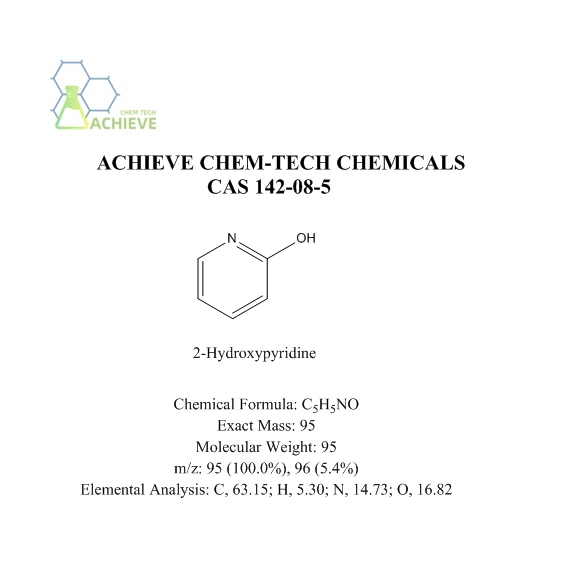
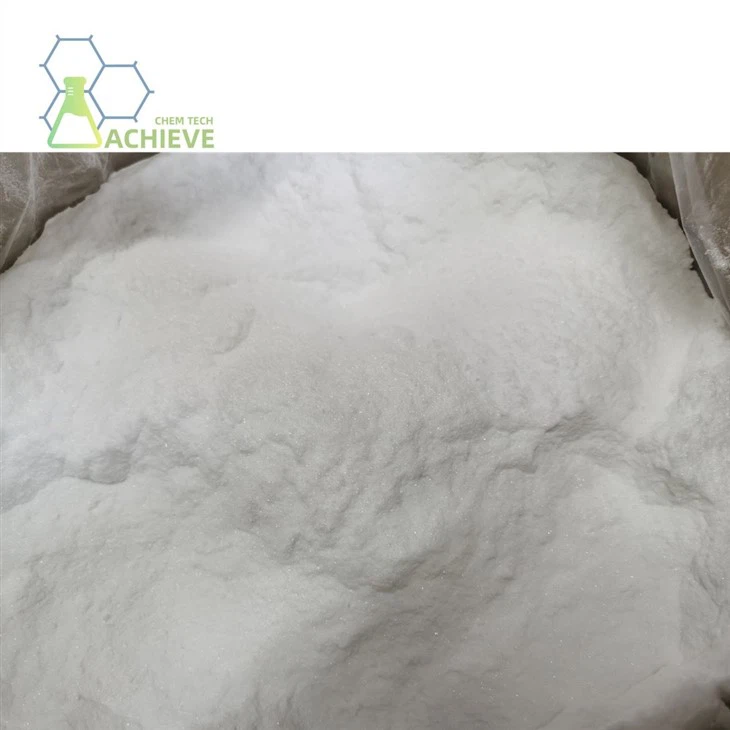
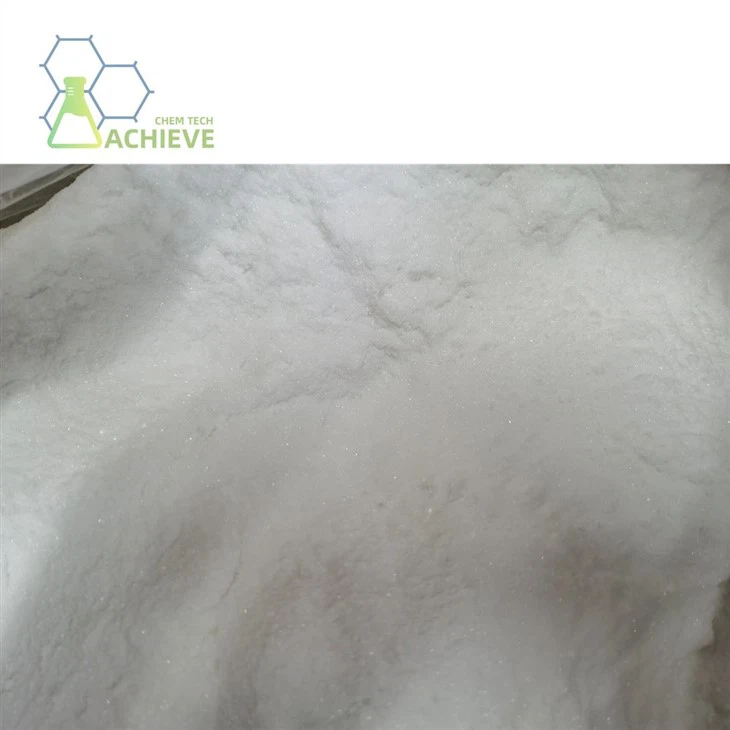
2-Hydroxypyridine usually appears as white or pale yellow particles or powders at room temperature and pressure. The molecular formula C5H5NO, CAS 142-08-5, contains a pyridine ring and a hydroxyl group in its molecular structure, which gives it a certain polarity and reactivity. Its boiling point is relatively high, generally between 280-281 ℃ (lit.) or 323.7 ± 15.0 ° C at 760 mmHg, indicating its high thermal stability. The acidity coefficient (pKa) is 0.75 (at 20 ℃), indicating that its hydroxyl group has a certain acidity and can undergo acid-base reactions under certain conditions. This compound has good water solubility, with a solubility of up to 450 g/L at 20 ° C. It is also easily soluble in ethanol, but has lower solubility in benzene and ether. This good water solubility makes it more widely used in the fields of medicine and chemical engineering. It has good reactivity and is widely used as a pharmaceutical synthesis intermediate and chemical raw material. In the field of medicine, it can be used to synthesize various bioactive compounds; In the field of chemical engineering, it can be used as a catalyst, ligand, or reaction intermediate.

|
|
|


|
Chemical Formula |
C5H5NO |
|
Exact Mass |
95 |
|
Molecular Weight |
95 |
|
m/z |
95 (100.0%), 96 (5.4%) |
|
Elemental Analysis |
C, 63.15; H, 5.30; N, 14.73; O, 16.82 |

In the field of biochemistry, 2-hydroxypyridine (also known as 2-pyridinephenol or 2-pyridone) is an important organic compound with a wide range of applications.
As a raw material for synthesizing peptide segments
In biochemical research, peptide segments are the basic building blocks of proteins and are crucial for understanding the structure and function of proteins. Used as a raw material for synthesizing peptide segments, it can be transformed into peptide segments with specific sequences and functions through specific chemical reactions. This application not only helps to deepen the study of the relationship between protein structure and function, but also provides an important material basis for drug development and biotechnology applications.


Biochemical experimental research
It also plays an important role in biochemical experimental research. It can be used as an experimental reagent to participate in various biochemical reactions and experimental processes, helping scientists verify hypotheses, explore unknown fields, and promote scientific progress. For example, in enzymatic reaction research, 2-pyridone can be used as a substrate or inhibitor to explore the catalytic mechanism and substrate specificity of enzymes; In cell culture experiments, it can be used as a nutrient or signaling molecule to observe biological processes such as cell growth, differentiation, and apoptosis.
Biological pesticides and plant growth regulators
Although there are few reported cases of direct application as biopesticides or plant growth regulators, considering the biological activity and environmental friendliness of this substance and its derivatives, it may be developed into new types of biopesticides or plant growth regulators in the future. These compounds may promote plant growth, enhance stress resistance, and increase yield by regulating metabolic pathways and signaling networks within the plant body.


Basic Information and Chemical Properties
2-Hydroxypyridine (2-hydroxypyridine) is an important pyridine compound with the molecular formula C₅H₅NO, a molecular weight of 95.10, and a CAS number of 142-08-5 (some literature indicates it as 72762-00-6, which may be due to differences in purity or crystal form). It appears as white or light yellow granules, with a melting point range of 105-107°C, a boiling point of 280-281°C, a density of 1.39g /cm³, and good water solubility (up to 500g/L at 20°C), but slightly soluble in chloroform and methanol. This compound is weakly acidic, and its hydroxyl group (-OH) and the nitrogen atom (N) on the pyridine ring can participate in various chemical reactions, such as proton transfer and REDOX reactions.
Core Manufacturing Methods
Catalytic dechlorination method with 3,5, 6-trichloropyridinol
Process flow
Using 3,5, 6-trichloropyridinol as the raw material, organic solvents (such as ethanol, methanol) and ammonium formate were added. Under the action of palladium/carbon (Pd/C) catalyst, it was heated to 65-95°C and reflow for 5-8 hours. After the reaction is completed, the mixture is cooled and filtered by suction. The filter cake is washed with ethanol to recover the catalyst, and the mother liquor is concentrated and subjected to vacuum distillation to obtain 2-hydroxypyridine.
Key parameters
Raw material molar ratio: 3,5, 6-trichloropyridinol: ammonium formate = 1: (2-5)
Catalyst dosage: Add 1-2 grams of Pd/C per mole of raw material
Solvent selection: Ethanol is the best solvent (with a yield of up to 87.3%), followed by methanol (85.6%). Long-chain alcohols (such as n-propanol) have a reduced yield due to solubility issues (68.2%).
Advantages: The reaction conditions are mild (temperature below 100°C), the post-treatment is simple, and the yield is significantly higher than that of traditional methods (the yield of traditional methods is about 75%).
Hydrolysis method of 2-chloro-3-cyanopyridine
Process flow
Using 2-chloro-3-cyanopyridine as the raw material, it is hydrolyzed under alkaline or acidic conditions to produce 2-hydroxy-3-cyanopyridine (intermediate), and further de-cyanidation is carried out to obtain 2-hydroxy-pyridine.
Key parameters
Hydrolysis conditions: The pH value and temperature must be strictly controlled to avoid side reactions.
Yield: Approximately 97% (but multiple purification steps are required, resulting in higher costs).
Applicable scenarios: It is suitable for the preparation of high-purity 2-hydroxypyridine, but its industrial application is relatively rare.
Other synthetic routes
Isonicotinic acid oxidation method: Isonicotinic acid (4-pyridinic acid) is oxidized to 2-hydroxyisonicotinic acid, and then decarboxylated to obtain 2-hydroxypyridine, but the yield is relatively low (about 63%).
Pyridine ring modification method: Using pyridine as the raw material, the -OH group is introduced through hydroxylation reaction, but the steps are cumbersome and the industrial value is limited.
Direction of Manufacturing Process Optimization
Catalyst improvement
Traditional Pd/C catalysts are costly and prone to deactivation. Research on new non-precious metal catalysts (such as nickel-based catalysts) or supported catalysts (such as Pd/Al₂O₃) can reduce costs and enhance stability.
Solvent recovery and recycling
Organic solvents (such as ethanol) account for a relatively high proportion of production costs. The development of solvent recovery technologies (such as distillation and adsorption) can significantly reduce raw material consumption.
Continuous production
Traditional batch reactions have problems of low efficiency and high energy consumption. Designing a continuous flow reactor to achieve continuous addition of raw materials and real-time separation of products can enhance production efficiency.
Green synthetic route
Explore green synthesis methods such as photocatalysis and electrochemical catalysis to reduce the use of toxic reagents (such as ammonium formate) and lower environmental pollution.
Application Fields and Market Demands
2-hydroxypyridine, as an intermediate in the fields of pharmaceuticals, pesticides and chemicals, has seen a continuous increase in market demand.
In the medical field: It is used for the synthesis of anti-tuberculosis drugs (such as isoniazid), anti-tumor drugs and neuroprotective agents.
In the field of pesticides: As an intermediate for herbicides and fungicides.
In the field of chemical engineering: It is used for the preparation of dyes, rubber additives and photosensitive materials.
According to data from market research institutions, the global market size of 2-hydroxypyridine is expected to grow at a compound annual growth rate of 5% to 7%, and the market size is expected to exceed 100 million US dollars by 2025.
Global market demand is steadily increasing
The market size continues to expand
According to industry reports, the global market size of 2-hydroxypyridine is expected to grow from approximately X billion US dollars in 2025 to X+ 150 million US dollars in 2030, with a compound annual growth rate (CAGR) of 5% to 7%. This growth is mainly attributed to the expansion of downstream application fields, especially the strong demand in the pharmaceutical, pesticide and polymer materials industries.
The regional markets are highly differentiated
Asia Pacific: emerging markets such as China and India have become the core engines of global demand growth. As the world's largest producer and consumer, China's market size accounted for more than 35% in 2023, and the concentration of leading enterprises was high (the top 10 enterprises accounted for nearly 90% of the market share).
North America and Europe: the North American market accounts for about 25%, mainly benefiting from the stable demand in the fields of medicine and agriculture; Europe has promoted the development of green chemical industry through strict carbon emission policies, and the demand for environmentally friendly 2-hydroxypyridine products has increased.
Other regions: Japan and South Korea rely on battery giants (such as LG new energy and Panasonic) to become major export destinations. The demand for pesticide intermediates in the Southeast Asian market is growing rapidly due to the acceleration of agricultural modernization.
Demand-driven by downstream application fields

In the pharmaceutical field: The research and development of innovative drugs drive high-end demand
Antibiotics and antiviral drugs: 2-hydroxypyridine is a key intermediate in the synthesis of various antibiotics (such as cephalosporins) and antiviral drugs. In 2023, the proportion of 2-hydroxypyridine used as an active pharmaceutical ingredient in the global pharmaceutical market reached 18%, and it is expected to increase to 22% by 2027.
Anti-cancer drugs and neuroprotective agents: With the intensification of population aging, the demand for anti-cancer drugs and medications for treating neurodegenerative diseases has soared. 2-hydroxypyridine plays a significant role in the synthesis of drugs such as mecobalamin (used for the treatment of peripheral neuropathy), driving the growth of the high-end market.
Stable isotope-labeled substances: In the field of drug analysis, the demand for stable isotope-labeled 2-hydroxypyridine (such as ¹³C, ¹⁵N labeling) has increased significantly, and it is used for mass spectrometry tracing and pharmacokinetic studies.
Herbicides and insecticides: Approximately 30% of new pesticide formulations worldwide contain 2-hydroxypyridine, and this figure is increasing at a rate of 5% annually. Its derivatives (such as 2-amino-3-hydroxypyridine) are widely used in the synthesis of highly effective and low-toxicity insecticides and herbicides, with the demand in the pesticide industry accounting for 35% in 2023.

Agricultural modernization drive: As global agriculture transitions towards precision and greenness, the demand for environmentally friendly pesticide intermediates continues to grow, and the market space for 2-hydroxypyridine further expands.

In the field of polymer materials, the demand is driven by the new energy and electronics industries
Chain transfer agent: 2-hydroxypyridine can be used as a chain transfer agent in polymer polymerization reactions, influencing the molecular weight and structure of polymers. With the development of the new energy (such as lithium battery separators) and electronic materials (such as flexible displays) industries, their demand has been steadily rising.
Specialty chemicals: In the preparation of dyes, coatings and plastic additives, 2-hydroxypyridine, as a functional intermediate, was consumed by the global fine chemical industry for over 10,000 tons in 2021, representing a year-on-year growth of 6.5%.
Future Demand Growth Points
The rise of emerging markets: The modernization process of agriculture in regions such as Southeast Asia and Latin America is accelerating, and the demand for pesticide intermediates is growing rapidly. It is expected to become a new engine for global demand growth.
The trend of green chemical engineering: Increasingly strict environmental protection regulations are driving the 2-hydroxypyridine industry towards green and low-carbon transformation. The research and development of green synthesis methods such as photocatalysis and electrochemical catalysis will reduce production costs and environmental pollution, further stimulating market demand.
Cross-disciplinary application expansion: In fields such as materials science and environmental monitoring, the potential application value of 2-hydroxypyridine is gradually being explored. For instance, its derivatives can be used to develop high-performance sensor materials to meet the demands of the Internet of Things and smart manufacturing.
Frequently Asked Questions
Is 2-hydroxypyridine aromatic?
+
-
Introduction. 2-Hydroxypyridine (2-HPY) is an aromatic heterocyclic compound. It represents an important class of compounds, which have π- and n-electrons systems.
What is the difference between 2 pyridone and 2 hydroxypyridine?
+
-
The equilibrium between these two tautomeric forms is sensitive to properties of solvent. 2-Hydroxypyridine has an OH group capable of hydrogen bonding, yet it is 2-pyridone that is better stabilized in the high polarity solvents.
What are the hazards of 2-hydroxypyridine SDS?
+
-
HAZARD STATEMENTS
H301 Toxic if swallowed. H315: Causes skin irritation. H319: Causes serious eye irritation. H335: May cause respiratory irritation.
What is the use of 2-hydroxypyridine?
+
-
2-Hydroxypyridine is widely utilized in research focused on: Pharmaceutical Development: This compound serves as a key intermediate in the synthesis of various pharmaceuticals, particularly in the development of anti-inflammatory and analgesic drugs.
Is hydroxyacetophenone good for your face?
+
-
Hydroxyacetophenone is a common ingredient in cosmetics for its antioxidant and soothing properties. It alleviates pain and irritation on the skin by inhibiting the COX-2 enzyme, which is responsible for the synthesis of prostaglandins during inflammation.
Hot Tags: 2-hydroxypyridine cas 142-08-5, suppliers, manufacturers, factory, wholesale, buy, price, bulk, for sale, 1 2 Naphthoquinone 4 sulfonic acid sodium salt, 4-Fluorophenylacetone CAS 459-03-0, 4,4'-Dimethylbiphenyl CAS 613-33-2, 4 6 Dichloro 2 methylpyrimidine CAS 1780 26 3, Bromocyclohexane CAS 108 85 0, Cysteamine powder