






Shaanxi BLOOM Tech Co., Ltd. is one of the most experienced manufacturers and suppliers of ethyl diphenylphosphinite cas 719-80-2 in China. Welcome to wholesale bulk high quality ethyl diphenylphosphinite cas 719-80-2 for sale here from our factory. Good service and reasonable price are available.
Ethyl Diphenylphosphinite is a highly valuable nucleophilic tri-coordinated phosphorus reagent in organic synthesis. Its molecular structure is centered around a pentavalent phosphorus atom, which is connected to an ethoxy group and two phenyl groups. This electron-rich configuration makes it an efficient phosphonylation reagent and ligand precursor. In the field of transition metal catalysis, it can stabilize the low-valent metal center through coordination, regulate the electronic environment and reaction selectivity of the catalytic cycle.

|
|
|


|
C.F |
C14H15OP |
|
E.M |
230 |
|
M.W |
230 |
|
m/z |
230 (100.0%), 231 (15.1%), 232 (1.1%) |
|
E.A |
C, 73.03; H, 6.57; O, 6.95; P, 13.45 |
As a nucleophilic reagent, it can undergo Michaelis-Arbuzov rearrangement with halogenated alkanes, efficiently forming carbon-phosphorus bonds, and is a key intermediate for the synthesis of functional phosphates. Moreover, this reagent achieves precise phosphonylation protection of specific hydroxyl groups in nucleic acids and carbohydrate chemistry. Its spatial steric hindrance and electronic properties provide a unique solution for the selective modification of functional groups of complex natural products. It is widely used in the synthesis of pesticide, pharmaceutical intermediates, and functional phosphorus ligands, demonstrating the core role of phosphorus chemistry in precise molecular construction.

synthesis methods
This is currently one of the most commonly used synthesis methods. The specific steps of this method are as follows:
Firstly, the receptor chromatin (partially added with hydrolyzed acids and organic halides) is mixed with nutrient rich media such as Escherichia coli to form monophosphate photosynthetic cells. Photosynthetic cells progress towards decarboxylation, forming transfer RNA. Subsequently, an appropriate amount of hydroxycarbonyl oxalic acid and phosphoric acid were added to catalyze the reaction to obtain the target product ethyl diphenylphosphinite.
In this method, strains such as Escherichia coli act as photosynthetic cells, and photosynthesis can provide sufficient nourishment for the compound, ensuring the purity and yield of the target product. Meanwhile, this method can prepare diphenylethoxyphosphine with different activities, which has a wide range of applications.
The principle of this method is to connect the two ends of the H2C chemical bond and another monomer structure with the same functional group to form the target product. The commonly used condensation methods are as follows:
(1) Knoevenaqel condensation reaction. React with corresponding aldehydes or ketones to reactants containing nitro and phosphorus groups.
(2) Mannich reaction. React with condensed compounds and corresponding alcohols to generate diphenylethoxyphosphine.
This synthesis method has the advantages of simplicity and speed, and can produce various target products with different activities.
Transition metal catalysis can activate the C-H bonds in compounds through transition metals, enabling them to form target products with phosphines. Common catalysts include iron tricarbonyl, etc., as follows:
Ni (Ph2PCH2CH2CH20) 2+Ph3P=C6H5C1 tert butyl -- C6H5CHO (Ph2P) CHCHO {Ni (Ph2PCH2CH2CH20) 2}+HCI
This method has the advantages of good catalytic effect, non toxicity, and no need for oxygen.
This is a very important method for the catalytic synthesis of diphenylethoxyphosphine. CuI undergoes exchange reactions with organic halides by adsorbing and breaking down bonds such as C-H and P in the compound, forming the target product.

Regarding the use of Ethyl Diphenylphosphinite in flame retardants, although it is not common to directly use it as a flame retardant, its molecular structure contains phosphorus elements, which makes it have certain potential and application value in the preparation and application of flame retardants.

Flame retardant modification applied to polymer materials
Polymer materials such as plastics, rubber, and fibers are widely used in daily life, industry, and other fields due to their light weight, low cost, and excellent processability. However, most polymer materials are inherently flammable, and they will burn rapidly when exposed to open flames, accompanied by a large amount of smoke and toxic gases, which poses serious safety hazards to people's lives and property.
Therefore, flame retardant modification of polymer materials is one of the important means to improve their safety in use and expand their application scope. Ethyl Diphenylphosphinite (also known as Diphenylethoxyphosphine) can be used as an efficient additive or intermediate for flame retardant modification. It can be introduced into the molecular chains of polymer materials through chemical reactions, thereby improving the flame retardant performance of the materials and reducing the risk of combustion.


Blending modification: Mix Ethyl Diphenylphosphinite or its modified products with polymer materials (such as polyethylene, polypropylene, and rubber), and disperse them uniformly in the material matrix through physical mixing or auxiliary chemical methods (such as melt blending). This blending modification method is simple to operate, low in cost, and suitable for large-scale industrial production.
However, it is important to ensure good compatibility between the flame retardant and polymer materials; otherwise, it will easily lead to phase separation, which affects the physical and mechanical properties (such as toughness, strength, and processing performance) of the material while achieving flame retardancy.


Graft modification: Ethyl Diphenylphosphinite or its modified products are grafted onto the molecular chains of polymer materials through chemical reactions (such as free radical polymerization or condensation reaction), forming stable chemical bonds between the flame retardant and the polymer matrix.
This grafting modification method can effectively improve the bonding strength between the flame retardant and polymer materials, avoid the migration or precipitation of the flame retardant during use, and make the flame retardant effect more durable and stable. At the same time, it has little impact on the physical and mechanical properties of the material, ensuring the comprehensive performance of the modified polymer.


Flame retardant treatment applied to textiles
As one of the indispensable items in people's daily lives, textiles (such as clothing, home textiles, and industrial textiles) have also received much attention for their flame retardant properties, especially in public places and special fields (such as fire protection, aerospace). Ethyl Diphenylphosphinite or its modified products can be effectively applied to the flame retardant treatment of textiles through impregnation, coating, and other practical methods.
These processed textiles can quickly self-extinguish or significantly slow down the combustion rate when exposed to fire, and reduce the generation of smoke and toxic gases, thereby greatly reducing the risk of fire and protecting people's safety.
Immersion treatment: Soak textiles (such as cotton, polyester, and blended fabrics) in a flame retardant solution containing a certain concentration of Ethyl Diphenylphosphinite or its modified products, and control the temperature and time of immersion to allow the flame retardant to fully penetrate into the interior of the fibers and form a stable combination with the fiber molecules. This processing method is simple, low-cost, and applicable to various types of textile fibers, and the flame-retardant textiles prepared have uniform flame-retardant performance without obvious damage to the fiber structure and hand feel.


Coating treatment: Mix Ethyl Diphenylphosphinite or its modified products with film-forming agents, dispersants, and other auxiliaries to prepare a flame-retardant coating, and apply it evenly on the surface of textiles through brushing, spraying, or rolling. After drying and curing, this coating can form a dense protective layer on the surface of textiles, which can isolate oxygen and heat during combustion, suppress the spread of flames, and prevent the fibers from burning quickly. This method is suitable for textiles that require high flame-retardant performance and has little impact on the appearance of the textiles.
Structure and Properties of Diphenylethoxyphosphine
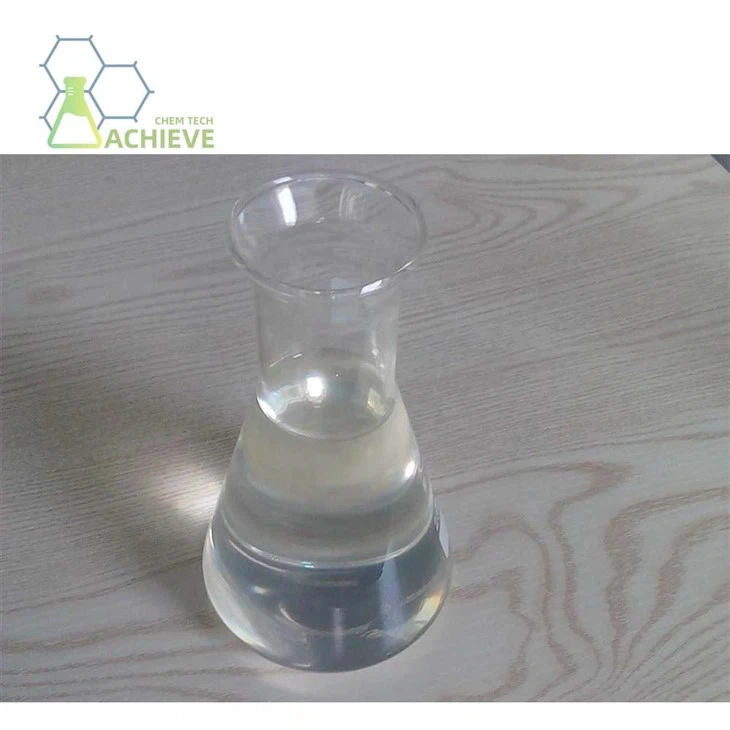
Ethylphenylphosphine, chemical formula C14H15OP, molecular weight 230.24. It is a transparent and colorless liquid that is stable at room temperature and pressure, but should be avoided from contact with oxides, air, and moisture. The density of diphenylethoxyphosphine is approximately 1.066 g/mL (at 25 ° C), and its boiling point is approximately 316.1 ± 25.0 ° C (at 760 mmHg). These physical properties make diphenylethoxyphosphine have good solubility and stability during the synthesis process.
The Use of Diphenylethoxyphosphine in the Synthesis of Photoinitiator Intermediates
Diphenylethoxyphosphine has a wide range of applications in the synthesis of intermediate photoinitiators. Specifically, it can serve as an important raw material for the preparation of phenyl phosphine oxide initiators. Phenylphosphine oxide initiator is an efficient free radical (I) type photoinitiator with wide absorption range and high photopolymerization speed, especially suitable for thick film deep curing.
Specific Example: Preparation of Phenylphosphine Oxide Initiator
The following are the specific steps and examples for preparing phenyl phosphine oxide initiators, in which diphenylethoxyphosphine is involved as a key intermediate.

The discovery of ethyldiphenylphosphonic acid can be traced back to the mid-20th century, when the field of organophosphate chemistry was in a rapidly developing stage. In the 1950s, with the widespread application of organic phosphorus compounds in agriculture, medicine, and industrial catalysis, scientists began to systematically study the synthesis and properties of various organic phosphorus compounds. In this context, ethyldiphenylphosphonic acid was synthesized and reported for the first time as a novel organic phosphorus compound. Early research mainly focused on exploring its basic chemical properties and reactivity.
In the 1960s, with the introduction of modern analytical techniques such as nuclear magnetic resonance (NMR) and mass spectrometry (MS), scientists were able to more accurately determine the structure and purity of ethyldiphenylphosphonic acid. The application of these technologies not only accelerated the research on the compound, but also laid the foundation for its application in organic synthesis.
In the 1970s and 1980s, research on ethyldiphenylphosphonic acid further deepened, particularly in its applications in coordination chemistry and catalytic reactions. Scientists have discovered that ethyldiphenylphosphonic acid can serve as an effective ligand to form stable complexes with transition metals, which exhibit excellent performance in catalytic hydrogenation, carbon carbon bond formation, and other reactions. This discovery greatly promotes its application in organic synthesis, making it a key intermediate in many important reactions.
In the 21st century, with the development of green chemistry and sustainable chemistry, the research focus of ethyldiphenylphosphonic acid has gradually shifted towards its environmentally friendly synthesis methods and applications. Scientists have developed various efficient and low pollution synthetic routes and explored their potential in asymmetric synthesis and biologically active molecule synthesis. These studies not only enrich the chemical properties and application scope of ethyldiphenylphosphonic acid, but also provide new directions for its future chemical research and industrial applications.
Materials Science
► Modification of Material Surfaces
Ethyl diphenylphosphinite can be used to modify the surfaces of materials, such as metals and polymers. By reacting with functional groups on the material surface, it can introduce phosphorus - containing layers that can improve properties such as adhesion, corrosion resistance, and biocompatibility. For example, treating a metal surface with ethyl diphenylphosphinite can form a thin protective layer that prevents oxidation and corrosion.
► Synthesis of Functional Materials
It can also be used in the synthesis of functional materials, such as phosphine - containing polymers or organometallic compounds with unique optical, electrical, or magnetic properties. These materials have potential applications in areas such as optoelectronics, sensors, and energy storage devices.
Ethyl diphenylphosphinite is a versatile organophosphorus compound with a wide range of applications in organic synthesis, catalysis, and materials science. Its unique structure and reactivity make it a valuable reagent for the formation of carbon - carbon and carbon - phosphorus bonds, as well as for the synthesis of complex organic molecules and functional materials. As research in these fields continues to advance, it is likely that new applications and synthetic methods involving ethyl diphenylphosphinite will be discovered, further expanding its importance in the chemical community. However, it is crucial to handle this compound with care due to its potential health and safety hazards.
Hot Tags: ethyl diphenylphosphinite cas 719-80-2, suppliers, manufacturers, factory, wholesale, buy, price, bulk, for sale, 2,5-Dihydroxybenzaldehyde, N N N Trimethylethylenediamine, Cytidine 5 diphosphate disodium salt, 2-Chloro-3-methylpyridine, Dodecylamine, 5 Acetyl 2 thiopheneboronic Acid CAS 206551 43 1