





Shaanxi BLOOM Tech Co., Ltd. is one of the most experienced manufacturers and suppliers of 3-amino-3-phenylpropionic acid cas 614-19-7 in China. Welcome to wholesale bulk high quality 3-amino-3-phenylpropionic acid cas 614-19-7 for sale here from our factory. Good service and reasonable price are available.
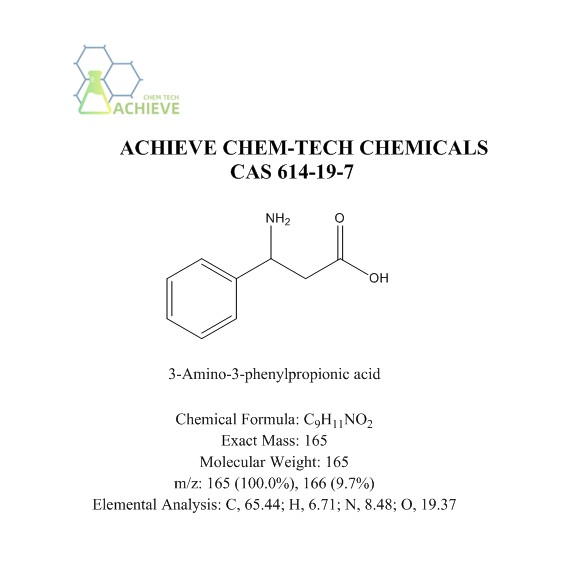
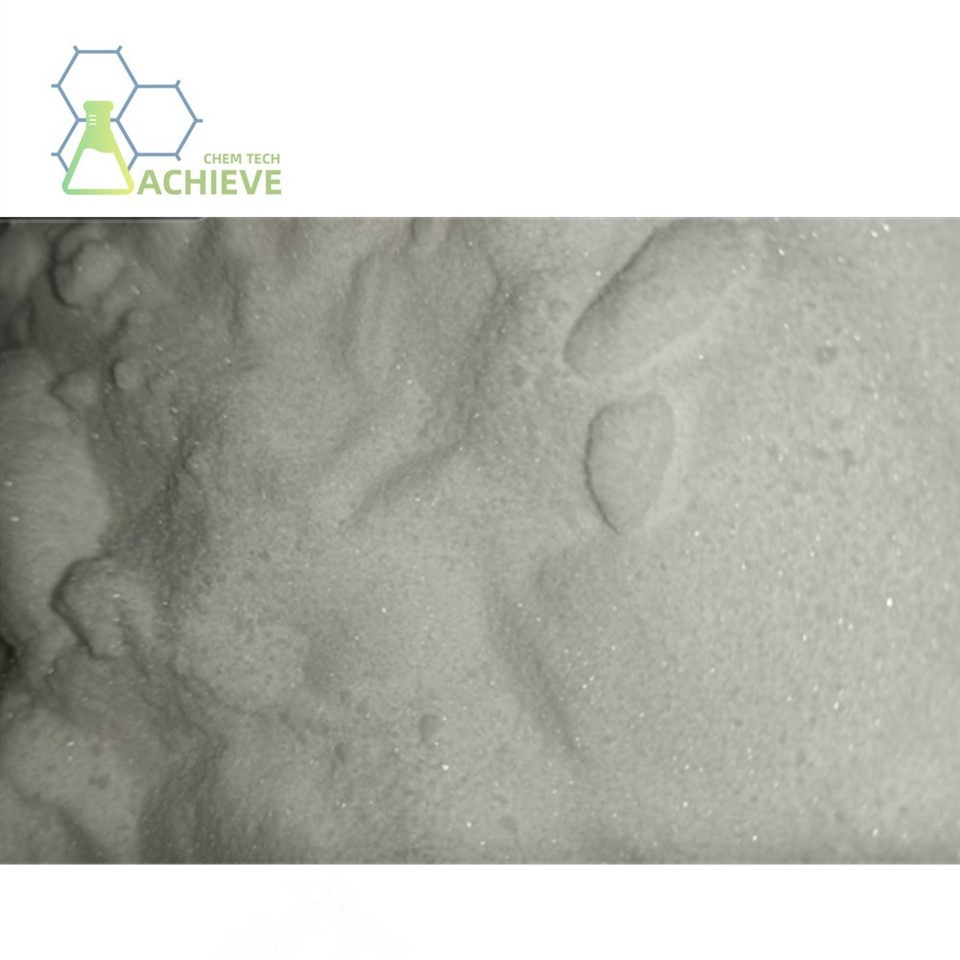
3-Amino-3-phenylpropionic acid, is a compound with important application value in chemical research and pharmaceutical intermediates. It appears as a white needle shaped powder with the molecular formula C9H11NO2, CAS 614-19-7, and a molecular weight of 165.19. It is soluble in hot water and hot alcohols, but slightly soluble in water, alcohols, and ethers. Due to the presence of functional groups such as amino and carboxyl groups in its molecules, it can be used to prepare polymer materials with specific properties through polymerization, cross-linking, and other reactions. These polymer materials have broad application prospects in fields such as coatings, adhesives, and functional films. In addition, this compound can also be used to prepare new materials such as nanomaterials and biomaterials, providing new ideas and methods for the development of materials science. It also has certain application value in other fields. As a chemical substance with special structure and properties, it has shown extensive application value in scientific research. From biochemical research to drug research and development, to materials science research and other fields of research, this compound plays an important role.

|
|
|


|
C.F |
C9H11NO2 |
|
E.M |
165 |
|
M.W |
165 |
|
m/z |
165 (100.0%), 166 (9.7%) |
|
E.A |
C, 65.44; H, 6.71; N, 8.48; O, 19.37 |


Metabolic pathway research:
As an amino acid derivative, 3-Amino-3-phenylpropionic acid metabolic pathway is of great significance in biochemical research. Scientists can track the metabolic process of this compound in organisms by labeling it, thereby revealing the regulatory mechanism of amino acid metabolism. This research method helps to gain a deeper understanding of the metabolic network of organisms, providing a theoretical basis for the treatment and prevention of diseases.
Protein synthesis and functional research:
Proteins are an important component of living organisms, and their function and structure are closely related. It can serve as a substrate for protein synthesis and affect the structure and function of proteins by participating in the protein synthesis process. Researchers can use this compound to study protein synthesis mechanisms, folding processes, and interactions with other molecules, in order to reveal protein functions and regulatory mechanisms.

2. Drug research and development

Discovery of lead compounds in drugs:
Drug research and development is a complex and lengthy process, in which discovering lead compounds with potential therapeutic activity is one of the key steps. As a biologically active compound, it can serve as a candidate for drug lead compounds. By modifying and optimizing its structure, scientists can develop new drugs with higher activity and lower side effects.
Research on the Mechanism of Drug Action:
The mechanism of action of drugs in organisms is an important aspect of drug research and development. It can serve as a probe or model for drug targets, used to study the interaction between drugs and biomolecules, signal transduction pathways, etc. This research method helps to gain a deeper understanding of the mechanisms of action of drugs and provides guidance for the optimization and improvement of drugs.

Preparation and performance research of biomaterials:
Biomaterials are a type of material that is compatible with living organisms, biodegradable, and widely used in medical, tissue engineering, and other fields. It can be used to prepare biomaterials, such as biodegradable scaffolds, drug delivery systems, etc. By studying its structure and properties, scientists can develop biomaterials with better biocompatibility and degradation, providing new ideas and methods for the development of medical and tissue engineering fields.

4. Research in other fields

In environmental science, its unique chemical properties make it a candidate for the development of advanced wastewater treatment agents. The amino and carboxyl functionalities can interact with contaminants in water, facilitating their removal or degradation. Additionally, its aromatic ring might enhance its affinity for certain pollutants, making it an effective component in targeted cleanup strategies. As a catalyst, it could catalyze reactions that break down harmful compounds into more benign substances, thus contributing to the purification of water bodies.
In chemical engineering, its amphoteric nature and aromatic characteristics make it suitable as a reaction medium or solvent in specific processes. Its ability to interact with both acidic and basic compounds allows it to stabilize reactions and enhance yields. As a solvent, it may offer advantages in terms of solubility and reaction selectivity, particularly in systems where traditional solvents fail to provide optimal performance.These applications not only broaden the scope of utility but also contribute to advancements in environmental protection and industrial processes. By exploring and leveraging its diverse properties, researchers can drive innovations that address pressing societal challenges and propel related fields forward. In this way, the study of 3-amino-3-phenylpropionic acid continues to expand its horizons, fostering interdisciplinary collaboration and fostering new avenues of exploration.

3-amino-3-phenylpropinic acid is an organic acid that contains a carboxyl group (- COOH) in its molecular structure. Carboxyl groups are acidic functional groups that can partially ionize hydrogen ions (H+) in water, thus exhibiting acidity. In aqueous solution, it will partially dissociate into 3-amino-3-phenylpropionate ion (C9H10NO2-) and hydrogen ion, and the degree of dissociation depends on factors such as the pH value and temperature of the solution.It is worth noting that its molecule also contains an amino group (- NH2), which is a basic functional group. However, in 3-amino-3-phenylpropinic acid, due to the proximity of the amino and carboxyl groups, there may be some interaction between them, which inhibits the alkalinity of the amino group to a certain extent.


It mainly manifests as acidity, but its acidity strength may be affected by the presence of amino groups.
3-Amino-3-phenylpropinic acid, also known as β-phenyl-β-alanine or beta-phenylalanine, is an aromatic amino aci derivative with a unique chemical structure that combines both aliphatic and aromatic features.
This organic compound possesses a central carbon atom bonded to an amino group (-NH₂), a carboxyl group (-COOH), and a phenyl ring (-C₆H₅). The phenyl ring contributes to its aromatic properties, while the amino and carboxyl groups endow it with amphoteric characteristics, meaning it can act as both an aci and a base.
This aci is not naturally occurring in common biological systems but has found synthetic applications in various fields. In the pharmaceutical industry, 3-amino-3-phenylpropionic aci serves as a key intermediate in the synthesis of certain drugs, particularly those targeting neurological and psychiatric disorders due to its structural similarity to natural amino acis, which aids in crossing biological membranes.
Moreover, its ability to form stable metal complexes has led to its exploration in the development of new materials for catalysis and sensing technologies. Researchers are also intrigued by its potential use as a building block in the creation of supramolecular structures and advanced polymers with tailored properties.

3-amino-3-phenylpropionic acid and its derivatives exhibit extremely rich and complex interaction characteristics in the chemical world, which are not only due to their unique functional group structures, but also reflected in their diverse reaction modes when in contact with other compounds.
The following is a more detailed explanation of these interactions:
The structure of 3-amino-3-phenylpropionic aci and its derivatives cleverly combines acidic and basic functional groups, making them active molecules in aci-base reactions. Specifically, the carboxyl group (- COOH) in its molecule has typical acidic characteristics and can partially ionize hydrogen ions (H+) in aqueous solution, thereby undergoing neutralization reaction with alkali and generating corresponding carboxylate salts. Meanwhile, the amino group (- NH2) in the molecule exhibits alkalinity and can accept protons (H+), reacting with acis to form the corresponding ammonium salts. This aci-base dual property not only endows 3-amino-3-phenylpropionic aci and its derivatives with flexibility in adjusting solution pH, but also provides broad application space for their interactions with aci-base indicators, aci-base catalysts, and other substances.


Molecular interactions:
In addition to the aci-base interactions and metal ion coordination mentioned above, there may also be various intermolecular interactions between 3-amino-3-phenylpropionic aci and its derivatives. Among them, hydrogen bonding, as a strong intermolecular force, has a significant impact on the physical properties of compounds such as solubility, melting point, boiling point, etc. In addition, weaker intermolecular forces such as van der Waals forces and dipole dipole interactions also to some extent determine the behavior of compounds in solution, such as aggregation state and dissolution rate.
The existence of these intermolecular interactions not only enriches the chemical properties of 3-amino-3-phenylpropionic acid and its derivatives, but also provides possibilities for their self-assembly and molecular recognition applications in solution.
Scope of sales channels
3-Amino-3-phenylpropionic acid (3-APP) is an important organic compound with wide applications in medicine, pesticides, materials science, and other fields. With the rapid development of the global chemical industry, the market demand for 3-APP continues to grow, and the diversity and coverage of its sales channels have become important factors affecting the market competitiveness of enterprises. Here is a detailed analysis:

Chemical raw material wholesaler
Chemical raw material wholesalers are one of the traditional important channels for 3-APP sales. These wholesalers typically establish long-term partnerships with multiple manufacturers, have a wide customer network, and a stable supply chain. They sell 3-APP to downstream chemical companies, pharmaceutical factories, pesticide manufacturers, etc. through bulk procurement and distribution. The advantage of chemical raw material wholesalers lies in their ability to provide diverse product choices and flexible procurement solutions to meet the needs of different customers. However, with the intensification of market competition, the profit margin of wholesalers is gradually shrinking, and it is necessary to continuously improve service quality and reduce costs to maintain competitiveness.
Regional agents
Regional agents are exclusive sales representatives of 3-APP in specific regions or markets. They are responsible for promoting and selling 3-APP within the region, as well as providing after-sales service and technical support. Regional agents typically have a deep understanding of the local market and are able to provide customized solutions based on customer needs. By collaborating with regional agents, manufacturers can quickly enter new markets and reduce market development costs. However, managing and motivating agents is also one of the challenges that manufacturers need to face.


Chemical exhibitions and industry conferences
Chemical exhibitions and industry conferences are important promotion platforms for 3-APP sales. In these activities, manufacturers can showcase their products and technological capabilities, establish connections with potential customers, and understand market dynamics and competitor situations. By participating in exhibitions and conferences, manufacturers can expand their brand influence, increase product awareness, and attract more customers. In addition, exhibitions and conferences provide opportunities for manufacturers to communicate and cooperate with peers, which helps promote industry technological progress and market development.
Export traders

Financial Big Data
Export traders are one of the important channels for 3-APP's international market sales. They establish cooperative relationships with foreign clients and sell 3-APP to various parts of the world. Export traders typically have extensive international trade experience and a wide customer network, capable of handling complex export procedures and logistics issues. By collaborating with export traders, producers can quickly enter the international market and reduce market development costs. However, export traders also need to face risks and challenges such as exchange rate fluctuations and trade barriers.
Overseas agents and distributors
Overseas agents and distributors are the exclusive sales representatives of 3-APP in specific countries or regions. They are responsible for promoting and selling 3-APP products in the region, as well as providing after-sales service and technical support. By collaborating with overseas agents and distributors, manufacturers can better understand local market demand and competition, and develop appropriate marketing strategies and product positioning. Meanwhile, overseas agents and distributors can also assist manufacturers in dealing with local laws, regulations, cultural differences, and other issues, reducing market entry risks.


International exhibitions and business inspections
International exhibitions and business inspections are important means of promoting 3-APP in the international market. By participating in international exhibitions, manufacturers can showcase their products and technological capabilities, establish connections with foreign customers, and learn about international market trends and competitors. Business investigation can help manufacturers gain a deeper understanding of the needs and rules of the target market, and find suitable partners and sales channels. Through international exhibitions and business inspections, manufacturers can expand their brand influence, increase product awareness, and attract more international customers.
Hot Tags: 3-amino-3-phenylpropionic acid cas 614-19-7, suppliers, manufacturers, factory, wholesale, buy, price, bulk, for sale, 3-Phenyltoluene, tert Butyldimethylsilyl chloride, Cyclohexapentylose CAS 10016 20 3, 5 Fluoro 2 Nitroaniline CAS 2369 11 1, GS 441524 Powder, 7 Nitroindole CAS 6960 42 5