




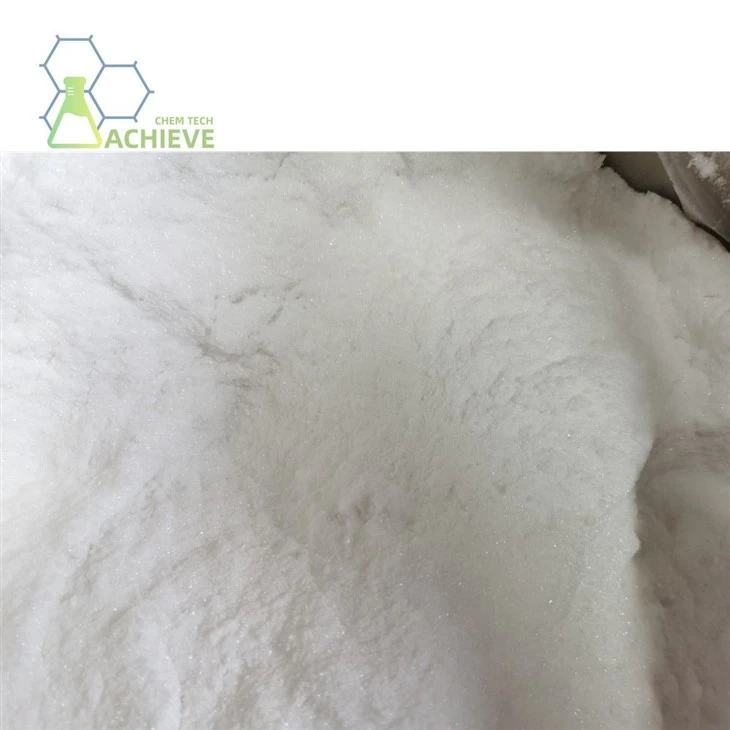


4-Chloro-2-fluorobenzonitrile, white to nearly white crystalline appearance, molecular formula C7H3ClFN, refractive index 1.537, LogP value 2.4, molecular weight 155.56. At room temperature, this substance has low volatility, is not easily vaporized, is not easily soluble in water, and is relatively lipophilic. It should also be sealed and stored in a cool, dry place. It is mainly used as an intermediate in pharmaceuticals, pesticides, and liquid crystal materials. With the continuous development of science and technology and the deepening of people's understanding of compound properties, the application fields of the product will be further expanded. In the future, we can look forward to seeing the emergence of products in more fields such as new energy, environmental protection, and biotechnology.

|
|
|


|
Chemical Formula |
C7H3ClFN |
|
Exact Mass |
130 |
|
Molecular Weight |
130 |
|
m/z |
155 (100.0%), 157 (32.0%), 156 (7.6%), 158 (2.4%) |
|
Elemental Analysis |
C, 54.05; H, 1.94; Cl, 22.79; F, 12.21; N, 9.00 |

4-Chloro-2-fluorobenzonitrile, as an important organic compound, has shown extensive application value in various fields such as chemistry, medicine, pesticides, and materials science.
Application in the field of pesticides
Insecticide:
can be used to synthesize certain efficient and low toxicity insecticides. These insecticides achieve the goal of pest control by damaging the nervous system of pests or interfering with their metabolic processes. Compared with traditional pesticides, these new insecticides have higher selectivity and lower toxicity, and have less impact on the environment and human health.
Fungicides:
In addition to being used as insecticides, they can also be used to synthesize fungicides. These fungicides have excellent control effects on various plant pathogens and can be used to protect crops from disease damage.
Application in the field of medicine
KF-31327 drug synthesis
In the process of synthesizing KF-31327 drug, it serves as one of the starting materials and condenses with ethyl isonicotate to form piperidino benzonitrile. Subsequently, it undergoes a series of reaction steps such as reduction, nitration, and chlorination to ultimately synthesize the target drug KF-31327.
Crisaborole intermediate
This substance is also used as an intermediate in the synthesis of Crisaborole drugs. Crisaborole is a medication used to treat eczema.
Application in the field of liquid crystal materials
Development of Fluorinated Liquid Crystal Materials
Fluorinated liquid crystal materials are highly valued for their unique properties, and the introduction of fluorine atoms can significantly improve the performance of liquid crystal materials. Research has shown that the correct substitution of fluorine atoms in liquid crystal molecules can improve key properties such as phase transition temperature, dielectric anisotropy, birefringence, and viscosity of liquid crystal materials.
Application in high-performance LCD displays
The appropriate position of fluorine substituted liquid crystal molecules can significantly improve the performance of liquid crystals and meet the application requirements of high-performance liquid crystal displays. These performance improvements are crucial for high-performance display technologies such as active matrix liquid crystal displays (AM-LCD).
Polymer stabilized liquid crystal material
In polymer stabilized liquid crystal (PSLC) materials, 4-chloro-2-fluorobenzonitrile may participate as a monomer or intermediate in the formation of polymer networks, affecting the stability and optoelectronic properties of the liquid crystal material. The formation of polymer networks can improve the stability of liquid crystal materials and enhance their optoelectronic properties.
Blue phase liquid crystal (BPLC) material
It may play a role in the synthesis of blue phase liquid crystal materials, as blue phase liquid crystals have advantages such as sub millisecond response rates, self-assembly properties, and wide viewing angles, and the polymer network can broaden the temperature range of blue phase liquid crystals, making them stable at room temperature.

Fluorination reaction is a strong chemical reaction that needs to be carried out under strict experimental conditions. During the experiment, attention should be paid to safety to avoid the leakage and splashing of fluorinating reagents.
The selection of fluorination reagents should be determined based on specific reaction conditions and requirements, and different fluorination reagents have different reaction activities and selectivity.
During the reaction process, attention should be paid to temperature control to avoid adverse effects of high or low temperatures on the reaction.
When purifying products, attention should be paid to the safety of the operation and avoid contact with strong oxidants, acids, bases, and other substances.
Although the synthesis method based on direct fluorination has successfully synthesized 4-chloro-2-fluorobenzonitrile, there are still some areas that can be optimized and improved. Here are some possible optimization and improvement directions:
Choosing more efficient fluorination reagents:
By screening and comparing different fluorination reagents, selecting fluorination reagents with higher reactivity and selectivity can improve the efficiency of the reaction and the purity of the product.
Optimizing reaction conditions:
By adjusting reaction conditions such as temperature, time, and solvent type, the reaction process can be further optimized to improve the yield and quality of the product.
Introducing catalysts:
Introducing appropriate catalysts into the reaction system can reduce the activation energy of the reaction, improve the reaction rate and product selectivity.
Improving purification methods:
By improving purification methods, such as using more efficient chromatographic separation techniques or crystallization methods, the purity and quality of the product can be further improved.
What are safety and danger?
1.Health hazards
- Acute toxicity (oral): belongs to level 3, which means that swallowing can cause poisoning.
- Skin corrosion/irritation: Belongs to level 2, indicating that the substance may cause skin irritation.
- Serious damage/eye irritation: Belongs to Class 2A, indicating that the substance has a serious irritating effect on the eyes.
2.Environmental hazards
Not specifically classified, but based on its potential toxicity to aquatic organisms, it should be considered hazardous to the environment.
3.Physical hazards
Not classified, but the substance may decompose and produce toxic smoke when burned or at high temperatures, including dangerous decomposition products such as carbon monoxide, carbon dioxide, nitrogen oxides (NOx), hydrogen fluoride, hydrogen chloride, and cyanide.
4.GHS tag elements
Icon or hazard symbol, signal word "danger", specific danger description includes poisoning if swallowed, causing skin irritation, and causing serious eye irritation.
5.Preventive instructions
Do not eat, drink or smoke when using this product. Wash your hands thoroughly after handling. Wear protective gloves/goggles/masks.
6.First-aid measures
This includes calling a detoxification center/doctor immediately after ingestion, carefully washing with water for a few minutes after eye contact, and gently washing with plenty of soap and water after skin contact.
7.Storage conditions
The storage area should be locked, the container should be kept sealed, and stored in a cool, dark place away from incompatible materials such as oxidants.
8.Disposal of waste
According to local government regulations, hand over items/containers to industrial waste disposal facilities.
9.Transportation information
The United Nations classifies it as the first toxic substance, with UN number 3439, and the official transport name is "Nitrile, Solid, Toxic, not otherwise specified". The packaging level is III.

1.Market demand growth
With the continuous development of the global economy and advances in technology, the demand for high-performance materials, new drugs, and environmentally friendly pesticides is growing day by day. As one of the important raw materials for synthesizing these products, the market demand for this substance is showing a steady growth trend. Especially in the fields of medicine and pesticides, due to its unique chemical structure and biological activity, it has become a key intermediate for the development of new drugs and pesticides.
2.Expansion of application areas
- In the field of medicine, it can be used to synthesize compounds with specific pharmacological activities, such as anti-tumor drugs, antibacterial drugs, etc. With the increasing attention to health issues, the demand for new drugs is constantly increasing, which will provide broad development space for their application in the pharmaceutical field.
- Pesticide field: It can be used to synthesize efficient, low toxicity, and environmentally friendly pesticide products. With the increasing global demand for pesticide safety and environmental protection, traditional pesticide products are gradually being phased out, and the market demand for new pesticide products is constantly growing. Therefore, the application of 4-chloro-2-fluorobenzonitrile in the field of pesticides will also have broad market prospects.
- In the field of dyes and materials science, it can also be used to synthesize high-performance dyes and materials, such as fluorescent dyes, liquid crystal materials, etc. These materials have extensive application value in fields such as electronic information and optoelectronic displays, and therefore their applications in these areas will continue to expand.
3.Technological Innovation and Industrial Upgrading
With the continuous development of technology, the production technology of this substance will also continue to innovate and upgrade. By optimizing production processes, improving production efficiency and product quality, production costs can be further reduced and market competitiveness can be enhanced. At the same time, strengthening collaborative innovation with other industries and promoting close cooperation between upstream and downstream of the industrial chain will help form a complete industrial chain and cluster, and promote the sustainable development of its industries.
Prevention and Management Strategies
Engineering control
Sealed operation: Used in fume hoods or negative pressure laboratories to reduce dust dispersion.
Local exhaust: Install exhaust devices to ensure that the concentration of harmful substances in the air of the work area is below the occupational exposure limit (OEL).
Automation equipment: using robotic arms or remote operation technology to reduce direct contact between personnel.
Personal protective equipment (PPE)
Respiratory protection: Wear N95 mask or half face gas mask (equipped with organic vapor filter box).
Skin protection: Wear nitrile gloves, lab coat, and protective goggles, and if necessary, use a chemical resistant apron.
Eye protection: Wear sealed goggles to prevent liquids from splashing in.
Operating standards and training
Standardized process: Develop SOP to clarify precautions for weighing, dissolution, storage, and other processes.
Regular training: Provide safety training to operators, including first aid measures and emergency plan drills.
Risk notification: Post warning signs in the laboratory, indicating toxicity and protective requirements.
Emergency management
Emergency supplies: equipped with eye wash stations, emergency shower devices, absorbent materials (such as silicone), and fire extinguishers.
Leakage treatment: Cover small-scale leaks with sand and collect them and dispose of them as hazardous waste; Large scale leakage requires evacuation of personnel and contact with professional organizations for handling.
Medical collaboration: Establish a green channel with nearby hospitals to ensure timely treatment of severe cases.
Hot Tags: 4-chloro-2-fluorobenzonitrile cas 57381-51-8, suppliers, manufacturers, factory, wholesale, buy, price, bulk, for sale, 5 Chlorovaleryl Chloride CAS 1575 61 7, 2,5-Dihydroxybenzaldehyde, 5 Chloroindole 2 carboxylic Acid CAS 10517 21 2, 2 5 Dihydroxybenzaldehyde, Dodecylamine, 5 Methyl 2 pyrazinecarboxylic Acid CAS 5521 55 1