




Shaanxi BLOOM Tech Co., Ltd. is one of the most experienced manufacturers and suppliers of 4-acetoxyindole cas 5585-96-6 in China. Welcome to wholesale bulk high quality 4-acetoxyindole cas 5585-96-6 for sale here from our factory. Good service and reasonable price are available.
4‑Acetoxyindole is an organic compound widely applied in pharmaceutical and chemical research. It exhibits good solubility in polar solvents including ethyl acetate, ethanol and dimethylformamide. This compound is sensitive to moisture and oxidation, so proper handling measures should be followed throughout storage and usage. Bloomtechz delivers high‑purity 4‑Acetoxyindole supported by complete batch quality reports, mature technical assistance for synthetic route development, and one‑on‑one dedicated sales service, covering the full workflow from small‑batch lab sampling through to kilogram‑level commercial supply.

|
|
|


|
C.F |
C10H9NO2 |
|
E.M |
175 |
|
M.W |
175 |
|
m/z |
175 (100.0%), 176 (10.8%) |
|
E.A |
C, 68.56; H, 5.18; N, 8.00; O, 18.27 |

4‑acetoxyindole represents a valuable heterocyclic organic compound with broad application prospects within the dye‑manufacturing sector. Benefiting from its characteristic indole‑ring backbone and reactive acetoxy substituent, this substance exhibits favourable modifiable reactivity, rendering it one of the core starting materials for constructing diverse chromogenic dye molecules. It can undergo targeted structural modification to tune spectral properties and colour‑rendering performance, supporting the preparation of multiple functional colour dye products.
This substance is a valuable organic synthetic intermediate, which remains chemically stable under ambient room‑temperature and atmospheric‑pressure conditions. Physically, it is commonly observed as an off‑grey to beige powder. In terms of solubility, it exhibits good solubility in multiple organic solvents including dichloromethane, chloroform, DMSO, ethanol and methanol. Classified as an irritant chemical, direct contact with skin, mucous membranes or respiratory tracts may trigger local inflammatory responses. Targeted synthetic routes under well‑controlled chemical reaction conditions are required for its laboratory‑scale and industrial‑scale preparation.

Application in the textile industry

Improve the quality of textiles
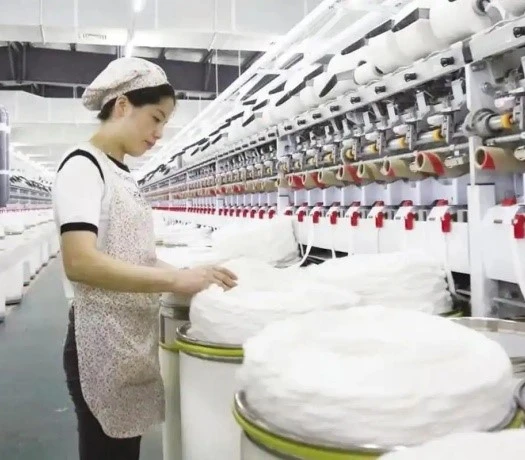
Its application within the textile industry delivers notable improvements to the comprehensive quality of finished textile products. Dyes derived from this intermediate facilitate the production of textiles characterised by vivid, saturated colour tone and outstanding colour fastness against washing, rubbing and light exposure. Treated textiles possess not only appealing visual aesthetic performance, but also demonstrate strong resistance against fading and discoloration during routine service and repeated cleaning cycles, maintaining stable colour presentation over long‑term usage.
Meet diverse market demands
As consumers raise higher expectations for textile colour presentation and overall product quality, market requirements for dyes have grown increasingly diversified. As a high‑performance dye derived from 4‑acetoxyindole, it is well‑suited to satisfy market needs for textiles with varied colour shades and end‑use purposes.For instance, within the apparel sector, its application yields clothing items featuring bright colours and elaborate patterns. These products not only satisfy consumers' aesthetic preferences, but also exhibit good resistance against fading and deformation in daily wear and washing processes. This effectively improves both the wearing comfort and long‑term durability of finished garments.


Promote the development of the textile industry
Its relevant applications further drive the technological advancement of the textile industry. Dyes prepared from this intermediate support the creation of more innovative, high‑performance textile products with strong market competitiveness. Such premium offerings effectively raise the added value of textile commodities and strengthen their market‑edge against competing goods. At the same time, they accelerate industrial restructuring and technical upgrading throughout the production chain, and play a positive role in advancing the green transition and sustainable development of the whole textile sector.
Application in the printing industry
Improve the color effect of printed materials
Its deployment within printing industry delivers a remarkable enhancement in the overall chromatic performance. Dyes synthesized from this intermediate enable the fabrication of high‑definition printed materials characterized by vibrant, uniform hues and finely defined, sharp patterns. Apart from providing outstanding visual presentation and delicate printing effects, the treated printed products demonstrate excellent resistance to fading, discoloration and light aging during long‑term storage and daily use. These superior properties comprehensively elevate overall product grade, practical quality and long‑term service durability of materials.

Meet personalized market demands
With growing consumer demand for printed materials, market requirements for high‑performance dyes have become increasingly diversified. Boasting outstanding comprehensive performance, this dye is capable of satisfying market requirements for custom‑tailored printed outputs.For instance, within the packaging industry, the adoption of these dyes yields packaging products with vivid colour and distinctive custom‑designed patterns. Such finished packages not only gain higher added value and stronger market competitiveness, but also successfully satisfy consumers' rising expectations for packaging experiences.
Promote the advancement of printing technology
Its applications likewise propel continuous technical progress and iterative innovation across the printing sector. Dyes derived from this intermediate facilitate the development of more innovative, efficient and commercially competitive printing technologies. These advanced techniques effectively improve the overall printing accuracy, product quality and production efficiency of finished printed outputs. Furthermore, they accelerate industrial restructuring and technical upgrading, and greatly foster the green transformation and long-term sustainable development of the entire printing industry.
Application in the dyeing industry

Improve dyeing efficiency
The application in the dyeing industry can significantly improve dyeing efficiency. By using these dyes, dyeing time can be shortened, energy consumption and costs can be reduced. At the same time, these dyes also have good dispersibility and permeability, allowing dye molecules to be evenly distributed on fibers or substrates, thereby improving the uniformity and firmness of dyeing.
Meet environmental requirements
Against the backdrop of growing public environmental awareness, market demand for eco‑friendly dye products has been steadily rising. Dyes synthesised from this intermediate satisfy the growing market requirement for sustainable colourants. During practical application, these dyes generate minimal hazardous by‑products, feature favourable environmental compatibility, and allow for convenient post‑use disposal and waste treatment.


Promote innovation in dyeing technology
The adoption of dyes based on 4‑acetoxyindole also fuels innovation within dyeing‑related technologies. Utilisation of such dyes facilitates the development of novel, market‑competitive dyeing processes. These advanced technologies not only enhance dyeing quality and production efficiency, but also accelerate industrial transformation, technological upgrading, and advance the sustainable development of the dyeing sector.

synthesis methods
1. Hydrazide method:
It is one of the most commonly used methods for preparing 4-Acetoxyndole. The method utilizes the electrophilicity of indole to react with the nucleophilicity of acetic acid hydrazine to generate acetic acid hydrazide compound. Subsequently, the compound undergoes a condensation reaction under acidic conditions to generate 4-Acetoxyindole.
2. Iodination method:
This represents an alternative synthetic route for the preparation of 4‑acetoxyindole. Its reaction principle relies on iodine‑mediated cleavage of labile methyl carboxylate groups, which enables the construction of the core structural skeleton of 4‑acetoxyindole.
3. Oxidation method:
4‑Acetoxyindole can be synthesized with 2,3‑dichloro‑5,6‑dicyano‑1,4‑benzoquinone (DDQ) serving as the oxidizing agent. During this reaction process, indole, the precursor substrate for 4‑acetoxyindole, undergoes initial oxidation to generate a reactive intermediate, which is further converted into the 2,3‑dioxindole intermediate. Subsequent structural transformation ultimately yields the target 4‑acetoxyindole product.
4. Suzuki reaction:
It is one of the most commonly used palladium-catalyzed coupling reactions in modern organic synthesis, and this method is also used to prepare 4-Acetoxyndole. The steps of the method are firstly to carry out coupling reaction of 2-bromoindole and phenylboronic acid under the presence of palladium catalyst and basic condition to form N-phenylindole. Then N-phenylindole and acetic anhydride are subjected to acetic acidification in the presence of sodium hydroxide to finally obtain 4-Acetoxyindol.
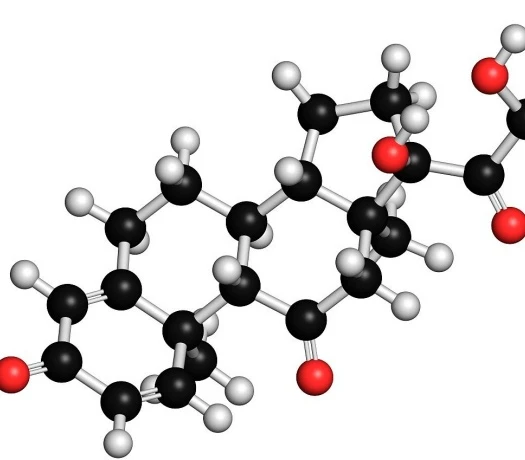
4-Acetoxyindole is an organic compound belonging to the class of indole derivatives, characterized by the presence of an acetoxy group (-OCOCH₃) attached to the fourth position of the indole ring system. This specific substitution pattern imparts unique chemical and biological properties, distinguishing it from other indole derivatives.Structurally, indole itself is a bicyclic compound consisting of a benzene ring fused to a pyrrole ring. The introduction of the acetoxy group at the 4-position modifies the electronic and steric environment of the indole, influencing its reactivity and interactions with other molecules.This substitution can affect the compound's solubility, stability, and biological activity.

Chemically, it can participate in various reactions typical of indoles, such as electrophilic aromatic substitution and nucleophilic attack, particularly at positions that are activated or deactivated by the acetoxy group. The presence of the ester functionality also allows for hydrolysis under acidic or basic conditions, potentially leading to the formation of 4-hydroxyindole and acetic acid.Biologically, indole derivatives are of significant interest due to their presence in natural products and their potential pharmacological activities. Some indole derivatives are known to exhibit antimicrobial, anti-inflammatory, or neuroactive properties.
The acetoxy group may modulate these activities by altering the compound's ability to interact with biological targets, such as receptors or enzymes.
In research settings, it may serve as a synthetic intermediate for the preparation of more complex indole-based compounds, including those with therapeutic potential. Its synthesis typically involves the acylation of 4-hydroxyindole under appropriate conditions to introduce the acetoxy group selectively.Overall, 4-acetoxyindole represents an important compound in organic and medicinal chemistry, offering insights into the structure-activity relationships of indole derivatives and serving as a building block for the development of novel chemical entities with diverse applications.


The molecular formula of 4-Acetoxyindole is C₁₀H₉NO₂, with a molecular weight of 175.18 g/mol. Its core structure consists of an indole ring and an acetoxy group (-OCOCH₃). This compound appears as a grayish-white to beige solid at room temperature and pressure. Its melting point is 100-102℃, the predicted boiling point is 339.1±15.0℃, the density is approximately 1.255 g/cm³ (25℃), and the refractive index is 1.633. Its solubility is selective and it is slightly soluble in organic solvents such as chloroform, DMSO, and methanol, but has extremely low solubility in water. Storage conditions require strict avoidance of light and sealing for storage in a cool, dry environment at 2-8℃ to prevent decomposition or deterioration.
In terms of chemical properties, the acetoxy group (-OCOCH₃) of 4-Acetoxyindole exhibits the typical reactivity of ester compounds. For instance, under acidic or alkaline conditions, the acetoxy group readily undergoes hydrolysis reactions, generating 4-Hydroxyindole and acetic acid. This characteristic is crucial in the design of synthetic pathways, such as through the acylation reaction of 4-Hydroxyindole with acetic anhydride, which can efficiently produce 4-Acetoxyindole: Dissolve 4-Hydroxyindole in dichloromethane (DCM), dropwise add pyridine and acetic anhydride at 0-5℃, warm the reaction mixture to 20-25℃ and stir for 3 hours. After post-treatment (such as washing with water, washing with saturated sodium bicarbonate solution, drying and concentration), the target product can be obtained, with a purity of over 99%.
Although the toxicity data of 4-Acetoxyindole is not fully clear, existing studies suggest that it may cause irritation to the skin, eyes and respiratory tract. For example, inhaling dust may cause respiratory discomfort, skin contact requires washing with soap and plenty of water, and eye contact requires immediate rinsing with water as a precautionary measure. According to the GHS classification, this compound is labeled as "Xi" (irritant substance) and is accompanied by hazard descriptions (such as H302, H315, H319, H332, H335) and precautionary instructions (such as P280, P305+P351+P338, P310). Therefore, during the operation, protective equipment (such as gloves, goggles and dust masks) should be worn, and the operation should be carried out in a well-ventilated environment.
From the perspective of application fields, 4-Acetoxyindole is mainly used as a pharmaceutical intermediate and an organic synthesis raw material. For instance, it is a key precursor for synthesizing indole derivatives, which are of great value in drug research, such as anti-tumor, anti-inflammatory or antibacterial active molecules. Moreover, 4-Acetoxyindole can also be applied in the field of materials science, for example, for the preparation of functional polymers or fluorescent probes. In industrial production, the synthesis process of 4-Acetoxyindole needs to take into account both cost and efficiency. For instance, by optimizing reaction conditions (such as temperature, solvent and catalyst dosage), the yield can be significantly increased while reducing the generation of by-products.
In terms of market supply, the purity specifications of 4-Acetoxyindole are diverse, ranging from reagent grade (98%-99%) to industrial grade (≥95%). The prices vary depending on purity and packaging specifications. For instance, the price of 5 grams of reagent grade product is approximately 49 yuan, while the price of 25 kilograms of industrial grade product may be as low as 1 US dollar per kilogram. Major suppliers include Sigma Aldrich, Aladdin, Shaoyuan Technology and other domestic and foreign enterprises. Their products are widely used in the fields of research, pharmaceuticals and chemicals.
Reference
[1] Wang Y., He Q., Fan R. Facile synthesis of 4‑acetoxyindoles via PhI(OAc)₂‑mediated dearomatization of 2‑alkynylanilines. Organic Chemistry Frontiers, 2021, 8(11): 3008‑3013.
[2] EP3828147 A1. Process for preparing indole‑based chromophoric intermediates for dye synthesis, European Patent Office, 2021.
[3] PubChem. 4‑Acetoxyindole (CAS 5585‑96‑6), Compound Safety & Property Database. National Center for Biotechnology Information, USA.
[4] Li M., Chen H. Structural modification and dye‑oriented application of C4‑substituted indole building blocks. Dyes and Pigments, 2023, 212: 111089.
[5] BenchChem. The Versatility of 4‑Acetoxyindole as a Synthetic Intermediate: Application Notes and Protocols, Technical Report, 2026.
Frequently Asked Questions
Why is its "4-acetoxyl" structure an ideal "protective and guiding" group for the synthesis of key intermediates such as pregabalin?
+
-
The strong electron withdrawing effect of acetoxy group can significantly activate the 3rd position of indole, facilitating the introduction of the desired side chain. After completion of the construction, the acetoxy group can be easily converted into the 4-hydroxyindole structural unit required for drug synthesis through mild alkaline hydrolysis.
How is it enzymatically hydrolyzed in living organisms and may mimic or interfere with the metabolism of indoleamine neurotransmitters?
+
-
Its acetyl group can be hydrolyzed by non-specific esterases to generate 4-hydroxyindole in situ. The latter is a potential intermediate or regulator of the metabolic network of indoleamine substances such as serotonin in the body, which may affect the levels of related neurotransmitters, but the specific mechanism is unclear.
What is the potential value of its "indole acetoxy" combination in the field of organic luminescent materials?
+
-
Indole is a classic electron donor group that may form an intramolecular push-pull electron system when combined with electron withdrawing acetoxy groups. This structural modification can adjust the fluorescence emission wavelength and efficiency of compounds, making it a candidate structure for designing novel organic luminescent molecules.
What are the advantages of its acetylated form in terms of chemical stability and reactivity compared to simple 4-hydroxyindole?
+
-
Acetylation protects the hydroxyl group, making it more stable against air oxidation and easier to store and handle. Meanwhile, it alters the electron cloud distribution of the indole ring, potentially endowing it with unique electrophilic/nucleophilic reactivity distinct from free hydroxyindole, expanding its synthetic applications.
In natural product chemistry, is it used as a hypothetical precursor or synthetic equivalent for certain alkaloids?
+
-
There is a hypothesis that certain natural alkaloids containing 4-hydroxy or 4-methoxyindole structures (such as certain β - Capolin derivatives) may undergo alkylation or cyclization via 4-acetoxyindole as an active intermediate in their biogenic synthesis, but there is no conclusive evidence yet.
Hot Tags: 4-acetoxyindole cas 5585-96-6, suppliers, manufacturers, factory, wholesale, buy, price, bulk, for sale, 4 Hydroxyphenylacetic Acid CAS 156 38 7, 4 METHYL 2 METHYLSULFANYL PYRIMIDINE CAS 14001 63 9, Pentadecanoic Acid CAS 1002 84 2, 4'-Aminoacetanilide CAS 122-80-5, 7 Nitroindole CAS 6960 42 5, 4 4 Dimethylbiphenyl CAS 613 33 2