




Shaanxi BLOOM Tech Co., Ltd. is one of the most experienced manufacturers and suppliers of 4-bromo-2-chloroaniline cas 38762-41-3 in China. Welcome to wholesale bulk high quality 4-bromo-2-chloroaniline cas 38762-41-3 for sale here from our factory. Good service and reasonable price are available.
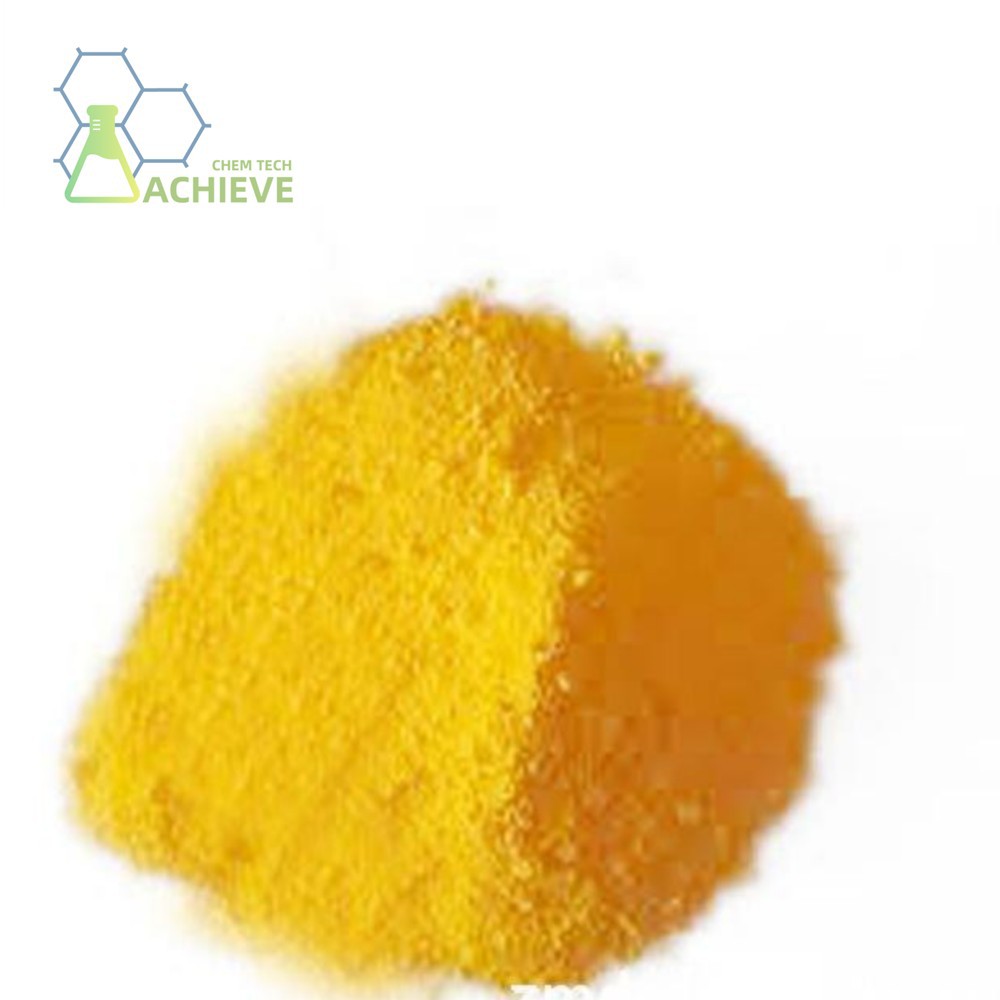
4-Bromo-2-chloroaniline is an important organic intermediate with the molecular formula C₆H₅BrClN. Structurally, it can be regarded as a derivative of aniline where the amino group (-NH₂) is substituted by a bromine atom at the ortho position and a chlorine atom at the meta position. This compound typically appears as a white to light yellow crystalline powder or a flaky solid. Due to its large molecular weight and the presence of halogen atoms, its melting point and boiling point are relatively high, but the specific values vary depending on the purity of the sample. It is slightly soluble in water and readily soluble in common organic solvents such as ethanol and ether. This property facilitates its subsequent reactions in organic synthesis. As an aromatic amine, its amino group endows the compound with weak basicity and nucleophilicity, which can participate in key reactions such as diazotization; at the same time, the two strong electron-withdrawing halogen atoms (especially bromine) significantly reduce the electron cloud density of the benzene ring through the induction effect, which not only affects its acidity and basicity but also makes it more prone to electrophilic substitution reactions, and the reaction site is jointly regulated by the steric and electronic effects of the meta-position chlorine atom and the ortho-position bromine atom. Based on these unique chemical properties, 4-Bromo-2-chloroaniline is widely used in the pharmaceutical, pesticide, and dye industries, and is a key building block for the synthesis of various fine chemicals. It should be noted that as an aromatic amine derivative, it may have certain toxicity and potential irritancy, so appropriate protective measures should be taken during operation.
Additional information of chemical compound:
|
Chemical Formula |
C6H5BrClN |
|
Exact Mass |
204.93 |
|
Molecular Weight |
206.47 |
|
m/z |
204.93(100.0%),206.93(97.3%),206.93(32.0%),208.92(31.1%), 205.93 (6.5%), 207.93 (6.3%), 207.93 (2.1%), 209.93 (2.0%) |
|
Elemental Analysis |
C, 34.90; H, 2.44; Br, 38.70; Cl, 17.17; N, 6.78 |
|
Melting point |
70-72℃(lit.) |
|
Boiling point |
241.8±20.0℃(Predicted) |
|
Density |
1.6567 (rough estimate) |
|
|
|


4-Bromo-2-chloroaniline is an important organic compound with unique chemical structure and properties, and therefore has a wide range of applications in multiple fields. The following is a detailed discussion on its use:
organic synthesis
In the field of medicine, it is widely used as an important organic synthesis intermediate in the synthesis of various drugs. Due to the presence of two halogen substituents, bromine and chlorine, in its molecule, it has extremely high flexibility in drug molecule design. Here are some specific application examples:
Antihistamines are a type of medication used to treat allergic diseases. 4-bromo-2-chloroaniline can serve as a key intermediate for the synthesis of certain antihistamines. By introducing specific functional groups or structural modifications, drug molecules with high antihistamine activity can be synthesized. Some anti-cancer drugs contain aniline groups in their structures, and 4-bromo-2-chloroaniline, as a type of aniline compound, can be introduced into anti-cancer drug molecules through chemical reactions. This introduction may not only enhance the anti-cancer activity of the drug, but also improve its pharmacokinetic properties and increase the bioavailability of the drug. In addition to antihistamines and anticancer drugs, 4-bromo-2-chloroaniline can also be used to synthesize various other types of drugs, such as antibiotics and antiviral drugs. The synthesis of these drugs usually requires complex chemical reaction processes, and 4-bromo-2-chloroaniline plays an irreplaceable role as an important intermediate.

Synthesis of anthraquinone dyes

Anthraquinone dyes are an important class of organic dyes with bright colors and good dyeing properties, and can also be used as important intermediates in the synthesis of anthraquinone dyes. Through specific chemical reactions, 4-bromo-2-chloroaniline can be converted into an intermediate containing anthraquinone structure, which further reacts to produce anthraquinone dyes. For example, 4-bromo-2-chloroaniline can react with anthraquinone compounds to generate azo dyes containing anthraquinone structures or anthraquinone direct dyes. These dyes have good dyeing performance, light fastness, and wash fastness, and can achieve good dyeing effects on different fibers.
In the textile industry, it is widely used as a dye intermediate to synthesize dyes of various colors. These dyes have good dyeing performance, light fastness, and wash fastness, which can meet the dyeing needs of different fibers and fabrics. For example, in the synthesis of red azo dyes, the diazonium salt of 4-bromo-2-chloroaniline can be coupled with β - naphthol to produce a bright red dye. This dye can achieve good dyeing effects on fibers such as cotton, linen, silk, and wool. In the leather industry, it is also widely used as a dye intermediate. Through specific chemical reactions, 4-bromo-2-chloroaniline can be converted into dyes suitable for leather dyeing. These dyes have good permeability and fastness, which can make leather present a uniform and bright color. In the paper industry, 4-bromo-2-chloroaniline can be converted into dyes suitable for paper dyeing through specific chemical reactions. These dyes have good dyeing performance and light fastness, which can make paper present bright and long-lasting colors.

Pesticide field
In pesticide formulations, adjuvants are indispensable components. They can help pesticide molecules better disperse, suspend, or dissolve in solvents, thereby improving the effectiveness of pesticide use. 4-Bromo-2-chloroaniline may have certain special physical or chemical properties that make it a candidate for adjuvants in pesticide formulations. By introducing special chemical components such as 4-bromo-2-chloroaniline, certain properties of pesticides can be improved. For example, the stability, permeability, and adhesion of pesticides can be improved, thereby enhancing their control effectiveness. These performance improvements are of great significance for enhancing the effectiveness of pesticide use. With the continuous development of pesticide technology, the research and development of new pesticide formulations has become an important direction. The introduction of new chemical components such as 4-bromo-2-chloroaniline provides new ideas and possibilities for the development of new pesticide formulations.

Application in the field of pesticides

It can participate in the synthesis of herbicides. For example, in the synthesis routes of certain herbicides, important intermediates are introduced to obtain target molecules with herbicidal activity through further chemical reactions. These herbicides play an important role in agricultural production, helping to control weed growth and improve crop yield and quality. In addition to herbicides, 4-bromo-2-chloroaniline can also participate in the synthesis of insecticides. By introducing different functional groups or structural modifications, pesticide molecules with insecticidal activity can be synthesized. These insecticides play an important role in controlling pests on crops, helping to reduce their harm to crops. In the design process of pesticide molecules, the halogen substituents of 4-bromo-2-chloroaniline provide abundant structural modification possibilities. Through strategies such as halogen substitution reactions, new functional groups can be introduced into pesticide molecules or the electronic distribution of molecules can be altered, thereby designing pesticide molecules with higher biological activity and selectivity.
Case study on environmental impact
Case background
During the production of 4-bromo-2-chloroaniline in a chemical enterprise, some products leaked into nearby rivers due to equipment aging, improper operation, and other reasons. The leaked 4-bromo-2-chloroaniline has had a serious impact on river water quality, leading to the death of aquatic organisms and damage to ecosystems.
Case analysis
Cause of the accident
Equipment aging and poor maintenance are the main causes of leaks.
The operators lack necessary environmental awareness and skills, and fail to detect and handle leakage issues in a timely manner.
Environmental impact
The leaked 4-bromo-2-chloroaniline has caused serious pollution to river water quality, leading to the death of aquatic organisms and damage to ecosystems.
The leakage incident has had a serious impact on the drinking water safety and ecological environment of local residents.
Response measures
The enterprise shall immediately activate the emergency plan and take emergency measures to control and reduce the spread of pollutants.
The government department quickly intervened in the investigation and handling, conducted an investigation and analysis of the cause of the accident, and held the relevant responsible persons accountable in accordance with the law.
Treat and restore polluted rivers to restore their ecological functions.
Case analysts
Strengthen equipment maintenance and management
Chemical enterprises should regularly inspect and maintain their production equipment to ensure its normal operation, safety, and stability.
Strengthen the training and assessment of operators to enhance their environmental awareness and operational skills.
Improve emergency plans
Chemical enterprises should develop comprehensive emergency plans, clarify emergency response procedures and responsible persons.
Regularly conduct emergency drills and training to enhance the ability to respond to sudden environmental incidents.
Strengthen environmental supervision
Government departments should strengthen environmental supervision of chemical enterprises to ensure strict compliance with environmental regulations and standards.
Intensify the punishment for illegal activities, increase the cost of illegal activities, and form an effective deterrent effect.

The parent compound of 4-bromo-2-chloroaniline is aniline, which can be traced back to the early 19th century. In 1826, German chemist Otto Unverdorben decomposed indigo by heating it to obtain an alkaline substance, which he named "Krystalin". This is the first separation of aniline, but its structure was not yet determined at that time. In 1834, Friedlieb Runge separated aniline from coal tar and called it "Kyanol" because it produces a blue substance after oxidation. In 1840, Russian chemist Carl Julius Fritzsche * * obtained the compound again by alkaline treatment of indigo and officially named it "Aniline", derived from the Portuguese word "anil" (indigo). In 1841, Nikolay Zinin discovered that the reduction of nitrobenzene could produce aniline (Zinin reaction), which became the basis for industrial production of aniline. The chemical structure of aniline was finally determined by August Wilhelm von Hofmann in 1856, laying the foundation for the subsequent synthesis of aniline derivatives. In the mid-19th century, with the development of organic chemistry, chemists began to study how to introduce halogens (chlorine, bromine, etc.) onto benzene rings. The halogenation reaction of aniline has become a research hotspot because halogenated aniline can serve as an important intermediate for dyes, drugs, and pesticides. In 1856, Hoffman systematically studied the chlorination reaction of aniline and found that different reaction conditions could produce mono -, di -, and even multi chlorine substituted products. In the 1860s, Heinrich Caro (one of the founders of BASF) studied the bromination reaction of aniline and developed a controllable bromination method. Its synthesis requires precise control of the position of halogen substitution (para bromine+ortho chlorine), which depends on the localization effect of aromatic electrophilic substitution reaction. In the 1870s, German chemists Wilhelm K ö rner and Victor Meyer systematically studied the effect of substituents on the reactivity of benzene rings, providing theoretical support for selective halogenation. Similar structures of halogenated aniline were mentioned in German dye industry literature at the end of the 19th century. There are two main pathways for its synthesis:
- Bromination of 2-chloroaniline: Due to the ortho position of chlorine, it mainly enters the para position during bromination to obtain 4-bromo-2-chloroaniline.
- Chlorination of 4-bromoaniline: Bromine is a weak passivating group, and chlorination may occur in the ortho or para position, but with low selectivity.
German chemical companies such as Bayer, BASF, and Hirst applied for multiple patents related to halogenated aniline between 1880 and 1900, which may include the synthesis method of 4-bromo-2-chloroaniline. These studies mainly serve the azo dye industry, as halogenated aniline can provide richer colors and higher stability. At the beginning of the 20th century, with the development of X-ray crystallography and spectroscopy, the structure of 4-bromo-2-chloroaniline was accurately determined. In the 1930s, infrared spectroscopy (IR) and ultraviolet spectroscopy (UV) were used to analyze its functional groups and conjugated systems. As an intermediate of azo dyes in industrial applications, it provides an orange red color tone. Used for synthesizing antibacterial drugs containing halogens (such as sulfonamides). Some synthetic materials containing halogenated aniline insecticides. During World War II, chemical companies in Germany and the United States optimized the production process of halogenated aniline, reducing costs and increasing output. In the second half of the 20th century, the synthesis method of 4-bromo-2-chloroaniline was significantly improved:
- N-bromosuccinimide (NBS) bromination (1950s): improves selectivity and reduces by-products.
- Phase transfer catalysis (PTC) technology (1970s): enables efficient reaction in a water organic two-phase system.
- Metal catalyzed coupling reactions (1980-2000): such as Buchwald Hartwig reaction, used to construct nitrogen-containing heterocyclic derivatives.
Meanwhile, the widespread use of high-performance liquid chromatography (HPLC) and nuclear magnetic resonance (NMR) technologies has made the purification and characterization of 4-bromo-2-chloroaniline more precise.
Hot Tags: 4-bromo-2-chloroaniline cas 38762-41-3, suppliers, manufacturers, factory, wholesale, buy, price, bulk, for sale, (Z)-3-Methylpent-2-en-4-yn-1-ol, Antioxidant 1520, 4,4'-Dimethylbiphenyl CAS 613-33-2, 5 Methylpyridine 3 boronic Acid CAS 173999 18 3, 3 5 Dichloropyridine, 2 Bromopyridine 4 carboxylic acid