




Shaanxi BLOOM Tech Co., Ltd. is one of the most experienced manufacturers and suppliers of methyl pyruvate cas 600-22-6 in China. Welcome to wholesale bulk high quality methyl pyruvate cas 600-22-6 for sale here from our factory. Good service and reasonable price are available.
Methyl Pyruvate (PAME) is a methyl derivative of pyruvic acid, with the chemical formula of C₄H₆O₃. At room temperature, it is a colorless to pale yellow liquid and has the characteristic volatile odor of esters. As an important organic intermediate, it has extensive applications in biochemistry, medicine, and feedstocks science.In metabolic research, methylmalonic acid can serve as a substrate for cellular energy metabolism. It bypasses the pyruvate transporter and directly enters the mitochondria to participate in the tricarboxylic acid cycle (TCA cycle). Therefore, it is used to improve cellular energy supply under conditions of hypoxia or metabolic disorders. Additionally, it demonstrates anti-inflammatory, antioxidant, and neuroprotective potential in the medical field and may be used in the research of treatment for ischemia-reperfusion injury or neurodegenerative diseases.
In industrial applications, methyl ketal can be used as an organic synthesis intermediate, participating in reactions such as ester exchange and condensation, and is employed for the synthesis of drugs, fragrances and polymer feedstocks. Due to its high reactivity, it needs to be stored under low-temperature and light-shielded conditions to prevent decomposition. Currently, its biomedical applications are still in the experimental stage, but due to its unique metabolic regulatory effect, it holds significant scientific value.

|
C.F |
C4H6O3 |
|
E.M |
102 |
|
M.W |
102 |
|
m/z |
102 (100.0%), 103 (4.3%) |
|
E.A |
C, 47.06; H, 5.92; O, 47.01 |
|
|
|
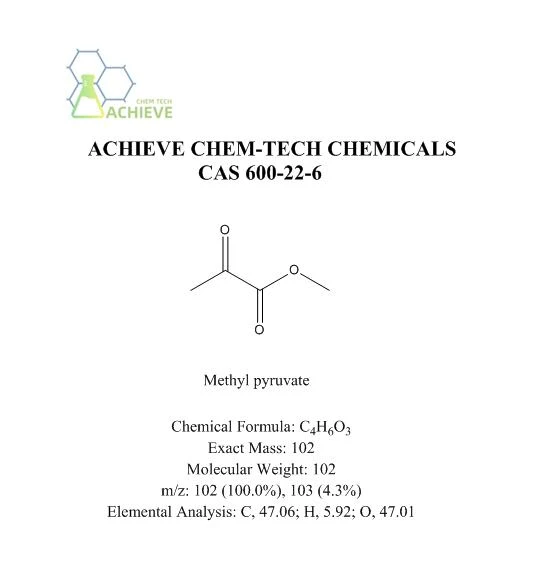
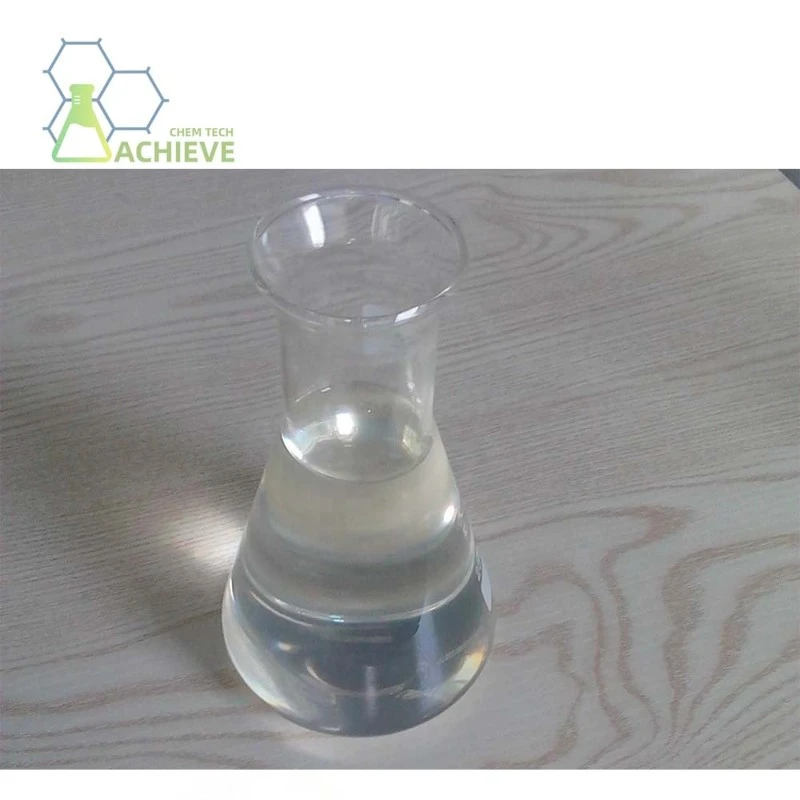
The structure of PAME contains functional groups such as carbonyl, methyl, and methyl groups, which have a certain impact on its physical and chemical properties.
Among them, the presence of carbonyl groups gives them a certain polarity and can undergo addition reactions with nucleophilic reagents; The presence of methyl groups makes them stable and less prone to oxidation reactions; Methyl ester group gives it a certain degree of water solubility and fat solubility.

There are two main methods to produce methyl pyruvate in China:
Lactic acid methyl ester oxidation method
Methyl lactate oxidation method Under light conditions, methyl lactate was oxidized with liquid bromine and H2O2 as catalysts to obtain reaction products; Then the reaction product is adjusted to neutral, extracted with dichloromethane, and dried with CaCl2; Finally, it was obtained by vacuum distillation with a yield of 48%. Lactic acid methyl ester oxidation method, as an effective method for preparing PAME, involves oxidizing the hydroxyl portion of lactic acid methyl ester and introducing carboxyl groups to obtain the target product.
Free radical reaction mechanism:
Under light conditions, hydrogen peroxide molecules absorb light energy and decompose into two hydroxyl radicals (· OH). These free radicals are highly active and can attack carbon atoms near hydroxyl or methyl groups in methyl lactate molecules, forming new free radical intermediates. Subsequently, these intermediates further react with liquid bromine or hydrogen peroxide, undergoing a series of free radical transfer and conversion processes, ultimately producing PAME.
Operation process:
1. Raw material preparation:
Firstly:High-purity methyl lactate needs to be prepared as the starting feedstock.
Meanwhile:Accurately calculate and prepare an appropriate amount of liquid bromine and hydrogen peroxide as oxidants according to the reaction requirements.
In addition:It is necessary to prepare auxiliary feedstocks such as alkaline solutions (such as sodium hydroxide), extractants (such as dichloromethane), and desiccants (such as anhydrous calcium chloride) for adjusting the pH value.
2. Reaction operation:
Mixing and Illumination:Mix methyl lactate, liquid bromine, and hydrogen peroxide in a certain proportion in the reaction vessel to ensure uniform mixing. Subsequently, place the reaction vessel under a controllable light source for irradiation. The selection of lighting conditions needs to be optimized based on experimental results to balance reaction rate and product yield.
Reaction monitoring:During the reaction process, it is necessary to closely monitor parameters such as reaction temperature, pressure, and stirring rate. At the same time, regular sampling and analysis of the composition changes of the reaction solution can be conducted to understand the reaction process and product generation.
Reaction termination:When the reaction reaches the predetermined level (such as confirming the maximum amount of product generated through sampling analysis), the light should be stopped in a timely manner and the reaction should be terminated. At this point, an appropriate amount of alkaline solution can be added to neutralize the remaining acidic substances.
2. Pyruvic acid and methanol condensation method
Mix a certain amount of pyruvic acid and methanol, add benzene and p-methylbenzenesulfonic acid, heat them together until refluxing, and finally obtain product by vacuum distillation with a yield of 65%.
Reaction principle it was synthesized by using pyruvic acid and methanol as raw stocks, carbon tetrachloride as water carrying agent, and hydrated ferric sulfate as esterification dehydrating agent. The reaction equation is:
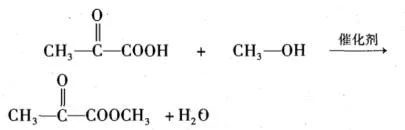
In the bottle, add 100g (1.14moL) of pyruvic acid, 92g (2.85moL) of methanol and 50g (0.325moL) of carbon tetrachloride, stir and mix evenly; Add 15g hydrated ferric sulfate, stir the mixture together for 15min, slowly heat it with oil bath until refluxing, control the temperature to react at 70~72C, and the refluxed liquid flows into the water separator to slowly separate the water in the water separator. Stop the heating reaction when the effluent is slow and the separated water reaches about 20g.
The reaction unit is changed into atmospheric distillation unit. First, carbon tetrachloride and excess methanol are evaporated, and heating is stopped when the top temperature is 80 ° C. Then change the atmospheric pressure device into a pressure reducing device, collect the distillate at 68~75C/- 0.095MPa, and obtain 71g of yellowish transparent liquid product, which is a pale yellow liquid. Re distill the front distillate and apply it at high boiling point to obtain 15g of product; The total product is 86 g (0.842 moL), the yield is 73.9%, and the content is 98.6% by gas chromatography.
After many experiments, the optimum process conditions were obtained as follows: when the amount of pyruvic acid was 100g, the molar ratio of pyruvic acid to methanol was 1:2.5, the reaction time was 2.5h, the amount of carbon tetrachloride and hydrated ferric sulfate was 50g and 15g respectively, and the reaction temperature was reflux temperature, the yield could reach 73.9%.
The structure is correct after IR and NMR confirmation. This method is easy to operate, easy to control, high yield, high content, and suitable for industrial production.

Methyl pyruvate has a wide range of applications in the synthesis of resins. Due to the active methyl and carbonyl functional groups contained in its molecular structure, it has high chemical activity and can react and polymerize with various organic compounds to synthesize different types of functional resins with diverse properties.

1. Synthesis Of Poly (Methyl Pyruvat)
PAME can undergo controllable self-polymerization under specific initiator conditions to synthesize high-molecular-weight poly(PAME) resin. The unique ordered molecular chain structure of this resin endows it with outstanding comprehensive performance. It possesses excellent thermal stability to maintain stable physical and chemical properties in long-term high-temperature service environments, as well as strong resistance to acid, alkali and common organic solvent corrosion. Moreover, its superior electrical insulation and dielectric stability make it a high-performance insulating resin feedstock.
It is widely applied in electronic component packaging, electrical equipment insulation, aerospace precision parts and high-temperature resistant structural components. Industrial preparation of poly(PAME) mainly adopts lotion polymerization and solution polymerization. Among them, lotion polymerization is favored for large-scale production due to its simple operation, mild reaction conditions, low energy consumption and stable product yield.
2. Synthesis Of Acrylic Resin
PAME serves as an important modified monomer for the synthesis of high-performance acrylic resins.


It can conduct free radical copolymerization with common acrylic monomers including acrylic acid, methyl acrylate and butyl acrylate.Incorporating PAME segments into the acrylic resin molecular chain effectively remedies the poor heat resistance and insufficient chemical stability of conventional acrylic resins. The modified acrylic resin exhibits excellent weather resistance, which can resist ultraviolet radiation and temperature cycle erosion for a long time and maintain intact film-forming performance in outdoor environments. Meanwhile, it retains excellent chemical corrosion resistance and electrical insulation properties. It is widely used in high-end architectural exterior coatings, industrial anti-corrosion paints, printing and packaging inks, and electronic surface protective coatings.
3. Synthesis Of Epoxy Resin
PAME can react with epichlorohydrin and other epoxy monomers via ring-opening addition and cross-linking reactions to produce modified epoxy resins. Compared with traditional pure epoxy resins, PAME-modified epoxy resins feature tighter molecular cross-linking structure and higher structural stability. They show ultra-strong adhesion to metal, plastic, concrete and multiple substrates, capable of forming compact, wear-resistant and stable protective films. In addition, the resin retains outstanding chemical corrosion resistance and electrical insulation performance with good mechanical toughness.
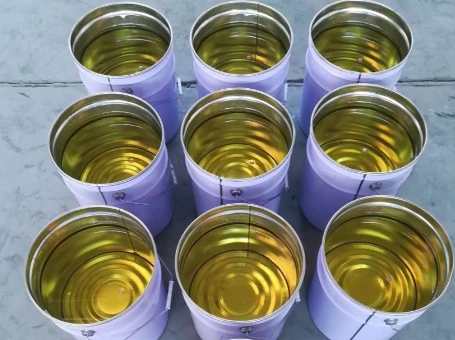

It is extensively used in electronic component potting, electrical equipment anti-corrosion encapsulation, building structural bonding and industrial floor anti-corrosion projects, serving as a core feedstock for industrial anti-corrosion and electrical insulation protection.
4. Synthesis Of Polyimide Resin
Methyl pyruvate is a functional modified raw stock for preparing high-performance polyimide resins. It can participate in high-temperature condensation polymerization with dianhydride and diamine monomers, introducing unique functional groups into the polyimide molecular chain to optimize its structural performance.
This modification significantly improves the thermal stability and chemical resistance of traditional polyimide resins.The obtained modified products have excellent high-temperature resistance, good low-temperature toughness and stable resistance to various chemical reagents, with further enhanced electrical insulation and dimensional stability. Owing to these excellent properties, the resin is widely applied in high-end fields such as aerospace thermal insulation components, precision electronic circuit substrates, semiconductor packaging and high-temperature insulating accessories.


5. Synthesis Of Polyurethane Resin
PAME is an indispensable auxiliary raw stock for synthesizing high-performance polyurethane resins. It can undergo chain extension and cross-linking polymerization reactions with isocyanates and polyether polyols to prepare modified polyurethane feedstocks. The addition of PAME effectively optimizes the molecular cross-linking degree of polyurethane, greatly improving the wear resistance, flexibility and structural toughness of conventional polyurethane resins, while upgrading its electrical insulation performance.
The modified polyurethane features excellent wear resistance, tear resistance and soft mechanical properties with stable insulating capability. It is widely used in industrial protective coatings, flexible electronic insulating layers, waterproof wear-resistant adhesives and automotive interior bonding feedstocks.
6. Synthesis Of Phenolic Resin
PAME can be used as a modified comonomer for phenolic resin synthesis, performing condensation polymerization with phenol, cresol and other phenolic compounds under acidic or alkaline catalytic conditions.


The functional groups introduced by PAME effectively increase the cross-linking density of phenolic resins, obviously enhancing their high-temperature heat resistance and chemical corrosion resistance.While maintaining excellent electrical insulation performance, the modified phenolic resins also gain improved mechanical strength and anti-aging ability. Such high-performance phenolic resins are widely used in electronic insulating molded parts, aerospace high-temperature resistant composite feedstocks and industrial anti-corrosion insulating equipment, possessing high practical industrial value.
7. Synthesis Of Polyester Resin
PAME is a key modified raw stock for preparing high-quality polyester resins. It can conduct esterification and condensation polymerization with polyols such as ethylene glycol and propylene glycol, participating in the construction of polyester molecular chain frameworks. The introduction of PAME enables the polyester resin to form a more uniform and stable molecular structure, effectively improving its comprehensive mechanical properties. Compared with ordinary polyester resins, the modified product has better wear resistance, bending flexibility and structural stability, as well as reliable electrical insulation and chemical stability.
It is commonly used in high-performance industrial coatings, flexible adhesives, textile finishing agents and composite bonding layers, covering machinery, chemical and light industry fields.
8. Synthesis Of Polyether Resin
PAME can act as a functional modifier in the preparation of polyether resins. Under appropriate catalytic conditions, it can initiate and participate in ring-opening polymerization with ethylene oxide, propylene oxide and other ether monomers to synthesize modified polyether resins.
The unique functional groups of PAME effectively compensate for the deficiencies of traditional polyether resins, improving their flexibility, low-temperature resistance and chemical corrosion resistance, and endowing the feedstocks with stable electrical insulation performance. The finished polyether resin products have soft texture, strong environmental adaptability and excellent anti-aging performance, which are widely used in flexible industrial coatings, waterproof anti-corrosion adhesives, flexible electronic insulating films and fine chemical auxiliary feedstocks, with broad market application prospects.

In summary, PAME has broad application value in the synthesis of resins. The different functional groups in its structure can react with various compounds to synthesize different types of resins. These synthesized resins have important application value in various fields.
Frequently Asked Questions
What is the structure of methyl pyruvate?
+
-
Methyl pyruvate is the organic compound with the formula CH3C(O)CO2CH3. This colorless liquid is the methyl ester of pyruvic acid. It has attracted interest as a prochiral precursor to alanine and lactic acid. It is prepared by esterification of pyruvic acid.
What is pyruvate and its function?
+
-
Pyruvate is a key intersection in the network of metabolic pathways. Pyruvate can be converted into carbohydrates via gluconeogenesis, to fatty acids or energy through acetyl-CoA, to the amino acid alanine, and to ethanol. Therefore, it unites several key metabolic processes.
Hot Tags: methyl pyruvate cas 600-22-6, suppliers, manufacturers, factory, wholesale, buy, price, bulk, for sale, 1 1 2 2 Tetrabromoethane CAS 79 27 6, 4 Aminoacetanilide CAS 122 80 5, Peptone Powder CAS 73049 73 7, 1 3 Dichloro 2 Propanol CAS 96 23 1, 4 Chlorobutyryl Chloride CAS 4635 59 0, 5 Bromoisatoic Anhydride CAS 4692 98 2