




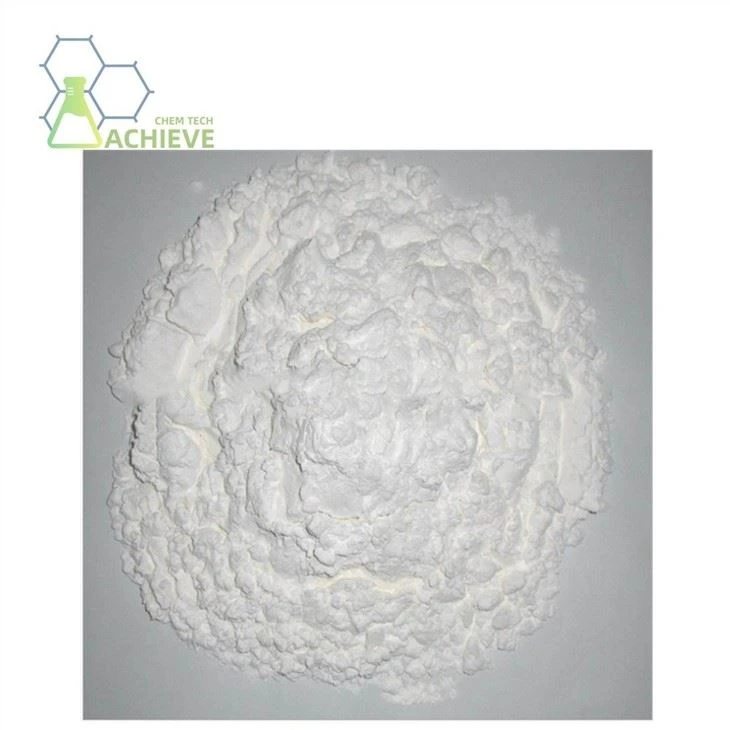
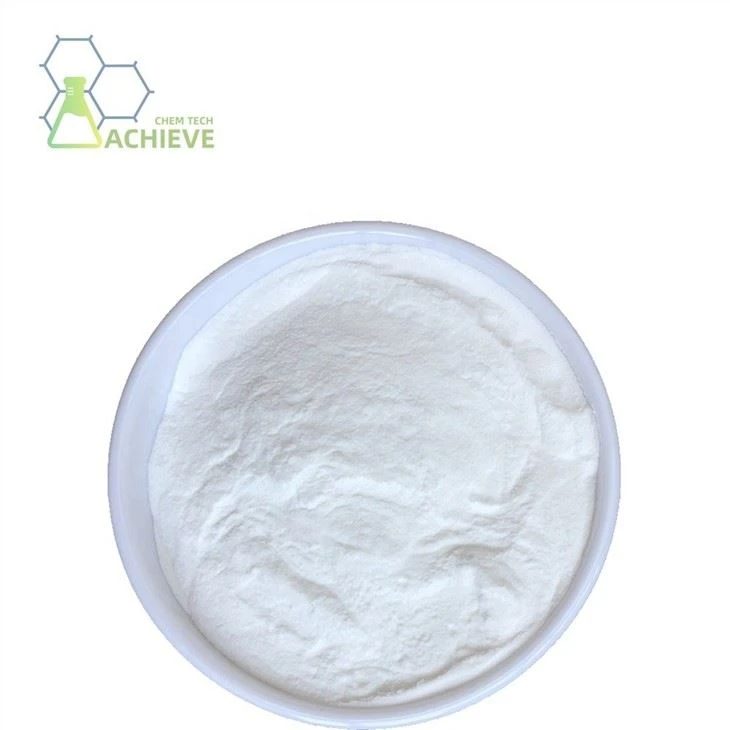
Shaanxi BLOOM Tech Co., Ltd. is one of the most experienced manufacturers and suppliers of p-phenylenediamine powder cas 106-50-3 in China. Welcome to wholesale bulk high quality p-phenylenediamine powder cas 106-50-3 for sale here from our factory. Good service and reasonable price are available.
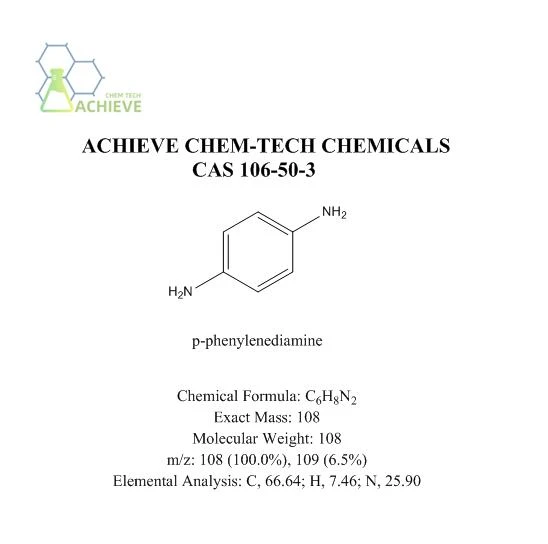
P-phenylenediamine powder, also known as Ulsi D, is an organic compound with the chemical formula C6H8N2. It is a white to light purple solid that is slightly soluble in water and soluble in ethanol, ether, benzene, chloroform, and acetone. Due to the presence of two amino groups in its molecular structure, it can form hydrogen bonds with water and has a certain hygroscopicity. At the same time, it will be oxidized and turn dark brown when exposed to air. P-phenylenediamine is an aromatic amine with excellent photosensitivity, which can be used to prepare organic photosensitive materials through photochemical reactions.
This is because the π electrons in the benzene ring can absorb low-energy ultraviolet light through conjugation, thereby generating photochemical reactions. It is one of the simplest aromatic diamines and a widely used intermediate, which can be used to prepare azo dyes, polymers, fur dyes, rubber anti-aging agents, and photographic developers. In addition, p-phenylenediamine is also a commonly used sensitive reagent for testing iron and copper.

|
Chemical Formula |
C6H8N2 |
|
Exact Mass |
108 |
|
Molecular Weight |
108 |
|
m/z |
108 (100.0%), 109 (6.5%) |
|
Elemental Analysis |
C, 66.64; H, 7.46; N, 25.90 |
|
|
|
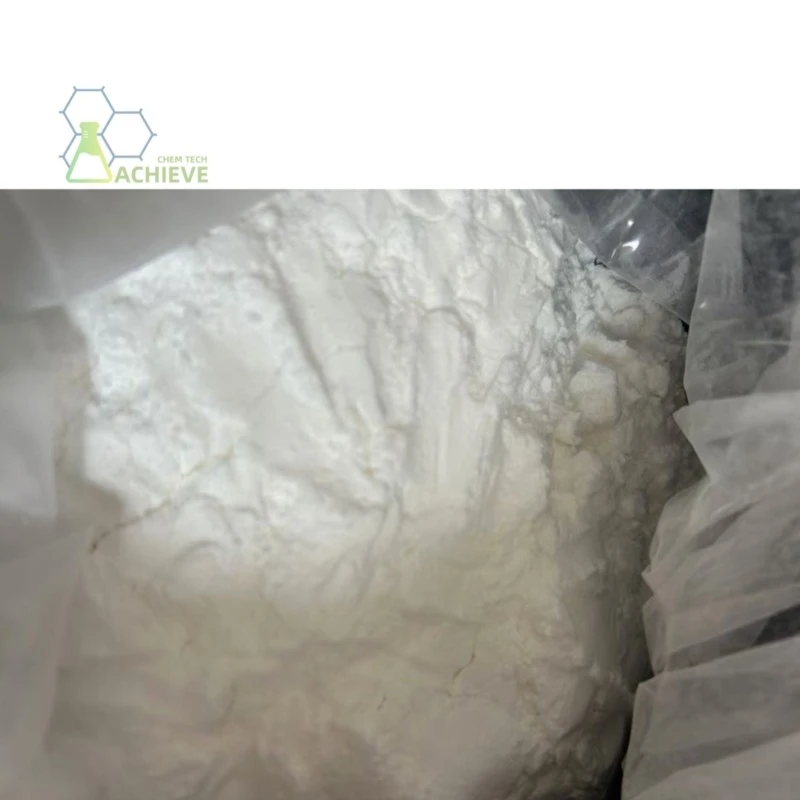
P-phenylenediamine powder, also known as p-Phenylenediamine, is a white to light purple solid at room temperature and pressure. It turns purple red or dark brown when exposed to air and is insoluble in water, but soluble in common organic solvents. P-phenylenediamine belongs to the class of aniline derivatives, which have significant alkalinity and can react with hydrochloric acid to form the corresponding hydrochloride salt. Due to the easily functionalized nature and strong electron donating ability of amino groups, p-phenylenediamine is used as a dye intermediate, epoxy resin curing agent, and rubber anti-aging agents such as DNP, DOP, DBP, etc. In addition, this substance can also be used in the production of fine chemicals such as aircraft coatings, bulletproof vest liners, wall coatings, etc.

1. Synthetic dyes and pigments:
P-phenylenediamine is an intermediate of azo disperse dyes, acid dyes, direct dyes and sulfide dyes. Add 3% hydrogen peroxide to make the color black, and add 5% ferric chloride to make it brown. It has a strong affinity for keratin in hair, and its oxidation process is the color fixation process when dyeing hair. It is not only the most effective ingredient in hair dye, but also the most potentially harmful substance to human health.
Synthetic resin:
(1) Aramid fiber 1414 produced by condensation of p-phenylenediamine and terephthalic acid is a synthetic fiber with excellent performance and wide applications.
(2) The reaction of p-phenylenediamine with maleic rosin monoacyl chloride can produce polyamide imide resin with good performance, which can be used for film formation and wire drawing. It is a kind of resin with great practical value.
(3) Kevlar, a polymer obtained by polycondensation of p-phenylenediamine and p-phenylenediamine chloride, is a high temperature resistant polymer liquid crystal resin and is now used in composite materials for supersonic aircraft.


(4) The reaction of p-phenylenediamine and phosgene can produce diisocyanate (PPDI), and then produce polyurethane with high crystallinity. The product has excellent high temperature performance and can be used as thermoplastic and castable elastomer.
(5) P-phenylenediamine reacts with aromatic dicarboxylic acid to form aromatic polyamide and then make fiber fabrics. They can be used as reinforcing materials for tires and V-belts, reinforced plastics, sports equipment, brake linings and other articles requiring high strength and high modulus.
Rubber antioxidant:
(1) P-phenylenediamine and the antioxidant synthesized with p-phenylenediamine as raw material have good effects, and there are many varieties at home and abroad. It is mainly used as an antioxidant for natural rubber and diene based synthetic rubber.
(2) P-phenylenediamine can be directly used for anti-aging of raw rubber. One example is the combination of p-phenylenediamine and organic acid cobalt salt for raw rubber. This raw rubber is used to produce steel tire, which overcomes the aging problem caused by adding salt to improve the adhesion between steel wire and rubber during storage and vulcanization.

(3) The condensation of p-phenylenediamine and furfural can also improve the adhesion between steel wire and rubber.
Anti aging 288 is obtained by condensation of p-phenylenediamine with octanol-2 or corresponding ketone. It is an excellent anti ozone agent, effective for aging caused by oxygen and deflection, and has protective effect against atmospheric exposure cracking. It is suitable for natural rubber and synthetic rubber.
(4) The anti-aging property of the condensation product of epoxidized vegetable oil and p-phenylenediamine is equivalent to that of 4010NA, but it is not volatile, does not spray frost, and has better solvent resistance than 4010NA.
Epoxy resin curing agent:
(1) Using p-phenylenediamine as curing agent of epoxy resin alone does not show any advantages, but curing epoxy resin with p-phenylenediamine modified phenolic resin has good heat resistance and chemical resistance, and the heat resistance is 50 ℃ higher than that of the cured phenolic resin.
(2) The reaction products of p-phenylenediamine with N - (4-hydroxy) maleimide and p-phenylenediamine with 2-amino-n - (hydroxyphenyl) succinimide are used as curing agents of epoxy resin. The glass transition temperatures of the cured products are 227 ℃ and 202 ℃, respectively, and can be used for printed circuit boards. The glass transition temperature of the cured product with 4,4 '- diaminodiphenyl sulfone was 144 ℃.


Petroleum product additives:
(1) The condensate of p-phenylenediamine with Dibutyl Phosphate and dibutyl maleate, as a lubricant additive, shows excellent anti-aging, anti fatigue and corrosion resistance under load when the dosage is 1%. As a petroleum demulsifier, the condensation product of p-phenylenediamine with ethylene oxide and propylene oxide has excellent performance.
(2) The condensation of p-phenylenediamine with sulfur, alkyl phenol and paraformaldehyde can be used as a detergent for gasoline and lubricating oil.
Carbon black treatment agent:
p-phenylenediamine treated carbon black is used as the developer of zinc oxide based electronic photographic photosensitive paper. The contact time is 0.3 seconds, the image contrast is clear, and the high-quality COBE can be obtained. Carbon black treated with p-phenylenediamine can be used as pigment, which can improve the blackness and the stability of the slurry, and can be used in ink and other products with excellent performance.


Flame retardant:
Tthe reaction product of p-phenylenediamine and tetrabromophthalic anhydride is used for flame retardant of low density polyethylene. When 20% is added, the combustion speed is reduced from 1.24 inch / min without flame retardant to 0.36 inch / min, and the extension is reduced from 3.0 inch without flame retardant to 0.25 inch. The reaction product of p-phenylenediamine and dichlorophenyl phosphate is used for flame retardant of polyimide glass cloth reinforced plastics, which is non combustible at 2000 ℉ (1093 ℃) for 15 minutes.

P-phenylenediamine powder (PPD), with the chemical formula C6H8N2, is an important organic compound belonging to aromatic diamines. Its molecular structure contains one benzene ring and two para amino groups (- NH2), which endows it with unique chemical properties.
Weakly alkaline
Mechanism and Performance
The weak alkalinity of p-phenylenediamine mainly stems from the amino groups in its molecule. The nitrogen atom in an amino group contains a pair of lone pair electrons that can accept protons (H ⁺), thus exhibiting weak alkalinity.
Reaction with acid:
As a weak base, p-phenylenediamine can react with inorganic acids such as hydrochloric acid and sulfuric acid to form water-soluble salts. For example:
Reaction with hydrochloric acid:
Generate p-phenylenediamine hydrochloride ([C6H8N2] ⁺ Cl ⁻).
Reaction with sulfuric acid:
Generate p-phenylenediamine sulfate ([C6H8N2] ⁺ HSO4 ⁻).
These salts have good solubility in water, mild reaction conditions, and usually do not require heating or catalysis.
Diazotization reaction:
Under specific conditions, p-phenylenediamine can undergo diazotization reaction. For example, treating with nitroxyl sulfate in a mixture of phosphoric acid/sulfuric acid produces diazo compounds. This reaction has important applications in dye synthesis.
Application significance
The weak basicity of p-phenylenediamine makes it potentially valuable for catalytic reactions and neutralization of acidic substances. For example, in organic synthesis, it can act as a base catalyst to participate in certain condensation reactions.
Reducibility
Mechanism and Performance
The reducibility of p-phenylenediamine mainly comes from the nitrogen atom in the amino group. Amino groups are easily oxidized by strong oxidants, losing electrons and undergoing reduction reactions.
Reaction with hydrogen peroxide:
During the hair dyeing process, p-phenylenediamine undergoes an oxidation reaction with hydrogen peroxide (H2O2) to produce black products that penetrate into the hair pulp. This reaction is the basis of the color development principle of hair dyes.
Reacting with oxygen in the air:
Exposed to air, p-phenylenediamine is easily oxidized by oxygen, producing dark brown benzoquinone diimide. This process is spontaneous and does not require external conditions.
Reaction with manganese dioxide:
In the presence of sulfuric acid, p-phenylenediamine undergoes an oxidation reaction with manganese dioxide (MnO2) to produce p-benzoquinone. The reaction conditions are acidic environment and usually require heating to promote the reaction.
Application significance
The reducibility of p-phenylenediamine is widely used in the fields of dyes, pharmaceuticals, and others. For example, in dye synthesis, it can serve as a precursor for chromophores, generating dye molecules with specific colors through oxidation reactions.
Substitution reaction activity
Mechanism and Performance
The amino group on the benzene ring of p-phenylenediamine powder is a strong activating group, which significantly enhances the reactivity of adjacent hydrogen atoms on the benzene ring through electron donating conjugation effect, making it prone to substitution reactions.
Nitrification reaction:
Under the mixed action of concentrated nitric acid and concentrated sulfuric acid, para phenylenediamine can undergo nitration reaction to generate nitro compounds. For example, generate 4-nitro-p-phenylenediamine.
Sulfonation reaction:
Under the action of concentrated sulfuric acid, p-phenylenediamine can undergo sulfonation reaction to generate sulfonic acid based compounds. For example, generating 4-sulfonic acid based p-phenylenediamine.
Halogenation reaction:
In the presence of halogens (such as chlorine and bromine) and catalysts (such as ferric chloride), p-phenylenediamine can undergo halogenation reaction to produce halogenated benzene compounds. For example, generating 4-chloro-phenylenediamine.
Application significance
The substitution reaction activity makes p-phenylenediamine a key intermediate for the synthesis of various aromatic compounds. By introducing different substituents, compounds with specific functions can be prepared, such as dyes, drugs, etc.
Diversity of oxidation reactions
Mechanism and Performance
The oxidation reaction of p-phenylenediamine has diversity and can generate various oxidation products under different conditions.
Air oxidation:
Exposed to air, p-phenylenediamine is rapidly oxidized by oxygen to produce dark brown benzoquinone diimide. This reaction is spontaneous and does not require external conditions.
Oxidation under acidic conditions:
Reaction with manganese dioxide:
In the presence of sulfuric acid, p-phenylenediamine undergoes an oxidation reaction with manganese dioxide to produce p-benzoquinone.
Reaction with sodium dichromate:
In the presence of sulfuric acid, p-phenylenediamine undergoes an oxidation reaction with sodium dichromate (Na2Cr2O ₇), which also produces p-benzoquinone.
Oxidation under the coexistence of specific amines:
Reaction with aniline or ortho toluidine: In the presence of aniline or ortho toluidine, phenylenediamine undergoes an oxidation reaction to form blue indamide. After boiling, indamide further transforms into alkaline safranin.
Iron catalyzed oxidation:
In ammonia water, p-phenylenediamine is slowly oxidized by iron to form p-benzoquinone diimide. This compound is unstable and can further react to form complex compounds - Banderovsky bases, which are intermediates generated during hair and fur dyeing.
Oxidation in the presence of active methylene compounds:
In the presence of active methylene compounds, p-phenylenediamine undergoes an oxidation reaction to generate azo methyl base dyes.
Application significance
The diversity of oxidation reactions makes p-phenylenediamine powder widely used in fields such as dye and drug synthesis. For example, in dye synthesis, different colored dye molecules can be prepared by controlling the oxidation conditions. In drug synthesis, oxidation reactions can be used to prepare compounds with specific pharmacological activities.
FAQ
Is p-Phenylenediamine safe for hair?
It is an important constituent of hair dye toxicity of which one could herald fatal complications such as rhabdomyolysis, renal failure, angioneurotic edema, and respiratory failure.
Is PPD good for your hair?
Is PPD harmful? Despite its efficacy in coloring hair, PPD has a reputation for negative side effects. Most commonly, PPD can cause reactions ranging from mild skin irritation to more severe allergic contact dermatitis.
What hair dye does not contain phenylenediamine?
EcoColors offers a range of PPD-free (paraphenylenediamine-free) hair colors that deliver professional results with a natural base. Our gentle, nourishing soy-based formula contains no gluten, propylene glycol, parabens, sulfites, SLS, ethanolamine, heavy metals, mineral oils, or artificial fragrances.
What is p-Phenylenediamine found in?
Para-phenylenediamine (PPD) is the commonest and most well-known component of hair dyes. Oxidative hair dyes and dark henna temporary tattoos contain PPD. Individuals may be sensitized to PPD by temporary henna tattooing in addition to dyeing their hair.
Hot Tags: p-phenylenediamine powder cas 106-50-3, suppliers, manufacturers, factory, wholesale, buy, price, bulk, for sale, Succimer powder, 5 Fluoro 2 Nitroaniline CAS 2369 11 1, 4'-Aminoacetanilide CAS 122-80-5, 4 Chlorobutyryl Chloride CAS 4635 59 0, 5 Chloroindole 2 carboxylic Acid CAS 10517 21 2, 2 Chlorobenzaldehyde CAS 89 98 5