



Shaanxi BLOOM Tech Co., Ltd. is one of the most experienced manufacturers and suppliers of succimer powder cas 304-55-2 in China. Welcome to wholesale bulk high quality succimer powder cas 304-55-2 for sale here from our factory. Good service and reasonable price are available.
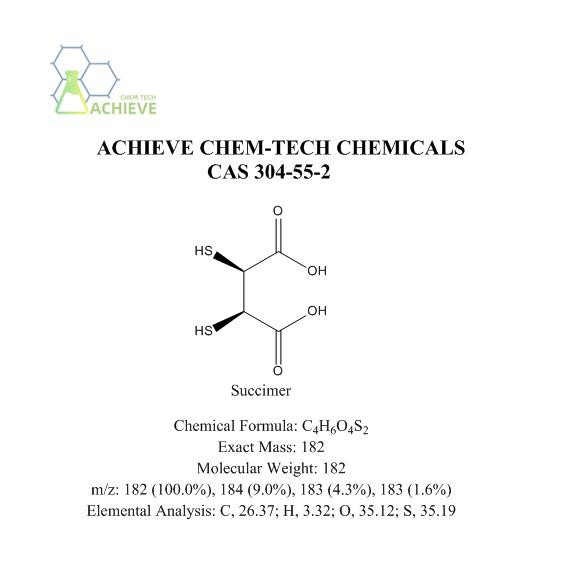
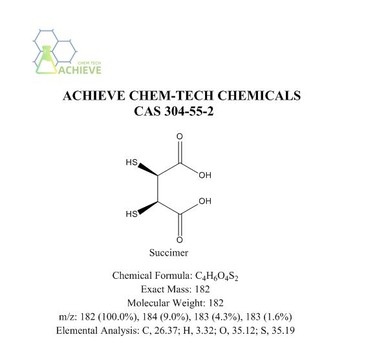
Succimer powder (DMSA), also known as 2,3-dimercaptosuccinic acid, with molecular formula C4H6O4S2 and CAS 304-55-2, is an organic sulfur-containing compound. At room temperature, it is a white crystalline powder with a special odor due to the presence of thiol (- SH) functional groups in its molecules. Due to the presence of two thiol groups in the molecule, there is a unique odor of thiol compounds. Dimercaptosuccinic acid and its sodium salts can be used as detoxifying agents for the treatment of heavy metal poisoning, either orally or by injection. Dimercaptosuccinic acid has two non enantiomers, one is racemic and the other is racemic. The racemate can serve as a chelating agent, and its sodium salt is commonly used.

|
Chemical Formula |
C4H6O4S2 |
|
Exact Mass |
182 |
|
Molecular Weight |
182 |
|
m/z |
182 (100.0%), 184 (9.0%), 183 (4.3%), 183 (1.6%) |
|
Elemental Analysis |
C, 26.37; H, 3.32; O, 35.12; S, 35.19 |
|
|
|
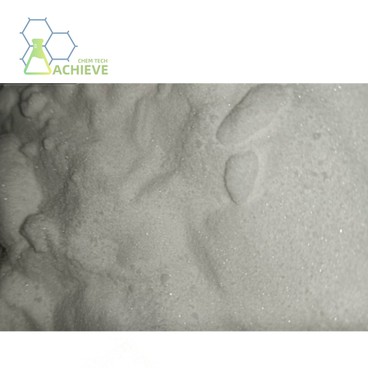

Succimer powder (chemical formula C ₄ H ₆ O ₄ S ₂, molecular weight 182.22) is an organic compound containing two thiol groups (- SH). In terms of solubility, it has some special properties. It is insoluble in water, but easily soluble in alkaline solutions. This means that under alkaline conditions, the interaction force between its molecules and solvent molecules is strong, making it easy to form a stable solution. In addition, it is slightly soluble in organic solvents such as methanol, which is of great significance for its application in organic synthesis and drug preparation.Its racemic form (meso DMSA) is widely used in fields such as medicine, mining, environmental governance, and nuclear medicine due to its unique chemical properties. The following provides detailed information on its usage from three dimensions: core use, extended applications, and potential directions.
Core use: Heavy metal detoxification and medical applications
1. A special antidote for heavy metal poisoning
2,3-dimercaptosuccinic acid is the preferred oral medication for the clinical treatment of heavy metal poisoning such as lead, mercury, arsenic, and cadmium. Its mechanism of action is based on the strong chelating ability of thiol groups with heavy metal ions
Lead poisoning treatment: By forming stable water-soluble chelates with lead ions, it promotes the excretion of lead from the kidneys.

A study conducted by Peking Union Medical College Hospital in 2021 showed that after oral administration of DMSA (10 mg/kg, once every 8 hours for 5 days as a course of treatment) to patients with chronic lead poisoning, blood lead levels decreased from 512 ± 86 μ g/L to 186 ± 42 μ g/L, urinary lead excretion increased by 4.7 times, symptom improvement rate reached 92%, and no significant liver or kidney toxicity was observed.

Mercury poisoning treatment: Significant therapeutic effect on inorganic mercury poisoning. Twelve cases of acute arsine poisoning reported by Shanghai Ruijin Hospital in 2022 were treated with sequential oral administration of DMSA (30 mg/kg · d, divided into three doses, lasting for 14 days) after acute hemodialysis combined with intravenous DMPS. The 24-hour urinary arsenic level decreased from a peak of 1.84 ± 0.63 mg/L to 0.18 ± 0.05 mg/L, and no delayed neuropathy occurred.
Arsenic poisoning treatment: By competitively chelating arsenic ions, the inhibition of cytochrome oxidase is reduced. Clinical studies have shown that DMSA can significantly reduce blood arsenic levels and improve symptoms such as skin keratinization and pigmentation.
Cadmium poisoning treatment: As a selective masking agent for cadmium, DMSA can reduce the accumulation of cadmium in the kidneys. Animal experiments have shown that DMSA treatment can reduce the renal cadmium content of cadmium exposed rats by more than 40%.
Advantages and limitations:
Advantages: Oral bioavailability is about 20% -25%, plasma protein binding rate is>95%, mainly excreted through the kidneys, and safety is higher than traditional antidotes (such as dimercaptopropanol).
Limitations: Unable to penetrate the human blood-brain barrier, limited effectiveness in clearing heavy metals in the central nervous system.


2. Treatment of Wilson's disease
Wilson's disease is a copper metabolism disorder, and DMSA exerts therapeutic effects by promoting copper excretion
Mechanism: DMSA forms chelates with copper ions, increasing urinary copper excretion and reducing liver copper content.
Clinical study: A 2015 study by the Institute of Neurology at Anhui University of Traditional Chinese Medicine showed that during the treatment of Wilson's disease patients with DMSA, serum ceruloplasmin levels significantly decreased, but attention should be paid to its potential bleeding tendency (such as thrombocytopenia).
3. Nuclear medicine contrast agents
The sodium salt of DMSA (sodium dimercaptosuccinate) can be used as a contrast agent for nuclear renal static imaging:
Function: Concentrate in the renal cortex 4 hours after injection, evaluate glomerular filtration function and renal parenchymal damage through imaging technology.
Application scenario: Used for diagnosing kidney scars, abnormal kidney development, and adverse reactions after kidney transplantation.

Extended Applications: Industrial and Agricultural Fields

1. Mining flotation inhibitor
DMSA acts as a selective inhibitor in mineral flotation processes to optimize mineral separation efficiency
Chalcopyrite inhibition: A 2015 study by Northeastern University showed that DMSA has a stronger inhibitory effect on chalcopyrite than molybdenite, with a dosage of only 1/9-1/13 of sodium sulfide. The dynamic potential test shows that the adsorption of DMSA on the surface of chalcopyrite is significantly stronger than that of molybdenite.
Mechanism of action: DMSA undergoes electrochemical interaction with the surface of chalcopyrite, forming a hydrophobic layer and reducing its floatability; And there is no significant reaction to molybdenite.
2. Metal masking agents and analytical chemistry
DMSA as a masking agent for EDTA titration analysis of zinc:Principle: The thiol group of DMSA can form stable chelates with interfering metal ions (such as copper and lead), eliminating their interference with zinc titration.
Application scenario: Accurate determination of zinc content in environmental samples.


3. Remediation of heavy metal pollution in agriculture
Succimer powder reduces the absorption of heavy metals by crops through foliar spraying or soil addition:
Rice cadmium pollution control: Experiments have shown that DMSA treatment can reduce cadmium content in rice grains by 47.95%, lead content by 61.76%, and inorganic arsenic content by 51.24%.
Mechanism: After binding with heavy metal ions, DMSA promotes their fixation in flag leaves and reduces their transport to grains.
1. Environmental governance and wastewater treatment
Derivatives of DMSA can be used for heavy metal removal in industrial wastewater:
Adsorbent material: graft DMSA onto the surface of polymers or nanomaterials to prepare efficient heavy metal adsorbents.
Case: DMSA modified magnetic nanoparticles have an adsorption capacity of up to 120 mg/g for lead ions and can be quickly recovered through magnetic separation.
2. Drug delivery system
Utilizing the chelating ability of DMSA to develop targeted drug carriers:
Design concept: Combine DMSA with anti-tumor drugs (such as cisplatin) to form prodrugs, which trigger drug release through highly expressed metal ions in tumor tissues.


Advantages: Improve drug selectivity and reduce systemic toxicity.
3. Synthesis of biomaterials
DMSA is used as a crosslinking agent to prepare hydrogels or biodegradable materials:
Application scenarios: wound dressings, tissue engineering scaffolds.
Case: DMSA crosslinked chitosan hydrogel has excellent water absorption and antibacterial properties, which can promote wound healing.

Synthetic Metaldehyde:
Put 560kg of 0 ℃ acetaldehyde into a 1000 liter reactor, add about 40kg of ether and cool it to -15 ℃, and add the prepared acid catalyst, namely, about 4kg of hydrochloric acid, about 1kg of ether, about 1kg of pyridine, about 0.5kg of sodium bromide and about 0.3KG of hydroxylamine hydrochloride, into the polymerization reactor under continuous stirring and cooling, observe the temperature of the polymerization reactor, control the addition rate of acid catalyst, so that the polymerization temperature in the polymerization reactor does not exceed chemicalbook0 ℃, After the acid catalyst is added, keep stirring and cooling to maintain the temperature in the polymerizer at -10 ℃ ~ -5 ℃ for about 3 hours, and then it can be discharged from the polymerizer for filtration. After washing and drying the solid, white crystalline tetraacetaldehyde can be obtained. The filtrate is sent to the distillation kettle for heating, and sulfuric acid is added as a catalyst. The trimeric acetaldehyde in the filtrate is depolymerized, and the top temperature of the depolymerization tower is controlled at 20 ℃ 21 ℃. Acetaldehyde and ether are distilled and separated, ready for the next feeding.

Antimony potassium dimercaptosuccinate, the first complex of succimer powder, was introduced into the treatment of schistosomiasis as a drug by friedheim et al. Through the complexation of potassium salt of dimercaptosuccinic acid with metal antimony ion, the absorption of antimony by human body can be increased and the treatment effect can be strengthened.
In 1957, liangyouyi of Shanghai Institute of Materia Medica, Chinese Academy of Sciences, and others first reported that the sodium salt of dimercaptosuccinic acid as an antidote can effectively treat the heavy metal antimony poisoning caused by potassium antimony tartrate. Then they found that dimercaptosuccinic acid and its sodium salt can be used to treat arsenic, lead, mercury, cadmium and other heavy metal poisoning, and can also be used as a copper excretion promoting drug to treat hepatolenticular degeneration. Compared with dimercaptopropanol, dimercaptosuccinic acid has little toxicity and better detoxification effect on antimony, so it is often used instead of the former.
However, although dimercaptosuccinic acid can pass through the blood-brain barrier of mice, it cannot pass through the blood-brain barrier of human body, which makes dimercaptosuccinic acid limited in the treatment of human heavy metal poisoning and cannot be used to remove the heavy metal elements accumulated in the central nervous system.

Succimer Powder, chemically known as meso-2,3-dimercaptosuccinic acid (DMSA), is an important oral heavy metal chelating agent, whose discovery is closely linked to the global demand for effective metal poisoning antidotes in the mid-20th century. Its research and development originated from the urgent need to address widespread metal poisoning cases, including antimony poisoning from schistosomiasis treatment drugs, and lead, mercury, arsenic poisoning in industry, agriculture and daily life.
In the early 1950s, Chinese scientists led by Dr. Ding Guangsheng launched research on metal detoxification drugs, focusing on dithiol compounds due to their strong affinity for heavy metal ions. In 1957, they first demonstrated that succimer could effectively treat antimony poisoning caused by excessive tartar emetic, a drug used for schistosomiasis treatment, and confirmed its efficacy in alleviating mercury and arsenic poisoning in animal experiments. Meanwhile, researchers in Russia also studied succimer for metal poisoning treatment around the same period.
In the 1960s, Friedheim improved its synthetic method, laying the foundation for its subsequent promotion. In 1975, further studies confirmed its effectiveness in treating mercury poisoning in animals, expanding its application scope. In 1991, the U.S. FDA approved succimer for oral treatment of childhood lead poisoning, marking the first time the U.S.仿制 a drug developed in China. Today, as an essential medicine recognized by the WHO, succimer's discovery and development continue to provide a safe and effective treatment option for global metal poisoning patients.
FAQ
Is succimer available in the US?
+
-
Recordati is currently the only U.S. supplier of this medication. Succimer is one of several medications used for the chelation of lead. Other medications include calcium disodium EDTA and dimercaprol. This drug shortage ended in June 2021.
What is succimer used for?
+
-
Description. Succimer is used in the treatment of acute lead poisoning to remove excess lead from the body, especially in small children. Succimer combines with lead in the blood stream. The combination of lead and succimer is then removed from the body by the kidneys.
Are succimer and DMSA the same?
+
-
Succimer (sux' i mer) or dimercaptosuccinic acid (DMSA) is an orally available heavy metal chelating agent that is used to treat lead poisoning in children. Succimer is an organo-sulfur compound with two sulfhydryl groups that bind divalent metal ions such as lead, cadmium, mercury, and arsenic.
Hot Tags: succimer powder cas 304-55-2, suppliers, manufacturers, factory, wholesale, buy, price, bulk, for sale, Antioxidant 1520, 5 Iodocytidine CAS 1147 23 5, Trimethyl Phosphate CAS 512 56 1, 2 2 Bis hydroxymethyl butyric Acid CAS 10097 02 6, Benzimidazole Powder CAS 51 17 2, 5 Methylpyridine 3 boronic Acid CAS 173999 18 3