



Shaanxi BLOOM Tech Co., Ltd. is one of the most experienced manufacturers and suppliers of 2,2,2-trifluoroethyl methacrylate cas 352-87-4 in China. Welcome to wholesale bulk high quality 2,2,2-trifluoroethyl methacrylate cas 352-87-4 for sale here from our factory. Good service and reasonable price are available.
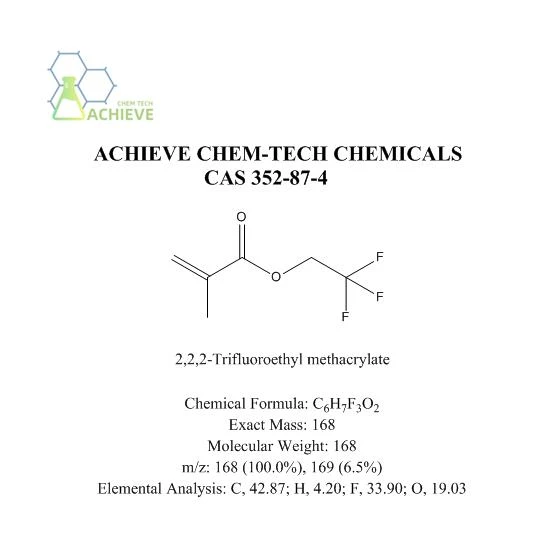
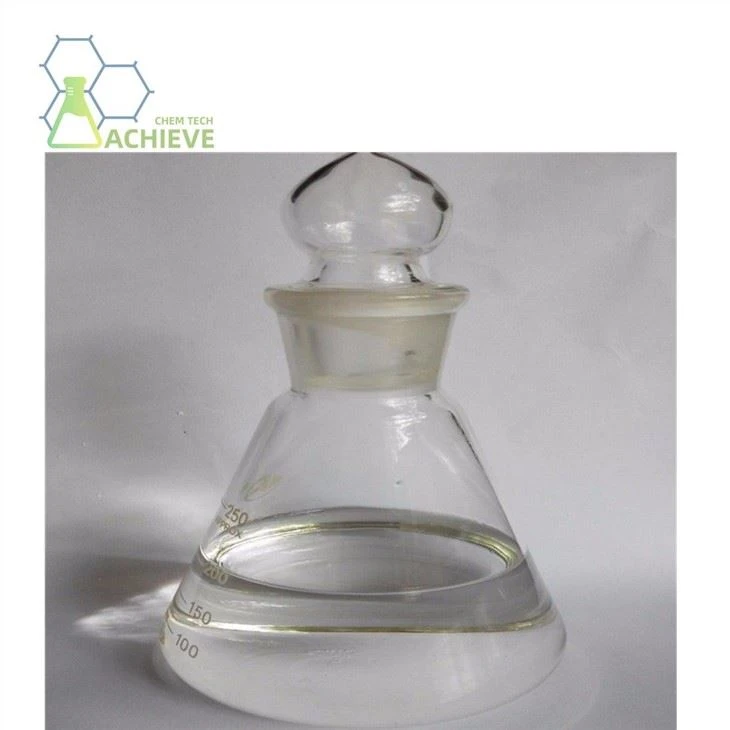
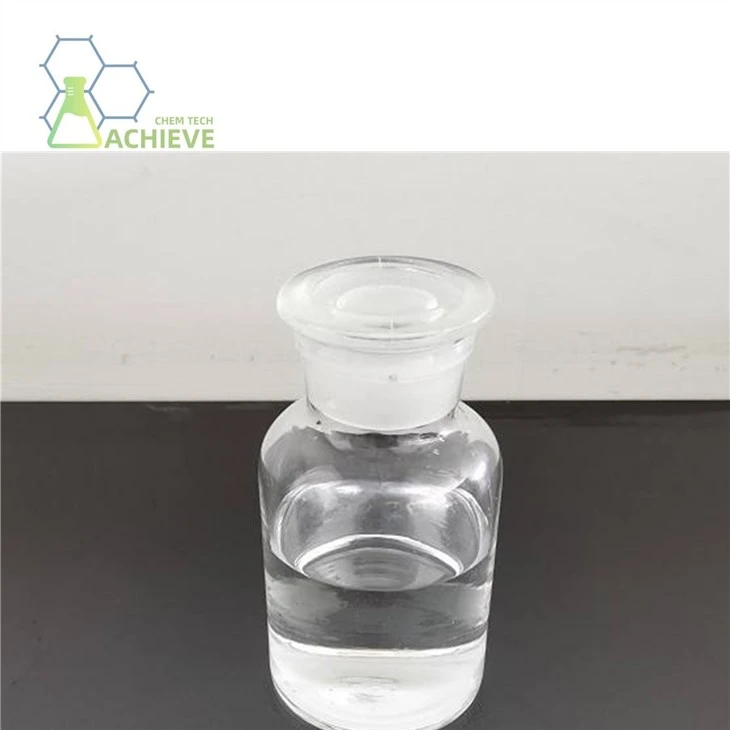
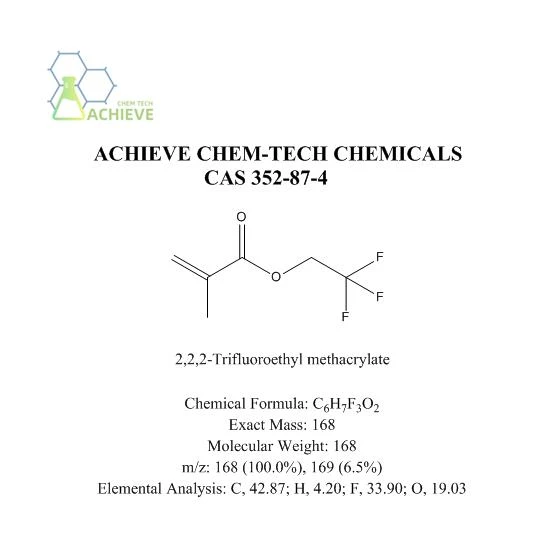
2,2,2-Trifluoroethyl Methacrylate (TFEMA), with the chemical formula C6H7F3O2 and CAS 352-87-4, is an important organic synthesis intermediate and a colorless to light yellow transparent liquid. Under different conditions, its color may vary slightly, but overall it presents a clear and transparent characteristic. The solubility in water is relatively low, with a solubility of about 0.05% (or 906mg/L at 20 ℃) at 20 ℃. This means that it is not easily soluble in water, but may have good solubility in certain organic solvents. Density 1.181g/ml, refractive index (η D25) 1.359 at 25 ℃, boiling point 107 ℃, solubility wt%, 0.05 in water at 20 ℃. 20 ℃ vapor pressure 2.2KPa, melting point -22 ℃, homopolymer Tg (82 ℃), purity ≥ 98.0%, quality standard (Q/HXJ097-2002) project index value purity ≥ 96%, moisture ≤ 0.5%, color (APHA) ≤ 50, acidity (calculated as MAA) ≤ 0.5%. Mainly used in coatings to improve their weather resistance, water resistance, and pollution resistance. It can also be used as a coating and core material for optical fibers, as well as a charge adjuster for contact lenses and computer toners and carrier particles.

|
Chemical Formula |
C6H7F3O2 |
|
Exact Mass |
168 |
|
Molecular Weight |
168 |
|
m/z |
168 (100.0%), 169 (6.5%) |
|
Elemental Analysis |
C, 42.87; H, 4.20; F, 33.90; O, 19.03 |
|
|
|

A preparation method of 2,2,2-Trifluoroethyl Methacrylate:

Trifluoroethanol and methacryloyl chloride were used as raw materials for esterification under the protection of polymerization inhibitor, and then the target product trifluoroethylmethacrylate was collected from the reaction product The purity of trifluoroethylmethacrylate obtained by the preparation method of the present invention is more than 99%, the yield is more than 80%, and the boiling point is 100.8-101.2 ℃. Compared with the prior art, the reaction process conditions of the present invention are mild.
The present invention proposes an efficient and high-purity method for preparing trifluoroethyl methacrylate (TFEMA), which uses trifluoroethanol and methacryloyl chloride as key raw materials, synthesizes the target product through esterification reaction, and introduces a polymerization inhibitor throughout the process to prevent unwanted polymerization reactions, thereby ensuring high purity and yield of the product. The following is an explanation of the method:
Detailed steps of synthesis method
Trifluoroethanol:
Ensure the purity and dryness of the raw materials, as moisture can seriously affect the esterification reaction.
Methacryloyl chloride:
High purity raw materials are also required, and due to its volatility and irritability, appropriate protective equipment should be worn during operation.
Polymerization inhibitor:
Choose appropriate inhibitors such as hydroquinone (HQ), para hydroxybenzene methyl ether (MEHQ), etc., to prevent free radical polymerization during the reaction process.
Solvent (optional):
Depending on the requirements of the reaction system, appropriate solvents such as dichloromethane, tetrahydrofuran (THF), or toluene can be selected to improve the solubility and reaction efficiency of the reactants.
However, considering the activity of methacryloyl chloride, sometimes the reaction is more direct and efficient under solvent-free conditions.
Use a dry three necked flask as the reaction vessel, equipped with a magnetic stirrer, thermometer, and condensation reflux device.
Ensure that all glassware is dry and free of water, and pre blow with inert gas (such as nitrogen) to remove oxygen and moisture from the air.
Under nitrogen protection, add trifluoroethanol and a polymerization inhibitor (in a certain proportion) into a three necked flask, and start stirring to evenly disperse the polymerization inhibitor.
Slowly add methacryloyl chloride dropwise to the reaction system, controlling the dripping rate to maintain stable reaction temperature. This step requires special attention to safety, as methacryloyl chloride will decompose violently when exposed to water or alkali.
Adjust the heating device according to the reaction conditions (such as temperature, pressure, reaction time, etc.) to allow the reaction to proceed at an appropriate temperature. Usually, esterification reactions are carried out between room temperature and reflux temperature, but the specific temperature needs to be determined based on experimental conditions.
During the reaction process, the reaction progress can be monitored by analytical methods such as TLC (thin layer chromatography) or GC-MS (gas chromatography-mass spectrometry).
After the reaction is complete, cool the reaction solution to room temperature and add an appropriate amount of water to quench the unreacted methacryloyl chloride. Please note that this step may generate acidic gases (such as HCl) and should be carried out in a fume hood.
Extract the organic layer with appropriate organic solvents (such as dichloromethane, ethyl acetate, etc.) and wash with saturated saline solution to remove water-soluble impurities.
Dry the organic layer (using desiccants such as anhydrous sodium sulfate or potassium carbonate), filter and concentrate to dryness to obtain the crude product.
Further purify the crude product through methods such as recrystallization, distillation, or column chromatography to obtain high-purity Trifluoroethyl Methacrylate.
It should be noted that this equation is an idealized representation, and in actual reactions, other side reactions may also occur, such as hydrolysis of raw materials and oxidation of alcohols. In addition, the specific mechanism of action of the inhibitor may involve complex processes such as the capture of free radicals or the termination of chain reactions, which are not explicitly reflected in the equation. It can be used in new copolymerization systems to adjust the fluorine content.
Chemical equation
When describing chemical equations, we need to note that esterification is a typical substitution reaction, in which the hydroxyl group of an alcohol is replaced by the acyl group of an acyl chloride, while generating hydrogen chloride (HCl) as a byproduct. However, in practical operation, due to the presence of polymerization inhibitors and possible solvent effects, the chemical equation may be slightly complex.
In this equation:
But to simplify the explanation, we can write the basic reaction equation as follows:
CF3CH2OH + CH2=C(CH3)COCl → CF3CH2OOCCH=C(CH3)2 + HCl
-On the left are reactants:
trifluoroethanol (CF3CH2OH) and methacryloyl chloride (CH2=C (CH3) COCl).
-Above the arrow is labeled "inhibitor"
Indicating that the reaction occurs in the presence of an inhibitor to prevent free radical polymerization.
-On the right are the products:
trifluoroethyl methacrylate (CF3CH2OOCCH=C (CH3) 2) and hydrogen chloride (HCl).
It will play a great role in the modification and appearance of resin functionality. 2,2,2-trifluoroethylmethacrylate is prone to radical polymerization, bulk polymerization, solution polymerization and lotion polymerization In bulk polymerization or solution polymerization, organic peroxide / dibenzoyl peroxide and azo free radical initiator / azodiisobutyronine are used, while in lotion polymerization, water-soluble initiators such as potassium persulfate or ammonium persulfate are used 2,2,2-trifluoroethylmethacrylate can be copolymerized with typical vinyl monomers such as acrylate, styrene, acrylonitrile, vinyl acetate, vinyl acetate and other fluoroacrylate; It can be used for solvent type, thermoplastic type, thermosetting and lotion type coatings or other materials.

Use of trifluoroethylmethacrylate:

(1) Solvent based thermoplastic coatings are especially suitable for preparing coatings because 2,2,2-trifluoroethylmethacrylate can be easily copolymerized with other acrylic monomers. The chemical stability and weather resistance of coatings can be improved by copolymerizing fluorine-containing esters with acrylic monomers
(2) The product with good water resistance of thermosetting coating can polymerize with polymers with active functional groups on the side chain, such as (meth) acrylic acid, hydroxy acrylic acid and hydroxy acrylamide, so as to solve the problem that the gloss of the coating film decreases due to hydrolysis, and even the phenomenon of pulverization or cracking occurs. And with the addition of copolyfluoroester, the pollution resistance is also greatly improved.
(3) Lotion type coating 2,2,2-trifluoroethyl methacrylate has the property close to that of typical acrylic monomer. As a fluorine-containing monomer, it will not affect the mechanical and chemical stability of lotion. On the contrary, based on the surface activity effect of fluorine, this monomer helps to improve the stability of lotion in the polymerization process. It can be polymerized without emulsifier.
(4) It is difficult to polymerize 2,2,2-trifluoroethylmethacrylate by light irradiation. It is especially suitable for copolymerization with some UV polymerized monomers. The resulting copolymer is used as a UV crosslinked resin.
(5) Other applications: 2,2,2-trifluoroethylmethacrylate can be used as a component of a variety of special coatings. Due to its excellent chemical stability, this compound is used as a protective coating for aircraft; It can also be copolymerized with other vinyl compounds and propylene compounds to be used as a smooth coating for paper.

This coating is necessary for protecting the surface of printing paper and improving the gloss, and also improves the anti adhesion and anti damage performance. According to the records, 2,2,2-trifluoroethylmethacrylate is being or can be used in the manufacture of contact lenses, photocopying toners, optical fibers, pigments and other coatings, photosensitive resin materials, adhesives and medical equipment. The excellent compatibility of 2,2,2-trifluoroethylmethacrylate with other monomers is expected to expand its new applications. Use TFEMA is a colorless transparent liquid with polymerizability and ester odor. 2,2,2-Trifluoroethyl Methacrylate with - CF3 group has excellent compatibility with general monomers and monomers with high fluorine content.


Properties of polymer:
Thermal and mechanical characteristics the polymer of 2,2,2-trifluoroethylmethacrylate is a transparent amorphous polymer with a glass transition point (TG) of 82, which is lower than that of MMA polymer but higher than that of acrylic polymer. Therefore, the 2,2,2-trifluoroethylmethacrylate polymer is soft, and the breaking strength and hardness are about 1 / 2 of the corresponding value of MMA.
The surface characteristic critical surface tension indicates the degree of difficulty of wetting on the solid surface. Generally, the smaller this value is, the harder it is for the solid surface to be wetted In fluoropolymers, the critical surface tension is determined by the side chain structure. Unlike the polymer containing fluorine in the main chain, the polymer obtained by polymerizing 2,2,2-trifluoroethylmethacrylate has excellent water resistance and pollution resistance due to the fluorine atom in the side chain.
Comparison of three different homopolymers: therefore, the hydrophobicity of 2,2,2-trifluoroethylmethacrylate polymer with CF3 group is much greater than that of MMA polymer. In the study of copolymerization or resin processing, the CF3 group concentration on the polymer surface can be increased to make it exhibit greater hydrophobicity, pollution resistance, gloss and transparency.
it is known that the polarizability of fluorine atom and CF bond is small, and the influence on light is small. Therefore, the refractive index of 2,2,2-trifluoroethylmethacrylate polymer is low. The low refractive index increases the amount of information transmitted by the optical information transmission system. The refractive index of 2,2,2-trifluoroethylmethacrylate is lower than that of MMA polymer, and it has good adhesion and can be used as cladding and core material of optical fiber.
Gas permeability generally fluoropolymers have excellent oxygen permeability. It is believed that fluorogen has high affinity for oxygen. Using this property, the copolymers of 2,2,2-trifluoroethylmethacrylate and various fluorine-containing monomers are used as contact lenses (contact lenses).
Electrical characteristics fluoropolymers contain fluorine atoms with the highest electronegativity, so they are easily negatively charged. Using this negatively charged polymer, 2,2,2-trifluoroethylmethacrylate can be used as a charge adjuster for toner and carrier particles of computers.
Low water absorption 2,2,2-trifluoroethylmethacrylate polymer has low water absorption and can be used as an anti moisture coating agent to prevent moisture from adsorbing on printed circuits and prevent short circuit of electronic equipment due to condensed water.
Application of 2,2,2-trifluoroethylmethacrylate in coatings the most important properties of 2,2,2-trifluoroethylmethacrylate polymer in coatings are weather resistance, water resistance and pollution resistance.
2,2,2-Trifluoroethyl methacrylate (TFEMA) is a versatile organic compound with unique physical and chemical properties that make it suitable for a wide range of applications across various industries. Its synthesis methods continue to evolve, aiming for higher efficiency and sustainability. While TFEMA offers numerous benefits, it is essential to consider its safety aspects to ensure the well-being of workers and the environment. With increasing demand from end-use industries and ongoing research and development efforts, the future prospects for TFEMA look promising, with potential for growth and innovation in the coming years.
Frequently Asked Questions
How stable is TFEMA? How should it be stored?
+
-
Stability: TFEMA is prone to self-polymerisation and requires the addition of stabilisers (such as MEHQ, methoxyhydroquinone) to extend its shelf life.
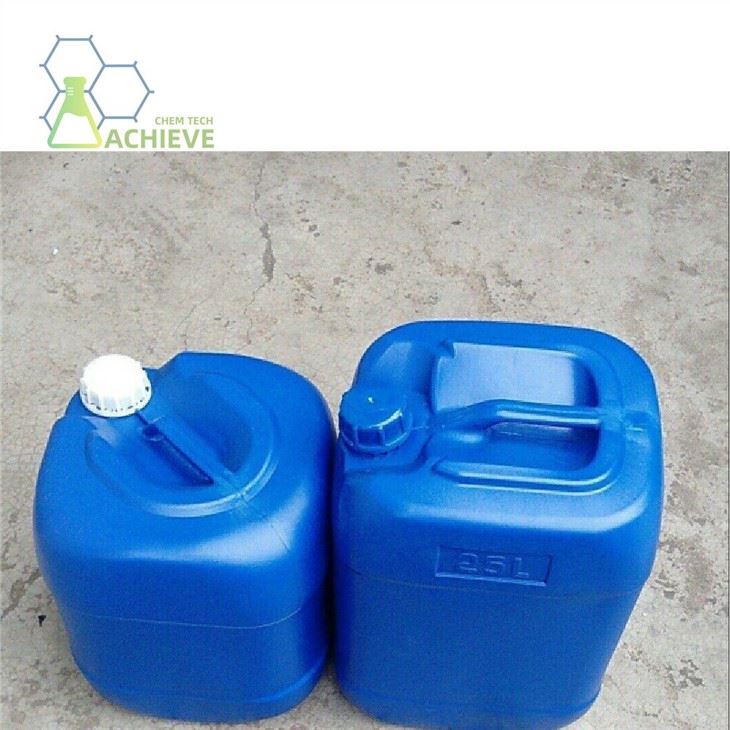
Storage conditions: Store in a sealed container in a dry, cool place, away from heat sources, flames and oxidising agents. Storage temperature should be below 30°C, and direct sunlight should be avoided.
What are the safety operating precautions for TFEMA?
+
-
Precautions: Wear protective gloves, safety goggles and a lab coat during handling to avoid skin contact or inhalation of vapours.
Ventilation requirements: Use in a well-ventilated laboratory or industrial setting to prevent vapour accumulation.
Emergency response: In case of skin contact, immediately rinse with copious amounts of water. If inhaled, promptly move to fresh air and seek medical attention.
Waste disposal: Dispose of in accordance with local regulations to prevent environmental contamination.
What are the purity standards for TFEMA? How is it tested?
+
-
Purity requirements: Industrial-grade products typically exhibit a purity of ≥96%, whilst laboratory-grade products may achieve ≥98% purity (as determined by GC analysis).
Testing methodology: Impurity levels are analysed via gas chromatography (GC) to ensure compliance with application specifications.
Hot Tags: 2,2,2-trifluoroethyl methacrylate cas 352-87-4, suppliers, manufacturers, factory, wholesale, buy, price, bulk, for sale, ferrocene powder, Sodium Isopropyl Xanthate SIPX , Tetrabutylammonium Hydrogen Sulfate CAS 32503 27 8, Chrysene powder, 2 Methyl 2 propene 1 sulfonic Acid Sodium Salt CAS 1561 92 8, Sodium Dodecyl Aulfate Powder CAS 151 21 3