



Shaanxi BLOOM Tech Co., Ltd. is one of the most experienced manufacturers and suppliers of monostearin cas 123-94-4 in China. Welcome to wholesale bulk high quality monostearin cas 123-94-4 for sale here from our factory. Good service and reasonable price are available.
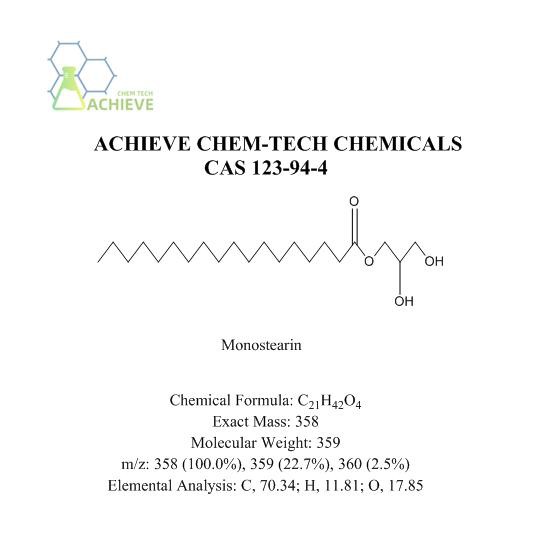
Monostearin is an organic compound with molecular formula c21h42o4, which has two configurations, i.e. 1-mg and 2-mg. According to the names of the main fatty acids, monoglycerides can be divided into monostearate glyceride, monostearate glyceride, monooleate glyceride, etc. among them, monostearate glyceride has the largest output and the most applications. Monoglycerides are generally in the form of oil, fat or wax, with light yellow or ivory color, oil flavor or tasteless, which is related to the size and saturation degree of fat groups and has excellent sensory characteristics. Monoglycerides are insoluble in water and glycerol, but can form stable hydrated dispersion in water. In addition, monoglyceride is a polyol type non-ionic surfactant. Because its structure has one lipophilic long-chain alkyl group and two hydrophilic hydroxyl groups, it has good surface activity and can play the role of emulsification, dispersion, defoaming and anti starch aging. It is the most widely used emulsifier in food and cosmetics.

|
|
|


|
Chemical Formula |
C21H42O4 |
|
Exact Mass |
358 |
|
Molecular Weight |
359 |
|
m/z |
358 (100.0%), 359 (22.7%), 360 (2.5%) |
|
Elemental Analysis |
C, 70.34; H, 11.81; O, 17.85 |

Monostearin (MG) is an organic compound with the molecular formula C21H42O4. It has two configurations, 1-MG and 2-MG. Monostearoyl glycerol ester is a mixture of monostearoyl glycerol, diacylglycerol, and triacylglycerol. It is an emulsifier that can be used to make cookies, bread, candies, chocolates, etc. It can improve the taste of food and is also used to make cosmetics and medical pastes, making the paste delicate and smooth.
Basic characteristics
Generally in the form of oil, fat or wax, with a light yellow or ivory color, and a greasy or tasteless taste, which is related to the size and saturation of the fatty groups, and has excellent sensory characteristics. Insoluble in water and glycerol, but capable of forming stable hydrated dispersions in water. In addition, it is a polyol type non-ionic surfactant with good surface activity due to its structure having a lipophilic long-chain alkyl group and two hydrophilic hydroxyl groups. It can emulsify, disperse, defoam, and resist starch aging, making it the most widely used emulsifier in food and cosmetics.
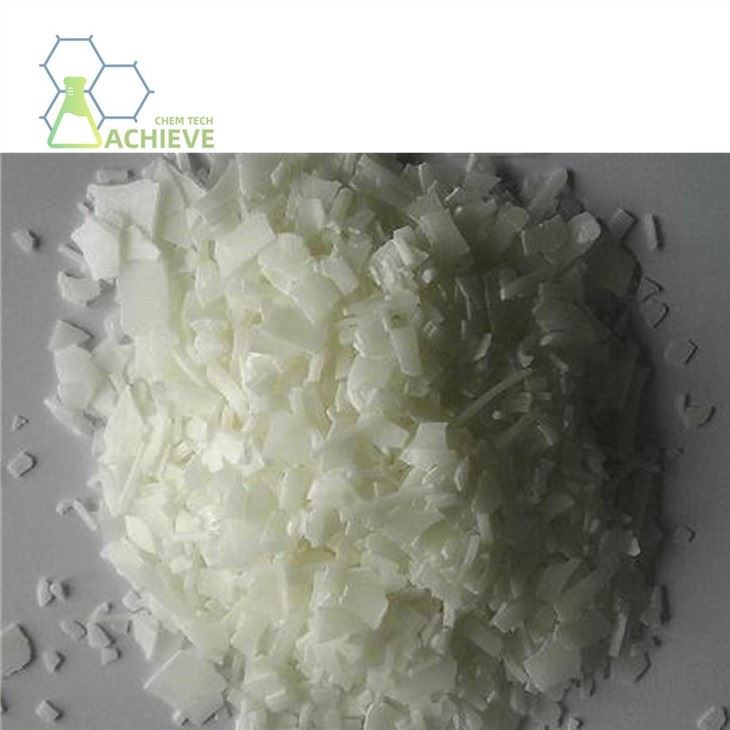
It is a non-ionic surfactant produced by esterification reaction of C16-C18 long-chain fatty acids with glycerol. It has both hydrophilic and lipophilic groups, and has various functions such as wetting and emulsification. The pure product is a white waxy solid that melts into a transparent liquid when heated, with a solidification point not lower than 58 ℃. Odorless, odorless, and non-toxic. Easy to dissolve in vegetable oil, soluble in hot ethanol, ether, chloroform, and acetone, insoluble in water. It can emulsify with water and is a water in oil emulsifier. But due to its strong emulsifying properties, it can also be used as a water in oil emulsifier. Commercial products are usually white or slightly yellow, in powder or bead form. In addition to monoesters, it also contains small amounts of diesters and triesters. The freezing point is also lower than that of pure products.

Specific applications in food additives

Improve the texture and taste of food
As an emulsifier, it plays a crucial role in food. It can effectively emulsify oil and water, making the distribution of oil in food more uniform, thereby improving the texture and taste of food. For example, adding it to bread can prevent it from aging and make it softer. In foods such as cookies and chocolate, it can also improve the taste of the food, making it more delicate and smooth.
Improve the stability of food
In addition to improving the texture and taste of food, monostearin can also enhance its stability. In the process of food production and processing, due to various factors, food may exhibit phenomena such as layering and sedimentation. And its emulsifying effect can effectively prevent these phenomena from occurring, making food more stable. For example, adding glycerol monostearate to dairy products can extend their shelf life and prevent problems such as layering and precipitation.


As a thickener and stabilizer
It can also be used as a thickener and stabilizer. In food, the role of thickeners and stabilizers is to increase the viscosity and stability of the food, preventing phenomena such as layering and precipitation. Its emulsifying effect can effectively increase the viscosity of food, making it more stable. At the same time, it can also interact with other components in food to form stable colloidal structures, further improving the stability of food.
In baked goods
In baked goods, it is particularly widely used. It can be used as an improver for baked goods such as bread and cakes, improving the taste and texture of the food. Adding it to bread can make it softer, more elastic, and improve its quality. Adding it to a cake can make it more delicate and have a better texture. In addition, it can also be used to make baked goods such as cookies and puff pastry, improving the taste and stability of these foods.


In dairy products
Dairy products are one of the essential foods in people's daily lives. Adding it to dairy products can extend their shelf life and prevent problems such as layering and sedimentation. At the same time, it can also improve the taste and texture of dairy products, making them more delicate and smooth. For example, adding it to milk can make it more stable and prevent layering. Adding it to yogurt can improve its taste and texture, making it more delicate and smooth.
In Candy and Chocolate
Candy and chocolate are one of people's favorite sweets. Adding it to candy and chocolate can improve the taste and texture of these foods. Its emulsifying effect can make the oil distribution in candies and chocolates more uniform, thereby improving their taste and stability. At the same time, it can also prevent problems such as layering and sedimentation of candies and chocolates during storage.


In beverages
Adding it to beverages can improve their taste and stability. Its emulsifying effect can evenly disperse the oil and water in the beverage, thereby improving the taste and stability of the beverage. At the same time, it can also prevent problems such as layering and sedimentation of beverages during storage.
In meat products
Adding it to meat products can improve their taste and texture. Monostearin emulsifying effect can evenly distribute the fat and protein in meat products, thereby improving the taste and stability of meat products. At the same time, it can also prevent problems such as oxidation and spoilage of meat products during storage.


Synthesis methods
Add stearic acid, glycerin and sodium hydroxide into the reaction pot, heat and melt, start stirring, and inject nitrogen. Heating, reaction at 185 ℃ for 7h, and the pH should be less than 5 at the end of the reaction. Cooling and discharging to obtain glycerol monostearate. The consumption of stearic acid per ton of product is more than 82kg, and the consumption of glycerol (more than 95%) is 235kg.
Stearic acid and glycerol are reacted for 2-4h at 180-250 ℃ in the molar ratio of 1: (1.2-1.3) under the action of 0.2% acid catalyst; The reactant is rapidly cooled to 100 ℃, the catalyst is neutralized with alkali, and the product containing 40% - 60% of monoester is obtained after washing with water.
Glyceryl stearate and glycerol react at 170-240 ℃ for 1-2h in the presence of 0.06% - 0.1% Cu (OH) 2. Nitrogen is introduced for protection during the reaction. After deodorization under reduced pressure, acid neutralization and purification, the product containing 40% - 60% monoester is obtained.
Glycidyl and stearic acid react at 100-130 ℃ for 30-70min under the catalysis of tetraethylammonium iodide, and the product containing 80% - 90% monoester can be obtained after the reaction product is refined.
Epichlorohydrin and sodium stearate (2:1, molar ratio) are reacted in toluene under the catalysis of phase transfer catalyst tetrabutylammonium bromide at 90-110 ℃ for 2h; The reactants were washed with sodium chloride solution, the organic phase was separated, and toluene and unreacted epichlorohydrin were removed by distillation to obtain glycidyl stearate. It was hydrolyzed with 0.1mol/l NaOH solution, separated and dried, and recrystallized with n-hexane to obtain the product. The monoester content was more than 90%. The monoester product with a content of 40% - 60% can be obtained with a high concentration of more than 90% by molecular distillation.


Monostearin, also known as glycerol monostearate, is a widely used emulsifier in various industries such as food, pharmaceuticals, cosmetics, and detergents. Its research and development history can be traced back to its discovery and subsequent exploration of its unique properties and applications.
It belongs to the family of oils and fats, and its sensory characteristics are similar to oils and fats. Its viscosity is related to the fatty acid groups, and it can generally be in the form of oil, fat, or wax. Generally speaking, monoglycerides have higher viscosity and melting point than the oils or fatty acids they use. The melting point of monoglycerides increases with the extension of the carbon chain of fatty acids; The color and odor of monoglycerides are related to the corresponding fatty acid groups and raw material sources. Their odor generally has a greasy odor, ranging from brown to milky white in color.
It is a mixture of 1-monoglyceride and 2-monoglyceride, which is the result of intramolecular acyl transfer. The activation energy of this intramolecular acyl transfer is relatively low, so monoglyceride is a mixture of the two at any temperature condition, but the ratio of the two varies with temperature.
As a lipid compound, it exhibits a homogeneous polycrystalline phenomenon. Distilled monoglycerides crystallize into a metastable alpha crystalline form, which then transforms into a stable beta crystalline form with a higher melting point. The metastable β '- crystalline form does not exist in industrial monoglycerides. When the alpha crystalline form cools down, a solid-state transition of the third crystalline form occurs, called sub alpha.
It has complex interactions with water, and the degree of interaction depends on temperature and the ratio of monoglycerides to water, as well as the type of fatty acid. The formed substance can exhibit both crystalline and liquid properties simultaneously, known as mesomorphism.
The mesomorphic phases of monoglyceride include: layered mesophase (layered phase), α - gel, cubic phase, hexagonal phase, etc. At normal temperature, β - crystal is a kind of lipid bilayer structure, and the middle is connected by polar groups relying on hydrogen bonds. This layer has a strong affinity with water. When the temperature is higher than Kraft point, water begins to penetrate into the polar layer of the bilayer, forming layered mesophase.
FAQ
What is monostearate?
Glycerol monostearate, commonly known as GMS, is a monoglyceride commonly used as an emulsifier in foods. It takes the form of a white, odorless, and sweet-tasting flaky powder that is hygroscopic. Chemically it is the glycerol ester of stearic acid. It is also used as hydration powder in exercise formulas.
Hot Tags: monostearin cas 123-94-4, suppliers, manufacturers, factory, wholesale, buy, price, bulk, for sale, Chrysene powder, Monostearin, 1 4 Cyclohexanedicarboxylic Acid CAS 1076 97 7, 1 Nonanol CAS 143 08 8, 2 Methyl 2 propene 1 sulfonic Acid Sodium Salt CAS 1561 92 8, 3-Chloropropyltrimethoxysilane