




Shaanxi BLOOM Tech Co., Ltd. is one of the most experienced manufacturers and suppliers of di-n-octyl phthalate cas 117-84-0 in China. Welcome to wholesale bulk high quality di-n-octyl phthalate cas 117-84-0 for sale here from our factory. Good service and reasonable price are available.
Di-n-octyl Phthalate (DOP) is a colorless transparent liquid, insoluble in water, transparent in appearance, and oily liquid without visible impurities. Soluble in ethanol, ether, mineral oil and other organic solvents. It is an organic ester compound and a commonly used plasticizer. Dioctyl phthalate is an important general-purpose plasticizer, which is mainly used for the processing of PVC resin, chemical fiber resin, acetic acid resin, ABS resin, rubber and other polymers, as well as paint, dye, dispersant, etc.

|
Chemical Formula |
C24H38O4 |
|
Exact Mass |
390 |
|
Molecular Weight |
391 |
|
m/z |
390 (100.0%), 391 (26.0%), 392 (2.7%) |
|
Elemental Analysis |
C, 73.81; H, 9.81; O, 16.39 |


Di-n-octyl Phthalate is a colorless and odorless oily liquid with the chemical formula C₂₄H₃₈O₄, having a molecular weight of 390.56 g/mol. Its melting point is -55℃, and its boiling point is 380℃. The density at 25℃ is 0.980 g/mL. As an important member of the phthalate ester compounds, Di-n-octyl Phthalate holds a crucial position in the industrial field due to its excellent plasticizing properties and chemical stability. The following analysis is conducted from four aspects: core application, mechanism of action, application scenarios, and safety.
Core Function: Flexible Enhancer for Plastics and Rubber
The core function of DnOP is as a plastic plasticizer. By reducing the intermolecular forces between polymer molecules, it significantly enhances the flexibility, processability, and durability of the material. Its mechanism of action is based on the ester groups in the molecule forming hydrogen bonds with the polymer chain, weakening the van der Waals forces between molecules, allowing the material to maintain strength while achieving elasticity. This characteristic makes it the preferred plasticizer for PVC processing and is widely used in the following fields:
Building and decoration materials
Floor and wallpaper: The DnOP-stabilized PVC floor has the characteristics of wear resistance, slip resistance and easy cleaning, and is suitable for public places such as hospitals and schools; the wallpaper is made to be flexible and adhered without cracking through DnOP.
Swimming pool lining: DnOP gives PVC lining excellent weather resistance and UV resistance, prolonging its service life.
Waterproof sheeting: In roof waterproofing materials, DnOP can enhance the low-temperature flexibility and anti-aging ability of the material.
Packaging and daily necessities
Food packaging film: The DnOP-stabilized PVC film has high transparency and good sealing performance, and is often used for vacuum packaging of meat and dairy products.
Toys and stationery: By controlling the addition amount of DnOP (usually 5%-15%), soft toys and notebook covers that meet safety standards can be produced.
Medical supplies: In medical-grade PVC products such as blood bags and infusion tubes, DnOP must meet biocompatibility requirements to ensure no toxicity and harm.
Industrial and automotive fields
Cable sheath: The DnOP-stabilized PVC sheath has excellent insulation and oil resistance, suitable for power cables and automotive wiring harnesses.
Seals and rubber hoses: In rubber products, DnOP can improve elasticity and reduce compression permanent deformation, used for automotive oil seals, hydraulic rubber hoses, etc.
Softening of synthetic rubber: In nitrile rubber (NBR) and chloroprene rubber (CR), DnOP as a softening agent can improve processing performance and reduce energy consumption.
Auxiliary uses: Modifier for coatings, adhesives and printing inks
Apart from the plastic field, DnOP also plays an important role in coatings, adhesives and printing inks:

Coatings and Coatings
Paint Additives: DnOP can enhance the leveling and adhesion of coatings, reduce brush marks and pitting, and is suitable for furniture and automotive painting.
Anti-corrosion Coatings: In metal anti-corrosion coatings, DnOP can enhance the flexibility and impact resistance of the coating, prolonging the protection period.

Adhesives and Sealants
Building Sealants: DnOP-modified sealants have excellent elasticity and weather resistance, suitable for sealing doors and windows, and curtain walls.
Pressure-sensitive Adhesives: In adhesive production, DnOP can adjust the adhesion and peel strength of the adhesive layer, meeting the requirements of different application scenarios.
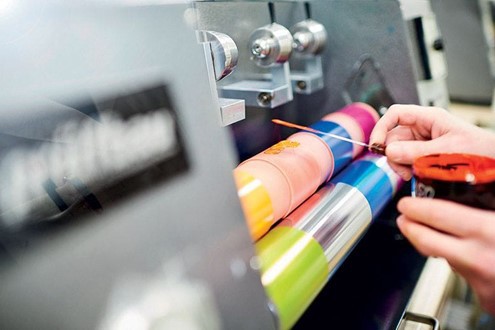
Printing Inks
Solvent-based Inks: DnOP as a diluent can reduce ink viscosity and improve printing adhesion, suitable for printing on plastic films and metal foils.
UV-Cured Inks: In UV inks, DnOP can enhance curing speed and adhesion, reducing shrinkage.
Detailed Application Scenarios and Case Analysis
PVC Floor Production
In PVC floor production, the addition amount of DnOP is typically 30%-40%. Through high-temperature mixing, DnOP is uniformly dispersed in the PVC matrix, forming an elastic network structure. Data from a flooring manufacturer shows that floors using DnOP-modified sealants maintain flexibility at -20℃, while floors without DnOP-modification crack at the same temperature.
Medical Blood Bag Manufacturing
Medical-grade DnOP must pass ISO 10993 biocompatibility tests to ensure no cytotoxicity and no allergic reactions. In blood bag production, the addition amount of DnOP is controlled at 8%-10%, ensuring the flexibility and sealing of the blood bag while avoiding the migration of plasticizers to the blood.
Automotive Wiring Harness Sheathing
Automotive wiring harness sheathing needs to withstand a temperature range of -40℃ to 105℃. DnOP-modified PVC sheathing remains elastic at low temperatures and does not soften or deform at high temperatures, effectively protecting the wiring harness from mechanical damage and chemical corrosion.
Safety and Environmental Considerations
Although DnOP has excellent industrial performance, its safety has long been controversial. Animal experiments show that DnOP may be toxic to the liver, kidneys, and reproductive system, especially prone to migration to food in high-temperature or acidic conditions. Therefore, various countries have imposed strict restrictions on the use of DnOP:
EU REACH Regulation: Lists DnOP as a substance of very high concern (SVHC) and restricts its use in children's toys and food contact materials.
US FDA: Allows DnOP for use in medical products, but requires specific migration limits (e.g., the migration amount of DnOP in blood bags should be ≤ 1 mg/kg).
China GB 9685-2016: Specifies the specific migration limit (SML) of DnOP in food packaging materials as 60 mg/kg.
To cope with environmental pressure, the industry is gradually developing substitutes for DnOP, such as citrate esters, epoxy soybean oil, and other biobased plasticizers. However, due to its cost-effectiveness and mature process, DnOP still occupies a certain share in the mid-to-low-end market.

Di-n-octyl Phthalate is one of the most widely used plasticizers. It has good comprehensive properties, high plasticizing efficiency, low volatility, good low-temperature flexibility, good heat resistance and weather resistance, and has good industrial prospects.
In this paper, dioctyl phthalate DOP was synthesized from 2-ethylhexyl alcohol and phthalic anhydride (phthalic anhydride) in the presence of catalyst. DOP was synthesized with 5 kinds of monomer catalysts, namely aluminum oxide, zinc oxide, zinc acetate, stannous octanoate, p-toluenesulfonic acid, and 4 kinds of mixed catalysts, namely zinc acetate/p-toluidic acid, stannous octanoate/aluminum oxide, zinc oxide/aluminum oxide, stannous octanoate/zinc oxide in a certain proportion. The influence of the catalysts on the synthesis of DOP was investigated. The results showed that the best catalyst was the mixture of aluminum oxide and stannous octanoate in a ratio of 1:1, The effect of reaction conditions on the synthesis of DOP was investigated.
The results showed that under the optimum conditions of molar ratio of isooctanol phthalic anhydride 3:1, stannous octanoate/alumina composite catalyst amount accounting for 0.2% of the total reactants, reaction temperature 230 "C, and reaction time 2.5 h, the esterification rate of reactants reached 91.79%.


Di-n-octyl Phthalate is an important general-purpose plasticizer, which is mainly used for the processing of PVC resin, chemical fiber resin, acetic acid resin, ABS resin, rubber and other polymers, as well as paint, dye, dispersant, etc.
Universal DOP: widely used in plastics, rubber, paint and emulsifier industries. The PVC plasticized with it can be used to make artificial leather, agricultural film, packaging materials, cables, etc.
Electrical grade DOP: It has all the properties of general grade DOP, and also has good electrical insulation performance, mainly used in the production of electric wires and electricity.
Food grade DOP: mainly used in the production of food packaging materials.
Medical grade DOP: mainly used for the production of medical and health products, such as disposable medical appliances and medical packaging materials.
What are the side effects of this compound?
1.Potential impact on human health
Endocrine disruption
DNOP has estrogen like effects and can interfere with the human endocrine system, leading to hormonal imbalances. This interference may have adverse effects on multiple systems of the human body, including but not limited to:
Reproductive system: Long term exposure to DNOP environment may lead to abnormalities in the reproductive system, such as decreased sperm quality, decreased sperm count, low sperm motility, and abnormal sperm morphology. These changes may increase the risk of male infertility and may have negative impacts on the health of offspring.
Developmental system: DNOP may also affect children's growth and development, leading to precocious puberty or delayed growth and development. This impact may have long-term adverse consequences on the physical and mental health of children.
Immune system damage
DNOP may also affect the function of immune cells and reduce the body's immunity. This kind of damage may increase the susceptibility of the human body to infections and diseases, thereby posing a threat to human health.
Cancer risk
Some phthalates, including DNOP, have been listed as possible human carcinogens by the International Agency for Research on Cancer (IARC). Long term exposure or intake of these substances may increase the risk of cancer, especially cancers related to the reproductive system, such as testicular cancer.
Other health impacts
In addition to the aforementioned effects, DNOP may also have other health impacts on the human body, such as:
Nervous system: Long term exposure to DNOP environment may have adverse effects on the nervous system, leading to symptoms such as headache, dizziness, and memory loss.
Digestive system: Consuming food or beverages containing DNOP may cause discomfort in the digestive system, such as nausea, vomiting, diarrhea, etc.
Skin: DNOP may cause irritation to the skin, leading to symptoms such as redness, itching, and pain.
2.Potential impact on the environment
DNOP not only has potential impacts on human health, but may also cause pollution and damage to the environment.
Water pollution
DNOP may enter water bodies through wastewater discharge during production and use, leading to water pollution. This pollution may have toxic effects on aquatic organisms and disrupt the balance of aquatic ecosystems.
Soil pollution
Waste containing DNOP may enter the soil during treatment and disposal, leading to soil pollution. This pollution may affect soil fertility and plant growth, thereby having negative impacts on agricultural production and the ecological environment.
Air pollution
DNOP may produce volatile organic compounds (VOCs) during the production process, which may form photochemical smog in the atmosphere and cause pollution to the atmospheric environment. In addition, DNOP may also be released into the atmosphere through combustion and other processes, further exacerbating the problem of air pollution.
3. Exposure pathways and risk control of DNOP
Exposure route
The human body is mainly exposed to the DNOP environment through the following pathways:
Food packaging: Plastic products containing DNOP, such as food bags and cling film, may release DNOP into food during use and be ingested by the human body.
Toys and children's products: Plastic toys and children's products containing DNOP may release DNOP into children's bodies during contact, potentially affecting their health.
Exposure route
Indoor environment: Interior decorative materials such as coatings and paints containing DNOP may release DNOP into the indoor air during use, leading to indoor air pollution.
Occupational exposure: Personnel engaged in the production, processing, and use of DNOP may be exposed to the DNOP environment through inhalation, skin contact, or ingestion.
Risk control
In order to reduce the impact of DNOP on human health and the environment, the following risk control measures need to be taken:
Strengthening supervision: The government should strengthen the supervision of the production, use, and disposal of DNOP, formulate strict laws, regulations, and standards to ensure the safe use of DNOP.
Alternative development: Encourage and support research institutions and enterprises to develop alternatives to DNOP in order to reduce dependence on and use of DNOP.
Risk control
Raise public awareness: Through publicity and education, increase public awareness and understanding of the hazards of DNOP, and enhance public awareness of environmental protection and health.
Strengthen personal protection: Personnel engaged in the production, processing, and use of DNOP should wear appropriate personal protective equipment, such as gloves, masks, and goggles, to reduce exposure to DNOP.
4.Toxicity study and risk assessment of DNOP
Toxicity study
In order to evaluate the toxicity of DNOP, scientists have conducted extensive toxicity studies. These studies include acute toxicity tests, subchronic toxicity tests, genetic toxicity tests, reproductive toxicity tests, and carcinogenicity tests. These research results indicate that DNOP has certain toxic effects and may have potential impacts on human health and the environment.
Risk assessment
Based on toxicity research results, scientists conducted a risk assessment of DNOP. The purpose of risk assessment is to determine the degree and scope of the impact of DNOP on human health and the environment, as well as to develop corresponding risk control measures. The results of the risk assessment indicate that DNOP poses certain risks to human health and the environment, and corresponding risk control measures need to be taken to reduce its risk level.
Hot Tags: di-n-octyl phthalate cas 117-84-0, suppliers, manufacturers, factory, wholesale, buy, price, bulk, for sale, Hypophosphorous Acid Solution CAS 6303 21 5, 2 2 Dithiobis benzothiazole CAS 120 78 5, P Terphenyl CAS 92 94 4, Pure Sodium Oleate CAS 143 19 1, 3-Isocyanatopropyltriethoxysilane, Dicyclohexylcarbodiimide powder