




Shaanxi BLOOM Tech Co., Ltd. is one of the most experienced manufacturers and suppliers of 3-isocyanatopropyltriethoxysilane cas 24801-88-5 in China. Welcome to wholesale bulk high quality 3-isocyanatopropyltriethoxysilane cas 24801-88-5 for sale here from our factory. Good service and reasonable price are available.
3-Isocyanatopropyltriethoxysilane (IPTS) can be used to impregnate glass fibers and inorganic silicon containing fillers, which can improve the properties of various composite materials. IPTS is an excellent glass fiber treatment agent, which improves the mechanical strength, electrical properties and anti-aging properties of composite materials. It is widely used in polyethylene crosslinking: glass fiber surface treatment of glass fiber reinforced plastics such as unsaturated resin, polyethylene and polypropylene resin, and synthesis of special coatings; Adhesive, surface moisture-proof treatment of electronic components, surface treatment of inorganic silicon fillers.

|
Chemical Formula |
C10H21NO4Si |
|
Exact Mass |
247 |
|
Molecular Weight |
247 |
|
m/z |
247 (100.0%), 248 (10.8%), 248 (5.1%), 249 (3.3%) |
|
Elemental Analysis |
C, 48.56; H, 8.56; N, 5.66; O, 25.87; Si, 11.35 |
|
|
|



(1) Synthesis of 3 - (triethoxysilyl) propyl] carbamate:
Add 224g (1.01mol) of 3-aminopropyltriethoxysilane and 132g (1.12mol) of diethyl carbonate to a 500ml three necked bottle equipped with electric stirring, thermometer and dropping funnel. The reaction temperature is - 25 ℃. The dropping funnel is filled with 3.5G of self prepared sodium ethoxide ethanol solution (25%) and added dropwise for 30min. The reaction mixture was stirred for 2h, heated to room temperature, and 1.3ml glacial acetic acid was added to quench the reaction. The reaction was stirred for 10min, and the pH value was adjusted to neutral. About 269 g of the product ([3 - (triethoxysilyl) propyl] carbamate) was evaporated under anhydrous conditions with a yield of 91.7%.

(2) Synthesis of propyltriethoxysilane isocyanate:
Put 40ml of vacuum pump oil into a 250ml round bottom flask, raise the temperature to 320-340 ℃, slowly drop 261g (0.89mol) of the product [3 - (triethoxysilyl) propyl] carbamate obtained in the first step into the hot oil to undergo thermal cracking, flash in high vacuum to obtain 196g of crude product, and refine again to obtain 163.5g (yield: 74.3%) of the target product isocyanate propyl triethoxysilane, with a purity of 98%.

Basic properties and synthesis methods
Basic properties
Physical and chemical properties:
3-Isocyanatopropyltriethoxysilane is a colorless or pale yellow liquid with a density of approximately 0.98 g/cm ³, a boiling point of 263 ℃ (760 mmHg), and a flash point of 112.9 ℃. Its low viscosity and low surface tension characteristics make it easy to infiltrate the surface of fillers in the preparation of composite materials, improving interfacial bonding performance.
Reactivity:
The isocyanate group (- NCO) in the molecule can react with active groups such as hydroxyl and amino groups to form stable covalent bonds; Ethoxyl (- OCH ₂ CH3) endows it with hydrolytic stability and can slowly release ethoxyl in humid environments, forming silicon hydroxyl groups (Si OH) and binding to inorganic surfaces.
Synthesis method
The preparation of IPTS is mainly divided into phosgene method and non phosgene method:
Phosgenation:
IPTS is generated through nucleophilic addition reaction using gamma aminopropyltriethoxysilane and phosgene as raw materials. This method has gradually been phased out due to the use of highly toxic phosgene and low yield (<60%).
Non phosgene method:
Using 3-aminopropyltriethoxysilane as raw material, it was prepared through a two-step reaction:
Step 1: React with diethyl carbonate at low temperature (-25 ℃) to produce the intermediate [3- (triethoxysilyl) propyl] aminoformate ethyl ester with a yield of 91.7%.
Step 2: Pyrolysis of the intermediate in mineral oil at 320-340 ℃, followed by high vacuum flash evaporation and distillation to obtain IPTS with a purity of 98% and a yield of 74.3%.
There are also literature reports that by reacting chloropropyltriethoxysilane with potassium cyanate and combining it with a high vacuum distillation device, the yield can be increased to 93%. The non phosgene method has the advantage of being environmentally friendly as it avoids the use of highly toxic substances.

3-Isocyanatopropyltriethoxysilane (IPTS), as a multifunctional organic silicon compound, has been widely used in materials science, chemical synthesis, biomedical and other fields due to its unique molecular structure and chemical properties. Its molecular formula is C10H21NO4Si, with a molecular weight of 247.36 and a CAS number of 24801-88-5. IPTS molecules contain isocyanate groups (- NCO) and ethoxy groups (- OCH2CH3), which endow them with high reactivity and hydrolytic stability. They can rapidly hydrolyze under alkaline conditions and form strong bonding abilities.
Materials Science Field

1. Composite materials
Mechanism of action: As a coupling agent, the isocyanate groups of IPTS react with the hydroxyl groups on the surface of glass fibers, and the ethoxy groups hydrolyze and condense with the resin matrix to form a "bridge" structure, enhancing the interfacial bonding strength.
Application example:
Fiberglass Manufacturing: Used for fiberglass materials such as polyacid resin, epoxy resin, phenolic resin, etc., to improve the dry and wet bending strength, compressive strength, and shear strength of mechanical parts, building materials, and pressure vessels.
Mineral filled composite materials: improve the wettability and dispersibility of fillers (such as glass microspheres and white carbon black) in polyester and nylon, enhance the electrical performance and water resistance of composite materials.
2. Adhesives and Coatings
Mechanism of action: The isocyanate groups of IPTS react with hydroxyl and carboxyl groups in the resin to form a cross-linked network, enhancing adhesion and weather resistance.
Application example:
Waterborne polyurethane coating: Adding 5-7% IPTS can enhance the adhesion of the coating to glass and metal, endowing it with waterproof and anti-static properties.
Epoxy resin adhesive: used as a water-resistant and high-temperature resistant adhesive for artificial boards, improving the mechanical properties and chemical corrosion resistance of the adhesive.


3. Casting and Grinding Wheel
Mechanism of action: IPTS enhances the adhesion of resin sand, improves the strength and moisture resistance of molding sand.
Application example:
Resin sand casting: As a self hardening resin sand core reinforcing agent, it improves the surface quality and dimensional accuracy of castings.
Grinding wheel manufacturing: Improve the adhesion and water resistance of phenolic adhesives to extend the service life of grinding wheels.
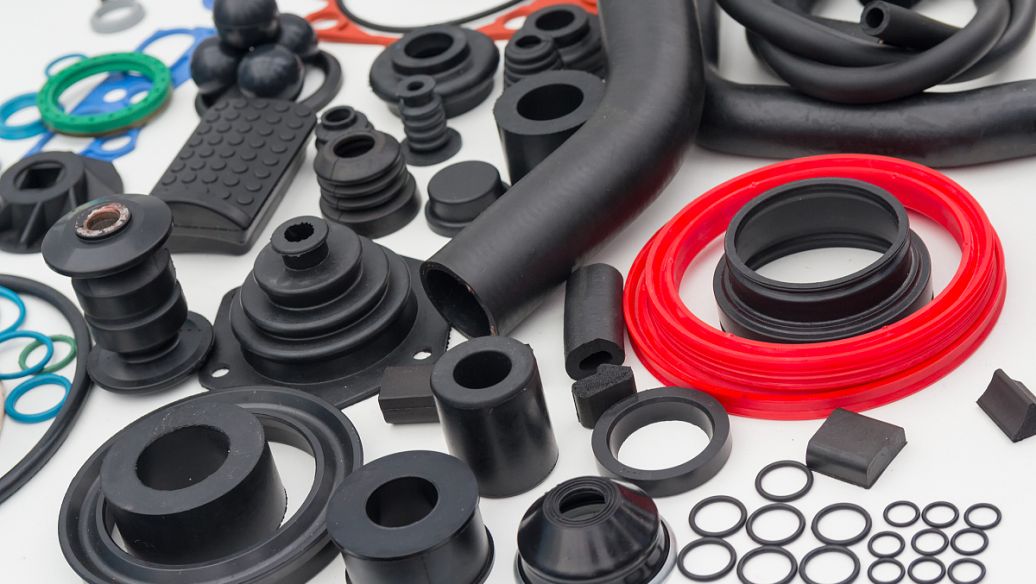
4. Rubber processing
Mechanism of action: As a thickening agent, the isocyanate groups of IPTS react with rubber molecular chains to enhance the adhesive strength between rubber and metal.
Application example: Used for processing light colored products of halogenated rubber such as chloroprene rubber and chlorinated butyl rubber to improve physical and mechanical properties.
Chemical synthesis field

1. Catalysts and intermediates
Mechanism of action: The isocyanate group of IPTS can participate in addition, condensation and other reactions, and is used for the synthesis of novel catalysts or pharmaceutical intermediates.
Application example: As a key intermediate for synthesizing isocyanate compounds, IPTS has potential applications in the synthesis of pesticide and pharmaceutical intermediates.
2. Surface modifiers
Mechanism of action: The ethoxy group of IPTS hydrolyzes to form silanol groups, which can bind with inorganic surfaces such as silica and metal oxides to achieve surface functionalization.
Application example: Used for surface modification of nanoparticles to enhance their dispersibility and stability in solvents.

Biomedical field

1. Drug release system
Mechanism of action: IPTS, as a coupling agent, can improve the compatibility between drugs and carriers, and delay drug release rate.
Application example:
Extended release tablets: In sustained-release formulations of cardiovascular drugs (such as nitroglycerin) and analgesics (such as morphine), IPTS helps maintain stable blood drug concentrations and reduce dosing frequency.
Targeted delivery system: modify the surface of liposomes or nanoparticles to increase the concentration of drugs at the target site and reduce side effects.
2. Biosensors
Mechanism of action: The isocyanate groups of 3-Isocyanatopropyltriethoxysilane can react with hydroxyl or amino groups on the surface of biosensing materials (such as enzymes, antibodies, DNA) to enhance the binding efficiency between sensing elements and target substances.
Application example:
Endotoxin detection: modify graphene or carbon nanotubes to enhance the sensitivity and specificity of biosensors for detecting endotoxins in Escherichia coli.
Glucose sensor: immobilize glucose oxidase and construct a highly selective and sensitive biosensor.

adverse reaction
3-Isocyanatopropyltriethoxysilane (CAS number 24801-88-5) is an organic silicon compound with the molecular formula C10H2NO4Si, containing isocyanate groups (- N=C=O) and triethoxysilane groups (- Si (OC2H5) I3)
Inhalation toxicity
Clinical manifestations: Inhalation of high concentration vapors or aerosols can cause acute respiratory irritation, including coughing, wheezing, chest tightness, difficulty breathing, and in severe cases, pulmonary edema or chemical pneumonia, and even death. Animal experiments showed that rats inhaled LD ₅₀ at 710 mg/kg, indicating high acute inhalation toxicity.
Mechanism: Isocyanate groups bind to respiratory mucosal proteins, causing cell damage and inflammatory reactions, while potentially triggering immune-mediated delayed allergic reactions (such as occupational asthma).
Skin and eye injuries
Clinical manifestations: Direct contact can cause skin erythema, edema, blisters, and in severe cases, skin necrosis; Eye contact can cause severe pain, tearing, corneal ulcers, and even blindness.
Mechanism: The strong corrosiveness of isocyanates can damage the structure of skin and eye tissue, while silane groups may hydrolyze to form silanol, further exacerbating irritation.
Skin sensitization
Clinical manifestations: Repeated exposure can cause contact dermatitis, characterized by itching, erythema, papules, and in severe cases, lichenoid changes. Some individuals may develop systemic allergic reactions (such as urticaria).
Mechanism: Isocyanates act as haptens and bind with skin proteins to form complete antigens, activating delayed type hypersensitivity reactions mediated by T lymphocytes.
Respiratory sensitization
Clinical manifestations: Inhalation may induce asthma like symptoms, including wheezing, shortness of breath, and chest tightness. Long term exposure can lead to chronic obstructive pulmonary disease (COPD).
Mechanism: Isocyanates activate the respiratory immune system, triggering IgE mediated type I hypersensitivity reactions or T cell-mediated type IV hypersensitivity reactions.
Hot Tags: 3-isocyanatopropyltriethoxysilane cas 24801-88-5, suppliers, manufacturers, factory, wholesale, buy, price, bulk, for sale, 3-Isocyanatopropyltriethoxysilane, 2 Methyl 2 propene 1 sulfonic Acid Sodium Salt CAS 1561 92 8, Hypophosphorous Acid Solution CAS 6303 21 5, Dicyclohexylcarbodiimide powder, 2,2'-Dithiobis(benzothiazole) CAS 120-78-5, Coconut Oil Acid Diethanolamine