




Shaanxi BLOOM Tech Co., Ltd. is one of the most experienced manufacturers and suppliers of lithium oxide powder cas 12057-24-8 in China. Welcome to wholesale bulk high quality lithium oxide powder cas 12057-24-8 for sale here from our factory. Good service and reasonable price are available.
Lithium oxide powder, with the molecular formula Li2O, CAS 12057-24-8, The molecular weight is 29.88. It is the most common oxide of lithium and is widely used as a component of glass. White powder or hard shell solid, ionic compound, relative density of 2.013g/cm3, melting point of 1567 ℃ (1840K), boiling point of 2600 ℃, sublimation begins above 1000 ℃. It has the highest melting point among the oxides of various elements in the first main group (IA) (alkali metals). Easily deliquescent, soluble in water, generating strong alkaline LiOH. Widely used in fields such as lithium batteries, glass ceramics, lithium chemical industry, nuclear industry, etc. In the field of lithium batteries, battery grade lithium oxide is mainly used as an electrolyte material for solid lithium batteries and a positive electrode material for lithium-ion power batteries. In the field of glass ceramics, lithium oxide is mainly used as an additive to improve the performance of glass ceramics.

|
Chemical Formula |
Li2O |
|
Exact Mass |
30 |
|
Molecular Weight |
30 |
|
m/z |
30 (100.0%), 29 (16.4%) |
|
Elemental Analysis |
Li, 46.45; O, 53.55 |
|
|
|


Lithium oxide powder ceramics refer to ceramic products whose main components are Li ₂ O, Al ₂ O3, and SiO ₂. Its main crystal phases are lithium garnet (Li ₂ O · Al ₂ O ∝· 2SiO ₂) and spodumene (Li ₂ O · Al ₂ O ∝· 4SiO ₂), with low thermal expansion coefficient (-0.03 × 10 ⁻/℃ 4.08 × 10 ⁻/℃ in the range of 1001000 ℃) and good thermal shock resistance. Li ₂ O is a network external oxide that enhances the glass network and effectively improves the chemical stability of glass.
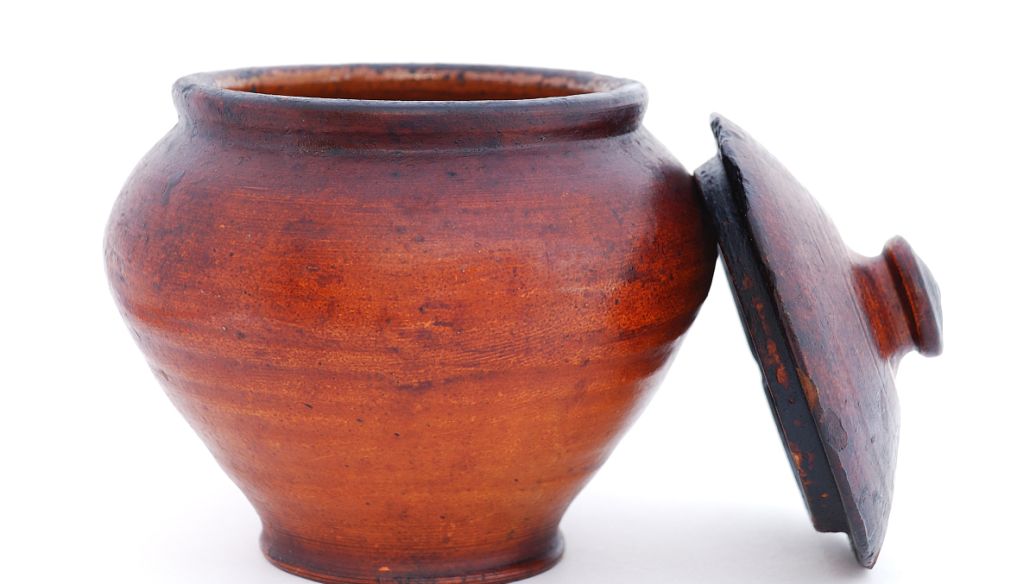
(1) Making ceramic products
Lithium oxide ceramic products: Due to their excellent thermal expansion coefficient and thermal shock resistance, lithium oxide ceramics are widely used in the production of lining bricks, thermocouple protection tubes, constant temperature parts, etc. for electric furnaces (especially induction furnaces). In addition, lithium oxide ceramics can also be used to make laboratory utensils, cooking utensils, etc.
As a ceramic binder, Li ₂ O-Al ₂ O ∝ - SiO ₂ (LAS) series materials are typical low expansion ceramics and can be used as thermal shock resistant materials. Meanwhile, Li ₂ O can also serve as a ceramic binder to enhance the strength and stability of ceramic materials.
(2) Improve the performance of glass ceramics
Improving the chemical stability of glass: Li ₂ O, as an external oxide of the network, can strengthen the network structure of glass, thereby enhancing its chemical stability.
Improving the flowability of glass: Glass containing lithium oxide has higher flowability in the molten state than glass containing the corresponding amount of sodium oxide or potassium oxide. Therefore, adding an appropriate amount of lithium oxide during the glass manufacturing process can achieve better processing performance.
Improving the resistance of glass ceramics: Lithium oxide can also make certain glasses have high resistance, meeting the needs of specific applications.


(3) Produce high-quality porcelain glaze
Improving the glossiness of porcelain glaze: Adding an appropriate amount of lithium oxide to the porcelain glaze can significantly enhance its glossiness. For example, adding 1% lithium carbonate to the glaze of tableware, electric porcelain, and sanitary ware can significantly improve the glossiness of the finished product.
Improving the fluidity of porcelain glaze: Lithium oxide has strong melting aid ability, and only a small amount needs to be added to significantly improve the fluidity of porcelain glaze. This helps to make the fired glaze more uniform and improve the quality of the product.
Preventing glaze evaporation: In glaze production, using lithium oxide instead of lead oxide can reduce the tendency to produce unwanted glaze on kilns and kiln furniture due to evaporation. Especially when the temperature exceeds 1120 ℃, this effect is more pronounced.


(4) Reduce the coefficient of linear expansion of ceramic products
Improving thermal shock resistance: In the production of special refractory products, clay products for construction, etc., the use of lithium feldspar (containing lithium oxide) as raw material can effectively reduce the linear expansion coefficient of the products and improve their thermal shock resistance.
(5) Used as a mineralizer
Increasing sintering temperature: Adding lithium oxide as a mineralizer in the production of special refractory products can lower the sintering temperature, thereby saving energy and costs.
Improving ceramic properties: By adding lithium oxide as a mineralizer, the mechanical properties, thermal stability, and chemical stability of ceramic products can also be improved.


(6) Fluxes used in enamel production
Reduce firing temperature and time: In enamel production, lithium oxide as a strong flux can reduce firing temperature and time, and improve production efficiency.
Improving the processing performance of enamel: By utilizing the strong melting ability of lithium oxide, the processing performance of dry cast iron acid resistant enamel can be improved.

Preparation process of lithium oxide ceramics
The preparation process of lithium oxide powder ceramics mainly includes steps such as raw material preparation, mixing molding, and sintering.
Select appropriate raw materials: Based on the performance requirements of the required ceramic products, choose suitable mineral raw materials containing Li ₂ O such as spodumene and diorite.
Raw material processing: Crushing, grinding, and other processing of raw materials to obtain a particle size distribution that meets the requirements.
Mixed molding
Ingredients: Accurately weigh and mix the processed raw materials according to the formula requirements.
Molding: Forming the mixed raw materials into the desired shape and size through pressing, grouting, and other methods.
sinter
Preheating: Preheating the formed ceramic body to remove moisture and organic matter from the body.
Sintering: The preheated body is subjected to sintering treatment at high temperature, causing the particles in the body to react and densify.
Cooling: Cooling the sintered ceramic products to obtain the final product.
Performance characteristics of lithium oxide ceramics
(1) Low thermal expansion coefficient:
The thermal expansion coefficient of lithium oxide ceramics is -0.03 × 10 ⁻⁶/℃ 4.08 × 10 ⁻⁶/℃ in the range of 1001000 ℃, which is much lower than other ceramic materials. This makes lithium oxide ceramics have better dimensional stability and thermal shock resistance at high temperatures.
01
(2) Good thermal shock resistance:
Due to its excellent coefficient of thermal expansion and thermal shock resistance, lithium oxide ceramics can maintain stable performance under extreme temperature changes.
02
(3) High chemical stability:
Li ₂ O, as an external oxide in the network, can strengthen the glass network structure, thereby improving the chemical stability of ceramics. This enables lithium oxide ceramics to resist erosion from various acids, bases, and salts.
03
(4) High strength:
Lithium oxide ceramics have high strength and can withstand significant mechanical stress.
04
(5) Moderate hardness:
Lithium oxide ceramics have moderate hardness, which can resist wear and scratches while avoiding difficulties in processing due to hardness.
05
Application Fields
(1) Electric furnace lining bricks: Lithium oxide ceramics have excellent thermal expansion coefficient and thermal shock resistance, so they are widely used to make lining bricks for electric furnaces (especially induction furnaces). These lining bricks can maintain stable performance at high temperatures, preventing damage to the electric furnace due to temperature changes.
(2) Thermocouple protection tube: A thermocouple is a sensor used for measuring temperature. During the use of thermocouples, they need to be protected to prevent damage from high temperatures and corrosive environments. Lithium oxide powder ceramics have excellent thermal and chemical stability, and are therefore used to make thermocouple protection tubes.


(3) Thermostatic parts: Due to the excellent thermal expansion coefficient and stability of lithium oxide ceramics, they are widely used in the production of parts that require constant temperature maintenance. These parts can maintain stable performance under extreme temperature changes, ensuring the normal operation of the equipment.
(4) Laboratory vessels: Lithium oxide ceramics have excellent thermal and chemical stability, and can withstand high temperatures and corrosive environments. Therefore, it is used to make laboratory utensils such as test tubes, beakers, etc. These vessels can ensure the accuracy and reliability of experimental results.
(5) Cooking utensils: Lithium oxide ceramics have excellent high temperature resistance and chemical stability, and are therefore used to make cooking utensils. These utensils can maintain stable performance at high temperatures without releasing harmful substances, ensuring food safety and health.

Chemical Stability
Thermal Stability
Lithium oxide (Li₂O) exhibits extremely high thermal stability, with a melting point range of 1427–1727°C and a boiling point as high as 2600°C, beginning to sublimate above 1000°C. Its crystal structure belongs to the inverse fluorite-type cubic crystal system (space group Fm3m), with lithium ions (Li⁺) located in the tetrahedral voids formed by oxygen ions (O²⁻), forming a stable ionic lattice. This structure enables it to maintain chemical inertness at high temperatures; however, the following should be noted:
High-temperature corrosion: Above 1000°C, lithium oxide can react with glass (primarily composed of SiO₂) to form lithium silicate (Li₂SiO₃), causing structural damage to the glass; simultaneously, it can corrode metals such as aluminum and zinc, producing metal oxides and lithium salts.
Decomposition risk: Although stable under normal conditions, prolonged exposure to high temperatures or strong acidic environments may trigger decomposition, releasing oxygen and forming lithium salts.
Stability in air and moisture
Hygroscopicity: Lithium oxide powder readily absorbs moisture from the air (deliquescence), forming strongly alkaline lithium hydroxide (LiOH), with a solution pH > 12, which is corrosive to skin and mucous membranes.
Carbonation reaction: In humid air, lithium oxide further reacts with carbon dioxide to form lithium carbonate (Li₂CO₃), causing product degradation. The reaction pathway is as follows:
Li2O+H2O→2LiOH(Hydrolysis)
2LiOH+CO2→Li2CO3+H2O(Carbonization)
Acid-base reactivity
Strong alkalinity: Lithium hydroxide, which is produced by the reaction of lithium oxide with water, is a strong alkali that can react with acids to form lithium salts and water. For example, when it reacts with hydrochloric acid (HCl):Li2O+2HCl→2LiCl+H2O
Reductivity: Lithium oxide can be reduced to elemental lithium at high temperatures by strong reducing agents such as silicon and aluminum:3Li2O+2Al→6Li+Al2O3
Safety Risks

Health Hazards
Corrosivity: Lithium oxide powder is highly irritating to the skin, eyes, and respiratory tract. Exposure may cause burns, redness, pain, and even chemical pneumonia or pulmonary edema.
Toxicity: Inhalation or ingestion of lithium oxide may cause symptoms such as headaches, nausea, and vomiting. Prolonged exposure may result in organ damage.

Environmental Hazards
Water Pollution: Lithium oxide and its hydrolysis products (LiOH) are harmful to aquatic ecosystems. Avoid discharging large quantities into groundwater, waterways, or sewage systems.
Soil Pollution: Lithium oxide may alter soil pH and affect microbial activity. Properly dispose of waste.

Hazard Symbols and Classification
GHS Classification: Skin Corrosion (Category 1B), Serious Eye Damage (Category 1).
Hazard Symbol: Corrosive (C), Hazard Statement H314 (Causes severe skin burns and eye damage).
Safety Precautions: Wear protective gloves, goggles, and protective clothing; avoid inhaling dust; store in a cool, dry place away from air and moisture.
Safety Handling and Storage Recommendations
Personal Protection
When handling, wear corrosion-resistant protective clothing, gloves (such as butyl rubber gloves), and goggles to avoid direct contact with skin and eyes.
Operate in a fume hood or closed system to prevent dust dispersion.
Storage Conditions
Sealing: Lithium oxide must be stored in a sealed container to avoid contact with air, moisture, and carbon dioxide.
Environmental Control: Storage temperature should be below 25°C, relative humidity below 50%, in a cool, well-ventilated, dry place.
Isolation Measures: Store separately from strong acids, strong oxidizers, and flammable materials to prevent cross-reactions.
Emergency Response
Leakage Handling: Use inert materials (such as dry sand) to absorb the leakage, avoiding dust generation; collect and place in a sealed container for disposal as hazardous waste.
Fire Response: Lithium oxide itself is non-flammable, but it may release oxygen at high temperatures, which can aid combustion. When extinguishing fires, use water mist, alcohol-resistant foam, or carbon dioxide; do not use dry powder extinguishers.
Hot Tags: lithium oxide powder cas 12057-24-8, suppliers, manufacturers, factory, wholesale, buy, price, bulk, for sale, Sodium Dodecyl Aulfate Powder CAS 151 21 3, 1 4 Cyclohexanedicarboxylic Acid CAS 1076 97 7, Tetrabutylammonium Hydrogen Sulfate CAS 32503 27 8, 1 10 Phenanthroline hydrate, 2,2'-Dithiobis(benzothiazole) CAS 120-78-5, Dodecyltrimethylammonium chloride