




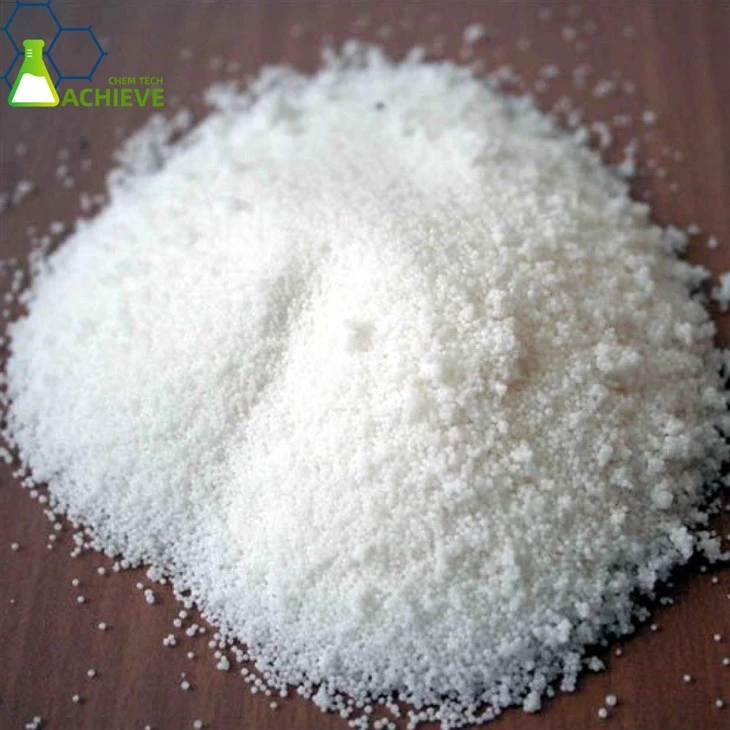

Shaanxi BLOOM Tech Co., Ltd. is one of the most experienced manufacturers and suppliers of stearic acid powder cas 57-11-4 in China. Welcome to wholesale bulk high quality stearic acid powder cas 57-11-4 for sale here from our factory. Good service and reasonable price are available.
Stearic acid powder is a saturated long-chain fatty acid derived from natural animal and plant oils (such as butter, palm oil), presenting as a white to slightly yellow, slippery crystalline powder or scales. It possesses excellent lubricity, stability and hydrophobicity, making it an indispensable "all-rounder" in the fields of cosmetics, food and industry. In personal care products (such as soap, cream), it is a crucial shaping agent and emulsifier, enhancing texture and stability; in the food industry (as additive E570), it acts as an anti-foaming agent and lubricant; in the plastic and rubber industry, it is also an efficient demolding agent and lubrication aid. The mechanism of its action lies in the fact that the long carbon chain in the molecule can effectively isolate substances, reduce friction, and simultaneously alter the surface properties of materials. This product is stable at room temperature, but it needs to be sealed, protected from light, and stored in a cool, dry place to prevent caking and oxidation.

|
|
|


|
Chemical Formula |
C18H36O2 |
|
Exact Mass |
284 |
|
Molecular Weight |
284 |
|
m/z |
284 (100.0%), 285 (19.5%), 286 (1.8%) |
|
Elemental Analysis |
C, 76.00; H, 12.76; O, 11.25 |

Basic Properties and Storage Conditions
Stearic acid powder is a naturally occurring saturated long-chain fatty acid with the chemical formula C₁₈H₃₆O₂, having a molecular weight of 284.48 g/mol. Its powder form is a white or slightly yellow crystalline solid with a slight fatty odor. The melting point ranges from 67 to 72℃, the boiling point is approximately 361℃, and the density is 0.84 g/cm³.
Solubility: Slightly soluble in cold water (at 23℃, the solubility is approximately 0.1 - 1 g/100 mL), easily soluble in organic solvents such as ethanol, acetone, and chloroform.
Storage requirements: It should be sealed and stored in a cool and dry place, avoiding high temperatures and contact with oxidants. For powder form, the recommended storage temperature is 2 - 8℃ to prevent caking or decomposition; if long-term storage is required (such as at -20℃), the shelf life can be extended to 3 years.
Core Application Areas and Usage
Stearic acid powder, due to its unique chemical properties, is widely used in multiple industrial fields. The following are the specific usage and mechanism of action:


Cosmetics and personal care products
Stearic acid is a key component in cosmetic formulations, mainly used as an emulsifier, thickener and stabilizer.
Emulsification: In cream products such as body lotions and cold creams, stearic acid reacts with bases (such as potassium hydroxide) to form stearate (such as potassium stearate), forming an oil-in-water emulsified system, which makes the product stable in texture and easy to apply.
Thickening and stabilization: In liquid products such as shampoos and body washes, stearic acid is combined with surfactants to increase the viscosity of the system and prevent stratification.
Typical formula:
Body lotion: Stearic acid 15-20% + Glycerin 5-10% + Potassium hydroxide 0.5-1% + Water remainder.
Lipstick: Stearic acid 10-15% + Beeswax 5-10% + Plant oil remainder, providing hardness and luster.
Plastic industry
Stearic acid powder is mainly used as a lubricant, demolding agent and heat stabilizer in plastic processing, improving processing performance and product performance.
Lubrication effect: In the production of polyvinyl chloride (PVC) pipes and profiles, stearic acid can reduce the melt viscosity, reduce equipment wear, and prevent material adhesion to the mold.
Thermal stabilizer: When combined with metal salts such as calcium and zinc, it forms a synergistic stabilizing system, inhibiting the decomposition of PVC to produce hydrogen chloride gas, and extending the service life of the material.
Usage suggestion:
PVC pipes: Stearic acid 0.5-1.5 phr (per hundred parts of resin usage).
Polyethylene (PE) film: Stearic acid 0.1-0.3 phr, improving the film's opening property.
Rubber industry
Stearic acid is a vulcanization activator and softener in rubber formulations, which can enhance vulcanization efficiency and improve the physical properties of rubber.
Sulfurization promotion: Reacts with zinc oxide to form zinc stearate, which serves as an intermediate in the sulfurization process, accelerating rubber cross-linking and shortening the sulfurization time.
Softening effect: In tire and conveyor belt products, stearic acid can reduce the hardness of rubber, enhance elasticity, and prevent aging and cracking.
Typical formula:
Natural rubber tires: Stearic acid 1-3 phr + Zinc oxide 3-5 phr + Sulfur 2-4 phr.
Lubricating oil manufacturing
Stearic acid is the basic raw material for lithium-based grease, calcium-based grease, etc. Through saponification reaction, it forms a fibrous soap structure, giving lubricating oil good water resistance and mechanical stability.
Saponification process: Combine stearic acid with lithium hydroxide (or calcium hydroxide) at high temperature to produce stearic acid lithium (or stearic acid calcium), and then mix and blend with base oil.
Performance advantages: Lithium-based grease has high pour point (>180℃), strong water resistance, etc., and is widely used in automotive bearings, construction machinery, and other fields.
Other industrial applications
Metal processing: As an extreme pressure additive for cutting fluids, it reduces tool wear.
Textile auxiliaries: In fabric softeners, stearic acid can improve fiber feel and increase luster.
Paper industry: As a sizing agent, it enhances the water resistance of paper.
Safe operation and precautions
Personal protection
During operation, wear dust masks (such as N95), goggles, and gloves to avoid powder inhalation or skin contact.
Storage safety
Keep away from fire sources and oxidants to prevent the accumulation of dust and the risk of explosion (although the explosion risk of stearic acid dust is relatively low, caution is still required).
Waste disposal
Waste should be handled in accordance with general chemical regulations to avoid environmental pollution.


Stearic acid powder exhibits excellent thermal stability. Its melting point range is 56-72℃, and its boiling point is as high as 232℃ (at 2.0 kPa pressure) or 360-376℃ (at normal pressure decomposition temperature). This characteristic enables it to maintain structural stability in high-temperature processing environments (such as plastic production and rubber vulcanization), and it is less likely to decompose due to heat, thus not affecting product quality. For example, in the manufacturing of polyvinyl chloride (PVC) pipes, stearic acid is used as a heat stabilizer, which can withstand processing temperatures (typically 160-200℃) without significant decomposition, effectively inhibiting the thermal degradation of the material.
Thermal stability mechanism
The thermal stability of stearic acid stems from its molecular structure:
Characteristics of long-chain saturated fatty acids: The saturated carbon chain (without double bonds) of octadecanoic acid (C₁₈H₃₆O₂) reduces the risk of oxidation and breakdown at high temperatures, and the intermolecular forces are strong, requiring a higher amount of energy to disrupt the crystal structure.
Metal salt formation: Stearic acid reacts with metal ions (such as calcium, zinc) to form metal soaps (such as calcium stearate, zinc stearate), and these salts further enhance thermal stability. For example, calcium stearate in PVC delays decomposition by absorbing hydrogen chloride (HCl), and its long-term thermal stability is superior to that of pure stearic acid.
Synergistic effect: When combined with additives such as epoxides and phosphite esters, stearic acid can form a synergistically stable system, significantly improving the heat resistance of the material.
Decomposition characteristics and conditions
Stearic acid undergoes decomposition under specific conditions, and the main pathways include:
High-temperature decomposition:
At normal pressure: When the temperature exceeds 360℃, stearic acid decomposes into stearic acid vapor and zinc oxide (if it is coexisting with metal oxides), or generates low-molecular-weight hydrocarbons (such as C₁₆H₃₄, C₂H₄).
Reduced-pressure environment: At 250-255℃ and 0.53-0.93 kPa conditions, stearic acid can be purified by fractionation. At this time, the decomposition by-products are fewer, and the main process is physical evaporation.
Oxidation decomposition:
When exposed to high temperature (>200℃) and oxygen for a long time, stearic acid may undergo oxidation reactions, generating peroxides, aldehydes or carboxylic acids, causing material discoloration or performance degradation. For example, in the rubber vulcanization process, if the temperature is not controlled properly, the oxidation products of stearic acid may accelerate rubber aging.
Acid-base catalytic decomposition:
When encountering strong acids (such as hydrochloric acid, sulfuric acid), stearic acid decomposes rapidly into fatty acids and metal salts (such as stearic acid zinc + HCl → stearic acid + ZnCl₂).
In an alkaline condition (such as sodium hydroxide solution), stearic acid undergoes saponification reaction, generating stearic acid sodium and glycerol.
Application in thermal management in practice


Plastic industry: Stearic acid is used as a lubricant and heat stabilizer. The processing temperature needs to be strictly controlled. For example, in PVC extrusion molding, the temperature should be maintained at 160-180℃ to avoid excessive decomposition of stearic acid; if combined with lead salt stabilizers, the heat resistance can be further increased to above 200℃.
Rubber industry: Stearic acid is used as a softening agent during vulcanization. The vulcanization temperature needs to be controlled in coordination with sulfur and accelerators (usually 140-160℃), to prevent premature decomposition of stearic acid and prevent insufficient rubber cross-linking.
Safety protection: When the stearic acid dust reaches a certain concentration in the air, it may explode upon contact with fire (although the risk is low, ventilation and dust prevention are still necessary). The decomposition products (such as stearic acid vapor) need to be collected through local exhaust devices to avoid inhalation hazards.
FAQ
1. What is it?
A natural saturated fatty acid extracted from animal and plant oils (such as butter, palm oil), which is a white, slippery powder or sheet-like solid at room temperature.
2. What are the main purposes?
The main application is as a lubricant, emulsifier and stabilizer. It is widely used in the production of soap, cosmetic creams (to increase viscosity), food (anti-settling agent E570), plastics and rubber (demolding aid).
3. How to store safely?
Sealed, kept in a cool and dry place, avoiding direct sunlight. Pay attention to moisture prevention to prevent clumping.
4. Safety Precautions?
It is generally considered safe, but high concentrations of the powder may cause slight irritation to the eyes and respiratory tract. It is recommended to wear a dust mask and goggles when operating to avoid inhaling the dust.
Hot Tags: stearic acid powder cas 57-11-4, suppliers, manufacturers, factory, wholesale, buy, price, bulk, for sale, Sodium Isopropyl Xanthate SIPX , ferrocene powder, 1 4 Cyclohexanedicarboxylic Acid CAS 1076 97 7, Dodecyltrimethylammonium chloride, 1 10 Phenanthroline hydrate, Stearic Acid Powder CAS 57 11 4