






Shaanxi BLOOM Tech Co., Ltd. is one of the most experienced manufacturers and suppliers of alarelin peptide in China. Welcome to wholesale bulk high quality alarelin peptide for sale here from our factory. Good service and reasonable price are available.
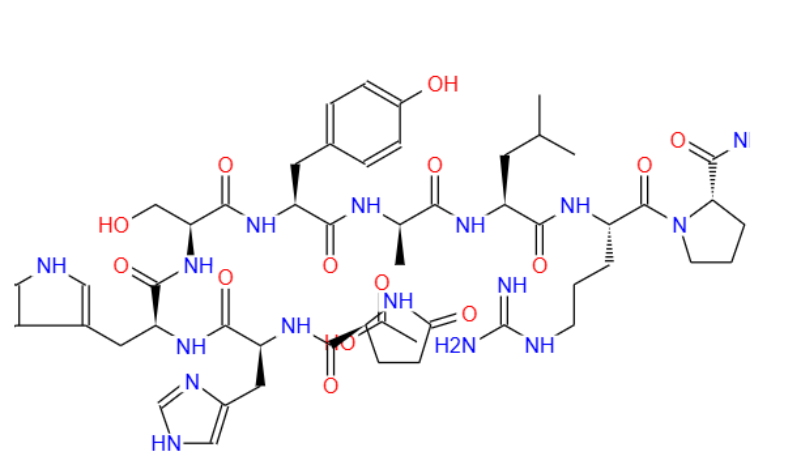
Alarelin peptide is a synthetic nonapeptide gonadotropin-releasing hormone agonist (GnRH-a) with the molecular formula C₅₆H₇₈N₁₆O₁₂ and a molecular weight of 1167.3. It is precisely synthesized via solid-phase peptide synthesis, exhibiting high receptor-binding affinity and metabolic stability. It demonstrates outstanding efficacy in the treatment of endometriosis and uterine fibroids. Additionally, it inhibits the proliferation of endometrial cancer cells by regulating the TGF-β/Smad signaling pathway, showing multi-target antitumor potential.
Our Products Form


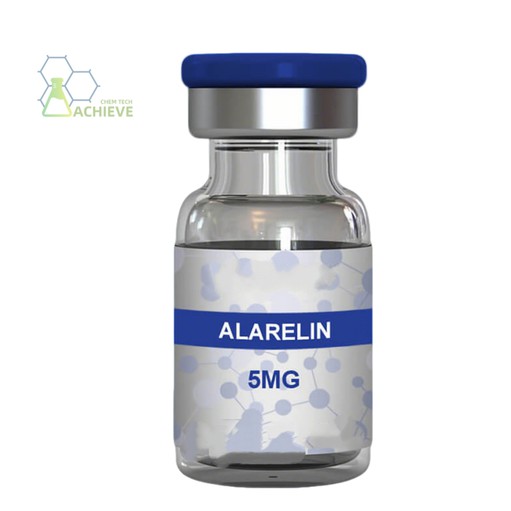

Alarelin COA
 |
||
| Certificate of Analysis | ||
| Compound name | Alarelin | |
| Grade | Pharmaceutical grade | |
| CAS No. | 79561-22-1 | |
| Quantity | 42g | |
| Packaging standard | PE bag+Al foil bag | |
| Manufacturer | Shaanxi BLOOM TECH Co., Ltd | |
| Lot No. | 202601090056 | |
| MFG | Jan 9th 2026 | |
| EXP | Jan 8th 2029 | |
| Structure |
|
|
| Item | Enterprise standard | Analysis result |
| Appearance | White or almost white powder | Conformed |
| Water content | ≤5.0% | 1.11% |
| Loss on drying | ≤1.0% | 0.51% |
| Heavy Metals | Pb≤0.5ppm | N.D. |
| As≤0.5ppm | N.D. | |
| Hg≤0.5ppm | N.D. | |
| Cd≤0.5ppm | N.D. | |
| Purity (HPLC) | ≥99.0% | 99.90% |
| Single impurity | <0.8% | 0.47% |
| Total microbial count | ≤750cfu/g | 547 |
| E. Coli | ≤2MPN/g | N.D. |
| Salmonella | N.D. | N.D. |
| Ethanol (by GC) | ≤5000ppm | 712ppm |
| Storage | Store in a sealed, dark, and dry place below -20°C | |
|
|
||

Application in Central Precocious Puberty (CPP)

Central precocious puberty (CPP) results from premature activation of the hypothalamic–pituitary–gonadal (HPG) axis, leading to the development of secondary sexual characteristics before age 8 in girls and 9 in boys, accompanied by advanced bone age and premature epiphyseal closure, ultimately impairing adult height and causing psychological distress. As a representative domestic GnRH-a, alarelin peptide is a first-line therapy for CPP, targeting the core pathological mechanisms of the disease.
(1) Core Clinical Scenarios
First-line treatment for idiopathic CPP:After excluding secondary causes such as intracranial tumors and congenital adrenal hyperplasia, idiopathic CPP accounts for the majority of childhood precocious puberty. It persistently suppresses pituitary LH and FSH secretion, rapidly reducing estradiol and testosterone to pre-pubertal levels and halting the progression of secondary sexual characteristics.


Bone age intervention and adult height protection:For children with open epiphyses and remaining growth potential, it slows bone maturation and delays epiphyseal closure, extending the growth window. Clinical data show that standardized 1-year treatment limits bone age advancement to approximately 6 months, significantly improving predicted adult height.
Information Sources: Hunan Pharmaceutical Affairs Service Network, Alarelin Injection Package Insert; Chinese Journal of Pediatrics, Guidelines for the Diagnosis and Management of Central Precocious Puberty (2015 Edition); Biotechnology Bulletin, Advances in GnRH-a Applications in Central Precocious Puberty
Application in Assisted Reproductive Technology (ART)
The core of ART (including in vitro fertilization-embryo transfer [IVF-ET] and intracytoplasmic sperm injection [ICSI]) is controlled ovarian hyperstimulation (COH). Through pituitary downregulation, it prevents premature endogenous LH surges, ensures synchronous follicular development, and yields sufficient high-quality oocytes. It is an indispensable regulatory agent in ART, applicable to major stimulation protocols and various infertility conditions.

(1) Downregulation in Controlled Ovarian Hyperstimulation

Downregulation in the long protocol (core application):The long protocol is a classic IVF-ET regimen. It is typically administered on day 21 of the menstrual cycle (mid-luteal phase) to achieve complete pituitary downregulation. Its key roles include: suppressing spontaneous LH secretion to avoid premature luteinization and cycle cancellation caused by premature LH surges; synchronizing follicular growth to improve follicular uniformity following FSH/HMG stimulation and increase oocyte yield. Clinical data show that oocyte count and high-quality embryo rate are comparable between the product long protocol and imported triptorelin, while treatment cost is reduced by 30%–40%.
Ovulation induction for disordered folliculogenesis and ovulatory dysfunction:For infertility due to small-follicle ovulation, polycystic ovary syndrome (PCOS), and other ovulatory disorders, the product combined with HMG significantly improves follicle quality. Studies show that the combined group has larger maximum follicle diameter on HCG day, more follicles ≥14 mm, higher clinical pregnancy rate (increased from 9.6% to 22.4%), 60% lower premature LH surge rate, and significantly reduced cycle cancellation, miscarriage, and ovarian hyperstimulation syndrome (OHSS) rates compared with HMG alone.

(2) Special Adapted Scenarios in Assisted Reproduction

Optimized prevention of OHSS:OHSS is a severe complication of ovarian stimulation. By precisely inhibiting LH secretion, reducing excessive follicle recruitment and vasoactive factor release, it combined with low-dose FSH limits moderate-to-severe OHSS incidence to below 1%. For high-risk patients (PCOS, young underweight women), the "coasting" protocol (withholding FSH while continuing alarelin) after downregulation safely reduces follicle number and mitigates OHSS risk.
Management of recurrent implantation failure:In patients with repeated embryo implantation failure, the product lowers systemic estrogen levels to improve endometrial receptivity (modulating thickness, morphology, and implantation-related factor expression). It also suppresses abnormal immune responses and reduces local endometrial inflammatory cytokines, creating a stable environment for embryo implantation and increasing clinical pregnancy rate.


Endometrial preparation for frozen-thawed embryo transfer (FET):In artificial-cycle FET, Alarelin peptide induces pituitary downregulation to suppress endogenous follicle development, making endometrial growth fully dependent on exogenous estrogen and progesterone. This synchronizes endometrial and embryonic development, suitable for FET cycles in patients with endometriosis and adenomyosis.
Information Sources: ChemicalBook, Clinical Application and Pharmacological Research of Alarelin Acetate; VIP Journals, Application of Modified Alarelin Long Protocol in IVF-ET; Journal of Xuzhou Medical University, Comparison of Alarelin and Triptorelin in Short Protocols for Controlled Ovarian Hyperstimulation
Potential Application in Gastric Acid Secretion Inhibition
The inhibitory effect of the product on gastric acid secretion is an emerging research area in peptide therapeutics. It regulates acid secretion through central and peripheral dual mechanisms, showing potential value in acid-related disorders including gastroesophageal reflux disease (GERD), peptic ulcer, and Zollinger–Ellison syndrome. Research is currently at the preclinical and early clinical stage.

(1) Mechanisms of Gastric Acid Inhibition

Central neural regulation:The product crosses the blood–brain barrier to act on the hypothalamus, inhibiting vagal efferent impulses and reducing acetylcholine (ACh) release - a key neurotransmitter stimulating parietal cell acid secretion. By blocking vagovagal reflexes, it decreases basal and postprandial peak acid output, especially suitable for hypersecretion caused by increased neural excitability (e.g., stress ulcer, anxiety-related reflux).
Peripheral direct inhibition:The product acts directly on gastric parietal cells by competitively binding to functional GnRH receptors expressed on their surface, inhibiting H⁺/K⁺-ATPase (proton pump) activity and blocking the final step of acid secretion. It also reduces the release of acid-promoting factors including gastrin and histamine, decreasing histamine secretion from enterochromaffin-like (ECL) cells and gastrin from G cells, achieving multi-target acid suppression.

(2) Potential Clinical Disease Applications

Gastroesophageal Reflux Disease (GERD):GERD is characterized by esophageal mucosal injury from acid reflux. It reduces gastric acid volume and elevates intragastric pH, decreasing acidic irritation of refluxate. Its mild and sustained acid inhibition lacks the rapid tolerance associated with proton pump inhibitors (PPIs), making it suitable for long-term maintenance in mild-to-moderate GERD or PPI-intolerant patients.
Peptic Ulcer (Gastric and Duodenal Ulcer):For mucosal injury caused by gastric hypersecretion, the product inhibits basal and maximal acid output to promote ulcer healing. Animal studies show that intravenous or intragastric alarelin (2 μg/kg) reduces gastric acid secretion by 60%–70% and increases ulcer healing rate by 50% in rats, with no significant gastrointestinal adverse reactions.
Zollinger–Ellison Syndrome:This syndrome involves refractory hypersecretion due to excessive gastrin from gastrinomas, often requiring high-dose PPI with frequent tolerance.


It controls intractable hypersecretion via dual central and peripheral inhibition of gastrin secretion and parietal cell activity, serving as a combination therapy to enhance efficacy.
Stress ulcer prophylaxis:For critically ill patients (craniocerebral injury, extensive burns, major surgery) with stress-induced gastric hypersecretion, it stabilizes neuroendocrine function and inhibits vagal hyperactivity to prevent stress ulcer bleeding. Its peptide structure confers high safety without hepatic or renal toxicity, suitable for the fragile physiological state of critically ill patients.
Information Sources: GDE Chem, Biological Activity and Gastric Acid Inhibition of Alarelin Acetate; PubMed, Comparative Study of Acid Suppression by Alrestatin and GnRH-a Agents

The acid-suppressive effect of alarelin peptide has been validated in rodent models: intragastric administration takes effect in 15 minutes, peaks at 60 minutes, and lasts 4–6 hours. Intravenous administration yields 100% bioavailability, with efficacy comparable to cimetidine but lacking anti-androgenic and hepatic enzyme inhibitory effects of H2-receptor antagonists. Preclinical studies show no gastric mucosal damage and enhanced mucosal blood flow, combining acid suppression with mucosal protection.


Future development directions include: long-acting sustained-release formulations (microspheres, liposomes) to extend duration to 12–24 hours for once-daily dosing; oral peptide delivery technologies to improve gastrointestinal stability and replace injections for better compliance; and combination therapy studies with PPIs and mucosal protectants to expand regimens for refractory acid-related diseases.
Information Sources: Chinese Pharmacological Bulletin: Advances in the Application of Peptide Drugs in Gastrointestinal DiseasesFrontiers in Endocrinology: Gastrointestinal Hormones and the Regulatory Mechanisms of Gastric Acid Secretion
Contraindications
Pregnant women (may induce abortion)
Lactating women (drug is excreted in breast milk and may harm infants)
Patients with unexplained vaginal bleeding
Patients hypersensitive to GnRH or its analogues
Information Sources: Chinese Pharmacopoeia Commission, Clinical Medication Guidelines; Yaoyuan.com

Research Background and Origin
The research and development of Alarelin began in the early 1970s, supported by groundbreaking global advances in the study of GnRH (Gonadotropin-Releasing Hormone). In 1971, American scholars Andrew Schally and Roger Guillemin successfully isolated and identified the structure of natural GnRH, laying the foundation for the development of GnRH analogs. Inspired by this achievement, a Chinese research team initiated pioneering studies on the synthesis of GnRH analogs in 1973–1974, ranking among the earliest research groups worldwide to explore this field.
Structural Modification and Synthetic Breakthrough
In the mid-1970s, to address the shortcomings of natural GnRH-short half-life and high susceptibility to enzymatic degradation-the research team carried out key structural modifications based on its nonapeptide framework: glycine at position 6 was replaced with D-alanine, and the C-terminal was ethylaminated for optimization. These changes significantly enhanced receptor-binding affinity and in vivo stability, boosting its biological activity to more than 15 times that of natural GnRH. In 1974, the first total chemical synthesis of the product was accomplished under the leadership of the Shanghai Institute of Biochemistry, Chinese Academy of Sciences. The drug was named "Bing'anruilin" in Chinese, with the international nonproprietary name Alarelin.
Clinical Translation and Marketing History
During the 1980s and 1990s, domestic studies completed pharmacological, toxicological, and clinical evaluations of the product, verifying its safety and efficacy in the treatment of precocious puberty, assisted reproductive technology, and other indications. In 1998, Alarelin API and its injection preparation were approved by the Ministry of Health of China (Approval Nos. (98) WSYSZ X-38 and X-39). Industrial production was realized by Shanghai Livzon Dongfeng Biotechnology Co., Ltd., making Alarelin the first domestically developed and marketed GnRH-a peptide drug in China.
Information Sources:Anhui Medical and Pharmaceutical Journal, Issue 3, 1999, Development and Application of Gonadotropin-Releasing Hormone and Its Analogs;Public notice of new drug approvals by the Ministry of Health, 1998 (Baimu Medical Network)
FAQ
What is the benefit of alarelin acetate?
+
-
Alarelin acetate (AA), a synthetic nonapeptide gonadotropin-releasing hormone (GnRH) analogue, induces reversible hypogonadism through pituitary desensitization, making it effective for endometriosis and hormone-dependent cancers .
Hot Tags: alarelin peptide, suppliers, manufacturers, factory, wholesale, buy, price, bulk, for sale, Tesamorelin CAS 218949 48 5, Melanotan ii powder, LONG R3 IGF I CAS 143045 27 6, CJC 1295 Peptide, Bremelanotide Powder CAS 189691 06 3, Kisspeptin powder