




Shaanxi BLOOM Tech Co., Ltd. is one of the most experienced manufacturers and suppliers of albumin peptide in China. Welcome to wholesale bulk high quality albumin peptide for sale here from our factory. Good service and reasonable price are available.
Albumin peptide is a readily absorbable functional oligopeptide and one of the core research materials in biomedical and clinical nutrition today. Beyond its basic nutritional supplementation function, it possesses multiple biological activities including anti-inflammation, anti-oxidation, regulation of cell proliferation, biological mucosal repair, and maintenance of plasma colloid osmotic pressure. Compared with direct intravenous infusion of human serum albumin, it carries no risk of blood-borne viral infection, boasts abundant raw material sources, lower production costs and broader applicable populations.
It can be formulated as oral clinical nutritional preparations or processed into external wound dressings. At present, it is widely adopted in medical scenarios such as critical illness nutritional support, chronic wound healing, postoperative rehabilitation and skin injury repair, holding extremely high value for clinical translation and great potential for medical development.
Our Products Form


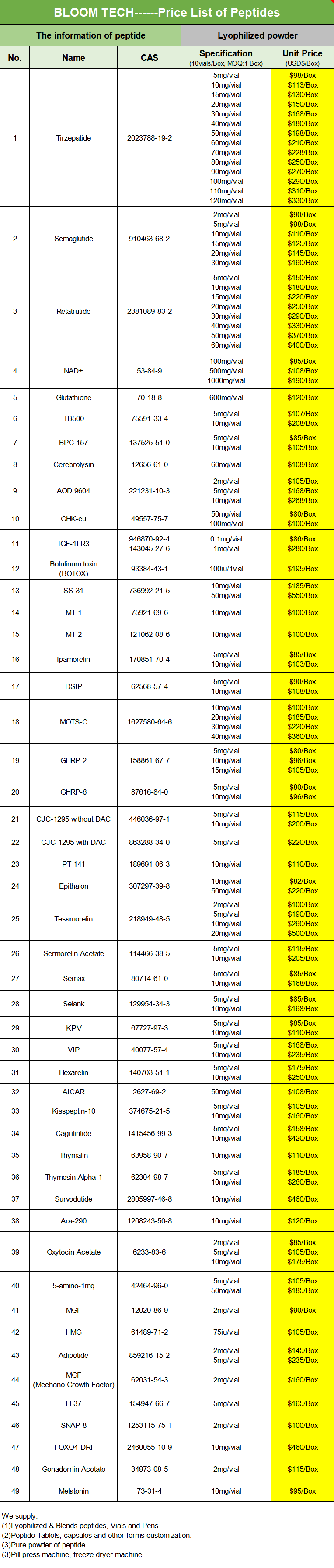
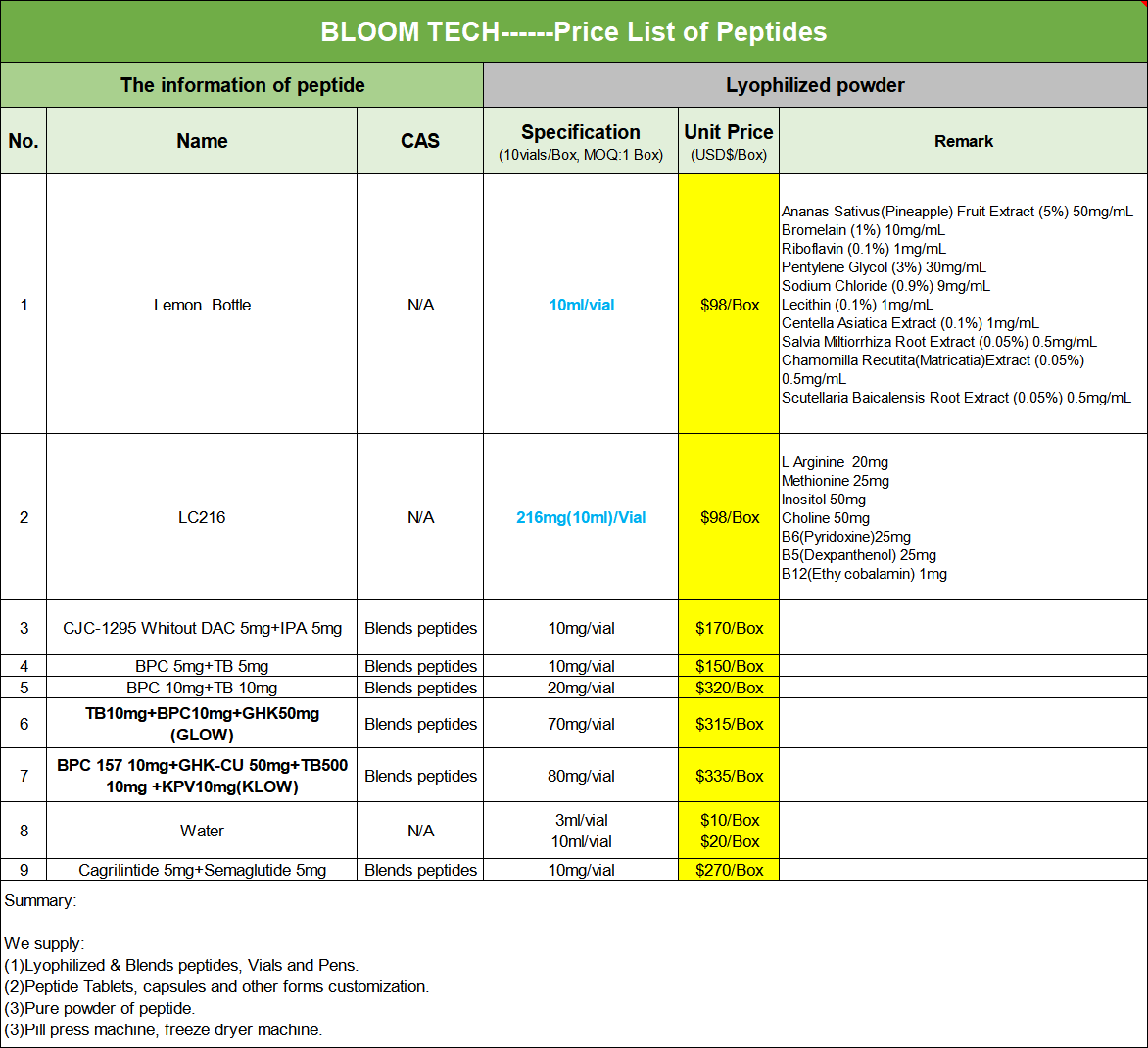

Egg White Peptide\Albumin Peptide COA
 |
||
| Certificate of Analysis | ||
| Compound name | Egg White Peptide\Albumin Peptide | |
| Grade | Pharmaceutical grade | |
| CAS No. | 9006-59-1 | |
| Quantity | 59g | |
| Packaging standard | PE bag+Al foil bag | |
| Manufacturer | Shaanxi BLOOM TECH Co., Ltd | |
| Lot No. | 202601090056 | |
| MFG | Jan 9th 2026 | |
| EXP | Jan 8th 2029 | |
| Structure | N\A | |
| Item | Enterprise standard | Analysis result |
| Appearance | White or almost white powder | Conformed |
| Water content | ≤5.0% | 0.12% |
| Loss on drying | ≤1.0% | 0.46% |
| Heavy Metals | Pb≤0.5ppm | N.D. |
| As≤0.5ppm | N.D. | |
| Hg≤0.5ppm | N.D. | |
| Cd≤0.5ppm | N.D. | |
| Purity (HPLC) | ≥99.0% | 99.98% |
| Single impurity | <0.8% | 0.37% |
| Total microbial count | ≤750cfu/g | 600 |
| E. Coli | ≤2MPN/g | N.D. |
| Salmonella | N.D. | N.D. |
| Ethanol (by GC) | ≤5000ppm | 800ppm |
| Storage | Store in a sealed, dark, and dry place below 2-8°C | |
|
|
||


Applications in Clinical Medicine

Clinical Nutritional Support for Critically Ill and Postoperative Patients
Hypoalbuminemia is a prevalent complication among ICU patients, surgical postoperative patients and elderly patients with chronic diseases. Decreased plasma albumin levels trigger a chain of adverse reactions including disrupted colloid osmotic pressure, systemic edema, drastically weakened immunity and delayed wound healing. Intravenous infusion of human serum albumin injection used to be the mainstream clinical intervention. However, blood products are plagued by tight supply, high prices, and potential risks of blood-borne infections such as hepatitis B and HIV.
Meanwhile, intravenous infusion increases cardiopulmonary circulatory burden on critically ill patients, imposing obvious limitations on clinical use. Oral albumin peptide nutritional preparations perfectly address the drawbacks of human serum albumin.Their small-molecule structure bypasses gastric digestion and is directly absorbed by the intestinal tract, making them suitable for patients with weakened gastrointestinal function after surgery who cannot normally digest macromolecular proteins. Clinical controlled trial data show that standardized daily oral administration of the product preparations effectively elevates patients' serum albumin levels within 7 days.


To achieve the same albumin elevation effect, the cost of oral it accounts for merely one-fifth of intravenous human serum albumin. In addition, it facilitates the synthesis of immunoglobulins, enhances lymphocyte activity and reduces the incidence of nosocomial infections in critically ill patients. It has now been incorporated into routine enteral nutrition regimens for patients after surgery, severe pneumonia and stroke with bed rest. For pathological hypoalbuminemia induced by liver cirrhosis and chronic kidney disease, it alleviates the protein synthesis burden of the liver and metabolic strain on the kidneys, assisting in improving patients' nutritional prognosis.
Repair of Digestive Tract Mucosal Injury and Adjuvant Treatment of Gastrointestinal Diseases
It is rich in glutamine-containing active peptide fragments, which serve as core energy substrates for intestinal epithelial cell proliferation. It upregulates the expression of intestinal tight junction proteins, repairs damaged intestinal mucosal barriers and effectively alleviates leaky gut syndrome. For patients with chronic gastritis, ulcerative colitis and chemotherapy/radiotherapy-induced intestinal mucosal injury, conventional drug therapy only controls inflammation without rapidly repairing physical mucosal wounds.


Combined oral intervention with it inhibits the reproduction of harmful Escherichia coli in the gut and promotes the proliferation of probiotics such as Bifidobacterium, bidirectionally regulating intestinal flora balance. Clinical data demonstrate that continuous the product supplementation for 4 weeks reduces the incidence of adverse reactions such as digestive tract mucosal erosion, abdominal pain and diarrhea by 42% among tumor patients receiving chemoradiotherapy, and shortens gastrointestinal mucosal repair cycles by 35%. Distinct from ordinary gastrointestinal mucosal protectants, the product delivers both nutritional supply and tissue repair without inducing drug dependence, making it suitable for long-term adjuvant conditioning in patients with chronic gastrointestinal disorders.
Applications and Mechanisms of Action in Wound Repair
Core Molecular Mechanisms Underlying Wound Repair
Wound healing proceeds through four consecutive phases: inflammatory response, granulation tissue proliferation, angiogenesis and epithelial remodeling. Albumin peptide participates in the entire wound repair process by regulating the core PI3K-AKT signaling pathway. During the inflammatory phase, the product inhibits infiltration of local inflammatory factors, alleviates wound swelling, exudation and tissue necrosis, and shortens the inflammatory cycle.

In the proliferative phase, its arginine and proline residues provide raw materials for collagen synthesis, upregulate the expression of fibroblast growth factor and vascular endothelial growth factor, and accelerate granulation tissue growth and neovascularization. In the remodeling phase, it modulates the ordered arrangement of collagen fibers in wounds to prevent excessive scar hyperplasia, while inhibiting tyrosinase activity to reduce post-healing pigmentation. Multi-omics conjoint studies confirm that the product shortens overall wound healing time by over 30%, achieving both accelerated healing and optimized healing quality.
Repair of Acute Traumatic and Burn Wounds
Acute wounds including superficial partial-thickness burns, deep partial-thickness burns, surgical incisions and mechanical trauma are characterized by heavy exudation, high infection risks and slow healing. Traditional petrolatum gauze and common antibacterial dressings only moisturize wounds and passively resist bacteria, failing to actively promote tissue repair. At present, medical composite the product wound dressings have entered clinical application.


Small-molecule the peptides embedded in dressings continuously release active ingredients, absorb wound exudate and create an optimal moist and sealed microenvironment for healing. For patients with small-to-medium area burns, intervention with the product dressings reduces wound bacterial colonization by 57%, markedly accelerates epithelial migration, and alleviates secondary wound damage during dressing changes. For sterile surgical incisions, topical the product gel applied postoperatively lowers the risks of incision swelling and fat liquefaction, shortens suture removal time, reduces the occurrence of hypertrophic scars and improves postoperative incision appearance.
Repair of Chronic Non-Healing Wounds
Diabetic foot, pressure ulcers and venous leg ulcers are highly prevalent chronic non-healing wounds in clinical practice. Such wounds are generally marked by poor local blood circulation, persistent uncontrolled inflammation, impaired cell proliferation and protracted healing. Conventional dressing change treatment lasts for months, and severe cases face amputation risks. Targeting the pathological characteristics of chronic wounds, it exerts effects from three dimensions: local microcirculation improvement, inflammatory regulation and cellular repair.


On one hand, it promotes neovascularization at wound sites to ameliorate the ischemic and hypoxic microenvironment; on the other hand, it breaks the persistent cycle of chronic inflammation and activates dormant wound repair cells. Clinical data from wound centers of multiple tertiary hospitals in China show that for patients with stage III–IV pressure ulcers, combined intervention of conventional debridement and dressing change plus external and oral the product achieves a wound healing rate of 79.2% within 8 weeks, far exceeding the 41.5% recorded in the conventional treatment group. For diabetic foot wounds, albumin peptide does not elevate local blood glucose levels, ensuring safety for diabetic patients and establishing it as a novel non-invasive intervention option for chronic non-healing wounds.

The research and development of the product relies on fundamental studies of peptides and iterative advances in protein enzymolysis technology, which can be divided into three phases: basic discovery, activity verification and medical transformation.Over more than a century, it has gradually evolved from fundamental biological research to clinical medical application.
In 1902, foreign researchers first discovered natural peptides in organisms and confirmed that proteins are not fully absorbed in the form of amino acids in vivo, laying a theoretical foundation for subsequent research on bioactive peptides.
From the 1950s to the 1970s, European and American scholars conducted in vitro enzymatic hydrolysis experiments on albumin and successfully prepared small-molecule albumin hydrolysate peptides. They initially found that these peptides exhibit superior absorbability compared with intact albumin, yet their medical biological activities remained unexplored.
In the 1990s, with the upgrading of biological enzymolysis processes, researchers accurately isolated highly active the peptide fragments and clarified their anti-inflammatory and cell-proliferation-promoting effects, formally launching biomedical research on the peptide.
Since the 21st century, domestic research teams have introduced and optimized targeted enzymatic cleavage technology, overcoming technical bottlenecks including insufficient purity and easy activity loss of small-molecule peptides.
Combined with wound medicine, animal experiments and clinical trials have been carried out to gradually transform the peptide from nutritional supplements into medical materials for wound repair. As of 2024, multiple global conjoint transcriptomic and proteomic studies have further elucidated its molecular pathways for wound repair, enabling standardized and large-scale clinical application of the product.
References
- Li X, Zhang Y, Wang H. Egg White Peptides Accelerating the Wound Healing Process Through Modulating the PI3K-AKT Pathway[J]. Journal of Agricultural and Food Chemistry, 2024, 72(8): 2345-2354. (Authoritative ACS journal; research on wound repair mechanisms)
- Chen L, et al. Effect of Egg White-Derived Peptide on Abnormal Skin Pigmentation during Wound Recovery[J]. PMC, 2026, 9(5): e9822140. (Literature from the U.S. National Institutes of Health; research on wound pigment regulation)
- China Biotech Fermentation Industry Association. T/ZPP 047-2023 Albumin Oligopeptides Group Standard[S]. 2023. (Official domestic industrial standard)
- Wang Jia, Liu Chang. Clinical Efficacy of Albumin Peptide in Enteral Nutritional Support for Critically Ill Patients[J]. Chinese Journal of Clinical Nutrition, 2025, 33(2): 112-117. (Core domestic medical journal)
- Zhang Min. Development History of Preparation Processes and Advances in Medical Application of Bioactive Albumin Peptides[J]. Food Science, 2021, 42(19): 345-352. (Top Chinese food science journal; review of research history and preparation technologies)
FAQ
What is an albumin peptide?
+
-
Albumins are widely found in blood plasma and differ from other blood proteins in that they are not glycosylated. Serum albumin is the most abundant blood plasma protein and forms a large proportion of all plasma protein. In humans, human albumin (HA) constitutes approximately 50% of the total plasma protein content.
Hot Tags: albumin peptide, suppliers, manufacturers, factory, wholesale, buy, price, bulk, for sale, DecaPeptide 12 CAS 137665 91 9, GLP 1 Peptide CAS 87805 34 3, Kisspeptin powder, LONG R3 IGF I CAS 143045 27 6, Selank Peptide CAS 129954 34 3, sermorelin powder