




Shaanxi BLOOM Tech Co., Ltd. is one of the most experienced manufacturers and suppliers of glucagon powder cas 16941-32-5 in China. Welcome to wholesale bulk high quality glucagon powder cas 16941-32-5 for sale here from our factory. Good service and reasonable price are available.
Glucagon powder is a type of insulin produced by the pancreas α The hormone secreted by cells is essentially a peptide hormone. It is a colorless, odorless solid that exists in crystalline form. Its molecular structure does not contain disulfide bonds, so it cannot form intramolecular disulfide bonds, but can only form intermolecular disulfide bonds. Molecular formula C153H225N43O49S, CAS CAS number 16941-32-5. The molecular weight is relatively small, at 2938 Daltons, consisting of 29 amino acid residues, including 19 glutamic acid residues. It has an N-terminal and C-terminal, with the N-terminal being the amino terminal and the C-terminal being the carboxyl terminal. Glucagon is soluble in water, but its solubility is not high. It forms a light yellow solution in water, but its solubility is lower in organic solvents such as ethanol and acetone. The molecular conformation is mainly determined by its amino acid sequence. It has an N-terminal and a C-terminal, each with its own specific structure. In addition, the molecular conformation of glucagon is also influenced by its binding to receptors. It plays an important regulatory role in the human body, participating in maintaining stable blood sugar levels, regulating insulin secretion, and promoting the breakdown of fats and proteins. In addition, in a state of stress, it also plays an important role in increasing the body's energy supply and ability to cope with stress.


|
|
Customized Bottle Caps And Corks:
|

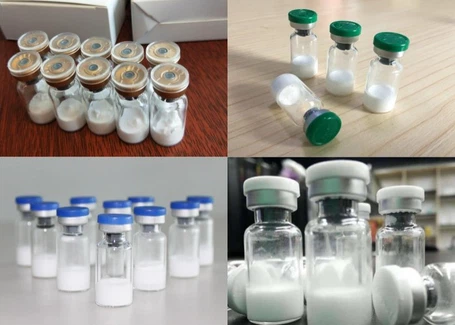

Glucagon powder is a type of insulin produced by the pancreas α Hormones secreted by cells have various uses. The following are the uses of glucagon:
1. Promote glycogen breakdown: Glucagon can promote the breakdown of liver glycogen and inhibit the synthesis of liver glycogen, thereby increasing blood sugar concentration. This is very important for maintaining stable blood sugar levels, as blood sugar levels may decrease during hunger or stress, and the role of glucagon is particularly important.
2. Promoting fat breakdown: Glucagon can promote fat breakdown and increase the concentration of fatty acids in the blood, which is crucial for maintaining energy and metabolic balance in the body.
3. Promoting protein breakdown: Glucagon can promote protein breakdown and increase the concentration of amino acids in the blood, which is crucial for the growth and repair of the body.


4. Regulating insulin secretion: Glucagon can regulate insulin secretion and promote insulin release. Insulin is a hormone that can lower blood sugar, while glucagon can promote insulin secretion, thereby maintaining stable blood sugar levels.
5. Participating in stress response: In stressful situations such as infection, trauma, surgery, etc., the secretion of glucagon increases, thereby increasing the body's energy supply and ability to cope with stress.
6. Participate in the treatment of diabetes: in the treatment of diabetes, glucagon can be used as an auxiliary treatment drug. It can increase the concentration of blood sugar, thus helping to control the blood sugar level of patients with diabetes.
1. There are many factors that affect the secretion of glucagon, and blood glucose concentration is an important factor. When blood sugar decreases, pancreatic secretion of glucagon powder increases; When blood sugar increases, the secretion of glucagon decreases. Amino acids have the opposite effect as glucose and can promote the secretion of glucagon. Protein or intravenous injection of various amino acids can increase the secretion of glucagon. The increase in amino acids in the blood not only promotes insulin release, which can lower blood sugar, but also stimulates the secretion of glucagon, which has certain physiological significance in preventing hypoglycemia.
2. Insulin can indirectly stimulate the secretion of glucagon by lowering blood sugar, but insulin secreted by B cells and somatostatin secreted by D cells can directly act on adjacent A cells, inhibiting the secretion of glucagon.


3. Insulin and glucagon are a pair of hormones with opposite effects, both of which form a negative feedback regulatory loop with blood glucose levels. Therefore, when the body is in different functional states, the molar ratio (I/G) of insulin to glucagon in the blood is also different. Generally, under overnight fasting conditions, the I/G ratio is 2.3, but when hungry or exercising for a long time, the ratio can drop below 0.5. The decrease in proportion is due to a decrease in insulin secretion and an increase in glucagon secretion, which is beneficial for glycogen breakdown and gluconeogenesis, maintaining blood sugar levels, adapting to the needs of the heart and brain for glucose, and promoting fat breakdown, enhancing fatty acid oxidation and energy supply. On the contrary, after ingestion or sugar loading, the ratio can rise to over 10, which is due to an increase in insulin secretion and a decrease in glucagon secretion. In this case, the role of pancreatic islets is not superior.
4. Scientists from the United States and Sweden jointly published a cover article in Cell Metabolism, confirming that human pancreatic islets α Cells can express a type of ionotropic glutamate receptor (GluRs) that is crucial for the release of glucagon.
5. An important feature of glucose homeostasis is the pancreatic islets α Cells effectively release glucagon, also known as insulin resistance or insulin B. Human glucagon is a single chain peptide composed of 29 amino acids starting from N-terminal histidine and ending at C-terminal threonine, with a molecular weight of 3485. Its main function is to counteract insulin and increase blood sugar. However, scientists still have little knowledge about the molecular mechanisms that regulate the secretion of glucagon.


6. In the experiment, researchers analyzed the role of glutamate as a positive autocrine signal in the release of glucagon from human, monkey, and mouse pancreatic islets. The results showed that the positive feedback of glutamate greatly promoted the secretion of glucagon, and once the blood sugar concentration increased, the secretion of glucagon would be affected by insulin, zinc ions, or γ- Limitations of aminobutyric acid (GABA).
7. The decrease in blood sugar concentration can promote pancreatic islets α Cells release glutamate. Glutamate then acts on AMPA and kainate type ionotropic glutamate receptors, causing depolarization of the cell membrane, opening of calcium ion channels, and ultimately increasing the concentration of free calcium ions in the cytoplasm, thereby promoting the release of glucagon. In in vivo experiments in mice, blocking the ionotropic glutamate receptor will reduce the release of glucagon and exacerbate the symptoms of insulin-induced hypoglycemia. Therefore, the autocrine feedback loop of glutamate makes the pancreatic islets α Cells have the ability to effectively enhance their own secretory activity, which is an indispensable prerequisite for ensuring sufficient glucagon powder release under any physiological condition.


Glucagon is a linear polypeptide hormone secreted by pancreatic alpha cells, consisting of 29 amino acid residues with a molecular weight of approximately 3485-3500 daltons. It plays a central role in blood glucose regulation by promoting hepatic glycogen breakdown and gluconeogenesis to increase blood glucose levels, while activating lipase to promote fat breakdown. The synthesis methods are mainly divided into two categories: biosynthesis and chemical synthesis. The following provides a detailed analysis from the technical principles, operating procedures, and comparison of advantages and disadvantages:
Biological synthesis method: based on the natural synthesis pathway of pancreatic alpha cells
Synthesis site and precursor structure
The biosynthesis of glucagon begins in the rough endoplasmic reticulum of pancreatic alpha cells, where the precursor glucagon, consisting of 37 amino acid residues, is first synthesized. The precursor undergoes proteolytic action to remove the C-terminal 8-peptide and form mature 29 peptide glucagon, which is then secreted into granules through the Golgi apparatus and ultimately released into the bloodstream.
Secretory regulation mechanism
Blood glucose level:
Hypoglycemia is the main stimulating factor, and when the blood glucose concentration is below 3.9 mmol/L, the activity of pancreatic alpha cells is enhanced; Elevated blood sugar inhibits the release of glucagon through insulin secretion.
Amino acid levels:
Glycogenic amino acids (such as alanine and glutamate) can promote secretion independently of blood glucose levels, and their mechanisms involve activation of amino acid transporters and the mTOR signaling pathway.
Neuroregulation:
Stimulation of the sympathetic nervous system (such as stress state) directly stimulates secretion through beta adrenergic receptors, while the parasympathetic nervous system inhibits secretion through acetylcholine.
Technical advantages and limitations
Advantages: The synthesis process conforms to physiological laws, the product has high activity and complete structure, and is suitable for studying the function and regulatory mechanism of natural glucagon.
Limitations: Relying on live tissue or cell culture, low yield and high cost, making it difficult to meet industrial production needs.

Chemical synthesis method: innovative breakthrough in solid-phase fragment method
The chemical synthesis method constructs glucagon molecules by artificially simulating amino acid condensation reactions, among which the solid-phase fragment method has become the mainstream technology due to its high efficiency and controllability. Taking a patented technology as an example, analyze its core steps and optimization strategies:
Solid phase fragment synthesis process
Step 1:5-29 Fragment Synthesis
Using Wang resin as the solid phase carrier, the initial peptide resin (Fmoc Thr (tBu) - Wang resin) has a degree of substitution of 0.2-0.5 mmol/g. By connecting amino acids one by one, gradually extend the peptide chain to fragment 5-29 (H-Thr (tBu) - Phe Thr (tBu) - Ser (tBu) - Asp (OtBu) - Tyr (tBu) - Tyr (Boc) - Tyr (tBu) - Leu Asp (OtBu) - Ser (tBu) - Arg (Pbf) - Arg (OtBu) - Phe Val Gln (Trt) - Trp (Boc) - Leu Met Asn (Trt) - Thr (tBu) - Wang resin).
Key parameters:
The molar ratio of amino acids to peptide resin is 1-6:1, ensuring high coupling efficiency;
Coupling reagents: HOBt and DIC mixture, or PyAop/PyBop and organic base (such as DIPEA) mixture, promote amide bond formation;
Reaction solvent: DMF (N, N-dimethylformamide), providing good solubility.
Step 2: Four peptide fragment ligation
Connect the four peptide fragment Fmoc His (Trt) - Ser (tBu) - Gln (Trt) - Gly OH to the 5-29 fragment peptide resin to form the complete glucagon sequence.
Protection based strategy:
Main chain amino: Fmoc or Boc protection to prevent side reactions;
Side chains: His is protected by triphenylmethyl (Trt), Ser is protected by tert butyl (tBu), and Gln is protected by Trt to ensure selective deprotection.
Step 3: Deprotection and peptide cleavage
Use lysis reagents (such as trifluoroacetic acid combined with anise sulfide, benzyl ether, triisopropylsilane, etc.) to acid hydrolyze and remove protective groups, while cutting peptide chains from the resin to obtain crude glucagon.
Step 4: Purification and Freeze Drying
Impurities were removed by high performance liquid chromatography (HPLC), and pure glucagon with a purity of ≥ 99% was obtained after freeze-drying.
Technological advantages and innovation points
Efficiency:
Segmented synthesis reduces side reactions and increases overall yield by 20% -30% compared to traditional solid-phase synthesis;
Low cost:
Avoid using expensive pseudo proline to protect dipeptides, reducing raw material costs by 40% -50%;
Controllability:
Accurately control the reaction conditions at each step to ensure product consistency.
Comparison of other chemical synthesis methods
Traditional solid-phase synthesis method
Principle: Connect amino acids one by one from the C-terminus to the N-terminus, using Fmoc or Boc protecting groups.
Limitations: The difficulty of connecting terminal amino acids is high, and the accumulation of side reactions leads to a decrease in purity (usually ≤ 85%); Although high-temperature reactions can accelerate synthesis, they are prone to side reactions such as racemization.
Enzymatic hydrolysis
Principle: Expression of glucagon powder fusion protein through genetic engineering, followed by enzymatic digestion to recover the target peptide.
Limitations: The steps are cumbersome (requiring expression, purification, enzyme digestion, and recovery), with a cycle of up to 7-10 days, and the efficiency of enzyme digestion is affected by protein conformation.
Suggestions for selecting synthesis methods
Research scenario: Priority is given to biosynthetic methods to obtain naturally occurring glucagon for signal pathway research or animal experiments.
Industrial production: Solid phase fragment method is an ideal choice, as its high efficiency and low cost characteristics are suitable for large-scale preparation of pharmaceutical grade glucagon (such as injections used for hypoglycemic emergency treatment).
Customized requirements: For non natural amino acid modified or labeled glucagon derivatives, traditional solid-phase synthesis combined with orthogonal protecting group strategy can be used.
Hot Tags: glucagon powder cas 16941-32-5, suppliers, manufacturers, factory, wholesale, buy, price, bulk, for sale, Kisspeptin powder, Bremelanotide Powder CAS 189691 06 3, Melanotan 2 Powder, Tesamorelin CAS 218949 48 5, CJC 1295 Peptide, Best Growth Hormone Releasing Peptide CAS 87616 84 0