




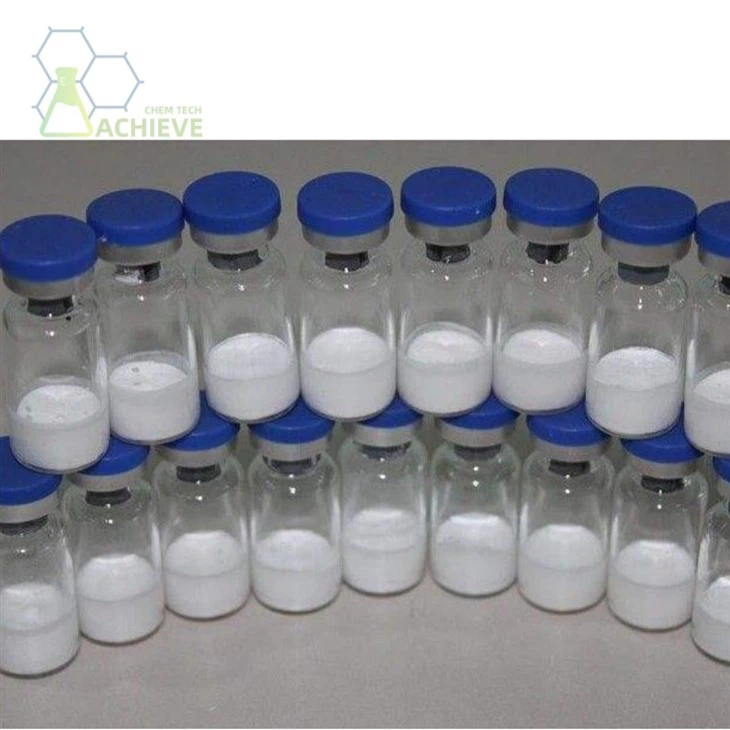
Human IGF-I, or Human Insulin-like Growth Factor 1 (IGF-1), is an important molecule with wide-ranging biological implications. It is a single-chain polypeptide with endocrine, autocrine, and paracrine properties that is produced predominantly by human hepatocytes, with some amount also produced by bone tissue. Its molecular structure is similar to that of insulin, which is why it is called insulin-like growth factor.
Also known as growth regulator C or growth promoter, is an important natural hormone that promotes growth and metabolism. It is known to promote growth and development, mitogenesis, and inhibit apoptosis. It stimulates the proliferation and survival of a variety of cells, including muscle, bone and cartilage tissue.
In terms of metabolism, it can promote glycogen synthesis, lactic acid secretion, inhibit glycogenolysis, and promote the action of insulin; at the same time, it can also promote lipolysis and reduce total triglycerides in the blood to achieve the effect of lowering blood lipids.
Customized Bottle Caps & Corks
|
|
|


Growth and development
Human IGF-I plays a crucial role in human growth and development. It promotes cell proliferation and differentiation, especially plays an important role in the development of bone, muscle and nervous system. Therefore, IGF-1 is used in the treatment of growth and development-related diseases, such as growth retardation and dwarfism.
Metabolic regulation
IGF-1 has insulin-like metabolic activity and can regulate the metabolism of blood glucose, fat and protein. It can promote glycogen synthesis to reduce blood glucose level; promote lipolysis to reduce body fat content; promote protein synthesis to enhance muscle strength and physical performance. Therefore, IGF-1 has certain application value in the treatment of diabetes, obesity and other metabolic diseases.
Trauma repair
IGF-1 has the effect of promoting connective tissue generation and improving collagen formation, which helps cartilage repair and nerve regeneration. Therefore, IGF-1 has potential application value in the fields of trauma repair, tissue regeneration and nerve repair. For example, it can be used to accelerate fracture healing and promote wound healing.
Anti-aging
With age, the level of IGF-1 in the human body gradually decreases, leading to cell reduction and decreased body function. Therefore, supplementation of IGF-1 helps to slow down the aging process and improve the body's immunity and quality of life. However, the application of IGF-1 in the field of anti-aging is still in the research stage.
 |
 |

What is insulin-like growth factor 1 (GF-1)
Insulin like growth factor (IGF) is a broad-spectrum growth promoting factor with a chemical structure similar to proinsulin. It is a homologous single chain polypeptide, and 70% of the amino acids in its molecular composition are the same. IGF binds to insulin-like growth factor binding protein (IGFBP) in both tissues and blood, and exists in the form of a complex. Serum contains multiple IGFs, but so far only two have been purified, named IGF-1 and Human IGF-I. These two factors account for over 90% of the total extractable insulin-like growth factors in serum, and they play a major role in promoting tissue cell growth and development. Various tissues and organs in the body can synthesize and secrete IGF-1, but the most important organ is the liver, which synthesizes about 80% of IGF-1 in the blood. In addition, bone tissue, other tissues, and cells can also synthesize small amounts. IGF-1 in the bloodstream is mainly secreted by the liver, but its expression is distributed in all tissues, suggesting that local autocrine and paracrine IGF-1 may be the main mechanism controlling tissue growth.
What is the clinical significance of IGF-1?

IGF-1 and Growth and Development:&IGF-1 and the heart:
The specific role of IGF-1 in promoting tissue growth is evident. Animal studies have shown that IGF-1 can promote the growth of various tissues such as the skin appendix, colon, uterus, thymus, kidneys, spleen, testes, and adrenal glands. The most promising approach in clinical practice may be the use of IGF-1 to treat patients with Laron type dwarfism.
It is currently believed that IGF-1 is an important cardiogenic hormone involved in various cardiac physiological and pathological processes. IGF-1 can stimulate the growth of myocardial cells, affect cardiac release channels, increase cardiac output, and improve ejection function. IGF-1 can also promote myocardial repair, tissue remodeling, and enhance myocardial contractility during myocardial infarction.
IGF-1 and diabetes:
IGF-1 and insulin are structurally homologous. IGF-1 has been shown to stimulate the transport of glucose in fat and muscle cells by binding to insulin receptors, inhibit liver glucose output and lower blood sugar, while also suppressing insulin secretion. The research shows that there is an abnormality of GH/IGF-1 axis in diabetes, which is manifested by the increase of GH in circulation, the decrease of IGF-1 level, and the change of IGFBPs, which is related to insulin deficiency, the disorder of GH secretion regulation, and hyperglycemia; In addition, T1DM and poorly controlled T2DM patients generally have low IGF-1 levels and increased insulin therapy doses, which are associated with hepatic GH resistance.

The physiological role & regulation of IGF-I
Physiological effects
- Promoting growth and development: IGF-I is a key factor in children's growth and development, which can promote the growth of bones, muscles, and internal organs.
- Regulating metabolism: IGF-I has insulin like metabolic activity and can regulate blood glucose, blood lipids, and protein metabolism.
- Inhibition of cell apoptosis: By inhibiting cell apoptosis, IGF-I helps maintain the normal structure and function of tissues and organs.
Regulatory mechanism
- Growth hormone stimulation: Growth hormone is the main factor that stimulates the liver to produce IGF-I.
- Negative feedback regulation: After the level of IGF-I increases, it will feedback inhibit the secretion of growth hormone, forming a negative feedback regulation mechanism.
- Other factors such as nutritional status, age, gender, and genetic factors can also affect the level of IGF-I.
Final Solution
Skeletal abnormality
Abnormal bone development: IGF-I plays a crucial role in bone development, and when its level increases, it may lead to abnormal bone development, manifested as short stature, short limbs, etc. This may be due to IGF-I promoting early maturation and premature closure of bones, thereby limiting the growth space of bones.
Osteoporosis: Long term high levels of IGF-I may also affect bone mass and density, leading to an increased risk of osteoporosis and fractures.
Muscle weakness
Muscle dysfunction: IGF-I is involved in the growth and repair of muscle tissue, and when its levels are abnormal, it may affect the normal function of muscles. Patients may feel muscle weakness and fatigue, and their exercise ability may also be affected to some extent. This may be due to IGF-I promoting the proliferation and hypertrophy of muscle cells, but it may also lead to the degeneration and functional decline of muscle fibers.
Hypoglycemia
Excessive insulin secretion: IGF-I can promote insulin secretion, thereby regulating blood sugar levels. When IGF-I levels are too high, it may lead to excessive insulin secretion, which in turn can cause hypoglycemia. Patients may experience symptoms such as dizziness, fatigue, sweating, and in severe cases, they may even be life-threatening.
Imbalance in blood glucose regulation: Long term high levels of IGF-I may also affect the mechanism of blood glucose regulation, leading to fluctuations and instability in blood glucose.
The story begins in the 1950s, when scientists first identified a substance in the blood that could stimulate growth in hypophysectomized rats. This substance was later named "sulfation factor" and eventually recognized as IGF-I. In 1978, IGF-I was officially named and categorized along with IGF-II, marking the beginning of extensive research into its biological roles.
Throughout the 1980s and 1990s, researchers delved into the structure and function of IGF-I. It was found to be structurally similar to insulin, consisting of 70 amino acids, and to be produced primarily by the liver under the stimulation of growth hormone (GH). IGF-I was also discovered to exist in almost all tissues of the body, acting in an endocrine, paracrine, and autocrine manner.
One of the key milestones in IGF-I research was the understanding of its role in mediating the effects of GH. It became clear that IGF-I was a major effector of GH, promoting growth and anabolic processes such as protein synthesis, glucose uptake, and fat metabolism. This discovery led to the recognition of the GH-IGF-I axis as a fundamental regulatory pathway in growth and metabolism.
In clinical settings, IGF-I has been studied extensively for its potential therapeutic applications. It has been used to treat conditions such as growth hormone deficiency, short stature, and muscle wasting. However, the use of IGF-I is not without challenges, as it has been associated with side effects such as hypoglycemia and an increased risk of cancer.
To overcome these challenges, researchers have focused on developing IGF-I derivatives and analogs that retain the beneficial effects of the hormone while minimizing its adverse effects. This has led to the development of various IGF-I-based therapies, some of which have shown promise in clinical trials.
In recent years, there has been a growing interest in the role of IGF-I in aging and age-related diseases. Studies have suggested that IGF-I may play a role in the regulation of lifespan and aging processes, opening up new avenues for research into its potential anti-aging effects.
Frequently Asked Questions
Is IGF-1 stronger than HGH?
+
-
While HGH is best for long-term wellness and metabolic improvements, IGF-1 is more effective for short-term growth cycles, recovery protocols, and targeted performance enhancement.
Does IGF-1 increase breast size?
+
-
It has been observed that among young women who underwent hormonal breast augmentation with oestrogen, only those who responded with a significant increase in IGF-1 levels had substantial increases in breast volume
Does IGF-1 increase testicle size?
+
-
In humans, IGF1 directly increases testicular volume. The molecular pathways responsible for testicular differentiation and IGF1/IGF1R signaling are highly conserved among species; therefore, the IGF system may be involved in FSH signaling also in humans.
Hot Tags: human igf-i cas 67763-96-6, suppliers, manufacturers, factory, wholesale, buy, price, bulk, for sale, CAS 2259843 42 8, 2 5 Dihydroxybenzaldehyde, 12H benzofuro 3 2 a carbazole, CAS 2457172 98 2, levamisole hydrochloride powder, 2 biphenyl 4 yl 4 3 9 9 dimethyl 9H fluoren 2 yl biphenyl 3 yl 6 phenyl 1 3 5 triazine