


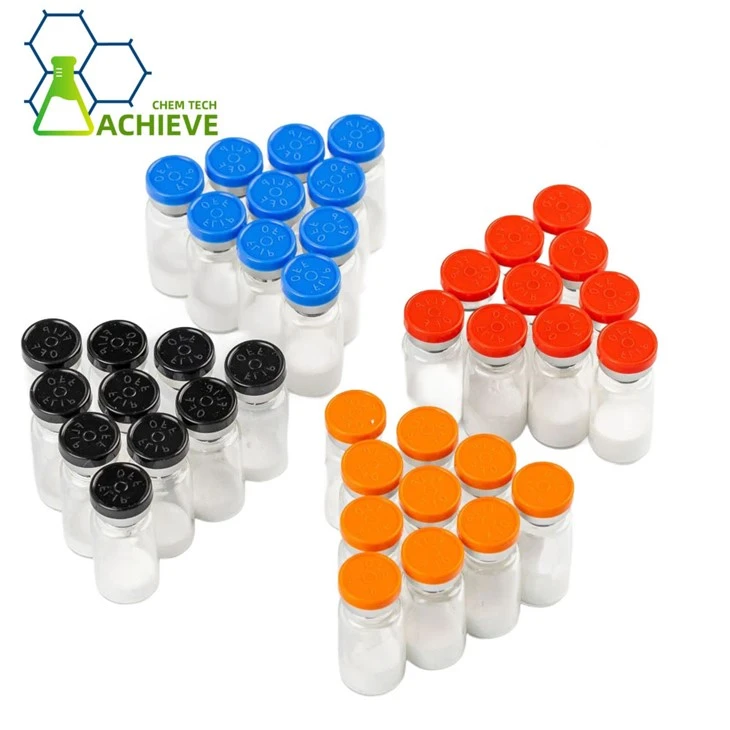




Shaanxi BLOOM Tech Co., Ltd. is one of the most experienced manufacturers and suppliers of leucine enkephalin in China. Welcome to wholesale bulk high quality leucine enkephalin for sale here from our factory. Good service and reasonable price are available.
Leucine enkephalin is an endogenous opioid peptide composed of five amino acids, with the amino acid sequence Tyr Gly Gly Phe Leu, and is an important member of the enkephalin family. This molecule is produced by enzymatic cleavage of the precursor protein proenkephalin and is widely present in the central intense system and various peripheral tissues. It is an important component of the endogenous analgesic system in the body.
Our product form




Leucine Enkephalin COA
 |
||
| Certificate of Analysis | ||
| Compound name | Leucine Enkephalin | |
| Grade | Pharmaceutical grade | |
| CAS No. | 58822-25-6 | |
| Quantity | 60g | |
| Packaging standard | PE bag+Al foil bag | |
| Manufacturer | Shaanxi BLOOM TECH Co., Ltd | |
| Lot No. | 202501090035 | |
| MFG | Jan 9th 2026 | |
| EXP | Jan 8th 2029 | |
| Structure |
|
|
| Item | Enterprise standard | Analysis result |
| Appearance | White or almost white powder | Conformed |
| Water content | ≤5.0% | 0.54% |
| Loss on drying | ≤1.0% | 0.42% |
| Heavy Metals | Pb≤0.5ppm | N.D. |
| As≤0.5ppm | N.D. | |
| Hg≤0.5ppm | N.D. | |
| Cd≤0.5ppm | N.D. | |
| Purity (HPLC) | ≥99.0% | 99.98% |
| Single impurity | <0.8% | 0.52% |
| Total microbial count | ≤750cfu/g | 95 |
| E. Coli | ≤2MPN/g | N.D. |
| Salmonella | N.D. | N.D. |
| Ethanol (by GC) | ≤5000ppm | 500ppm |
| Storage | Store in a sealed, dark, and dry place below -15°C | |
|
|
||


| Chemical Formula: | C28H37N5O7 |
| Exact Mass: | 555 |
| Molecular Weight: | 556 |
| m/z: | 555 (100.0%), 556 (30.3%), 557 (2.7%), 556 (1.8%), 557 (1.7%), 557 (1.4%) |
| Elemental Analysis: | C, 60.53; H, 6.71; N, 12.60; O, 20.16 |

Leucine enkephalin, as an important component of the endogenous opioid peptide system, is widely distributed in the central and peripheral intense systems and participates in the regulation of various physiological and pathological processes through interactions with μ - and δ - opioid receptors. In recent years, its utilize in pain mechaism analysis, neuro circuit efficacy investigate, and emotion and mind illness models has been continuously deepened, and it has become an important investigate tool in the field of neuroscience.

1. Introduction
The endogenous opioid peptide system plays a crucial role in maintaining neuro homeostasis, regulating pain perception, and influencing emotional behavior. As one of the important members of this system, it is widely used in basic neuroscience investigate due to its clear structure, wide distribution, and strong receptor specificity. This peptide activates Gi/o protein coupled opioid receptors, inhibits adenylate cyclase activity, and regulates ion channels, thereby affecting neuronal excitability and neurotransmitter release.
With the deepening of investigate, its use has expanded from the initial analgesicinvestigate to multiple fields such as neuro circuit regulation, cognitive efficacy investigate, and mechaism analysis of mind illness. Therefore, systematically integrating its specific utilizes in different investigate directions is of great significance for understanding its efficacy and expanding its utilizes.


2. Use in analgesia and pain regulation
The utilize in pain investigate spans multiple levels, both central and peripheral, with its core purpose being to elucidate the regulatory mechnisms of the endogenous analgesic system. At the spinal cord level, especially in the superficial dorsal horn region, this peptide is widely used to study the primary integration process of nociceptive signals. Numerous experiments have shown that by acting on presynaptic opioid receptors, it is possible to inhibit the release of glutamate and substance P from sensory nerve endings, thereby reducing the excitability of projection neurons.
This efficacy makes it an important tool molecule for studying the "pain gating mechaism" (Fields HL, 2004). In electrophysiological experiments, exogenous utilize of the peptide or regulation of its endogenous release can significantly alter neuronal firing patterns, which can be used to evaluate changes in synaptic transmission efficiency.
At the brainstem level, it is widely used to study the regulatory role of the descending analgesic system. The gray matter surrounding the aqueduct and the ventromedial medulla constitute a classic descending inhibitory pathway.


And this peptide is involved in regulating neuronal activity in these areas. Investigate has shown that it can enhance the activity of inhibitory neurons, thereby reducing the transmission of injury signals to higher centers. This utilize has important value in stress analgesia models and neuro regulation investigate, and has been used to explain various non pharmacological analgesic phenomena.
In the study of inflammatory pain, its main utilize lies in the analysis of the interaction between the immune system and the intense system. In chronic inflammation models such as rheumatoid arthritis,
Studies have found that immune cells can release enkephalins at the site of inflammation and produce analgesic effects by activating opioid receptors in peripheral nerve endings. This discovery makes it a key molecule for studying the 'peripheral opioid system' (Stein, 2016). In addition, in the postoperative pain and tissue damage model, this peptide is used to evaluate local analgesic strategies, providing a theoretical basis for reducing the side effects of central opioid drugs.
In neuropathic pain investigate, it is widely used to analyze the molecular mechnisms underlying the occurrence and maintenance of chronic pain.


In the neuro injury model and diabetes neuropathy, studies have found that the decrease of enkephalin expression is closely related to pain sensitization.
This phenomenon suggests that dys efficacy of the endogenous analgesic system plays an important role in chronic pain. Therefore, this peptide is used to evaluate changes in neuroplasticity and the efficacy status of the analgesic system. In addition, in the cancer pain model, leucine enkephalin is used to study the analgesic regulatory mechaism in the tumor microenvironment, especially in the presence of inflammatory cells, and its local release has an important impact on pain relief.
3. Its use in regulating intense system function
It has a wide range of utilizes in the study of intense system efficacy regulation. In the basal ganglia system, this peptide is mainly expressed in neurons of the striatal indirect pathway, making it an important tool for studying motor control and neuro circuit regulation. In Parkinson's disease models, changes in expression levels are used to reflect the activity status of indirect pathways. Investigate has shown that under conditions of dopamine deficiency, the expression of this peptide is upregulated, thereby enhancing inhibitory output and leading to impaired motor efficacy.


Therefore, this peptide has important utilizes in deciphering the mechnisms of motor disorders.
It has been widely used in epilepsy models in the study of neuro excitability regulation. In epilepsy investigate, this peptide reduces excessive synchronization of neuro networks by inhibiting excitatory synaptic transmission and enhancing inhibitory neuro activity. This use makes it an important molecule for studying the stability of neuro networks.
In addition, by observing the effect of this peptide on neuronal firing frequency and synaptic transmission, the mechaism of epileptic seizures can be further elucidated.
In the hippocampus, this peptide can affect the processes of long-term potentiation and long-term inhibition, thereby regulating information storage and extraction. Investigate has shown that it has a significant impact on cognitive efficacy by regulating glutamate receptor activity and neurotransmitter release. Therefore, this peptide is widely used in cognitive neuroscience investigate.


In neuroprotective investigate, it is used to analyze the protective mechnisms after nerve injury. In stroke and traumatic brain injury models, this peptide exhibits a certain neuroprotective effect by inhibiting cell apoptosis, reducing inflammatory response, and lowering oxidative stress levels. This use makes it an important molecular tool for evaluating neuroprotective strategies.
Application in the study of emotions and mind illnesses
In the study of emotions and mind illnesses, its main purpose is to regulate the reward system and emotional behavior. In the depression model, the decline in the efficacy of the enkephalin system is closely related to the loss of pleasure. By adjusting its levels and observing changes in animal behavior, investigate can be used to analyze the mechnisms of antidepressant treatment (Nestler&Carlezon, 2006). This peptide regulates dopamine release in the nucleus accumbens region, thereby affecting reward perception.


In anxiety disorder investigate, emotional responses are regulated by acting on the amygdala and prefrontal cortex. It can suppress excessive neuro excitement, thereby reducing levels of anxious behavior. This purpose is of great significance for understanding the mechaism of emotional regulation.
In addiction investigate, this peptide is widely used to analyze reinforcement effects and neuro adaptation mechnisms.
In the opioid dependence model, the dopamine system in the nucleus accumbens is regulated to participate in the process of reward and dependence formation (Shippenberg et al., 1987). In addition, it has also been used in the study of alcohol and other substance addiction to analyze changes in neuro circuits.
In stress investigate, it is used to regulate neuroendocrine responses, especially the hypothalamic pituitary adrenal axis. By affecting cortisol release, this peptide is involved in the body's adaptation process to stress (Drolet et al., 2001).

Leucine enkephalin has broad and multi-level utilizes in neuroscience investigate. This peptide plays an important role in multiple investigate fields, from pain regulation to the analysis of neuro circuit efficacy, and then to the study of emotional and psychiatric mechnisms. As an important molecule connecting the intense, immune, and endocrine systems, it not only provides a key tool for basic investigate, but also provides important basis for a deeper understanding of the mechnisms of related diseases.
References
1. Nature
2. Journal of Neuroscience
3. Brain Research
4. Trends in Pharmacological Sciences
5. Endocrine Reviews
6. Hughes J et al., 1975
7. Fields HL, 2004
8. Stein C, 2016
9. Gerfen CR et al., 1990
10. Shippenberg TS et al., 1987
11. Drolet G et al., 2001
12. Nestler EJ & Carlezon WA, 2006
FAQ
What is leucine enkephalin?
Leu-enkephalin is defined as a five amino acid endogenous peptide that acts as an agonist at opioid receptors. It is one of the first discovered endogenous opioid peptides, alongside its congener Met-enkephalin.
Is leu-enkephalin a painkiller?
Leucine-enkephalin (Leu-ENK), the endogenous delta opioid receptor agonist, controls pain and mood and produces potent analgesia with reduced adverse effects compared to conventional opioids.
Hot Tags: leucine enkephalin, suppliers, manufacturers, factory, wholesale, buy, price, bulk, for sale, Melanotan ii powder, Melanotan 2 Powder, LONG R3 IGF I CAS 143045 27 6, Best Growth Hormone Releasing Peptide CAS 87616 84 0, Kisspeptin powder, DecaPeptide 12 CAS 137665 91 9