




Shaanxi BLOOM Tech Co., Ltd. is one of the most experienced manufacturers and suppliers of pacap-38 in China. Welcome to wholesale bulk high quality pacap-38 for sale here from our factory. Good service and reasonable price are available.
PACAP-38 (Pituitary Adenylate Cyclase-Activating Polypeptide-38), It is a highly conserved neuropeptide composed of 38 amino acids, belonging to the vasoactive intestinal peptide (VIP)/glucagon family. This molecule was first isolated and identified from the hypothalamus of mammals in 1989, named after its ability to significantly promote the activity of adenylate cyclase in pituitary cells. PACAP-3 exhibits high conservation across species in both structure and function, with homologous molecules present in both invertebrates and humans, indicating its significant biological importance in the evolutionary process.
Our product form
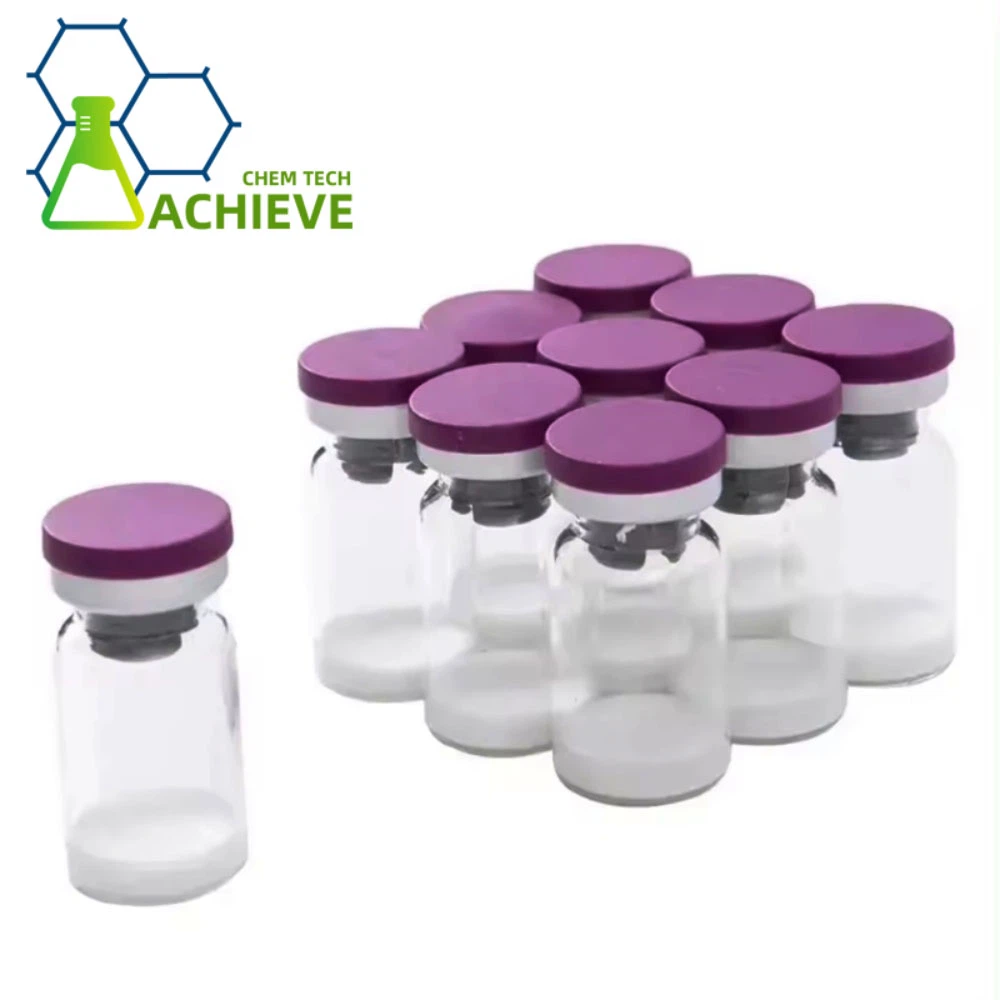


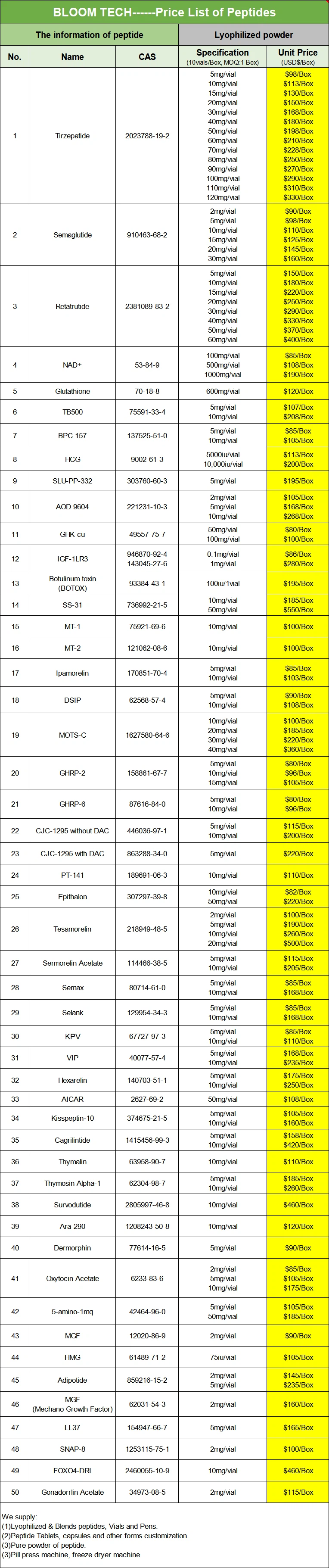
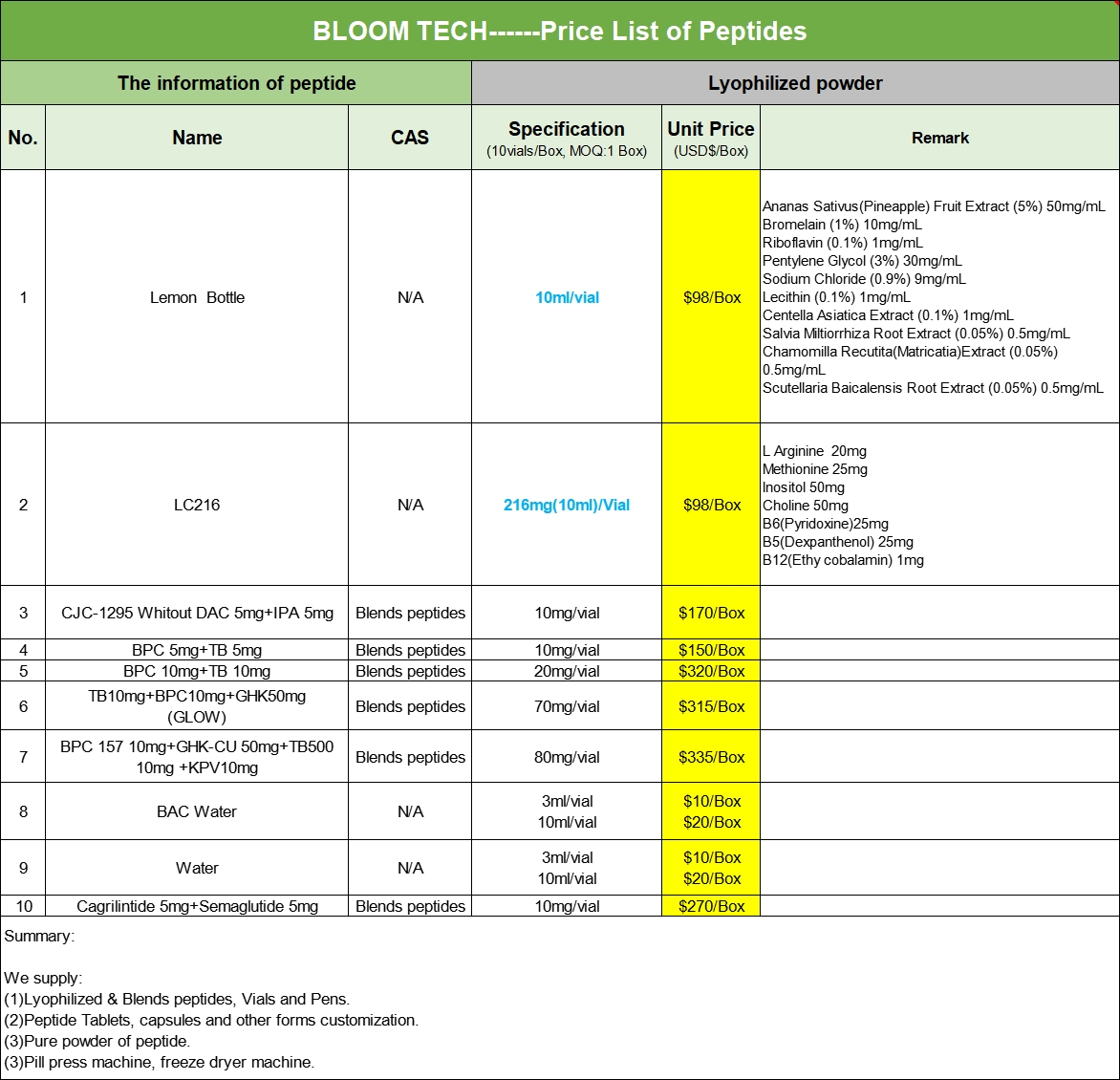

PACAP-38 COA
 |
||
| Certificate of Analysis | ||
| Compound name | PACAP-38 | |
| Grade | Pharmaceutical grade | |
| CAS No. | 137061-48-4 | |
| Quantity | 60g | |
| Packaging standard | PE bag+Al foil bag | |
| Manufacturer | Shaanxi BLOOM TECH Co., Ltd | |
| Lot No. | 202501090035 | |
| MFG | Jan 9th 2026 | |
| EXP | Jan 8th 2029 | |
| Structure | N/A | |
| Item | Enterprise standard | Analysis result |
| Appearance | White or almost white powder | Conformed |
| Water content | ≤5.0% | 0.54% |
| Loss on drying | ≤1.0% | 0.42% |
| Heavy Metals | Pb≤0.5ppm | N.D. |
| As≤0.5ppm | N.D. | |
| Hg≤0.5ppm | N.D. | |
| Cd≤0.5ppm | N.D. | |
| Purity (HPLC) | ≥99.0% | 99.98% |
| Single impurity | <0.8% | 0.52% |
| Total microbial count | ≤750cfu/g | 95 |
| E. Coli | ≤2MPN/g | N.D. |
| Salmonella | N.D. | N.D. |
| Ethanol (by GC) | ≤5000ppm | 500ppm |
| Storage | Store in a sealed, dark, and dry place below -15°C | |
|
|
||


From the distribution characteristics, it is widely present in the central nervous system and peripheral tissues. In the central nervous system, it is expressed abundantly in the hypothalamus, hippocampus, brainstem, and cerebral cortex, and is involved in key processes such as neurotransmitter regulation, neural development, and synaptic plasticity. In peripheral tissues, it can also be found in endocrine glands, gastrointestinal tract, pancreas, cardiovascular system, and immune cells, reflecting its multi system integration as a "neuroendocrine immune regulatory factor".
Biological functions are mainly mediated through specific receptors, including PAC1 receptors and VPAC1 and VPAC2 receptors shared with VIP. The PAC1 receptor has a high affinity for PACAP and is the main mediator of its specific effects. After receptor activation, multiple intracellular signaling pathways can be triggered, including cAMP/PKA pathway, PLC/IP3/Ca ² ⁺ pathway, and MAPK pathway, thereby regulating cell proliferation, differentiation, apoptosis, and metabolic activity. The ability to integrate multiple signaling pathways enables product to exhibit highly diverse biological effects in different cell types.


PACAP-38 is a neuropeptide widely distributed in the central nervous system and peripheral tissues, belonging to the vasoactive intestinal peptide (VIP)/glucagon family. It regulates various physiological functions by acting on PAC1 receptors, VPAC1 and VPAC2 receptors. Due to its critical role in neuroprotection, metabolic regulation, inflammatory response, and endocrine regulation, it has become an important molecular tool in basic research and translational medicine, and has demonstrated potential application value in multiple disease fields.

Application in neurological diseases
The main applications in the nervous system are focused on neuroprotection and neural repair. It can exert a protective effect in various neurodegenerative disease models by activating the intracellular cAMP/PKA signaling pathway, inhibiting neuronal apoptosis, and promoting cell survival.
In Alzheimer's disease related research, it has been used to reduce neurotoxicity induced by β - amyloid protein. Research has shown that this peptide can reduce oxidative stress levels and enhance neuronal resistance to damage, thereby improving cognitive dysfunction (Reglodi et al., 2011).
In addition, in Parkinson's disease models, by protecting dopaminergic neurons, reducing neuroinflammatory responses, and improving motor dysfunction.
In models of cerebral ischemia and brain injury, it also demonstrates significant utility. It is widely used in neuroprotective mechanism research by reducing ischemia-reperfusion injury, inhibiting inflammatory cell infiltration, and reducing cell apoptosis rate. These characteristics make it an important candidate molecule for stroke intervention strategy research (Shioda et al., 2016).


Application in Migraine and Neurovascular Diseases
Its role in neurovascular regulation makes it one of the key molecules in migraine research. In migraine research, it is widely used to induce experimental migraine models. Clinical studies have shown that exogenous PACAP-38 can induce migraine like headache attacks, which has been used to study the pathogenesis of the disease and novel therapeutic targets (Schytz et al., 2009).
In addition,it has important applications in the study of cerebral blood flow regulation by dilating cerebral blood vessels, regulating neuroinflammation, and affecting the function of the trigeminal nervous system. Its mechanism of action involves vascular smooth muscle relaxation and regulation of neurotransmitter release, therefore it is widely used in research related to cerebrovascular diseases.
Application in endocrine and metabolic regulation
The endocrine system plays an important regulatory role, especially in pancreatic function and energy metabolism. Research has shown that it can promote the secretion of insulin by pancreatic beta cells, thereby participating in the process of blood glucose regulation. Therefore, it has been used to explore the mechanism of islet function protection and insulin secretion regulation in the research related to type 2 diabetes (Yada et al., 2000).


In addition, it also participates in lipid metabolism and energy balance regulation. It affects appetite and energy expenditure through the central nervous system and has been used in obesity and metabolic syndrome research to decipher the neural metabolic regulatory network.
In hypothalamic regulation research, it is used to analyze the role of neuropeptides in hormone secretion regulation, such as their effects on adrenocorticotropic hormone release and stress response. These uses further expand its application scope in endocrine research.
Application in immune regulation and anti-inflammatory research
The main applications in the immune system are in anti-inflammatory and immune regulation. It can inhibit the release of pro-inflammatory cytokines such as TNF - α and IL-6, while promoting the expression of anti-inflammatory factors, thereby playing a regulatory role in the inflammatory response.
In the inflammatory bowel disease model, it is used to alleviate intestinal inflammatory damage.


Research has found that it helps maintain intestinal barrier function by regulating immune cell activity and inhibiting inflammatory signaling pathways (Delgado et al., 2004).
In addition, it has been used in the study of autoimmune diseases to regulate T cell responses and suppress immune overactivation. These applications make it an important candidate molecule for immune regulation research.
Application in the cardiovascular system
The main applications in the cardiovascular system are focused on vasodilation and myocardial protection. It promotes vascular smooth muscle relaxation and reduces vascular resistance by activating receptor-mediated signaling pathways.
In hypertension research, it is used to explore vascular regulation mechanisms and antihypertensive strategies. Its vasodilatory effect makes it a potential target for cardiovascular therapy (Reglodi et al., 2012).
In addition, in the myocardial ischemia-reperfusion injury model, PACAP-38 exhibits anti apoptotic and antioxidant effects, which can reduce myocardial cell damage. This use makes it of significant value in cardiac protection research.


Application in Reproductive System and Developmental Biology
The main applications in the reproductive system are reflected in hormone regulation and cell development. It participates in regulating the secretion of gonadotropins in the hypothalamus and pituitary gland, and is therefore used to study the mechanism of reproductive endocrine regulation.
In ovarian function research,it is used to analyze follicular development and hormone secretion regulation.
Research has shown that this peptide can promote the survival of granulosa cells and regulate steroidogenesis, thereby affecting ovarian function (Gras et al., 1999).
In addition, it has been used in embryonic development research to explore the signaling regulatory mechanisms involved in cell proliferation, differentiation, and organ formation processes. These applications demonstrate its significant research value in developmental biology.


Potential applications in tumor research
The main applications in tumor research are reflected in the regulation of cell proliferation and apoptosis. Its function is bidirectional and may manifest as promoting or inhibiting tumor growth in different types of tumors.
In some neuroendocrine tumor studies, it is used to promote cell differentiation and inhibit tumor malignant progression. In other types of tumors, it affects tumor cell proliferation by regulating cell signaling pathways (Vaudry et al., 2009).
In addition, it has also been used to study the neural immune regulatory mechanisms in the tumor microenvironment, providing new research directions for tumor treatment strategies.
The instrumental use in experimental research and drug development
As a functional neuropeptide, it is widely used as a tool molecule in basic research. Its applications include receptor function validation, signal pathway analysis, and new drug screening.
In the process of drug development, it is often used to evaluate the activity of novel receptor agonists or antagonists. In addition, by constructing PACAP related models, researchers can conduct in-depth analysis of its mechanisms of action in different systems.
This instrumental use makes it important in neuroscience, endocrinology, and pharmacology research.

References:
1. Endocrine Reviews
2. Physiological Reviews
3. Journal of Neurochemistry
4. Trends in Neurosciences
5. Nature Reviews Endocrinology
6. Vaudry D et al. (2009) PACAP and its receptors: from structure to functions
7. Reglodi D et al. (2011–2012) PACAP neuroprotection studies
8. Delgado M et al. (2004) PACAP in immune regulation
9. Schytz HW et al. (2009) PACAP and migraine
10. Yada T et al. (2000) PACAP and insulin secretion
Hot Tags: pacap-38, suppliers, manufacturers, factory, wholesale, buy, price, bulk, for sale, Tesamorelin CAS 218949 48 5, GLP 1 Peptide CAS 87805 34 3, Melanotan 2 Powder, Bremelanotide Powder CAS 189691 06 3, LONG R3 IGF I CAS 143045 27 6, Lpamorelin Powder CAS 170851 70 4