




Shaanxi BLOOM Tech Co., Ltd. is one of the most experienced manufacturers and suppliers of mog 35 55 peptide in China. Welcome to wholesale bulk high quality mog 35 55 peptide for sale here from our factory. Good service and reasonable price are available.
The myelin oligodendrocyte glycoprotein 35-55 fragment, commonly abbreviated and recognized as mog 35 55 peptide in academic laboratories worldwide, acts as a crucial autoantigen mediator extensively adopted in the frontier field of central nervous system autoimmune immunity research, and it occupies an irreplaceable foundational position throughout the whole process of developing novel targeted therapeutic drugs and uncovering the complex underlying pathological mechanisms driving multiple sclerosis (MS).
Its prominent core research value is fully embodied and concentrated within three vital independent dimensions: high-throughput targeted drug screening, standardized in vivo and in vitro drug efficacy evaluation, and reproducible autoimmune animal disease model construction, collectively supplying indispensable core experimental and technical support for systematic basic research and translational medical exploration of MS, a refractory, chronic and progressive autoimmune neurological disorder that lacks radical curative treatments. The subsequent content will elaborate on the specific application significance and operational details of these three core research points from multiple molecular, cellular and animal experimental dimensions respectively.
Our Products
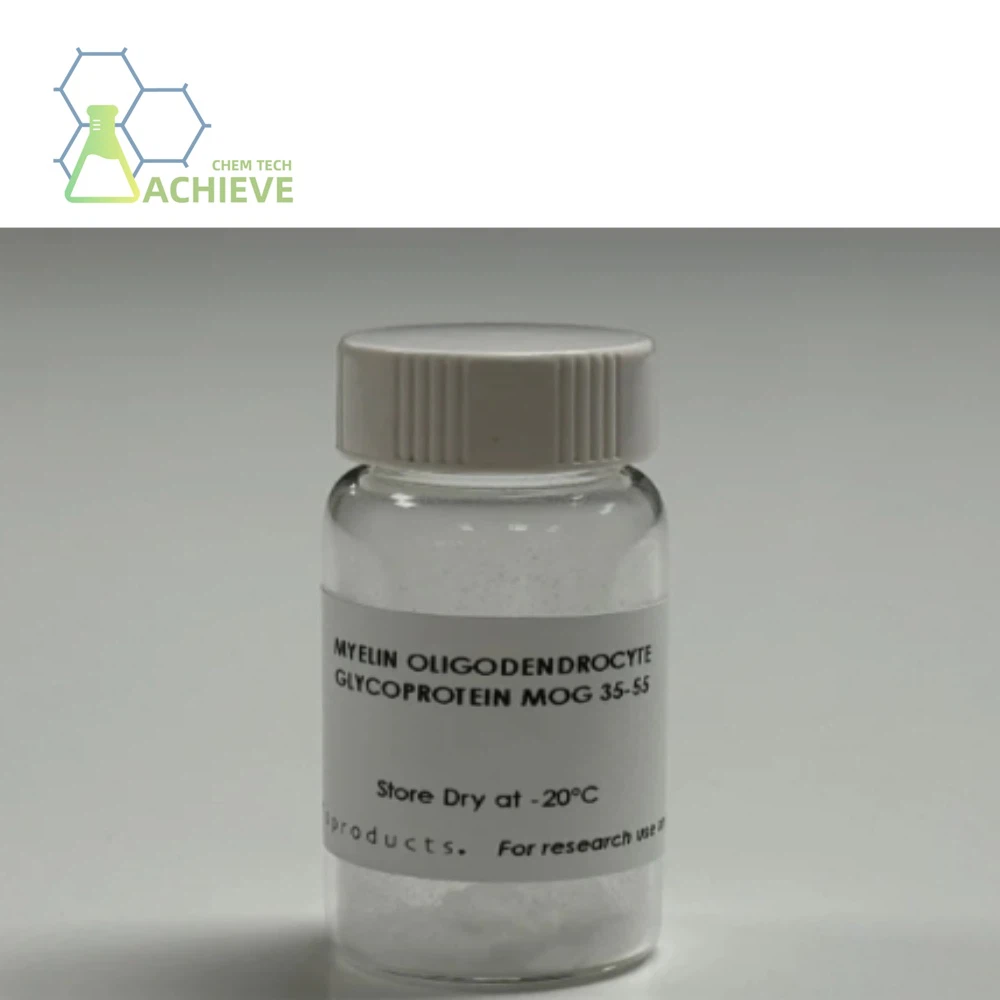
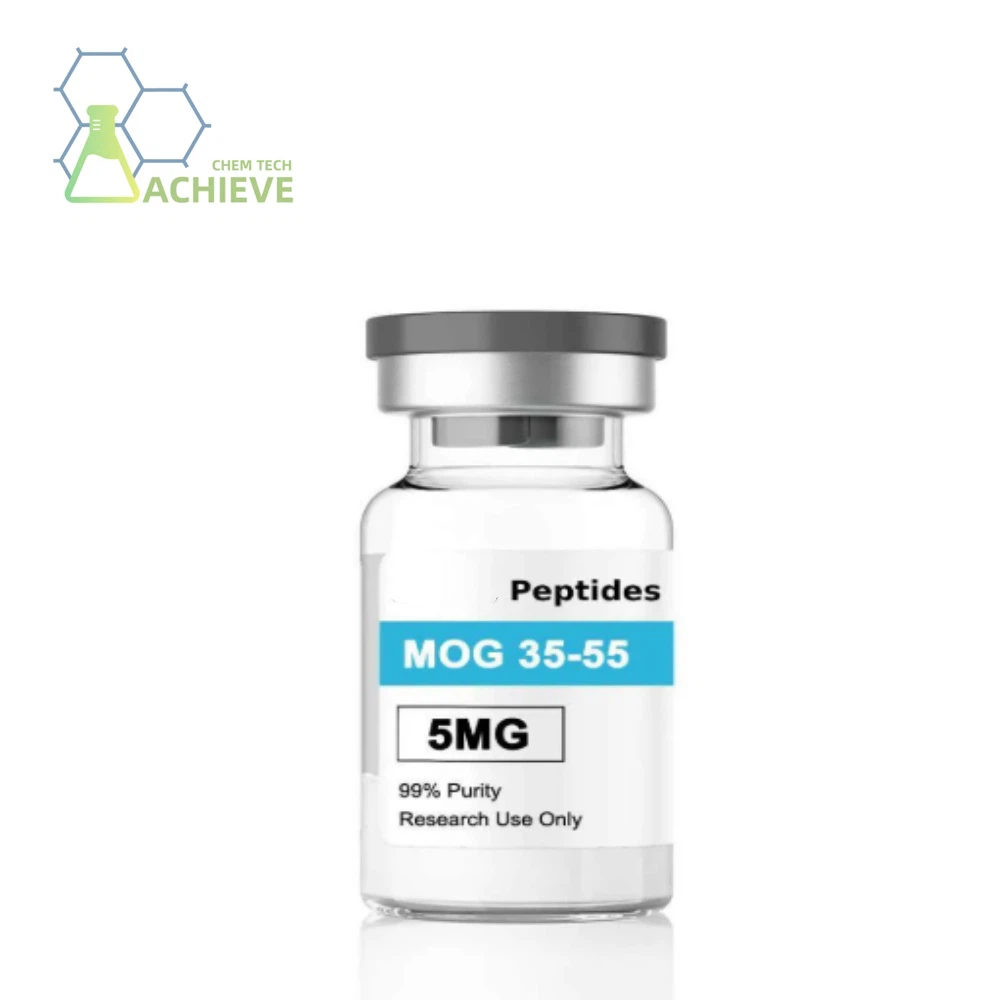


Mog (35-55) COA
 |
||
| Certificate of Analysis | ||
| Compound name | Mog (35-55) | |
| Grade | Pharmaceutical grade | |
| CAS No. | 149635-73-4 | |
| Quantity | 35g | |
| Packaging standard | PE bag+Al foil bag | |
| Manufacturer | Shaanxi BLOOM TECH Co., Ltd | |
| Lot No. | 202601090035 | |
| MFG | Jan 9th 2026 | |
| EXP | Jan 8th 2029 | |
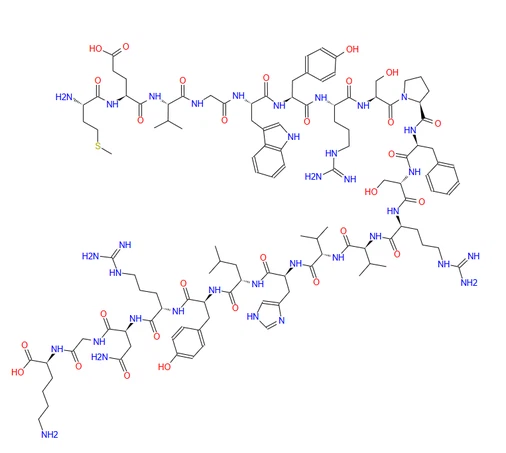
| Structure |
|
|
| Item | Enterprise standard | Analysis result |
| Appearance | White or almost white powder | Conformed |
| Water content | ≤5.0% | 0.54% |
| Loss on drying | ≤1.0% | 0.42% |
| Heavy Metals | Pb≤0.5ppm | N.D. |
| As≤0.5ppm | N.D. | |
| Hg≤0.5ppm | N.D. | |
| Cd≤0.5ppm | N.D. | |
| Purity (HPLC) | ≥99.0% | 99.98% |
| Single impurity | <0.8% | 0.52% |
| Total microbial count | ≤750cfu/g | 95 |
| E. Coli | ≤2MPN/g | N.D. |
| Salmonella | N.D. | N.D. |
| Ethanol (by GC) | ≤5000ppm | 500ppm |
| Storage | Store in a sealed, dark, and dry place below -15°C | |
|
|
||


The core mediating role of MOG (35-55) in MS drug screening
The mog 35-55 peptide, endowed with highly specific and stable immunogenic properties that mimic the pathological autoimmunity of multiple sclerosis lesions, has gradually become an indispensable core experimental tool for the preliminary high-throughput screening and subsequent biological activity verification of various MS therapeutic candidate drugs, offering a unified repeatable standardized screening paradigm to accelerate the research and development of new therapeutic drugs designed to act on distinct disease-related therapeutic targets. The detailed application value of this screening system can be fully elaborated based on the clear screening logic corresponding to three mainstream types of therapeutic drugs:
Screening and adaptation of immunosuppressants
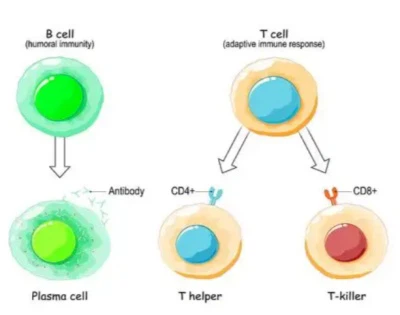
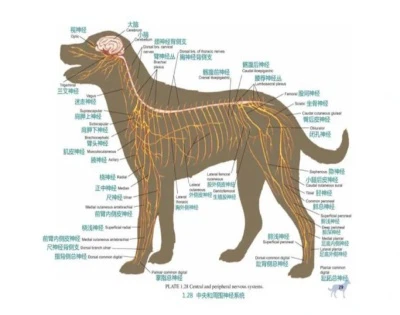
The immune response disorder model induced by MOG (35-55) can accurately simulate the pathological process of abnormal activation of immune cells attacking myelin sheaths in MS patients, providing a clinically relevant experimental scenario for the screening of immunosuppressants. It can effectively identify the inhibitory effect of candidate drugs on T/B cell activation, screen potential drugs that can specifically regulate immune response and reduce autoimmune damage, and avoid body damage caused by non-specific immune suppression. Compared with traditional screening methods, its screening specificity and clinical relevance are significantly improved.
Targeted screening of anti-inflammatory drugs
One of the core pathological features of MS is chronic inflammatory infiltration of the central nervous system. MOG (35-55) can induce neuroinflammation in experimental animals, simulate the pathological state of abnormal elevation of inflammatory factors and infiltration of inflammatory cells in MS patients, and based on this, screen candidate drugs that can target the inhibition of inflammatory factor release and reduce inflammatory cell infiltration. At the same time, the anti-inflammatory efficacy and dose-dependent relationship of drugs can be preliminarily determined, providing reference for the formulation of subsequent clinical administration plans.
Screening pathway for neuroprotective agents
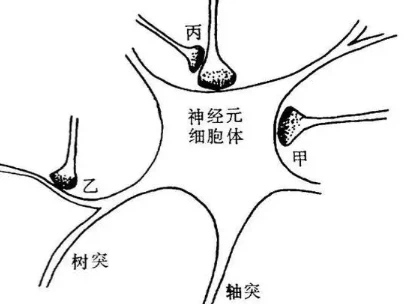
The demyelination and axonal injury are interrelated in the course of MS, and the mog 35 55 peptide induced model can present typical characteristics of myelin injury and neurodegeneration. Using this as a screening carrier, neuroprotective agents that can delay myelin loss, promote axonal repair, and reduce neuronal apoptosis can be screened, filling the drug screening gap in the field of MS neuroprotective therapy and providing new research and development directions for multi-target therapy of MS.
MOG (35-55) complete discovery timeline
1978-1980: Researchers isolated the myelin oligodendrocyte glycoprotein MOG from the central myelin sheath of animals, confirming that the full-length protein can induce autoimmune encephalomyelitis, but the key pathogenic short peptide fragment has not yet been identified.
1990-1994: Researchers completed the sequencing of MOG extracellular domain genes and immunized experimental animals one by one by synthesizing multiple short peptides in segments. The 35-55 amino acid segment was selected to have the strongest pro-inflammatory activity.
In 1995, two landmark studies jointly confirmed that MOG (35-55) is a core immunopathogenic epitope that can stably induce multiple sclerosis like lesions in mice and rats, becoming a standard modeling peptide.
1996-2000: Through truncation mutation experiments, the functional region of this peptide segment was accurately separated, and it was determined that it can synchronously activate pathogenic T and B lymphocytes, highly replicating the dual immune damage characteristics of human demyelinating diseases.
From 2001 to 2010, cross animal species experiments were conducted to verify the applicability of the peptide, and it was found that its sequence was associated with human MOG antibody related encephalopathy. The peptide synthesis process was mature and commercially popularized.
Since 2010, mog (35-55) has been continuously used for neuroinflammation, myelin repair, and immune drug screening. Derived modified peptide segments and transgenic animal models have further expanded its scientific research application scenarios.
The multidimensional efficacy evaluation value of MOG (35-55) for MS candidate drugs
Compared to conventional single-index drug efficacy evaluation methods that often carry obvious limitations in comprehensiveness, MOG (35-55) peptide relies on its stably induced, highly repeatable standardized autoimmune experimental animal model to precisely quantify the comprehensive therapeutic effects of potential MS candidate drugs from three mutually complementary core pathological dimensions: central nervous system inflammatory infiltration, myelin sheath integrity and demyelination degree, as well as overall neurological motor and sensory function, effectively guaranteeing highly scientific, objective and statistically reliable evaluation results for preclinical drug research. The detailed detection indicators and judgment standards corresponding to these specific evaluation dimensions are listed as follows:
Quantitative evaluation of inflammation reduction effect
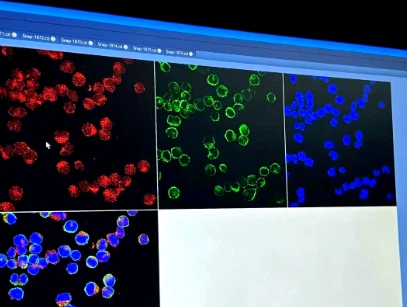
Through the MOG (35-55) induced experimental model, the inhibitory effect of candidate drugs on the activation of microglia and astrocytes, as well as the downregulation of pro-inflammatory factors such as IFN - γ and IL-17, can be accurately quantified using immunofluorescence detection, cytokine quantitative analysis, and other methods. At the same time, changes in the infiltration range of inflammatory cells can be observed, and the anti-inflammatory efficacy of drugs can be clarified through quantitative indicators to avoid subjective evaluation bias.
Detection of demyelination improvement effect
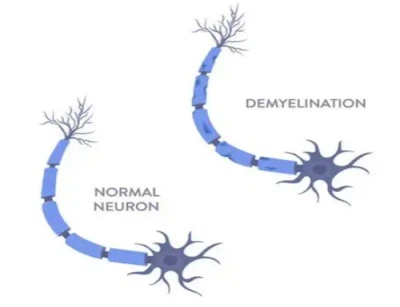
The model induced by MOG (35-55) can exhibit pathological features of myelin sheath loss that are highly consistent with those of MS patients. Through myelin staining, detection of myelin basic protein (MBP) expression, and other methods, the protective effect of candidate drugs on myelin sheath integrity can be visually observed, the area and degree changes of demyelinating lesions can be quantified, and the effect of drugs in delaying myelin sheath injury and promoting myelin sheath repair can be clarified, providing core pathological basis for the efficacy judgment of drugs.

Comprehensive evaluation of neurological function improvement
Based on the behavioral characteristics of the mog 35 55 peptide induction model, the improvement effect of candidate drugs on the motor coordination ability, limb symmetry, and sensory motor function of experimental animals can be evaluated through behavioral testing methods such as horizontal staircase experiment, cylinder experiment, and corner experiment. At the same time, combined with neuroelectrophysiological testing, the recovery of neural signal transduction efficiency can be quantified to achieve a comprehensive evaluation of the drug's neuroprotective effect, which is in line with the clinical symptom improvement needs of MS patients.
MOG (35-55) as the gold standard for EAE modeling and its pathological association with MS
As a clinically refractory autoimmune neurological disease, the ambiguity of its etiology and the complexity of its pathological mechanisms have led to research relying on standardized animal models. MOG (35-55), with its unique advantages, has become the gold standard antigen for experimental autoimmune encephalomyelitis (EAE) modeling. The core correlation between the three can be analyzed from the following dimensions:MS, as a chronic inflammatory demyelinating refractory autoimmune disease of the central nervous system, has an unclear pathogenesis and is related to multiple factors. Clinical conditions are characterized by multiple occurrences in time and space, recurrent course, and no cure.gni.
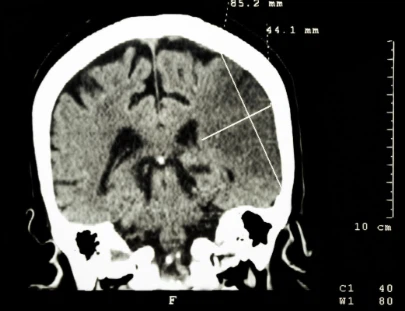

Standardized animal models are needed to support research; EAE is the most accurate and widely used animal model for simulating MS pathology, which can replicate its core pathology and clinical symptoms, and build a foundation and clinical translation bridge for related research and drug development; As a key immune advantage epitope of MOG, mog 35 55 peptide has strong immunogenicity and can specifically activate T/B cells to induce stable, reproducible, and highly compatible EAE with MS pathology. Compared with other antigens, MOG has more advantages and has become the gold standard for EAE modeling, providing a standardized experimental basis for MS research.
It can stably trigger typical demyelinating lesions mainly distributed in the spinal cord and brain tissue of experimental animals, closely simulating the spatial distribution characteristics of lesions observed in MS patients. Researchers can flexibly adjust the peptide dosage and immunization adjuvant dosage to control the onset time, peak severity and duration of clinical symptoms, which facilitates longitudinal dynamic observation of disease progression and accurate quantitative comparison of therapeutic intervention effects. Furthermore, this model supports multi-layered research covering cellular immunity, humoral immunity, tissue pathology and neurological function detection, laying solid experimental groundwork for revealing the unclarified pathogenic signaling pathways of multiple sclerosis and screening high-efficiency targeted therapeutic agents.

References
Bittner S, et al. The Task 1 channel inhibitor A293 shows efficacy in a mouse model of multiple sclerosis[J]. Experimental Neurology, 2012, 238: 149-155.
Li Li, Zhang Qiang Application of MOG (35-55) mediated EAE model in the efficacy evaluation of MS candidate drugs [J]. Chinese Pharmacological Bulletin, 2024, 40 (3): 456-462
Stromnes IM, Goverman JM. Active induction of experimental allergic encephalomyelitis[J]. Nature Protocols, 2006, 1: 1810-1819.
FAQ
What is MOG 35-55?
-
MOG (35-55) or myelin oligodendrocyte glycoprotein (MOG) 35-55 is a minor component of CNS myelin. MOG (35-55) produces a relapsing-remitting neurological disease with extensive plaque-like demyelination, common to the manifestations of multiple sclerosis.
Why can MOG (35-55) become the gold standard antigen for EAE modeling?
-
MOG (35-55), as a well-recognized key immune dominant epitope derived from full-length myelin oligodendrocyte glycoprotein, possesses potent inherent immunogenicity and can specifically activate pathogenic autoreactive T cells and B cells in vivo, thereby successfully inducing highly stable experimental autoimmune encephalomyelitis (EAE) in various common experimental animals such as mice and rats; The characteristic inflammatory demyelinating pathological phenotype triggered by this peptide is highly consistent with the core pathological changes seen in clinical multiple sclerosis patients, and this modeling method simultaneously owns outstanding advantages including strong experimental reproducibility, simple operation steps and short preparation cycles. Compared with other classic EAE modeling antigens like PLP and MBP, MOG 35-55 induced lesions better mimic the typical demyelination, inflammatory infiltration and axonal damage pathological characteristics of human MS lesions, which makes this peptide the universally acknowledged gold standard antigen for constructing classic EAE animal models in preclinical multiple sclerosis research.
How do I get a receipt for my purchase?
+
-
It can induce the EAE model to simulate the immune disorders, inflammatory infiltration, and neurological damage pathological characteristics of MS, providing targeted screening scenarios for immunosuppressants, anti-inflammatory drugs, and neuroprotective agents, achieving activity identification of different target drugs, and the screening results have strong clinical relevance, which can effectively shorten the new drug development cycle.
Hot Tags: mog 35 55 peptide, suppliers, manufacturers, factory, wholesale, buy, price, bulk, for sale, Melanotan ii powder, Tesamorelin CAS 218949 48 5, sermorelin powder, Selank Peptide CAS 129954 34 3, Kisspeptin powder, CJC 1295 Peptide