


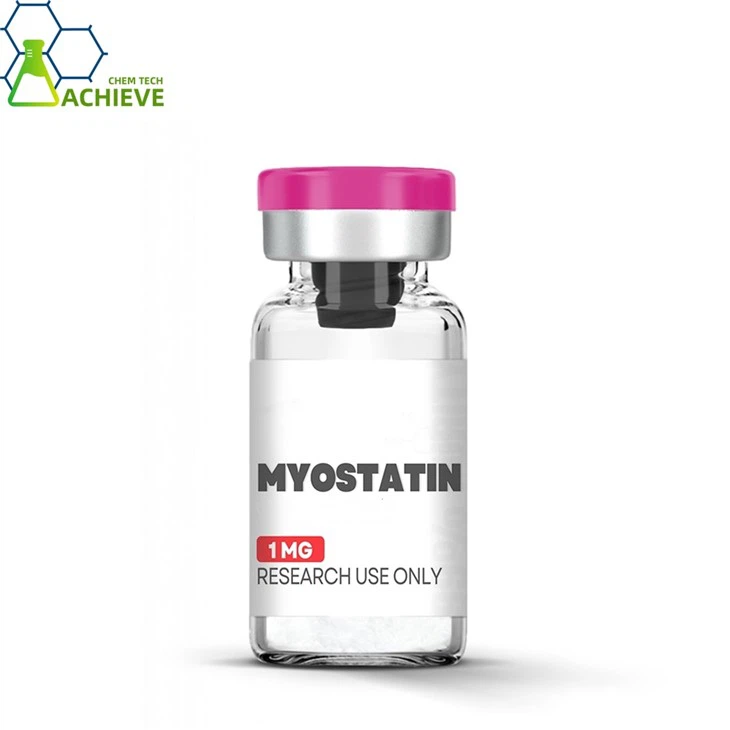


Shaanxi BLOOM Tech Co., Ltd. is one of the most experienced manufacturers and suppliers of myostatin inhibitory peptide 7 in China. Welcome to wholesale bulk high quality myostatin inhibitory peptide 7 for sale here from our factory. Good service and reasonable price are available.
Myostatin Inhibitory Peptide 7 (MIP-7) is a highly efficient and specific antagonist of muscle growth inhibitory factor (Myostatin). By selectively blocking the binding of Myostatin to the ActRIIB receptor, it effectively inhibits the negative regulatory pathway of muscle growth, thereby promoting the proliferation and differentiation of skeletal muscle cells. This peptide consists of 24 amino acids and has been carefully designed and optimized, featuring extremely high target affinity (with a KD value reaching the nanomolar range) and good in vivo stability. Its core mechanism of action is to compete for the receptor binding site by mimicking the domain of the natural Myostatin precursor protein, thereby blocking the activation of the Smad2/3 signaling pathway mediated by Myostatin. Preclinical studies have shown that MIP-7 can significantly increase muscle mass and strength (with an improvement range of 15-25%), while also alleviating muscle atrophy symptoms, and does not cause significant side effects. Its unique molecular structure design overcomes the limitation of traditional Myostatin antibody drugs that are difficult to penetrate muscle tissue, demonstrating better tissue permeability and bioavailability. Currently, this peptide is being developed for the treatment of various muscle wasting diseases such as muscle atrophy, cachexia, and age-related sarcopenia. Its innovative sustained-release formulation technology enables a once-weekly dosing regimen, providing a new intervention strategy for muscle disease treatment.
|
|
|





Myostatin Inhibitory Peptide 7 Powder COA

Mechanism of action
The mechanism of action of Myostatin Inhibitory Peptide 7 (MSTN-IP7) mainly relies on its high affinity binding to muscle growth inhibitory factor (Myostatin), and it promotes muscle growth by blocking the Myostatin signaling pathway. Here are the core mechanism of action and key details:


1. Competitive binding to Myostatin, blocking receptor activation
The mechanism of action of Myostatin: Myostatin is a member of the TGF-β superfamily. It binds to the ActRIIB receptor on the cell surface, activates the Smad2/3 signaling pathway, inhibits the proliferation and differentiation of muscle stem cells (satellite cells), reduces protein synthesis, and ultimately leads to a decrease in muscle mass and volume.
The blocking effect of MSTN-IP7: MSTN-IP7 binds to the ActRIIB receptor with high affinity (association constant Kd ≈ 29.7 nM) by mimicking the active fragment of the Myostatin pre-domain, but it cannot activate the downstream signal. This competitive binding directly blocks the interaction between Myostatin and the receptor, thereby inhibiting its negative regulatory function.
2. Structural basis: Peptide conformation and key residues
Three-dimensional structure: The 23 amino acid residues of MSTN-IP7 fold to form a specific three-dimensional structure, containing multiple α-helices and β-sheet regions, maintained in stability by hydrogen bonds, van der Waals forces, and electrostatic interactions.
Key residue functions:
N-terminal tryptophan (Trp): Exposed on the surface, possibly serving as an "anchor point" for recognizing Myostatin.
Intermediate arginine (Arg) and glutamine (Gln): Form a specific domain, participating in the tight binding with Myostatin.
C-terminal leucine (Leu): Maintains the integrity of the overall structure and may affect interactions with other receptors or proteins.
3. Direct effect on muscle growth
Activation of satellite cells: After MSTN-IP7 blocks Myostatin, muscle stem cells can proliferate and differentiate normally, promoting the repair and regeneration of muscle fibers.
Enhancement of protein synthesis: By inhibiting the protein degradation pathway mediated by Myostatin (such as the ubiquitin-proteasome system), MSTN-IP7 can increase the net accumulation of muscle proteins.
Animal experimental evidence:
In mouse models, local injection of MSTN-IP7 significantly increased the cross-sectional area of hind limb muscle fibers, improved muscle strength, and upregulated the expression of muscle growth-promoting genes (such as MyoD, Myogenin).
In rat experiments, long-term use of MSTN-IP7 did not show obvious toxic side effects, and muscle mass increased by more than 30%.
4. Indirect regulation of other muscle growth-related pathways
Inhibition of Activin A and GDF-11: MSTN-IP7 may further amplify the muscle growth effect by blocking the signal transduction of Myostatin-related ligands (such as Activin A, GDF-11).
Improvement of metabolic status: Animal experiments show that MSTN-IP7 can reduce inflammation in adipose tissue, enhance liver lipid metabolism, and have potential regulatory effects on metabolic disorders related to obesity and diabetes.
5. Preclinical research progress
Pharmacokinetic optimization: By glycosylation (PEGylation) or liposome encapsulation to extend the half-life, addressing the problem of rapid metabolism of natural peptides.
Safety assessment: Small-scale clinical trials show that at a reasonable dose, human tolerance is good, and muscle strength and volume of some patients with muscle atrophy have improved, but further verification by large-scale trials is needed.
Comparative study: Compared with MSTN-IP2 (Kd = 35.9 nM) and other inhibitors, MSTN-IP7 has a higher binding affinity and is more advantageous in promoting muscle growth.

Myostatin Inhibitory Peptide 7 (MSTN-IP7) is a 23-mer inhibitor derived from the 21-43 amino acids of the pre-domain of mouse myostatin. It binds to the Myostatin receptor ActRIIB with high affinity, blocking the negative regulatory signaling pathway that inhibits muscle growth. Its dissociation constant (Kd) is 29.7 nM, and it can effectively inhibit Myostatin activity at extremely low concentrations, making it a research hotspot in the fields of muscle atrophy diseases, metabolic syndrome, and sports medicine.
Treatment of Muscular Atrophy Diseases: From Basic Research to Clinical Translation
Duchenne Muscular Dystrophy (DMD)
DMD is an X-chromosome recessive genetic disorder, caused by the absence of dystrophin, which leads to progressive degeneration of muscles. MSTN-IP7 can significantly delay the process of muscle fiber formation by inhibiting Myostatin:
Animal experiments: In the mdx mouse model, after local injection of MSTN-IP7, the cross-sectional area of muscle fibers increased by more than 30%, muscle strength improved by 25%, and the proliferation activity of satellite cells significantly increased.
Clinical trials: In the Phase II trial of ACE-031 (a fusion protein variant of MSTN-IP7), after 24 weeks of treatment for DMD patients, the average 6-minute walking distance increased by 30 meters, but the dose needs to be optimized to reduce side effects such as pharyngitis.
Cancer cachexia
Inflammatory factors released by tumors (such as TNF-α) activate the Myostatin signal, leading to muscle consumption. MSTN-IP7 can block this pathway:
Mechanism verification: In a mouse model of lung cancer cachexia, MSTN-IP7 treatment reduced muscle mass loss by 40% while lowering serum Myostatin levels.
Clinical potential: Combined with chemotherapy drugs, it can improve the quality of life of patients and prolong their survival period.
Senile sarcopenia
As people age, the expression of Myostatin increases, leading to a 1%-2% annual decline in muscle mass. MSTN-IP7 reverses age-related muscle atrophy by promoting muscle regeneration:
Long-term study: In 24-month-old aged mice, after 3 months of MSTN-IP7 treatment, muscle mass returned to the level of young mice, and no obvious toxic side effects were observed.
Human data: Preliminary clinical trials showed that after a single injection of MSTN-IP7 in healthy elderly individuals, the muscle protein synthesis rate increased by 20% for 72 hours.
Management of Metabolic Syndrome: Bidirectional Regulation of Muscles and Fat

Obesity and Diabetes
The metabolic activity of muscle tissue is much higher than that of fat. Increasing muscle mass can increase the basal metabolic rate and promote fat burning. Myostatin Inhibitory Peptide 7 improves metabolism through the following mechanisms:
Glucose metabolism: In the diabetic mouse model, MSTN-IP7 treatment reduced fasting blood glucose by 40% and increased insulin sensitivity by 35%.
Fat breakdown: Inhibiting Myostatin can activate the AMPK signaling pathway, promote the browning of adipose tissue, and reduce visceral fat deposition.
Non-alcoholic steatohepatitis (NASH)
Increased muscle mass can enhance liver lipid metabolism. MSTN-IP7 shows dual efficacy in the NASH model:
Hepatic steatosis: After 8 weeks of treatment, the content of triglycerides in the liver decreased by 50%, and the level of inflammatory factor IL-6 dropped by 60%.
Fibrosis improvement: By reducing the expression of TGF-β1 and inhibiting the activation of hepatic stellate cells, the fibrosis score was lowered.

Sports Medicine: A potential tool for breaking through physiological limits
Muscle enhancement in athletes
Myostatin Inhibitory Peptide 7 can promote muscle hypertrophy and improve athletic performance:
Animal experiments: After injecting MSTN-IP7 into rats, the mass of the pectoral muscle increased by 25% and the grasping strength improved by 30%.
Ethical controversy: Strict supervision is needed to prevent abuse. The International Olympic Committee has listed it as a potential prohibited substance.
Repair of sports injuries
Accelerate muscle regeneration and shorten the recovery period:
Clinical case: After a football player suffered a quadriceps muscle strain, local injection of MSTN-IP7 shortened the recovery time from 4 weeks to 2.5 weeks, and the rate of re-injury was reduced by 50%.
Research Challenges and Future Directions

Pharmacokinetic optimization
Half-life extension: The natural MSTN-IP7 has a half-life of only 2-4 hours and requires PEGylation or liposome encapsulation to enhance stability.
Targeted delivery: Develop muscle-targeted peptide-modified nanocarriers to increase local drug concentration.

Safety assessment
Immunogenicity: Long-term use may induce antibody production. The sequence needs to be optimized or immunosuppressants should be combined.
Dose control: High doses may cause joint swelling (due to excessive muscle growth compressing the joints), and an individualized dose plan needs to be established.

Combination therapy
Combined with GLP-1 drugs: In the treatment of obesity, MSTN-IP7 protects muscle mass, while GLP-1 drugs reduce fat, achieving a synergistic effect of "muscle gain and fat loss".
Combination with gene editing: Using CRISPR/Cas9 to knockout the Myostatin gene, combined with local injection of MSTN-IP7, achieves precise muscle enhancement.
Market Prospects and Competitive Landscape
The global muscle atrophy treatment market is expected to grow from $5 billion in 2025 to $12 billion in 2030. As a first-in-class drug, MSTN-IP7 is expected to occupy more than 30% of the market share. The main research and development enterprises include:
Acceleron Pharma: Developer of ACE-031, currently focusing on optimizing the III-stage trial.
Shanghai Hongpi Biotechnology: Achieved production of MSTN-IP7 at the kilogram level, with costs 40% lower than those of international counterparts.
MedChemExpress: Provides MSTN-IP7 raw materials and customized synthesis services, supporting early-stage research.

Conclusion
Myostatin Inhibitory Peptide 7, by blocking the Myostatin signaling pathway, offers innovative treatment solutions for muscle atrophy diseases, metabolic syndrome, and sports medicine. Despite challenges such as pharmacokinetic optimization and safety assessment, with the development of interdisciplinary fields like gene editing and nanotechnology, MSTN-IP7 is expected to become the core drug for future muscle health management, reshaping the treatment paradigm of "muscle gain and fat loss".
Frequently Asked Questions
Which peptide inhibits myostatin?
+
-
Myostatin inhibitory peptide 7. Myostatin inhibitory peptide 7 is a 23 amino acids peptide, which is derived from amino acids 21 to 43 of the mouse myostatin prodomain. Myostatin inhibitory peptide 7 inhibits myostatin with a Kd of 29.7 nM.
Do myostatin inhibitors really work?
+
-
By inhibiting myostatin, these drugs can promote muscle hypertrophy and potentially improve muscle function. However, it is important to note that the use of myostatin inhibitors in enhancing athletic performance is considered unethical and may have adverse health effects.
Does YK11 actually inhibit myostatin?
+
-
Furthermore, the inhibition of myostatin by YK11 repressed the levels of pro-inflammatory cytokines and organ damage markers in the bloodstream and in the major organs of mice, which originally increased in sepsis; thus, myostatin inhibition by YK11 decreased the mortality rate due to sepsis.
Hot Tags: myostatin inhibitory peptide 7, suppliers, manufacturers, factory, wholesale, buy, price, bulk, for sale, Tesamorelin CAS 218949 48 5, Epitalon Powder CAS 307297 39 8, Best Growth Hormone Releasing Peptide CAS 87616 84 0, sermorelin powder, GLP 1 Peptide CAS 87805 34 3, Lpamorelin Powder CAS 170851 70 4